7 Essential Steps for a Crypto Trading Strategies Checklist

Over 50 million american adults have tried trading cryptocurrency, yet most overlook the crucial step of matching strategies to their true financial goals and comfort with risk. The fast pace and market swings can tempt even experienced traders to make impulsive decisions that hurt more than they help. Understanding how to align your trading approach, choose the right tools, and stay disciplined can help you avoid common pitfalls and set yourself up for long-term growth.
Table of Contents
- 1. Define Your Crypto Trading Goals And Risk Appetite
- 2. Select The Right Digital Asset Exchanges For Your Needs
- 3. Choose Reliable Automated Trading Bots And Tools
- 4. Develop And Test Your Trading Strategy
- 5. Implement Robust Risk Management Techniques
- 6. Monitor Real-Time Analytics And Adjust Strategies
- 7. Regularly Review And Rebalance Your Portfolio
Quick Summary
| Takeaway | Explanation |
|---|---|
| 1. Define clear trading goals. | Establish what motivates your trading and align your strategy with your risk appetite. |
| 2. Select suitable exchanges. | Choose between centralized and decentralized exchanges based on your trading style and needs. |
| 3. Use automated trading tools wisely. | Select trading bots that match your strategy and offer strong analytics for informed decision-making. |
| 4. Implement strong risk management. | Control losses by diversifying your portfolio and setting clear stop-loss parameters. |
| 5. Regularly rebalance your portfolio. | Adjust your investment allocations periodically to align with your risk tolerance and financial goals. |
1. Define Your Crypto Trading Goals and Risk Appetite
Successful crypto trading starts with crystal clear goals and a realistic understanding of your personal risk tolerance. Your trading strategy isn’t just about potential profits it’s about protecting your financial wellbeing while pursuing calculated opportunities in the volatile cryptocurrency markets.
Understanding your risk appetite means recognizing how much financial uncertainty you can comfortably handle without losing sleep or compromising your overall financial stability. According to research from the US Treasury, investors’ risk appetite and speculative trading behaviors are dominant factors driving crypto asset prices US Treasury.
To define your goals effectively, ask yourself critical questions:
- What is your primary motivation? (Income generation, long term investment, learning the market)
- How much capital can you realistically invest? (Without disrupting your essential financial needs)
- What is your maximum acceptable loss percentage? (5%, 10%, 15% of total investment)
A practical approach involves creating a personal risk management framework that outlines your investment boundaries. This means setting clear parameters like maximum trade size, stop loss levels, and portfolio diversification strategies. Professional traders understand that managing risk isn’t about avoiding losses entirely but about controlling potential downside while maintaining upside potential.
Remember. Your risk appetite isn’t static. It will evolve with your experience, market knowledge, and personal financial situation. Regularly reassess and adjust your strategy to stay aligned with your current comfort level and financial goals.
2. Select the Right Digital Asset Exchanges for Your Needs
Choosing the right digital asset exchange is like selecting a financial headquarters for your crypto trading journey. Your exchange selection can dramatically impact your trading performance, security, and overall investment experience.
According to research from Georgetown University, there are two primary types of digital asset exchanges: [Centralized Exchanges (CEXes) and Decentralized Exchanges (DEXes)] Georgetown University. Each comes with unique advantages and potential drawbacks that match different trading styles and risk profiles.
Centralized Exchanges (CEXes) characteristics:
- Easier to use for beginners
- Faster transaction processing
- More liquid markets
- Better customer support
- Built in fiat currency on ramps
Decentralized Exchanges (DEXes) characteristics:
- Greater privacy
- No central authority controlling funds
- Direct wallet to wallet trading
- Lower potential for systemic manipulation
- Often lower trading fees
When evaluating exchanges, consider these critical factors beyond just trading pairs. Look at trading fees, security history, supported cryptocurrencies, geographic restrictions, and regulatory compliance. Some exchanges offer competitive maker rebates and lower taker fees. For instance, platforms like Bitget have become attractive for futures traders seeking cost effective trading options Blockchain Council.
Pro tip: Never commit all your capital to a single exchange. Diversify across 2 3 reputable platforms to mitigate platform specific risks and maximize your trading flexibility. Your chosen exchanges should align with your trading goals, risk tolerance, and technical comfort level.
3. Choose Reliable Automated Trading Bots and Tools
Automated trading bots transform how individual traders interact with complex cryptocurrency markets. These sophisticated tools can execute trades faster and more precisely than human traders ever could.
Trading bots represent powerful technology that allows you to implement predefined strategies without constant market monitoring. According to trading research, transaction costs matter significantly. As Accounting Insights indicates, trading fees ranging from 0.1% to 0.5% per transaction can quickly accumulate, making efficient bot selection critical.
Key Criteria for Selecting Trading Bots:
- Proven track record of performance
- Strong security protocols
- Transparent pricing structure
- Multiple exchange compatibility
- Customizable strategy options
- Responsive customer support
When evaluating automated trading tools, prioritize platforms offering robust backtesting capabilities. This allows you to simulate your trading strategy using historical market data before risking real money. Look for bots that provide detailed performance analytics, risk management features, and flexible configuration options.
Remember. Not all trading bots are created equal. Some excel at specific market conditions or trading styles. Your ideal bot should align closely with your personal risk tolerance, trading goals, and technical comfort level. Continuous learning and periodic strategy reassessment will help you maximize your automated trading potential.
4. Develop and Test Your Trading Strategy
A well designed trading strategy is your roadmap to consistent performance in the volatile cryptocurrency markets. Without a strategic approach, youre essentially gambling instead of investing.
Developing a robust trading strategy requires systematic planning and rigorous testing. Accounting Insights highlights the importance of understanding transaction costs, which can range from 0.1% to 0.5% per trade and significantly impact your overall profitability.
Core Components of an Effective Trading Strategy:
- Entry and exit rules
- Risk management parameters
- Position sizing guidelines
- Technical indicator selection
- Backtesting methodology
- Performance evaluation metrics
Backtesting Steps:
- Select historical market data
- Apply your strategy rules
- Analyze performance metrics
- Identify potential weaknesses
- Refine and optimize strategy
Successful traders approach strategy development like scientific research. Start with a clear hypothesis about market behavior. Create precise, measurable rules that define exactly when to enter or exit a trade. Use historical data to simulate your strategy performance before risking real capital.
Remember. No trading strategy works perfectly in all market conditions. Continuous learning, adaptability, and disciplined risk management are your true competitive advantages. Treat your trading strategy as a living document that evolves with market dynamics and your growing understanding.
5. Implement Robust Risk Management Techniques
Risk management is the critical shield protecting your cryptocurrency investments from potential market volatility. Your ability to control potential losses can make the difference between sustainable trading and catastrophic financial setbacks.
According to research from the US Treasury, investors’ risk appetite and speculative trading behaviors are dominant factors driving crypto asset prices US Treasury. This underscores the importance of developing a strategic approach to managing investment risks.
Key Risk Management Principles:
- Never invest more than you can afford to lose
- Diversify your cryptocurrency portfolio
- Set clear stop loss parameters
- Maintain emergency cash reserves
- Regularly rebalance your investments
Advanced Risk Mitigation Strategies:
- Use position sizing techniques
- Implement trailing stop orders
- Create multiple trading sub accounts
- Hedge positions across different assets
- Utilize dollar cost averaging methods
As recommended by Global Association of Risk Professionals, a comprehensive risk management approach involves more than just setting limits. It requires continuous monitoring, periodic strategy reassessment, and a disciplined mindset.
Pro tip. Treat risk management as a dynamic process. Your strategy should evolve with market conditions, personal financial goals, and your growing understanding of cryptocurrency markets. Successful traders view risk management not as a constraint but as a powerful tool for long term financial resilience.
6. Monitor Real-Time Analytics and Adjust Strategies
Successful crypto trading demands more than initial strategy development. It requires continuous monitoring, real time analysis, and strategic adaptation to rapidly changing market conditions.
According to Accounting Insights, trading fees ranging from 0.1% to 0.5% per transaction can quickly accumulate. This underscores the importance of monitoring not just price movements, but also transaction costs that directly impact your net profitability.
Critical Analytics to Track:
- Portfolio performance metrics
- Individual trade win rates
- Cumulative profit and loss
- Trading fees and transaction costs
- Volatility indicators
- Market sentiment signals
Strategic Adjustment Techniques:
- Modify position sizing
- Adjust stop loss parameters
- Rebalance asset allocation
- Switch trading pairs
- Update entry exit rules
- Reduce trading frequency during high volatility
Real time analytics provide the crucial feedback loop that transforms good traders into exceptional ones. Your trading strategy is not a static document but a dynamic system requiring constant refinement. Successful traders view market data as a continuous conversation that informs intelligent decision making.
Remember. The most sophisticated trading strategy becomes obsolete without consistent monitoring and adaptive thinking. Your ability to read market signals and quickly recalibrate will separate you from traders who remain rigidly attached to their original plan.
7. Regularly Review and Rebalance Your Portfolio
Portfolio rebalancing is the strategic art of maintaining your cryptocurrency investments alignment with your original risk tolerance and financial goals. Think of it as a periodic health check for your investment strategy.
According to UMA Technology, rebalancing provides multiple crucial benefits: controlling risk exposure, locking in gains, and maintaining disciplined investment practices. This process is not about constant trading but thoughtful, periodic adjustments.
Key Rebalancing Considerations:
- Track asset allocation percentages
- Monitor individual cryptocurrency performance
- Compare actual vs target portfolio composition
- Evaluate market cap and sector diversification
- Review overall portfolio risk profile
Recommended Rebalancing Frequencies:
- Conservative investors: Quarterly review
- Active traders: Monthly assessment
- Aggressive investors: Biweekly evaluation
- Algorithmic traders: Weekly or real time adjustments
Successful rebalancing requires a systematic approach. Set predefined triggers such as when any single asset deviates more than 5% from its target allocation. This prevents emotional decision making and enforces a disciplined investment methodology.
Remember. Rebalancing is not about chasing the highest returns but maintaining a consistent risk management strategy. Your portfolio should reflect your current financial objectives while protecting against potential market volatility.
Below is a comprehensive table summarizing the key strategies and considerations for successful crypto trading as discussed in the article.
| Topic | Description | Key Considerations |
|---|---|---|
| Define Crypto Trading Goals | Establish clear goals and risk tolerance. | Consider motivation, investment capital, and acceptable loss percentage. |
| Select Digital Asset Exchanges | Choose exchanges that suit your trading needs. | Evaluate ease of use, fees, security, and exchange type (CEX vs DEX). |
| Automated Trading Bots | Use bots for efficient trade execution. | Look for performance, security, and strategy customization. |
| Develop Trading Strategy | Create a strategic roadmap for trading. | Focus on entry/exit rules, risk management, and backtesting. |
| Implement Risk Management | Protect investments against volatility. | Diversify portfolio, use stop losses, and rebalance regularly. |
| Monitor Real-Time Analytics | Continuously adjust strategies based on market data. | Track portfolio metrics, transaction costs, and volatility indicators. |
| Regularly Rebalance Portfolio | Maintain alignment with financial goals. | Review asset allocation frequently based on investor type. |
Take Your Crypto Trading Strategy to the Next Level with Automation
Crafting and executing a solid crypto trading plan requires clear goals risk management and continuous monitoring as outlined in the “7 Essential Steps for a Crypto Trading Strategies Checklist.” If you find managing stop losses diversifying portfolios or backtesting strategies overwhelming or time consuming an automated solution can ease the pressure and help you stay disciplined through market turbulence. Darkbot.io offers a powerful platform that lets you customize multiple bots create dynamic strategies and integrate seamlessly with digital asset exchanges so you can trade smarter not harder.
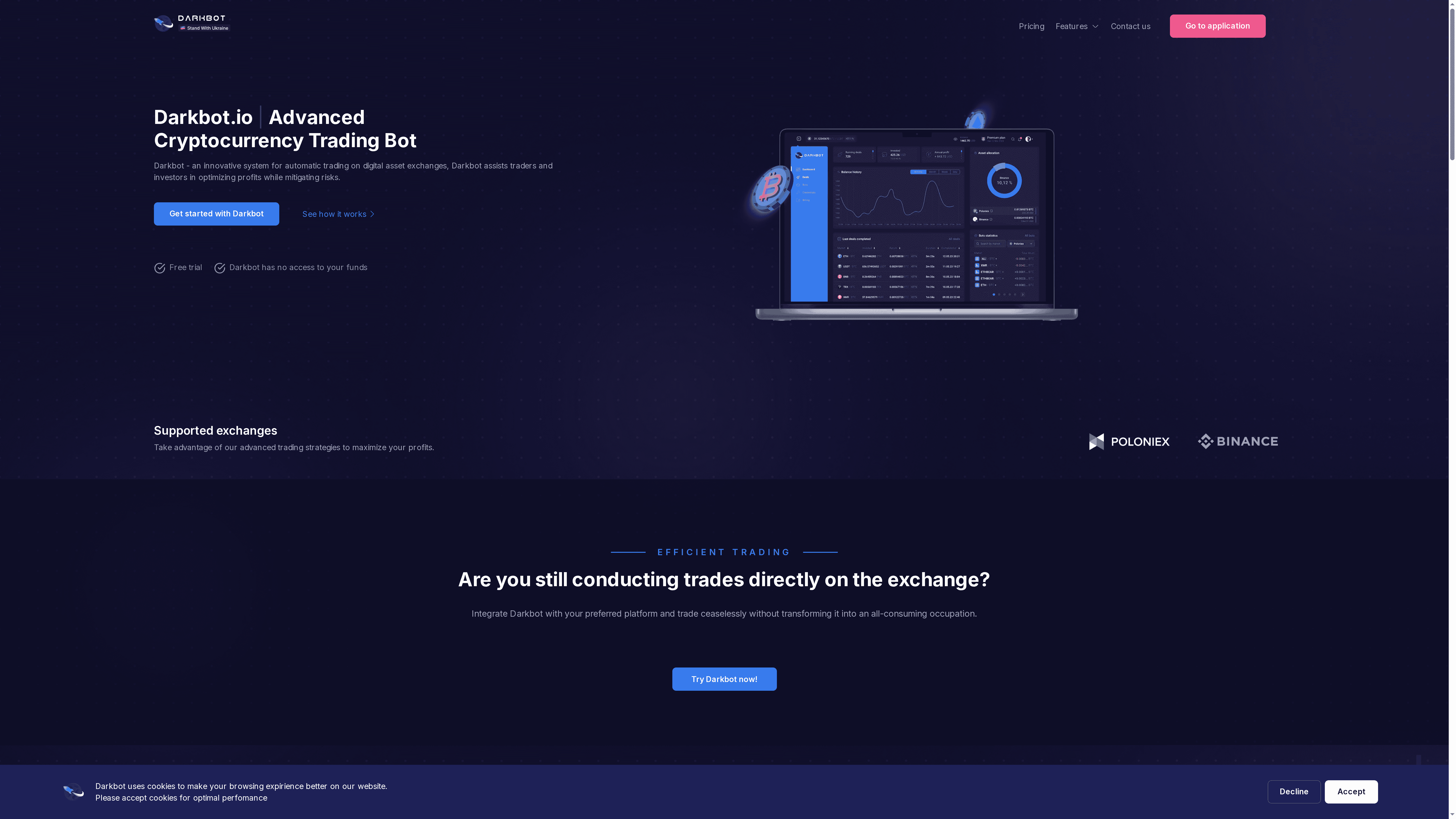
Ready to empower your trading with AI driven automation and real time analytics Start now at Darkbot.io to access customizable tools for risk control strategy fine tuning and portfolio rebalancing. Discover how effortless automation can transform your crypto journey by visiting the Darkbot.io landing page and explore features designed for traders just like you. Begin your path to more consistent trading results today.
Frequently Asked Questions
How do I define my trading goals in cryptocurrency?
Successful crypto trading starts with clearly defining your goals, such as income generation or long-term investment. Take time to ask yourself what you want to achieve and what capital you can invest without jeopardizing your financial wellbeing.
What factors should I consider when selecting a digital asset exchange?
When selecting a digital asset exchange, consider factors such as security history, trading fees, and supported cryptocurrencies. Evaluate multiple exchanges to ensure that they align with your trading goals and risk tolerance, and aim to diversify across 2-3 platforms.
What are some essential features to look for in automated trading bots?
Key features to look for in automated trading bots include a proven track record, strong security measures, and customizable strategies. Prioritize bots that offer robust backtesting capabilities to simulate your trading strategies before risking real money.
How can I create an effective trading strategy for cryptocurrency?
To create an effective trading strategy, establish clear entry and exit rules, define risk management parameters, and include position sizing guidelines. Employ systematic backtesting using historical market data to evaluate your strategy’s performance before implementing it in real time.
What are the best practices for managing risk in crypto trading?
Best practices for risk management in crypto trading include never investing more than you can afford to lose and diversifying your portfolio. Implement clear stop-loss parameters and maintain emergency cash reserves to cushion against potential market volatility.
How often should I review and rebalance my cryptocurrency portfolio?
Reviewing and rebalancing your cryptocurrency portfolio should be based on your investment style: conservative investors can do this quarterly, while active traders should assess monthly. Set predefined triggers for rebalancing, such as deviations of more than 5% from target allocations, to maintain consistent risk management.

Start trading on Darkbot with ease
Come and explore our crypto trading platform by connecting your free account!
Free plan available • No credit card required