Crypto Portfolio Management Guide for Smart Automation

More than 20 million american adults now trade or invest in cryptocurrency, yet many still approach crypto portfolio building without a clear strategy. The sheer variety of coins, platforms, and new automated tools can make choices feel confusing or risky. Whether you are just starting out or fine-tuning your approach, understanding how to set goals, protect your assets, and diversify with confidence lays the groundwork for a smarter investment journey.
Table of Contents
Quick Summary
| Key Insight | Explanation |
| 1. Assess your risk tolerance | Evaluate your financial goals and emotional resilience to determine how much you can afford to lose and your investment timeline. |
| 2. Secure your exchange accounts | Use reputable platforms, enable two-factor authentication, and employ strong, unique passwords to protect your assets from threats. |
| 3. Diversify your asset allocation | Allocate investments across categories: 50% in major cryptocurrencies, 30% in mid cap assets, and 20% in high-risk tokens to balance performance and risk. |
| 4. Use trading bots wisely | Select bots that allow customization and use backtesting to refine strategies; start with a small investment to assess performance. |
| 5. Monitor and adapt strategies | Regularly review performance metrics, adjust allocations, and focus on data-driven decisions instead of emotional reactions to improve portfolio outcomes. |
Step 1: Assess your risk tolerance and trading goals
Building a successful crypto portfolio starts with understanding your personal risk appetite and clear investment objectives. According to Behavioral Portfolio Theory, investors should construct portfolios that address multiple layers of financial goals from preventing disaster to pursuing high returns.
To accurately assess your risk tolerance, conduct a personal financial audit. Track your current income, expenses, savings, and investment capacity. Ask yourself critical questions: How much of your portfolio can you afford to lose? What is your investment timeline? Are you seeking short term gains or long term wealth accumulation? Most traders underestimate their true risk tolerance by not honestly evaluating their emotional and financial resilience.
Research from Tfin Crypto suggests implementing a staged approach to risk management. Start by categorizing your potential investments into risk tiers: conservative (low risk), balanced (medium risk), and aggressive (high risk). Allocate your portfolio percentages based on your personal risk profile. For instance, a younger trader might distribute 20% in conservative assets, 50% in balanced investments, and 30% in high risk opportunities. Regularly reassess these allocations as your financial situation and market conditions evolve.
Warning: Never invest more than you can comfortably lose. Crypto markets are notoriously volatile, and emotional decision making leads to significant financial mistakes.
Step 2: Connect and secure your crypto exchange accounts
Connecting and securing your crypto exchange accounts is a critical foundation for safe automated trading. According to Economic Times, implementing robust security measures is essential to safeguard your digital assets from potential threats.
Start by selecting reputable exchanges with strong security protocols. Create unique email addresses dedicated exclusively to your trading accounts to minimize exposure. When setting up your account, enable two factor authentication immediately. This adds an extra layer of protection beyond your password. Choose authentication methods like Google Authenticator or hardware security keys instead of SMS based verification which can be more vulnerable to interception.
Research from Outlook India highlights the importance of advanced security features. Generate complex passwords using password managers that include uppercase and lowercase letters, numbers, and special characters. Never reuse passwords across platforms.
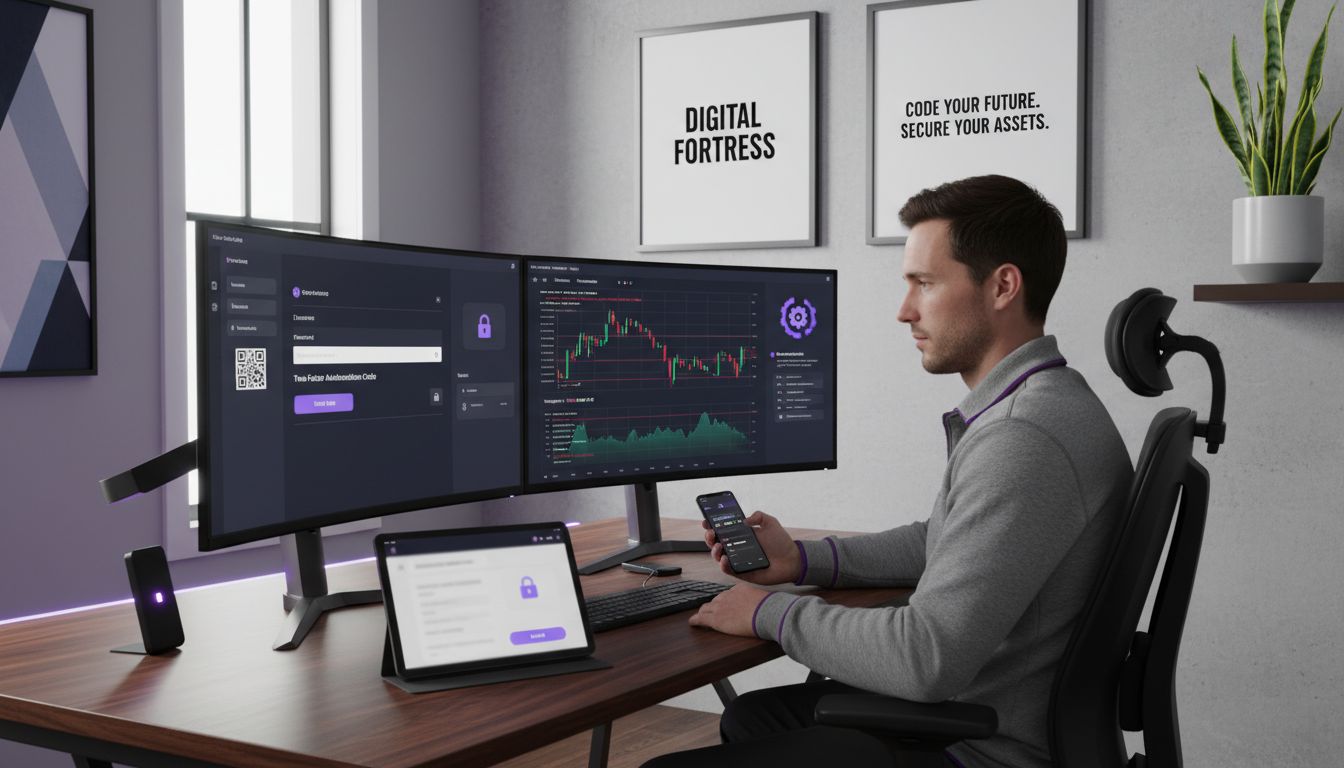 Consider using API keys with restricted permissions when connecting trading bots to limit potential damage from potential security breaches.
Warning: Always verify the official website URL before entering login credentials. Phishing sites can look remarkably similar to legitimate exchanges.
Step 3: Allocate assets with tailored trading strategies
Crafting a sophisticated crypto portfolio requires strategic asset allocation that goes beyond simple guesswork. According to research from arXiv, utilizing network methods can help identify decorrelated cryptocurrencies and create diversified portfolios that balance performance and risk.
Start by segmenting your portfolio into distinct risk categories. Allocate a core percentage to established cryptocurrencies like Bitcoin and Ethereum as stable anchors. Then distribute smaller percentages across mid cap and emerging altcoins for potential growth. A balanced approach might look like 50% blue chip cryptocurrencies, 30% mid cap assets, and 20% high risk emerging tokens. Research from arXiv suggests using rolling window optimization strategies to dynamically adjust your portfolio based on changing market conditions.
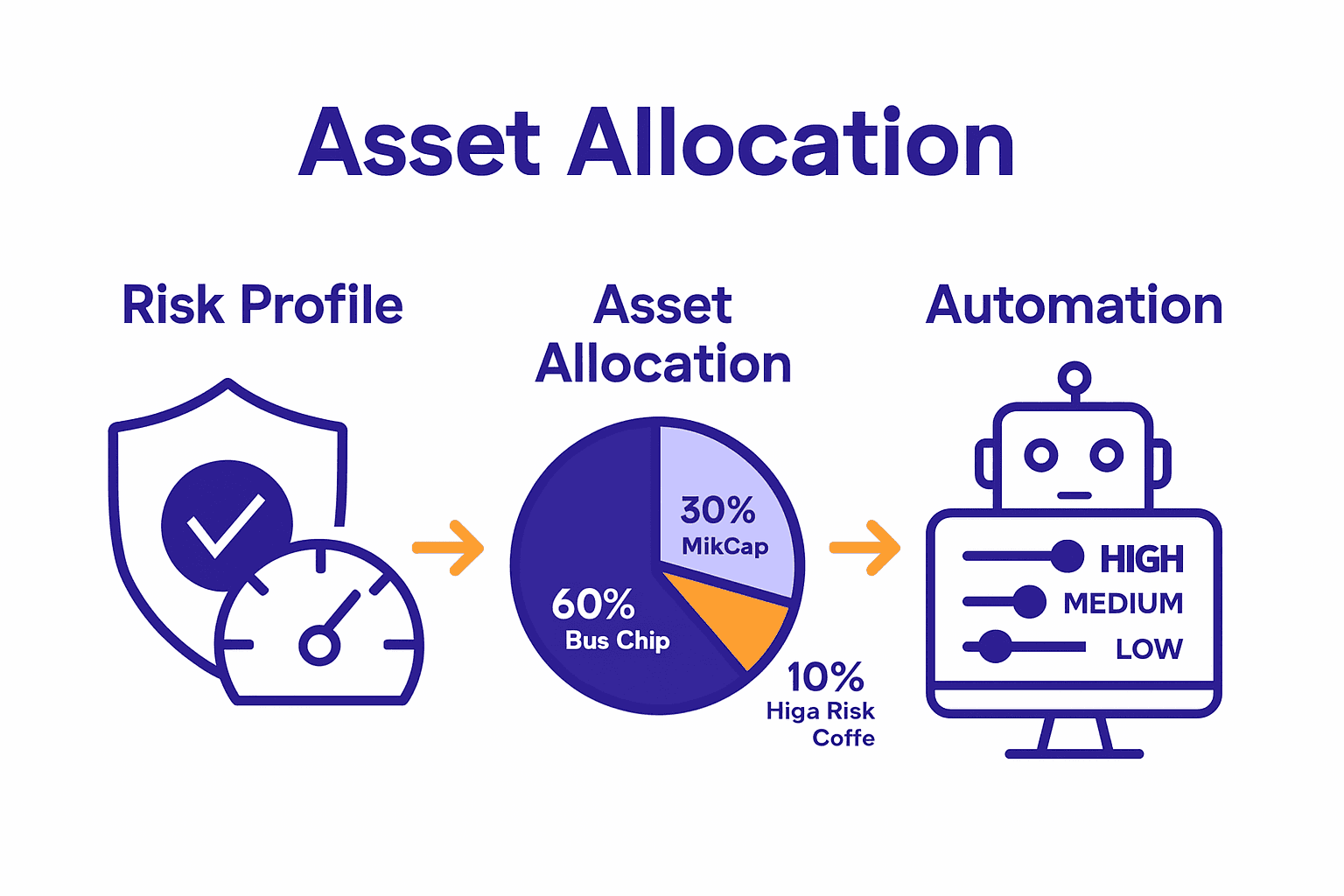
Consider implementing multiple trading strategies simultaneously to spread risk. Some traders use dollar cost averaging for consistent long term investments while maintaining separate accounts for day trading and swing trading. Advanced techniques like using network correlation methods can help you select cryptocurrencies that move independently from each other reducing overall portfolio volatility.
Warning: Avoid allocating more than 5% of your total portfolio to any single high risk cryptocurrency to protect against potential significant losses.
Step 4: Automate portfolio management with trading bots
Trading bots represent a powerful tool for managing cryptocurrency investments with precision and efficiency. Research from arXiv highlights the potential of advanced trading agents that leverage deep reinforcement learning to maximize profits while restraining risk in volatile markets.
Begin by selecting a trading bot platform that offers robust customization options. Connect your verified exchange accounts using read only API keys to ensure maximum security. Configure your bot with specific parameters that align with your risk tolerance and investment goals. This might include setting stop loss limits, defining rebalancing frequencies, and establishing rules for entry and exit points. According to arXiv, multi agent systems can provide adaptive techniques for autonomous portfolio management that respond dynamically to changing market conditions.
Implement a phased approach to bot trading. Start with a small percentage of your portfolio to test strategies and understand the bots performance. Use backtesting features to simulate historical performance and refine your approach.
Most advanced platforms offer machine learning capabilities that can help optimize trading strategies over time by analyzing past market data and identifying potentially profitable patterns.
Warning: Always monitor your automated trading system regularly. No bot is completely foolproof, and periodic human oversight is crucial to managing potential risks.
Step 5: Monitor performance and adjust strategies
Successful crypto portfolio management requires continuous performance tracking and strategic adaptation. Research from arXiv introduces the Tfin Crypto framework, which emphasizes dynamic drawdown-based risk management as a critical approach to maintaining portfolio resilience in volatile markets.
Establish a comprehensive monitoring system that tracks key performance indicators beyond simple profit metrics. Analyze metrics like Sharpe ratio, maximum drawdown, win rate, and risk adjusted returns. Set up automated reporting dashboards that provide real time insights into your portfolio performance. According to arXiv, adaptive multi agent systems can help investors continuously evaluate and optimize crypto asset allocations by responding dynamically to changing market conditions.
Implement a disciplined review schedule where you assess your trading strategies monthly or quarterly. Look for patterns in your bot performance such as consistent underperformance in specific market conditions or recurring losses in particular asset classes. Be prepared to adjust your allocation percentages, modify risk parameters, or completely replace strategies that consistently fail to meet your performance benchmarks. Consider using machine learning tools that can help identify subtle performance trends human analysts might miss.
Warning: Emotional decision making can destroy portfolio performance. Always base strategy adjustments on data and predefined rules rather than fear or excitement.
Elevate Your Crypto Portfolio Management with Smart Automation
Navigating the complexities of crypto portfolio building requires more than just knowledge. The guide highlights challenges like assessing risk tolerance, securing exchange accounts, and crafting tailored trading strategies that continuously adapt to market shifts. Emotional decision making and manual oversight often lead to missed opportunities or losses. With Darkbot.io, you can overcome these pain points by automating your trading strategies using advanced AI and machine learning technologies. Our platform provides seamless integration via API keys, secure account connections, and tools for dynamic portfolio management so you can focus on results instead of constant monitoring.
Take control of your crypto investments today by leveraging proven automation. Visit Darkbot.io to discover how effortless it can be to implement adaptive trading bots that handle real-time analytics, portfolio rebalancing, and risk management. Start now to reduce manual effort and protect your assets from emotional pitfalls. Learn more about how you can personalize your trading experience at Darkbot.io. Make your portfolio work smarter with automation designed to help you thrive in volatile markets.
Frequently Asked Questions
How do I assess my risk tolerance for crypto investing?
To assess your risk tolerance, conduct a personal financial audit by reviewing your income, expenses, savings, and investment capacity. Ask yourself critical questions about how much you can afford to lose and your investment timeline. Consider doing this assessment at least once a year.
What steps can I take to secure my crypto exchange accounts?
To secure your crypto exchange accounts, choose reputable exchanges, enable two-factor authentication, and create unique passwords using a password manager. Additionally, regularly verify website URLs before logging in to avoid phishing scams. Implement these measures immediately upon setting up your accounts.
How should I allocate my assets in a crypto portfolio?
Start by segmenting your portfolio into different risk categories, such as conservative, balanced, and aggressive. A sample allocation could be 50% in established cryptocurrencies, 30% in mid-cap assets, and 20% in high-risk tokens. Reassess these allocations quarterly based on market conditions and your financial situation.
How do I set up and use trading bots for automated portfolio management?
Begin by selecting a trading bot platform and connect your verified exchange accounts using read-only API keys. Configure the bot with parameters that align with your investment goals, such as stop-loss limits and rebalancing frequencies. Test your bot with a small percentage of your portfolio and review its performance regularly for adjustments.
What key metrics should I monitor to evaluate my crypto portfolio performance?
Focus on key performance indicators such as the Sharpe ratio, maximum drawdown, and risk-adjusted returns. Create automated reporting dashboards to provide real-time insights into these metrics. Review your performance at least monthly to identify trends and adjust strategies as needed.
How can I prevent emotional decision-making in my trading strategies?
To prevent emotional decision-making, base your strategy adjustments on data analysis and predefined rules rather than on feelings. Establish a disciplined review schedule and keep a record of your trading decisions and their outcomes. Commit to following your action plan, especially during market fluctuations, to maintain consistency.

Start trading on Darkbot with ease
Come and explore our crypto trading platform by connecting your free account!
Free plan available • No credit card required