Crypto Trading Bot Security: Protecting Profits and Data

Cyber attacks on digital trading platforms have cost American investors billions of dollars in recent years. As cryptocurrency trading bots become more popular, understanding their security essentials is vital for anyone moving money in volatile markets. This guide breaks down the core protective measures and strategic defenses every American trader needs for safeguarding crypto assets against evolving online threats.
Table of Contents
- Defining Crypto Trading Bot Security Essentials
- Types of Security Measures for Trading Bots
- API Key Protection and Exchange Integration Risks
- Common Threats and Vulnerabilities in Crypto Bots
- Best Practices for Safe Automated Trading
- Legal, Privacy, and Regulatory Compliance
Key Takeaways
| Point | Details |
|---|---|
| Security Framework | Implement a multilayered security framework including encryption, multi-factor authentication, and strict API key management to protect against cyber threats. |
| Continuous Vigilance | Maintain ongoing risk assessments and updates to security protocols to adapt to the evolving threat landscape in cryptocurrency trading. |
| Regulatory Compliance | Understand and comply with legal and regulatory requirements to protect user data and ensure operational integrity in automated trading. |
| Real-Time Monitoring | Implement continuous monitoring systems to detect and respond to suspicious activities within trading operations. |
Defining Crypto Trading Bot Security Essentials
Cryptocurrency trading bots represent sophisticated automated systems designed to execute trades across digital asset markets. Understanding their security architecture is paramount for protecting both financial investments and sensitive user data. Comprehensive security protocols serve as the foundational shield against potential cyber threats and unauthorized system access.
The core security framework for crypto trading bots encompasses multiple critical dimensions. These include robust API key management, advanced encryption standards, secure authentication mechanisms, and comprehensive risk mitigation strategies. Traders must implement stringent security measures that protect against potential vulnerabilities such as unauthorized transactions, data breaches, and algorithmic manipulation. Secure coding practices play a crucial role in developing resilient trading infrastructure that can withstand sophisticated cyber threats.
Effective bot security fundamentally relies on several key strategic components. These components include:
- Encryption Protocols: Implementing end-to-end encryption for all data transmissions
- Multi-Factor Authentication: Requiring multiple verification steps for system access
- API Restrictions: Limiting exchange API permissions to essential trading functions
- Regular Security Audits: Conducting comprehensive vulnerability assessments
- Network Segmentation: Isolating trading systems from broader network infrastructure
Ultimately, crypto trading bot security demands a proactive, multilayered approach that combines technological safeguards with continuous monitoring and adaptive risk management strategies. Successful implementation requires traders to remain vigilant, consistently update their security frameworks, and understand the evolving landscape of digital asset market threats.
Types of Security Measures for Trading Bots
Cryptocurrency trading bots demand sophisticated security strategies to protect traders from potential financial risks and cyber vulnerabilities. Comprehensive cybersecurity measures are essential for maintaining the integrity of automated trading systems and safeguarding sensitive financial data. These security protocols function as critical defensive mechanisms against emerging digital threats in the volatile cryptocurrency marketplace.
Trading bot security encompasses multiple interconnected layers of protection designed to prevent unauthorized access and mitigate potential system breaches. Advanced security development practices focus on implementing robust technological safeguards that address potential vulnerabilities across different operational domains. The most effective security approaches integrate multiple defensive strategies to create a comprehensive protection framework.
Key security measures for cryptocurrency trading bots include:
- Encryption Protocols: Implementing advanced end-to-end encryption for all data transmissions
- Two-Factor Authentication: Requiring multiple verification steps to prevent unauthorized system access
- IP Address Whitelisting: Restricting bot access to specific trusted network locations
- API Key Management: Configuring limited-permission API keys with minimal trading capabilities
- Regular Security Audits: Conducting systematic vulnerability assessments and penetration testing
- Real-Time Monitoring: Implementing continuous system surveillance for detecting suspicious activities
Effective trading bot security requires a proactive and adaptive approach that anticipates potential threats and continuously evolves to address emerging cybersecurity challenges. Successful implementation demands ongoing vigilance, technical expertise, and a comprehensive understanding of the complex digital landscape surrounding cryptocurrency trading infrastructure.
API Key Protection and Exchange Integration Risks
API keys represent critical access points for cryptocurrency trading bots, serving as digital credentials that enable interaction between trading platforms and external exchanges. Cybersecurity challenges in online trading underscore the fundamental importance of implementing robust protection mechanisms to prevent unauthorized access and potential financial exploitation.

The landscape of exchange integration risks is complex and multifaceted, requiring traders to develop sophisticated strategies for API key management. Comprehensive data security practices emphasize the need for granular control and strategic limitation of API key permissions. Traders must carefully configure API credentials to minimize potential attack surfaces and restrict potential damage in case of a security breach.
Key strategies for mitigating API key and exchange integration risks include:
- Read-Only API Keys: Configuring keys with limited trading permissions
- IP Address Restriction: Limiting API key usage to specific trusted network locations
- Regular Key Rotation: Systematically changing API credentials to reduce vulnerability
- Minimal Permission Scoping: Granting only essential trading and account management capabilities
- Encrypted Key Storage: Implementing advanced encryption for storing sensitive API credentials
- Two-Factor Authentication: Adding an additional verification layer for API key access
Successful API key protection demands a proactive and dynamic approach that anticipates potential security vulnerabilities. Cryptocurrency traders must remain vigilant, continuously update their security protocols, and develop a comprehensive understanding of the complex interactions between trading bots, API keys, and digital asset exchanges.
Common Threats and Vulnerabilities in Crypto Bots
Cryptocurrency trading bots operate in a complex digital ecosystem fraught with sophisticated cybersecurity challenges that can compromise financial assets and sensitive trading infrastructure. Comprehensive threat analysis in online trading reveals multiple attack vectors that malicious actors can exploit to manipulate or compromise automated trading systems.
The most prevalent vulnerabilities in cryptocurrency trading bots stem from systemic weaknesses in software architecture, authentication mechanisms, and data handling protocols. Advanced security risk assessment demonstrates that trading bots are particularly susceptible to targeted cyber attacks designed to exploit technical limitations and configuration oversights.
Key vulnerabilities in cryptocurrency trading bots include:
- API Key Exploitation: Unauthorized access through compromised API credentials
- Man-in-the-Middle Attacks: Intercepting and manipulating communication between bots and exchanges
- Social Engineering: Tricking bot operators into revealing sensitive authentication details
- Code Injection: Inserting malicious scripts to alter trading algorithms
- Data Leakage: Unintended exposure of trading strategies and personal information
- Algorithm Manipulation: Exploiting predictable trading patterns
Successful vulnerability management requires a proactive, multilayered defense strategy that anticipates potential security breaches and implements robust protective mechanisms. Cryptocurrency traders must remain vigilant, continuously update their security protocols, and develop a comprehensive understanding of the evolving threat landscape surrounding automated trading technologies.
Best Practices for Safe Automated Trading
Safe automated trading requires a comprehensive approach that integrates robust technological safeguards with strategic risk management techniques. Advanced cybersecurity practices for online trading emphasize the critical importance of implementing multiple layers of protection to mitigate potential vulnerabilities in cryptocurrency trading systems.
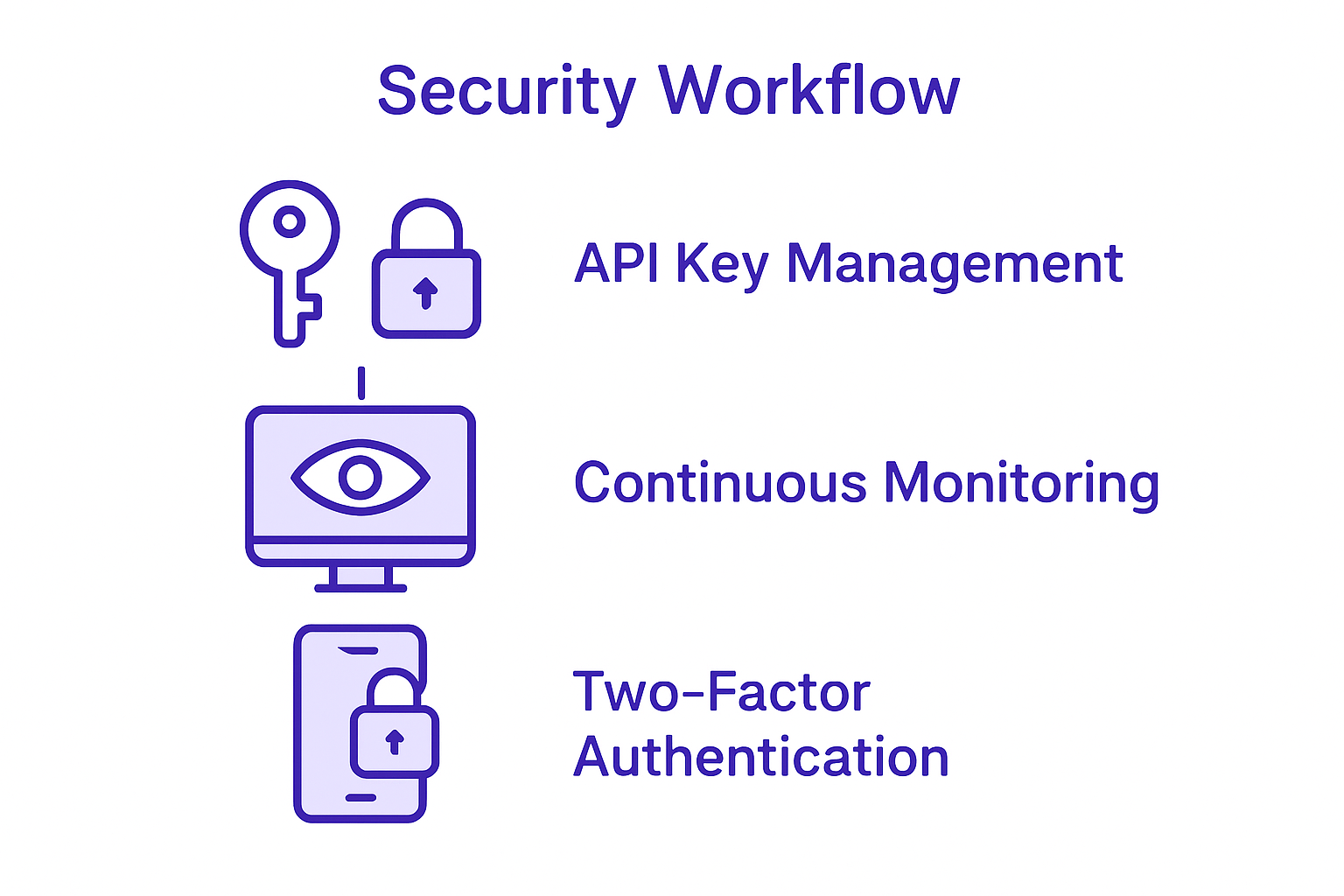
Successful trading bot security demands a proactive and holistic strategy that addresses potential risks across technical, operational, and human factors. Secure AI trading bot development highlights the necessity of implementing sophisticated security protocols that protect both technological infrastructure and sensitive financial data.
Key best practices for safe automated trading include:
- Comprehensive Risk Assessment: Regularly evaluate potential security vulnerabilities
- Limited API Permissions: Configure exchange API keys with minimal trading capabilities
- Multi-Factor Authentication: Implement robust verification mechanisms
- Encrypted Communication: Use advanced encryption for all system communications
- Regular Security Audits: Conduct systematic vulnerability assessments
- Isolated Trading Environments: Separate trading infrastructure from other network systems
- Continuous Monitoring: Implement real-time threat detection mechanisms
- Secure Credential Management: Use advanced password and key storage techniques
Ultimately, safe automated trading requires an adaptive and vigilant approach that anticipates emerging threats and continuously evolves security strategies. Cryptocurrency traders must develop a comprehensive understanding of technological risks, maintain robust defensive mechanisms, and remain proactive in protecting their digital assets and trading infrastructure.
Legal, Privacy, and Regulatory Compliance
Cryptocurrency trading bots operate within a complex legal landscape that demands rigorous adherence to evolving regulatory frameworks and data protection standards. Comprehensive online trading compliance research underscores the critical importance of understanding and implementing robust legal safeguards that protect both traders and their digital assets.
The regulatory environment for automated trading systems continues to develop rapidly, requiring traders to maintain exceptional awareness of jurisdictional requirements and privacy protection standards. Advanced data security regulations highlight the necessity of implementing comprehensive compliance strategies that address multiple layers of legal and ethical considerations in digital asset trading.
Key legal and regulatory compliance considerations include:
- Data Minimization: Collecting and storing only essential user information
- Transparent Privacy Policies: Clearly communicating data handling practices
- User Consent Management: Implementing robust consent mechanisms
- Cross-Border Compliance: Understanding international trading regulations
- KYC/AML Verification: Maintaining rigorous identity verification processes
- Secure Data Retention: Implementing time-limited data storage protocols
- User Rights Protection: Ensuring mechanisms for data access and deletion
- Audit Trail Maintenance: Documenting all trading and system interactions
Successful regulatory compliance demands a proactive and adaptive approach that anticipates changing legal landscapes. Cryptocurrency traders must develop comprehensive understanding of regulatory requirements, implement robust compliance frameworks, and remain vigilant in protecting both their financial interests and user privacy rights.
Secure Your Crypto Profits with Advanced Bot Protection
The challenges of safeguarding sensitive API keys and mitigating evolving cybersecurity threats in crypto trading bots can feel overwhelming. This article highlights crucial concerns like unauthorized access, encryption protocols, and regular security audits that every trader must address to protect their investments and data. The risk of exploitation through exposed API keys or algorithm manipulation makes a robust, multilayered security strategy indispensable.
At Darkbot.io, we understand these pain points firsthand. Our platform offers secure and seamless exchange integration via carefully managed API keys with restricted permissions. Experience peace of mind knowing your trading bots are backed by encrypted communications, continuous monitoring, and customizable security settings that align with the best practices for safe automated trading. Designed for traders at every level, our AI-driven solution simplifies complexity while protecting your portfolio from common vulnerabilities.

Take control of your trading security today with Darkbot.io. Discover how our advanced bot platform safeguards your assets while optimizing profits and streamlining portfolio management. Visit Darkbot.io now and empower your trading with confidence and cutting-edge protection.
Frequently Asked Questions
What are the key security measures for crypto trading bots?
Key security measures for crypto trading bots include encryption protocols, two-factor authentication, IP address whitelisting, limited API permission management, regular security audits, and real-time monitoring.
How can I protect my API keys when using a trading bot?
To protect your API keys, use read-only keys, restrict access to specific IP addresses, regularly rotate keys, minimize permissions, store keys securely with encryption, and implement two-factor authentication for access.
What are common threats to cryptocurrency trading bots?
Common threats to cryptocurrency trading bots include API key exploitation, man-in-the-middle attacks, social engineering, code injection, data leakage, and algorithm manipulation.
How can I ensure compliance with legal regulations when using a trading bot?
To ensure compliance, implement data minimization, maintain transparent privacy policies, manage user consent, adhere to KYC/AML regulations, secure data retention practices, and maintain an audit trail for all trading activities.
Recommended

Start trading on Darkbot with ease
Come and explore our crypto trading platform by connecting your free account!
Free plan available • No credit card required