Role of AI in Crypto: Transforming Trading Efficiency

More than 60 percent of traders in high-inflation regions are now adopting AI-driven strategies to outpace unpredictable markets and tighten risk control, a trend fueled by growing interest worldwide and among American crypto communities. As inflation erodes profits and human decision making struggles to keep up with market speed, automated tools powered by AI offer a powerful edge. This guide unpacks the key principles behind artificial intelligence in cryptocurrency, revealing practical ways to optimize returns while managing volatility.
Key Takeaways
| Point | Details |
|---|---|
| AI Enhances Trading Decisions | Artificial Intelligence significantly improves cryptocurrency trading by using advanced analytics and machine learning to make informed decisions rapidly. |
| Diverse AI Applications Exist | AI in cryptocurrency encompasses various applications, including predictive analytics, portfolio management, and risk assessment to optimize trading performance. |
| Risk Management is Crucial | Effective risk management through AI involves dynamic monitoring and rapid response to market changes, enhancing security against potential threats. |
| Compliance Challenges Persist | The deployment of AI in cryptocurrency trading faces regulatory challenges that necessitate adaptable systems capable of meeting diverse international compliance standards. |
AI in Cryptocurrency Explained: Core Principles
Artificial Intelligence is rapidly transforming cryptocurrency trading by introducing sophisticated analytical capabilities that surpass traditional human decision making. Advanced machine learning models are revolutionizing how traders understand and interact with digital asset markets, leveraging complex algorithms to process massive datasets and extract actionable insights.
The core principles of AI in cryptocurrency trading center around three fundamental strategies: predictive analysis, risk management, and automated execution. Machine learning techniques like Long Short-Term Memory networks (LSTMs) and Convolutional Neural Networks (CNNs) enable traders to develop nuanced models that can analyze historical price movements, market sentiment, and complex trading patterns with unprecedented accuracy. Systematic research demonstrates that these AI models can detect subtle market signals and anomalies that human traders might easily miss.
Key AI capabilities in cryptocurrency trading include real-time data processing, pattern recognition, and adaptive strategy development. Neural networks can simultaneously monitor multiple cryptocurrency exchanges, analyze global market trends, and execute trades with millisecond precision. These systems continuously learn and refine their algorithms, adjusting trading parameters based on ongoing performance metrics and evolving market conditions.
Expert Strategy Develop a hybrid approach that combines AI-driven insights with human strategic oversight to maximize trading performance and minimize potential algorithmic biases.
Types of AI Applications in Crypto Trading
Cryptocurrency trading has witnessed a significant transformation through diverse AI applications that enhance decision-making, risk management, and operational efficiency. Comprehensive research reveals multiple strategic domains where artificial intelligence is revolutionizing digital asset interactions across different functional areas.
AI applications in cryptocurrency trading can be categorized into several critical domains. Predictive analytics represent a primary application, where machine learning algorithms analyze historical market data to forecast potential price movements and market trends. Supervised and reinforcement learning models are particularly effective in generating probabilistic predictions about cryptocurrency price trajectories, helping traders make more informed investment decisions.
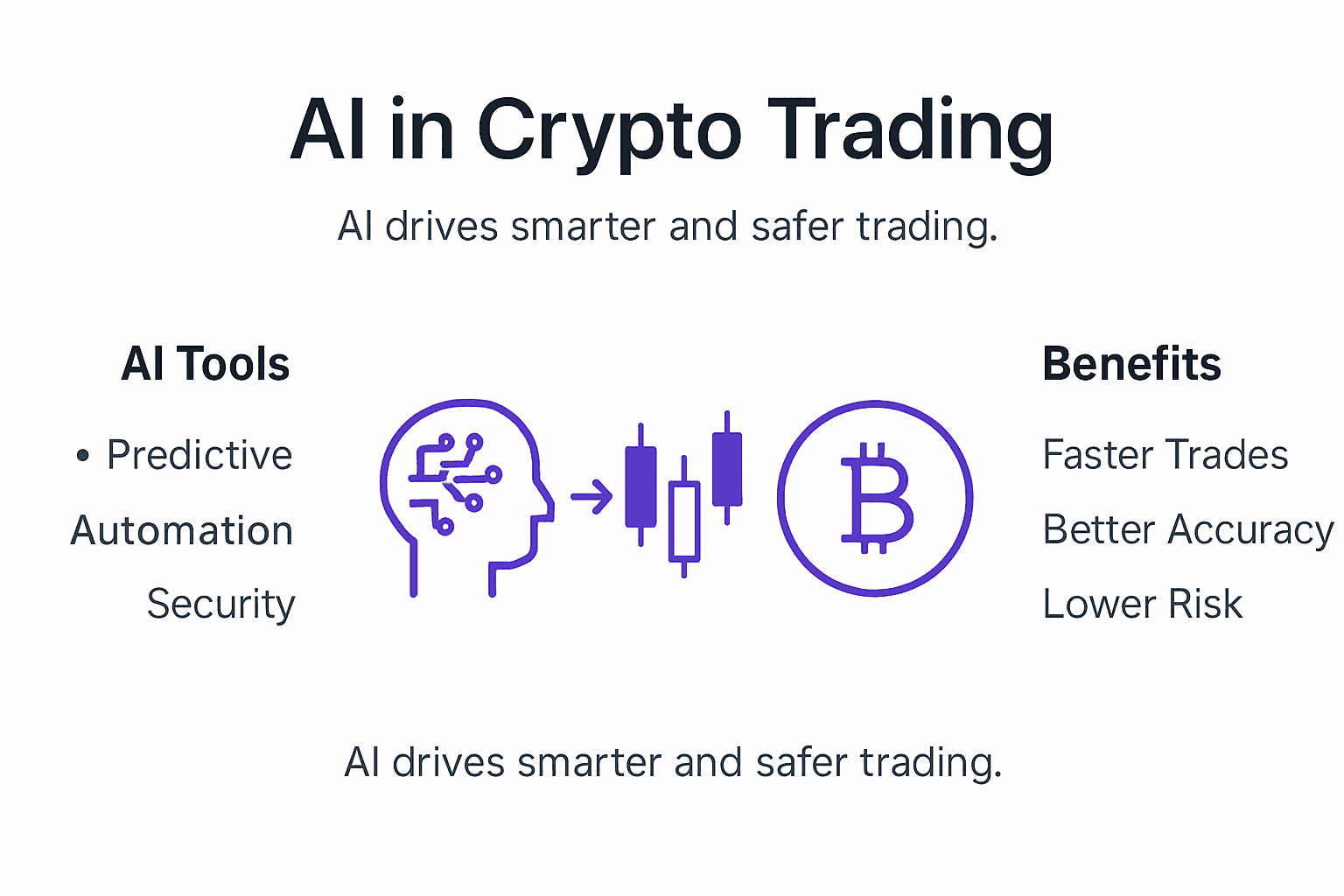
Beyond predictive capabilities, AI plays crucial roles in portfolio management, risk assessment, and automated trading execution. Advanced neural networks can simultaneously monitor multiple cryptocurrency exchanges, assess global market sentiments, and execute trades with millisecond precision. These intelligent systems continuously adapt their trading strategies based on real-time performance metrics, learning from each transaction to improve future decision-making processes. Additional AI applications include smart contract auditing, anomaly detection, and compliance monitoring across decentralized finance platforms.
Here’s a summary of key AI application domains in cryptocurrency trading and their unique business impacts:
| AI Application Domain | Core Function | Business Impact |
|---|---|---|
| Predictive Analytics | Market trend forecasting | Informs proactive investment decisions |
| Portfolio Management | Dynamic asset allocation | Optimizes risk-adjusted returns |
| Automated Trading Execution | Millisecond order placement | Maximizes efficiency, reduces delays |
| Smart Contract Auditing | Detects contract vulnerabilities | Enhances transaction security |
| Compliance Monitoring | Regulatory rule verification | Minimizes legal risk, ensures transparency |
Smart Strategy Implement a diversified AI trading approach that combines multiple machine learning techniques to create robust, adaptive trading algorithms that can navigate complex cryptocurrency market dynamics.
Automated Strategies and Real-Time Analysis
Automated trading strategies represent a sophisticated approach to cryptocurrency investment, leveraging advanced artificial intelligence to execute trades with unprecedented precision and efficiency. Innovative research demonstrates how machine learning algorithms can develop dynamic trading models that adapt rapidly to complex market conditions, moving far beyond traditional static investment approaches.
Real-time analysis has become a critical component of modern cryptocurrency trading strategies. Advanced AI systems continuously monitor multiple data streams, analyzing market sentiment, price movements, trading volumes, and global economic indicators simultaneously. Predictive analytics models enable traders to anticipate potential market shifts with remarkable accuracy, transforming how investment decisions are processed and executed.

The core strength of automated strategies lies in their ability to remove emotional decision making and implement systematic, rule-based trading protocols. These intelligent systems can execute trades within milliseconds, process vast amounts of historical and real-time data, and adjust trading parameters dynamically based on evolving market conditions. Key capabilities include instantaneous arbitrage detection, multi-exchange synchronization, risk management through automated stop-loss mechanisms, and portfolio rebalancing based on predefined mathematical models.
Smart Approach Develop a robust automated strategy by combining multiple machine learning techniques, implementing strict risk management protocols, and continuously backtesting and refining your trading algorithms.
Risk Management and Security Enhancements
Cryptocurrency trading demands sophisticated risk management strategies that go beyond traditional financial approaches. Advanced AI technologies are revolutionizing security protocols by implementing dynamic threat detection and proactive risk mitigation mechanisms that can adapt to the rapidly changing digital asset landscape.
Intelligent risk assessment involves comprehensive monitoring of multiple risk vectors simultaneously. AI-powered systems analyze trading patterns, market volatility, transaction histories, and potential security vulnerabilities with unprecedented precision. These advanced algorithms can detect anomalous behaviors, identify potential fraud attempts, and automatically implement protective measures such as transaction freezing, account restrictions, and real-time alerts before significant financial damage can occur.
The core components of AI-driven risk management include predictive threat modeling, automated compliance monitoring, and adaptive security protocols. Machine learning algorithms continuously evaluate historical data, current market conditions, and emerging risk patterns to develop robust defensive strategies. Key features include multi-factor authentication reinforcement, intelligent transaction screening, blockchain network anomaly detection, and automated regulatory compliance verification across different cryptocurrency exchanges and jurisdictional requirements.
Below is a quick comparison of traditional vs. AI-driven risk management strategies in crypto trading:
| Strategy Type | Data Analysis Approach | Reaction Speed | Adaptability |
|---|---|---|---|
| Traditional Risk Management | Manual pattern recognition | Minutes to hours | Static, infrequently updated |
| AI-Driven Risk Management | Automated multi-layer detection | Milliseconds | Learns and evolves continuously |
Smart Protection Implement a multilayered security approach that combines AI-powered threat detection, regular algorithm retraining, and continuous monitoring to stay ahead of evolving cybersecurity challenges in cryptocurrency trading.
Challenges, Limitations, and Compliance Factors
AI implementation in cryptocurrency trading presents a complex landscape of technical and regulatory challenges that require nuanced understanding and strategic navigation. Comprehensive research reveals critical limitations in current AI models, highlighting significant obstacles in developing robust, reliable trading algorithms that can consistently perform across volatile digital asset markets.
Technical constraints represent a primary challenge in AI cryptocurrency applications. Machine learning models frequently encounter issues like data overfitting, where algorithms become excessively tailored to historical data and struggle to generalize across changing market conditions. Advanced AI systems must continuously adapt their predictive models, addressing inherent limitations such as limited training data, high market volatility, and the rapid evolution of cryptocurrency ecosystems. Global regulatory frameworks further complicate AI deployment, requiring sophisticated approaches to ensure compliance across diverse international legal environments.
Complex compliance factors demand sophisticated governance strategies that balance technological innovation with regulatory requirements. Key challenges include maintaining transparent algorithmic decision making, protecting user privacy, ensuring fair trading practices, and implementing robust security protocols. Cryptocurrency platforms must develop AI systems capable of adapting to evolving regulatory landscapes, which often vary dramatically between different national and regional jurisdictions. This requires developing flexible AI architectures that can dynamically adjust to changing legal standards while maintaining core trading performance and ethical operational standards.
Strategic Insight Develop AI trading systems with modular compliance frameworks that can be quickly reconfigured to meet emerging regulatory requirements across different international markets.
Harness AI to Boost Your Cryptocurrency Trading Efficiency
The article highlights the growing challenges of managing complex cryptocurrency markets, from swiftly adapting automated strategies to mitigating risks with real-time analysis. If navigating volatile price movements and executing trades within milliseconds feels overwhelming, Darkbot.io offers a trusted solution tailored to these exact demands. By integrating advanced AI and machine learning, Darkbot.io empowers traders to automate strategy execution, perform dynamic portfolio rebalancing, and optimize risk management—transforming how you engage with crypto trading.
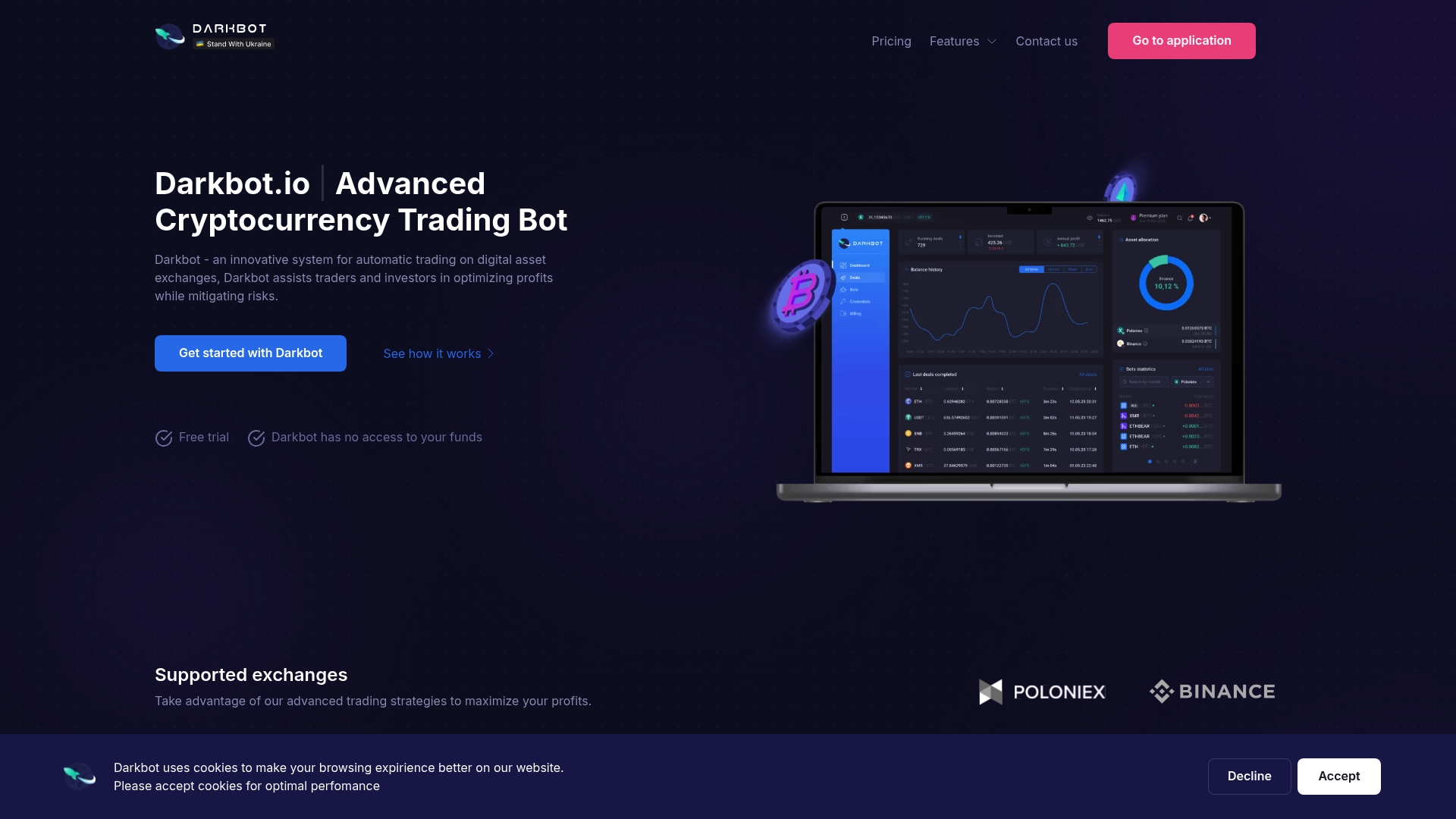
Take control of your crypto investments now by visiting Darkbot.io and discover how our platform’s seamless exchange integration and customizable trading bots simplify sophisticated AI-driven approaches. Unlock the potential of automated trading with features designed for both beginners and seasoned investors. Explore the power of automated trading strategies that adapt in real time and enhance your trading efficiency today.
Frequently Asked Questions
What is the role of AI in cryptocurrency trading?
AI in cryptocurrency trading enhances decision-making through predictive analytics, automated execution, and risk management to provide efficiency and accuracy in trading strategies.
How does predictive analytics work in crypto trading with AI?
Predictive analytics uses machine learning algorithms to analyze historical market data, allowing traders to forecast potential price movements and market trends for better investment decisions.
What are the advantages of automated trading strategies in crypto?
Automated trading strategies execute trades with millisecond precision, reduce emotional decision-making, and continuously adapt to market conditions, maximizing trading efficiency and minimizing delays.
What challenges does AI face in cryptocurrency trading?
AI in cryptocurrency trading faces challenges such as technical constraints like data overfitting, high market volatility, and complex compliance factors related to diverse regulatory environments.
Recommended
- Role of AI in Cryptocurrency Trading Success
- Role of AI in Cryptocurrency – Smarter, Safer Trading
- Why Use AI in Trading: Maximizing Crypto Performance
- Role of AI in Crypto Trading: Boosting Profits and Managing Risks
- How AI Chatbots Improve Customer Support Response Times — ChatPirate
- Inteligencia Artificial en e-commerce: Más eficiencia y ventas - Bit2Brain

Start trading on Darkbot with ease
Come and explore our crypto trading platform by connecting your free account!
Free plan available • No credit card required