Step by Step Trading Strategy Setup for Automation
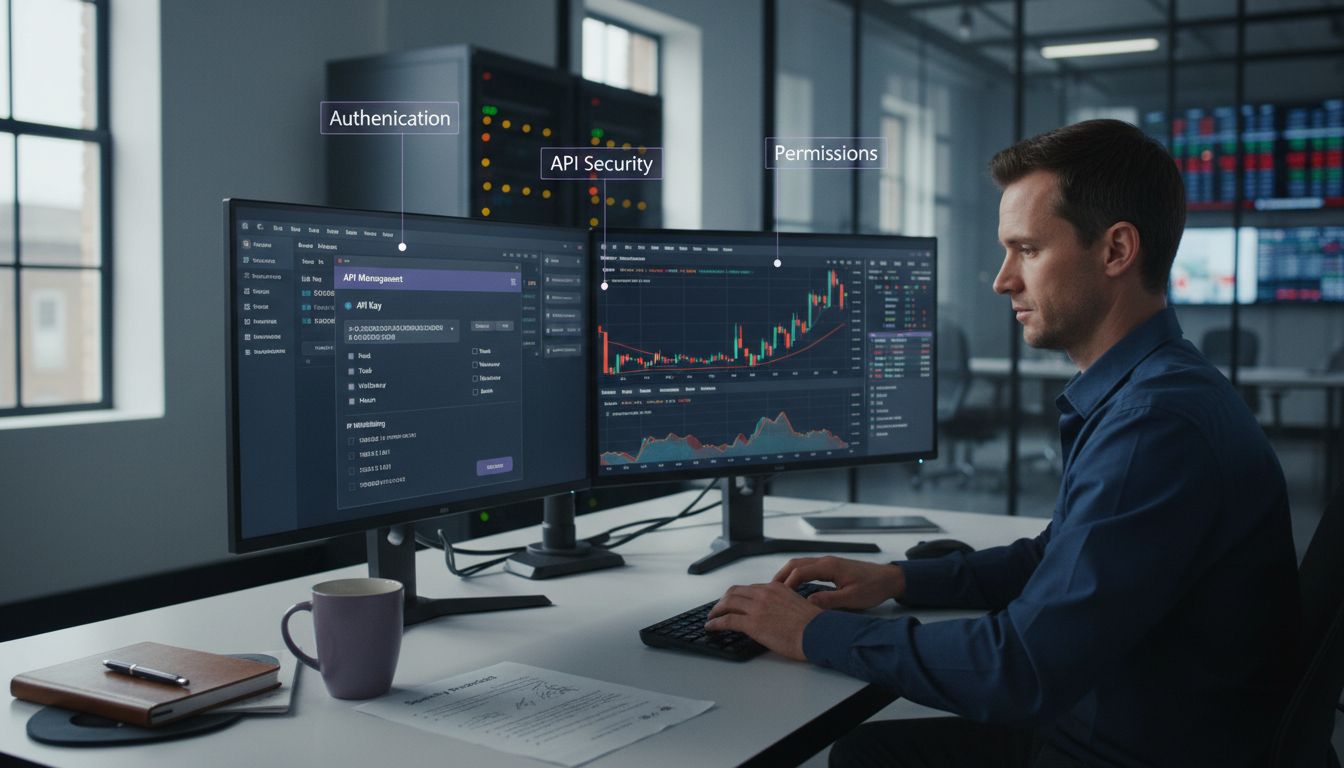
Over $20 billion in daily trades flow through automated cryptocurrency systems, and many american investors want a slice of this high-speed action. Setting up reliable automation is more than just plugging in software. Every step, from linking exchange accounts securely to customizing trade bots, plays a big role in protecting your money. This guide breaks down the essential actions to help american traders automate with confidence, better security, and smarter results.
Table of Contents
- Step 1: Connect Exchange Accounts Securely
- Step 2: Customize Trading Strategy Parameters
- Step 3: Enable Automated Execution Settings
- Step 4: Test Strategy In Simulation Mode
- Step 5: Monitor Performance And Adjust Settings
Quick Summary
| Key Insight | Explanation |
|---|---|
| 1. Securely connect exchange accounts | Safely integrate trading exchanges by setting unique API keys with limited permissions to ensure robust security protocols. |
| 2. Customize trading strategy parameters | Define specific parameters like entry triggers, position sizing, and risk percentages to align trading strategies with personal goals. |
| 3. Enable automated execution settings | Set up trade execution parameters such as order types and risk management features to ensure reliable and efficient trade automation. |
| 4. Test strategy in simulation mode | Use historical and current market data to validate your trading strategy through simulations, helping to identify potential performance issues. |
| 5. Regularly monitor and adjust performance | Continuously analyze performance metrics to optimize your trading strategy, making incremental adjustments based on market conditions. |
Step 1: Connect Exchange Accounts Securely
Connecting your trading exchanges securely is a critical first step in automating your cryptocurrency trading strategy. In this section, you will learn how to safely integrate multiple exchange accounts with your trading platform while implementing robust security protocols.
According to the Financial Industry Association’s best practices for automated trading, you need to establish pre trade risk controls when setting up exchange connections FIA. This means carefully configuring your API keys with specific permissions and understanding the security limitations of each exchange platform. Start by logging into your preferred cryptocurrency exchange and navigate to the API management section. Here, you will generate a new API key specifically designed for trading bot access.
When creating your API key, follow these critical security guidelines:
- Generate a unique API key for each trading bot or strategy
- Disable withdrawal permissions to prevent unauthorized fund transfers
- Use IP address whitelisting if the exchange supports this feature
- Create a separate API key with read-only permissions for monitoring
As Trading Technologies recommends, carefully review and assign your account connection settings to ensure secure trading operations. Double-check that you are not accidentally granting overly broad permissions that could compromise your trading account.
After generating your API keys, you will typically copy and paste them into your automated trading platform. Most platforms will perform an immediate validation check to confirm the key’s authenticity and permitted access levels. If the connection fails, review your API key settings and regenerate them following the platform’s specific guidelines.
Warning: Never share your API keys publicly or store them in unsecured locations. Treat these credentials like you would your most sensitive financial passwords.
Step 2: Customize Trading Strategy Parameters
Customizing your trading strategy parameters is where the real magic of automated trading happens. You will transform generic trading guidelines into a personalized approach that matches your risk tolerance, investment goals, and market understanding.
According to the Financial Industry Association’s guidelines, establishing pre-trade controls is fundamental to managing risk effectively FIA. This means configuring critical parameters like maximum order size, price tolerance, and trading frequency. Start by identifying your primary trading objectives whether you are seeking consistent small gains or targeting more aggressive growth opportunities.
Key strategy parameters you will want to customize include:
- Entry and exit point triggers
- Position sizing rules
- Stop loss and take profit percentages
- Trading pair selection criteria
- Risk percentage per trade
- Timeframe for trade execution
Trading Technologies recommends carefully configuring connection settings to optimize your strategy’s performance. This involves understanding how different parameters interact and testing them through backtesting or paper trading before deploying real capital.
Begin by setting conservative parameters and gradually adjust based on performance metrics. Most trading platforms offer simulation modes that allow you to test strategies without financial risk. Pay close attention to your win rate, average profit per trade, and maximum drawdown when fine-tuning your approach.
Warning: Avoid the temptation to over-optimize. Complex strategies with too many parameters often perform worse than simpler, more robust approaches. Your goal is consistent, manageable returns.

Step 3: Enable Automated Execution Settings
Enabling automated execution settings transforms your trading strategy from a theoretical plan into a live operational system. In this critical step, you will configure the precise mechanisms that will automatically execute trades on your behalf across multiple cryptocurrency exchanges.
According to the Financial Industry Association’s best practices, implementing robust automated execution settings requires careful configuration of system safeguards FIA. This means establishing key risk management features like kill switches that can immediately halt trading activity if unexpected market conditions arise. You want to create a system that can protect your investments while maintaining the flexibility to capitalize on market opportunities.
Key automated execution settings to configure include:
- Trade execution frequency
- Market order vs limit order preferences
- Minimum and maximum trade size
- Automatic stop loss triggers
- Slippage tolerance levels
- Maximum daily trading volume
Trading Technologies recommends carefully routing your order configurations through a secure gateway to ensure efficient and reliable trade execution. Most advanced trading platforms will provide granular controls that allow you to fine-tune how and when trades are executed.
Start by setting conservative execution parameters that align with your risk tolerance. Most platforms offer simulation or paper trading modes where you can test your settings without risking real capital. Pay close attention to how your automated system performs under different market conditions and be prepared to make incremental adjustments.
Warning: Always maintain a manual override capability. While automation is powerful, unexpected market events can require immediate human intervention. Never completely surrender control of your trading strategy to an automated system.
Step 4: Test Strategy in Simulation Mode
Testing your trading strategy in simulation mode is your critical checkpoint before risking real capital. This step allows you to validate your automated trading approach using historical market data and real market conditions without financial exposure.
According to the Financial Industry Association’s guidelines, strategy simulation is essential for ensuring system reliability and validating risk controls FIA. You will essentially create a virtual trading environment that mimics real market dynamics, enabling you to stress test your strategy across different market scenarios and timeframes.
Key aspects to evaluate during simulation testing include:
- Total return percentage
- Maximum drawdown
- Win rate
- Risk adjusted returns
- Average trade duration
- Performance across different market conditions
Trading Technologies recommends leveraging simulation environments that provide granular market condition replication. Select a testing period that covers various market trends including bullish, bearish, and sideways movements to comprehensively assess your strategy’s robustness.
Start by running multiple simulation scenarios with different initial parameters. Most platforms will generate detailed performance reports showing key metrics that help you understand how your strategy might perform in live trading. Pay special attention to consistent performance rather than occasional high returns.
Warning: Simulation results do not guarantee future performance. Market conditions constantly evolve, so treat simulation data as a helpful guide rather than a definitive prediction of future trading success.
Step 5: Monitor Performance and Adjust Settings
Monitoring and adjusting your automated trading strategy is an ongoing process that transforms your initial configuration into a dynamic and responsive trading system. This critical step ensures your strategy remains effective as market conditions continuously evolve and change.
According to the Financial Industry Association’s guidelines, continuous performance monitoring is essential for maintaining compliance with risk controls and optimizing trading outcomes FIA. You will need to develop a systematic approach to tracking your strategy performance, analyzing key metrics, and making informed adjustments that align with your investment goals.
Critical performance metrics to track include:
- Net profit percentage
- Sharpe ratio
- Total number of trades
- Average trade duration
- Profit factor
- Drawdown percentage
- Win rate versus loss rate
- Risk to reward ratio
Trading Technologies recommends utilizing real-time monitoring tools that provide granular insights into your trading strategy. Most advanced platforms offer comprehensive dashboards that visualize performance metrics, allowing you to quickly identify trends and potential areas for optimization.
Begin by establishing a regular review schedule where you analyze your strategy performance weekly or monthly. Look for consistent patterns rather than isolated instances of high performance. Be prepared to make incremental adjustments to your parameters such as stop loss levels, position sizing, or trade frequency based on your findings.
Warning: Avoid overreacting to short-term fluctuations. Successful trading strategies require patience and a systematic approach to performance evaluation. Small consistent improvements are more valuable than dramatic and potentially risky changes.
Take Control of Your Automated Trading Journey Today
Setting up an automated trading strategy can feel overwhelming when faced with securing exchange connections, customizing parameters, and testing execution settings. You want to automate confidently while protecting your investments from risks like unauthorized access or improper trade execution. Darkbot.io understands these challenges and delivers a comprehensive solution that simplifies each step with advanced features such as seamless API integration, AI-driven strategy customization, and real-time risk management tools. This platform empowers you to fine-tune your approach and stay agile in today’s volatile crypto markets.
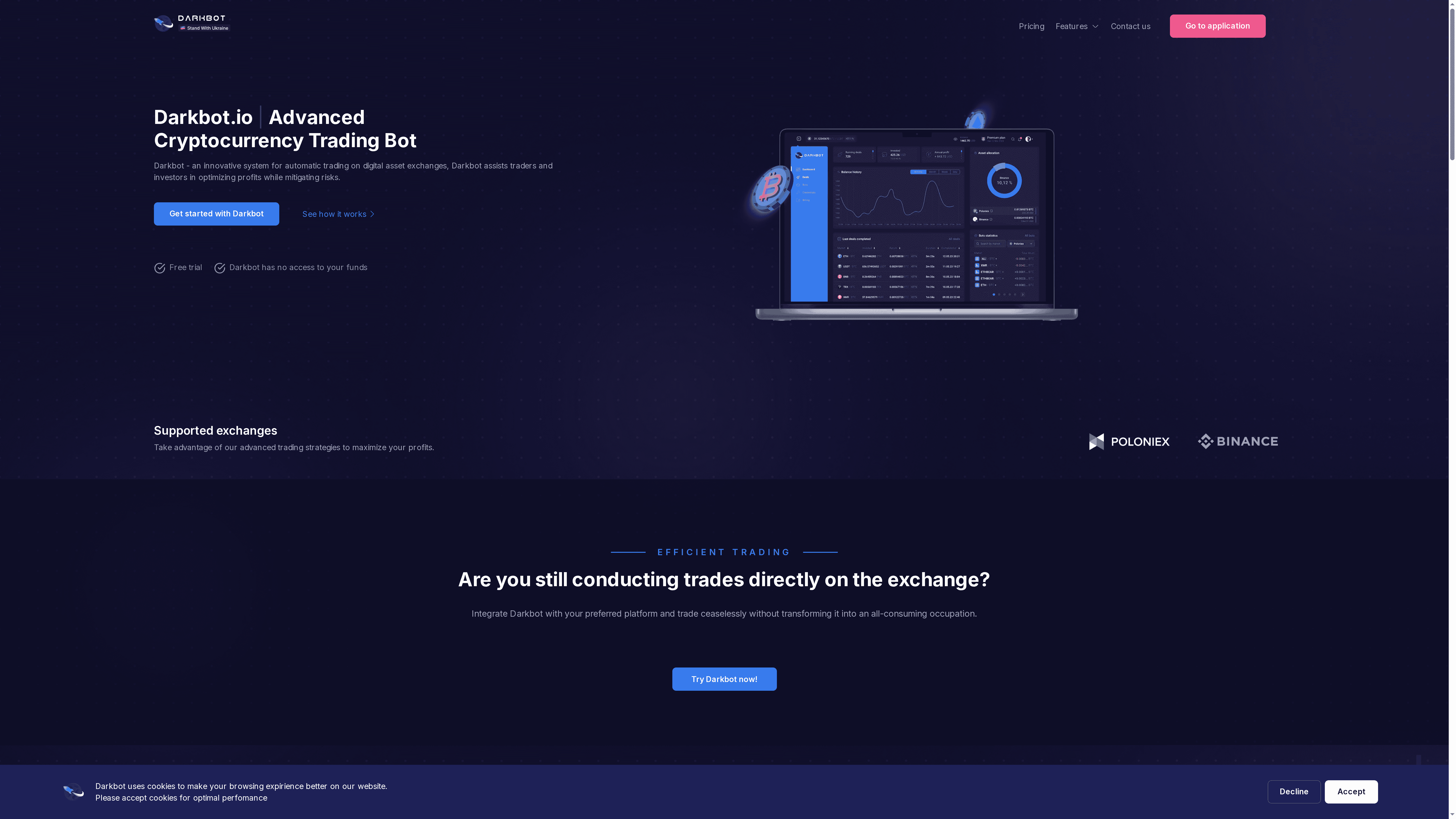
Unlock the power of automation backed by security and intelligence. Join Darkbot.io to experience effortless exchange connection setup, personalized strategy management, and live performance monitoring with intuitive controls. Start harnessing automated trading with confidence now by visiting Darkbot.io and explore how our platform supports every step of your trading automation journey. Take action today and transform your trading strategy into a smart, dependable system that works for you.
Frequently Asked Questions
How do I securely connect my exchange accounts for automated trading?
To securely connect your exchange accounts, generate unique API keys for each trading bot or strategy. Disable withdrawal permissions and enable IP address whitelisting if available.
What parameters should I customize for my trading strategy?
You should customize parameters like entry and exit point triggers, position sizing, stop loss percentages, and trading frequency. Start by identifying your trading goals and adjusting parameters based on your risk tolerance and market behavior.
How can I test my automated trading strategy without risking real money?
You can test your automated trading strategy by using simulation modes offered by trading platforms. Run multiple scenarios with different parameters to evaluate performance metrics like total return percentage and maximum drawdown.
What key performance metrics should I monitor after implementing my automated trading strategy?
Track metrics such as net profit percentage, win rate versus loss rate, and average trade duration. Establish a regular review schedule to analyze these metrics weekly or monthly to optimize performance.
What should I do if my automated strategy is not performing well?
If your automated strategy underperforms, be prepared to make incremental adjustments to parameters like stop loss levels and trade frequency. Monitor performance trends closely and adjust based on consistent patterns rather than short-term fluctuations.

Start trading on Darkbot with ease
Come and explore our crypto trading platform by connecting your free account!
Free plan available • No credit card required