What Is Algorithmic Trading in 2025: Impact on Crypto
Volatile price swings and constant market shifts leave even experienced cryptocurrency traders searching for smarter, faster ways to manage risk and spot opportunity. Algorithmic trading has emerged as a powerful solution, blending advanced computational algorithms with artificial intelligence to automate strategies and eliminate emotional errors. As global markets evolve, traders benefit from intelligent, responsive systems that maximize efficiency and adapt to real-time challenges, offering new ways to control risk and refine decision-making.
Key Takeaways
| Point | Details |
|---|---|
| Algorithmic Trading Efficiency | Algorithmic trading automates strategies and processes trades at high speeds, reducing emotional biases. |
| AI and Machine Learning Integration | Advanced technologies enable dynamic strategy optimization and real-time market analysis. |
| Diverse Strategy Types | Various strategies like trend-following and statistical arbitrage cater to different market conditions and user objectives. |
| Regulatory Compliance Importance | Adhering to emerging regulations is essential for maintaining market integrity and managing risks in algorithmic trading. |
Algorithmic Trading Defined and Core Concepts
Algorithmic trading represents a sophisticated approach to financial transactions where computational systems automatically execute trading strategies based on predefined rules and mathematical models. These advanced systems leverage technology to make split-second decisions across global financial markets.

At its core, algorithmic trading relies on complex mathematical formulas and statistical models to identify potential trading opportunities. Advanced computational algorithms enable traders to execute complex strategies with remarkable speed and precision, far surpassing traditional manual trading methods.
Key characteristics of algorithmic trading include:
- Automated execution of trading strategies
- High-speed transaction processing
- Elimination of emotional decision-making
- Ability to analyze multiple market indicators simultaneously
- Consistent application of predefined trading rules
The evolution of algorithmic trading has been dramatically influenced by technological advancements. Machine learning and artificial intelligence now enable these systems to adapt and refine strategies dynamically, transforming them from rigid rule-based mechanisms into intelligent, responsive trading platforms.
Emerging trends suggest that algorithmic trading will continue to become more sophisticated, incorporating:
- Advanced predictive analytics
- Real-time sentiment analysis
- Complex systems theory approaches
- Non-linear adaptive modeling techniques
Algorithmic trading represents a paradigm shift from traditional manual trading, emphasizing data-driven, systematic decision-making processes.
Pro tip: When exploring algorithmic trading, start by understanding your risk tolerance and testing strategies with small capital allocations to minimize potential losses.
Main Types of Algorithmic Trading Strategies
Algorithmic trading strategies have evolved dramatically, offering sophisticated approaches to automated financial transactions across global markets. These strategies leverage advanced computational techniques to execute trades with precision and speed that human traders cannot match.
Core algorithmic trading strategies encompass several key methodologies designed to capitalize on market inefficiencies and generate consistent returns. These include trend-following, mean reversion, statistical arbitrage, and machine learning-driven approaches that dynamically adapt to changing market conditions.
Key algorithmic trading strategies in 2025 include:
- Trend-Following Strategies: Identifying and trading in the direction of established market momentum
- Mean Reversion Strategies: Capitalizing on price movements that tend to return to historical average levels
- Statistical Arbitrage: Exploiting pricing inefficiencies across different market instruments
- Machine Learning Strategies: Using advanced AI to predict and execute trades based on complex data patterns
- High-Frequency Trading: Executing numerous trades at extremely rapid speeds
Each strategy comes with unique characteristics and risk profiles. Trend-following algorithms analyze historical price movements and market trends to predict potential future directions, while mean reversion strategies assume that prices will eventually return to their historical average.
Here’s how the main algorithmic trading strategies compare in terms of their focus, adaptability, and typical users:
| Strategy Type | Primary Focus | Level of Adaptability | Common Users |
|---|---|---|---|
| Trend-Following | Market momentum | Moderate | Hedge funds, asset managers |
| Mean Reversion | Price normalization | Low | Quantitative analysts |
| Statistical Arbitrage | Price inefficiencies | High | Proprietary trading firms |
| Machine Learning | Data-driven prediction | Very High | Tech-driven investors |
| High-Frequency Trading | Speed-based execution | High | Institutional traders |
Successful algorithmic trading requires continuous adaptation, robust data infrastructure, and sophisticated risk management techniques.
Advanced strategies now incorporate multiple sophisticated approaches:
- Real-time sentiment analysis
- Complex predictive modeling
- Multi-factor risk assessment
- Dynamic strategy recalibration
Pro tip: Always backtest your algorithmic trading strategies using historical data and start with small capital allocations to validate performance before full implementation.
How AI and Automation Shape Trading in 2025
Artificial Intelligence has fundamentally transformed trading strategies, creating unprecedented opportunities for sophisticated market analysis and automated decision-making. The integration of AI and machine learning technologies has revolutionized how financial markets operate, particularly in cryptocurrency and global trading environments.
AI-driven trading algorithms now enable traders to process massive data streams with remarkable speed and precision, identifying market patterns that human traders might easily miss. These advanced systems continuously analyze complex market signals, sentiment indicators, and historical trends to generate more intelligent trading strategies.
Key characteristics of AI-powered trading include:
- Instantaneous data processing across multiple markets
- Real-time sentiment analysis
- Dynamic risk management
- Adaptive strategy optimization
- Elimination of emotional trading decisions
Machine learning models have become increasingly sophisticated, allowing trading systems to continuously learn and improve their predictive capabilities. These systems can now integrate multiple data sources, including social media sentiment, economic indicators, and historical price movements, to make more nuanced trading decisions.
The global landscape of AI trading demonstrates significant regional developments:
The following table summarizes how AI and automation are shaping trading in different global regions:
| Region | Key Innovation Focus | Market Adoption Level |
|---|---|---|
| North America | Advanced AI frameworks | Leading |
| Europe | Regulatory integration | High |
| Asia | Machine learning applications | Rapidly increasing |
| Cryptocurrency | Adaptive algorithmic systems | Highly innovative |
- North American markets leading technological innovation
- European exchanges implementing advanced algorithmic frameworks
- Asian markets rapidly adopting machine learning strategies
- Cryptocurrency platforms developing most adaptive AI systems
AI in trading represents a paradigm shift from reactive to predictive financial decision-making, transforming how markets operate and generate value.
Pro tip: Develop a comprehensive understanding of machine learning principles and continuously validate your AI trading models against diverse market scenarios to ensure robust performance.
Key Benefits and Real-World Crypto Use Cases
Algorithmic trading has transformed cryptocurrency markets, providing sophisticated investors with powerful tools to navigate complex digital asset landscapes. These advanced systems offer unprecedented capabilities for managing and optimizing trading strategies across multiple cryptocurrency platforms.
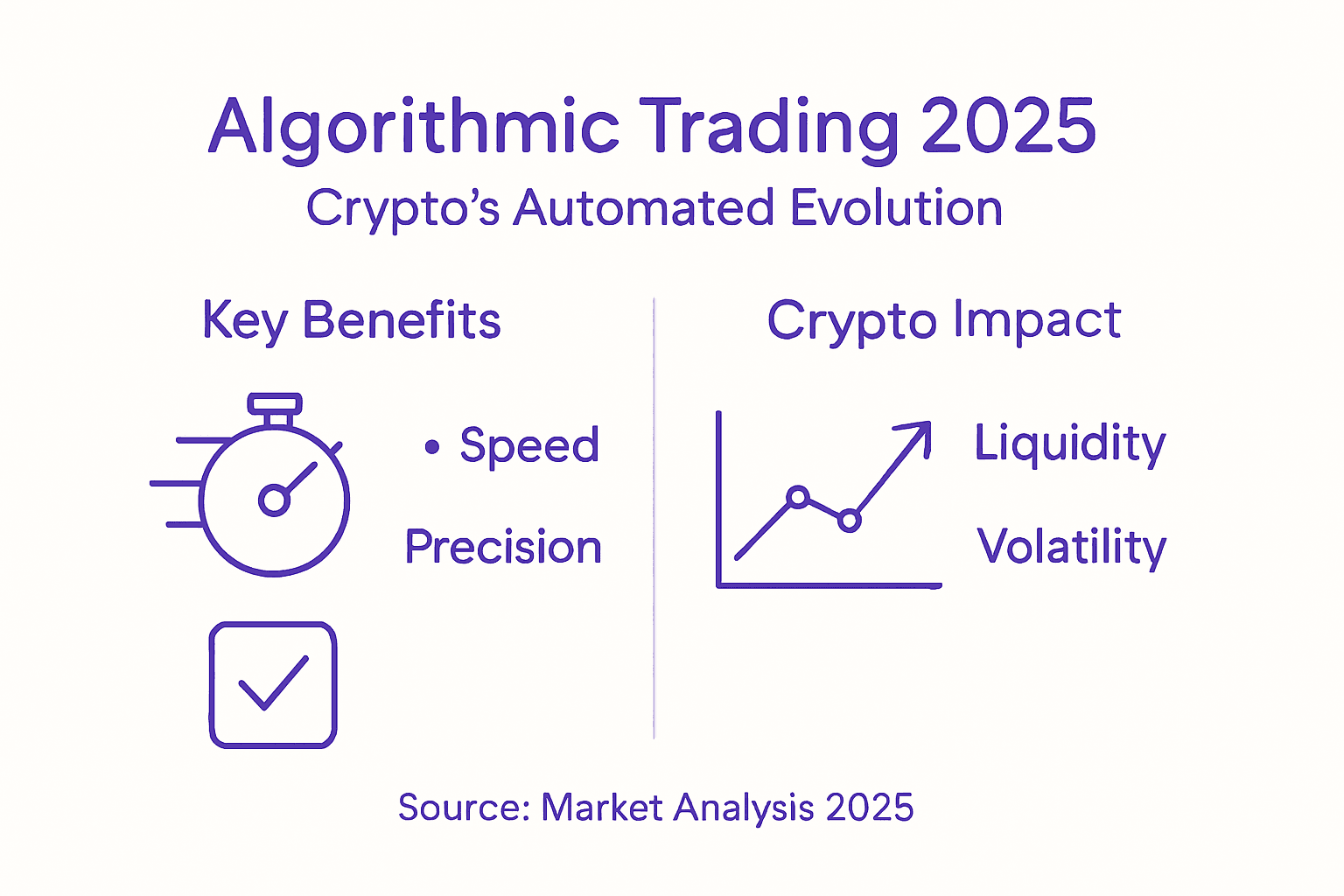
Algorithmic trading bots enable continuous market engagement through 24/7 operation, rapid trade execution, and data-driven decision-making mechanisms. These intelligent systems can process massive amounts of market data instantaneously, identifying opportunities that human traders might overlook.
Key benefits of algorithmic crypto trading include:
- Elimination of emotional trading decisions
- Consistent strategy implementation
- Reduced human error
- Faster transaction processing
- Multi-exchange portfolio management
- Advanced risk control mechanisms
Emerging use cases in cryptocurrency markets demonstrate the transformative potential of algorithmic trading. These innovative approaches are reshaping how digital assets are traded, managed, and optimized across complex financial ecosystems.
Significant real-world applications encompass:
- Decentralized finance (DeFi) liquidity management
- Cross-blockchain asset rebalancing
- Autonomous trading agent deployment
- Sentiment-driven investment strategies
- Complex risk mitigation frameworks
Algorithmic trading represents a fundamental shift from traditional reactive trading to proactive, data-driven financial management.
Pro tip: Develop a comprehensive understanding of your chosen algorithmic trading platform’s specific features and continuously validate performance through systematic backtesting and controlled risk management.
Risks, Regulatory Trends, and Compliance
Algorithmic trading in cryptocurrency markets faces increasingly complex regulatory landscapes that demand sophisticated governance and robust risk management frameworks. Financial authorities worldwide are developing comprehensive guidelines to address the unique challenges posed by automated trading technologies.
Regulatory compliance challenges remain a critical concern for algorithmic trading platforms, requiring extensive documentation, technical expertise, and proactive risk mitigation strategies. Emerging regulations focus on ensuring market integrity, preventing potential manipulation, and protecting investor interests.
Key regulatory risks and compliance considerations include:
- Mandatory algorithmic strategy documentation
- Real-time trading surveillance requirements
- Comprehensive risk assessment protocols
- Technical expertise validation
- Transparent governance frameworks
- Cross-border regulatory harmonization
Emerging regulatory trends demonstrate a sophisticated approach to managing algorithmic trading risks. Financial authorities are developing nuanced frameworks that balance innovation with market stability, recognizing the transformative potential of automated trading systems.
Significant compliance focus areas encompass:
- Advanced cybersecurity protocols
- Comprehensive algorithmic transparency
- Continuous performance monitoring
- Systematic risk management
- Ethical trading practice enforcement
Regulatory frameworks must evolve alongside technological innovations to maintain market integrity and protect investor interests.
Pro tip: Develop a comprehensive compliance strategy that anticipates regulatory changes and maintains robust documentation of your algorithmic trading methodologies.
Unlock the Power of Algorithmic Crypto Trading with Darkbot.io
The challenges highlighted in “What Is Algorithmic Trading in 2025: Impact on Crypto” show how important it is to use automated systems that combine AI and machine learning for real-time strategy optimization and risk management. Traders struggle with fast market changes, emotional decision-making, and managing complex portfolios across multiple exchanges. Darkbot.io addresses these pain points by offering an advanced automated cryptocurrency trading bot platform that integrates seamlessly with multiple digital asset exchanges via API Keys. With customizable strategies, portfolio management tools, and dynamic rebalancing, users can eliminate emotional trading and harness consistent, data-driven execution.
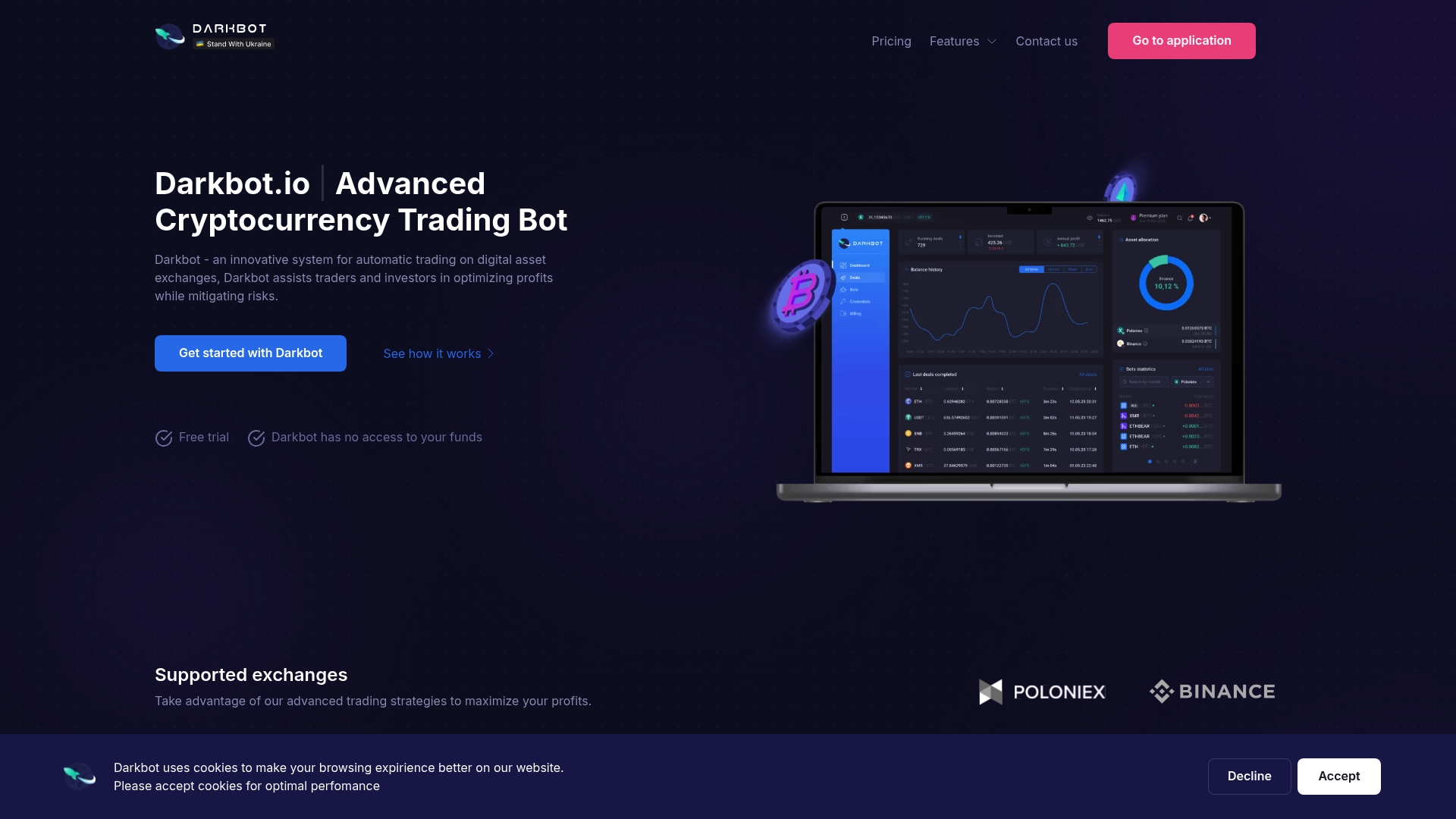
Take control of volatile markets today by exploring how your trading approach can evolve with AI-driven automation at Darkbot.io. Start with our intuitive platform designed for both novices and experts who want dependable, secure, and sophisticated trading tools. Visit Darkbot.io to learn more, discover advanced strategy customization, and experience portfolio management that adapts to market realities with precision.
Frequently Asked Questions
What is algorithmic trading in the context of cryptocurrency?
Algorithmic trading in cryptocurrency refers to the use of automated systems to execute trading strategies based on predefined rules and mathematical models. These systems analyze market data and make trading decisions at speeds unattainable by human traders, providing efficient management of digital assets.
What are the key benefits of using algorithmic trading in crypto markets?
The main benefits of algorithmic trading in crypto include the elimination of emotional trading decisions, consistent implementation of strategies, reduced human error, faster transaction processing, and advanced risk control mechanisms, allowing traders to optimize their investments effectively.
How does AI influence algorithmic trading in 2025?
AI significantly enhances algorithmic trading by enabling systems to analyze massive streams of data in real-time, identify market patterns, and optimize trading strategies dynamically. Machine learning allows these algorithms to adapt and improve based on ongoing performance and market conditions.
What are the risks associated with algorithmic trading in cryptocurrency?
The primary risks include regulatory compliance challenges, potential for market manipulation, technical failures of trading systems, and cybersecurity threats. Given the evolving regulatory landscape, robust risk management frameworks are essential to mitigate these risks.
Recommended
- Algorithmic Trading: Automating Crypto for Profit and Control
- Cryptocurrency Trading Strategies 2025: AI’s Role in Volatile Markets
- Trading Bot Algorithms: Optimizing Crypto Profits
- Cryptocurrency Trading Algorithms: Smarter Profits, Fewer Risks
- SEO Insights and Strategies for 2025: Ads Daddy.
- Swiss Banking for Crypto: Legal and Business Impact
- Business Growth in 2025: The Essential Guide - Nomad Excel - Your Entrepreneurial Adventure Starts Here

Start trading on Darkbot with ease
Come and explore our crypto trading platform by connecting your free account!
Free plan available • No credit card required