Why Use AI in Trading: Maximizing Crypto Performance

Nearly half of all American investors now consider artificial intelligence a crucial tool for staying competitive in modern markets. With trading systems processing data at speeds no human could match, the gap between traditional methods and automated strategies continues to widen. Understanding the principles behind AI-powered trading opens the door to faster decisions, improved risk management, and opportunities that were once impossible without advanced technology.
Table of Contents
- AI In Trading: Definition And Key Concepts
- Types Of AI Strategies In Crypto Trading
- How AI Automates And Optimizes Trades
- Benefits Of AI For Risk And Profit Management
- Risks, Limitations, And Security Concerns
- Comparing AI Trading With Manual Approaches
Key Takeaways
| Point | Details |
|---|---|
| AI Trading Efficiency | AI trading systems execute trades with speed and precision, analyzing vast datasets beyond human capabilities. |
| Emotional Decision-Making | AI removes emotional biases from trading, ensuring data-driven and objective investment decisions. |
| Risk Management | AI enhances risk management by dynamically adjusting strategies and optimizing portfolios in real time. |
| Hybrid Approach | The future of trading lies in integrating AI technology with human judgment for optimal decision-making. |
AI in Trading: Definition and Key Concepts
Artificial Intelligence (AI) trading represents a sophisticated technological approach to financial markets that transcends traditional trading methods. By leveraging advanced computational techniques, AI trading systems can analyze massive datasets, recognize intricate market patterns, and execute trades with unprecedented speed and precision. Algorithmic trading involves executing orders using automated, pre-programmed trading instructions that consider complex variables like time, price, and market volume.
Unlike conventional trading strategies, AI trading systems utilize machine learning and deep learning models that continuously adapt and improve. These intelligent algorithms can process exponentially more information than human traders, identifying subtle market signals and potential opportunities across multiple asset classes simultaneously. AI trading employs models that learn from data, analyzing extensive datasets to identify patterns and generate trading signals, which allows for more dynamic and responsive investment strategies.
Key components of AI trading include:
- Machine Learning Algorithms: Adaptive models that improve performance through continuous data analysis
- Predictive Analytics: Advanced statistical techniques for forecasting market movements
- Real-Time Data Processing: Instantaneous evaluation of market conditions and potential trade opportunities
- Risk Management: Automated systems for monitoring and mitigating potential investment risks
The fundamental advantage of AI trading lies in its ability to remove emotional decision-making from investment processes. By relying on data-driven insights and sophisticated computational models, these systems can execute trades with a level of consistency and objectivity that traditional human traders cannot consistently achieve. This technological approach transforms trading from a reactive, emotion-driven activity into a strategic, analytically informed practice.
Types of AI Strategies in Crypto Trading
Artificial Intelligence (AI) strategies in cryptocurrency trading represent sophisticated computational approaches designed to navigate the complex and volatile digital asset markets. Researchers have developed advanced hierarchical reinforcement learning frameworks specifically tailored for high-frequency trading in cryptocurrency markets, demonstrating the incredible potential of AI-driven investment techniques. These strategies go beyond traditional trading methods by incorporating machine learning algorithms that can adapt to rapidly changing market conditions in real time.
Key AI trading strategies in cryptocurrency markets include Reinforcement Learning Models, Machine Learning Prediction Systems, and Algorithmic Arbitrage Techniques. Dynamic reinforcement learning approaches combine statistical arbitrage with adaptive learning to manage correlated asset pairs effectively, allowing traders to capitalize on subtle market inefficiencies that human traders might overlook. These intelligent systems can process massive amounts of historical and real-time market data, generating trading signals with remarkable speed and precision.
The primary AI strategies employed in crypto trading encompass multiple sophisticated approaches:
- High-Frequency Trading (HFT) Algorithms: Executing numerous trades within microseconds
- Predictive Pattern Recognition: Identifying potential market trends before they emerge
- Statistical Arbitrage: Exploiting price discrepancies across different exchanges
- Machine Learning Price Forecasting: Using complex neural networks to predict potential price movements
The transformative power of AI trading strategies lies in their ability to eliminate emotional decision-making and implement data-driven, objective investment approaches. By leveraging advanced computational techniques, these systems can analyze complex market dynamics, manage risk more effectively, and execute trades with a level of consistency that traditional human traders cannot achieve. This technological innovation represents a significant leap forward in cryptocurrency trading, offering investors unprecedented opportunities for sophisticated market engagement.
How AI Automates and Optimizes Trades
AI trading automation represents a revolutionary approach to cryptocurrency market engagement, transforming how traders interact with complex digital asset environments. Algorithmic trading strategies utilizing continuous action space deep reinforcement learning enable precise control over trading positions and volumes, allowing for unprecedented levels of trading precision and strategic execution. These advanced systems can analyze market conditions, execute trades, and adapt strategies faster than any human trader could possibly manage.
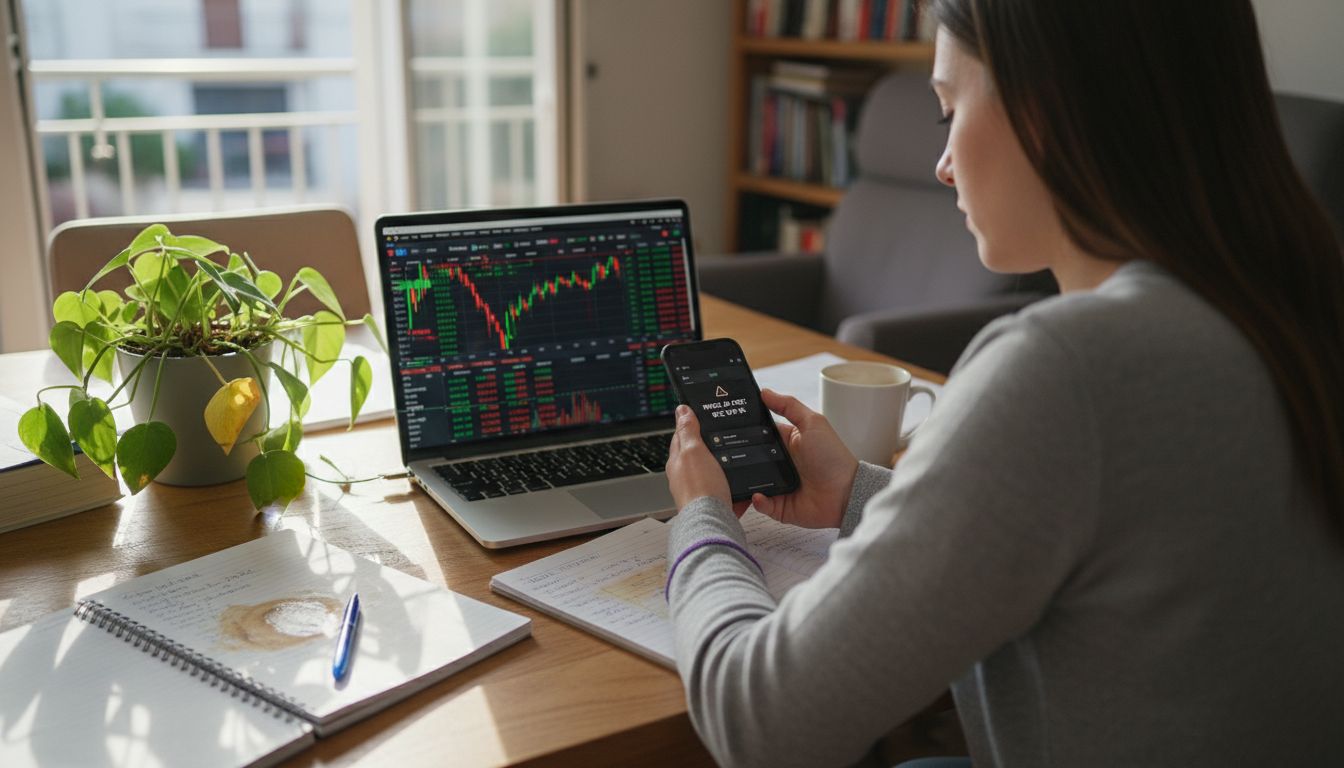
The automation process involves multiple sophisticated mechanisms that work simultaneously to optimize trading performance. Intelligent trading algorithms continuously process vast amounts of market data, identifying potential opportunities and executing trades with millisecond-level precision. Advanced AI methodologies integrate diverse information sources to enhance price trend predictions and trading performance, creating a comprehensive approach to market analysis that goes far beyond traditional trading techniques.
Key automation and optimization techniques include:
- Real-Time Market Analysis: Instantaneous processing of market signals
- Predictive Decision Making: Anticipating market movements before they occur
- Risk Management Protocols: Automatic position sizing and stop-loss implementations
- Multi-Exchange Synchronization: Coordinating trades across different cryptocurrency platforms
- Dynamic Strategy Adjustment: Continuously refining trading approaches based on market conditions
The ultimate power of AI-driven trade automation lies in its ability to eliminate human emotional interference and implement mathematically precise trading strategies. By leveraging advanced computational techniques, these systems can process complex market dynamics, manage risk with unprecedented accuracy, and execute trades with a level of consistency that human traders simply cannot match. This technological innovation represents a fundamental shift in cryptocurrency trading, offering investors a sophisticated, data-driven approach to market engagement.
Benefits of AI for Risk and Profit Management
AI-powered investing strategies transform traditional risk management approaches by leveraging advanced computational techniques that process massive amounts of structured and unstructured market data. These intelligent systems can identify complex, non-obvious correlations and patterns that human traders might completely miss, providing a comprehensive approach to understanding market dynamics. By analyzing intricate relationships between multiple market variables, AI introduces a level of strategic insight that dramatically enhances investment decision-making.
The risk management capabilities of AI extend far beyond traditional analytical methods. Multi-agent AI systems autonomously construct and evaluate cryptocurrency portfolios, achieving superior risk-adjusted returns compared to static investment strategies. These dynamic optimization techniques allow investors to adapt quickly to market volatility, implementing sophisticated risk mitigation protocols that can adjust in real-time to changing market conditions. The result is a more responsive and intelligent approach to managing investment portfolios.
Key benefits of AI-driven risk and profit management include:
- Predictive Risk Assessment: Identifying potential market vulnerabilities before they impact investments
- Dynamic Portfolio Optimization: Continuously rebalancing assets to maximize returns
- Emotional Bias Elimination: Removing human psychological factors from trading decisions
- Rapid Market Signal Processing: Analyzing thousands of data points simultaneously
- Adaptive Strategy Development: Automatically refining investment approaches based on market performance
Ultimately, AI represents a revolutionary approach to financial risk management, offering investors unprecedented levels of insight and control. By combining advanced computational power with sophisticated machine learning algorithms, these systems can process complex market information faster and more accurately than human traders. The result is a more strategic, data-driven approach to investing that minimizes potential losses while maximizing profit potential across volatile cryptocurrency markets.
Risks, Limitations, and Security Concerns
High-frequency trading introduces complex technological risks that can potentially destabilize cryptocurrency markets, challenging the seemingly straightforward promise of AI-driven trading systems. While these advanced algorithms offer remarkable computational advantages, they simultaneously create intricate vulnerabilities that traders must carefully understand and manage. The rapid execution speeds and automated decision-making processes can inadvertently amplify market volatility, creating unexpected systemic risks that traditional trading approaches never encountered.
The technological limitations of AI trading systems extend beyond mere computational challenges. Automated trading platforms pose significant risks related to over-reliance on technology, potential algorithmic errors, and vulnerability to cyber-attacks, requiring robust security protocols and continuous monitoring. These systems can generate unintended consequences, including sudden market fluctuations, unexpected trade executions, and potential manipulation of digital asset prices through sophisticated algorithmic strategies.
Key risks and limitations in AI-driven cryptocurrency trading include:
- Algorithmic Complexity: Potential for unforeseen computational errors
- Cybersecurity Vulnerabilities: Exposure to sophisticated hacking attempts
- Market Manipulation Risks: Potential for coordinated algorithmic trading strategies
- Technical Infrastructure Dependence: Vulnerability to network interruptions
- Regulatory Uncertainty: Evolving legal frameworks surrounding AI trading
Ultimately, successful AI trading requires a balanced approach that acknowledges both technological potential and inherent risks. Traders must implement comprehensive risk management strategies, maintain human oversight, and develop sophisticated monitoring systems to mitigate potential algorithmic vulnerabilities. The future of cryptocurrency trading lies not in blind technological trust, but in creating intelligent, adaptive systems that combine computational power with nuanced human judgment.
Comparing AI Trading with Manual Approaches
Trading strategies can fundamentally differ between manual human decision-making and algorithmic automated systems, presenting unique advantages and challenges for cryptocurrency investors. Manual trading relies heavily on human intuition, emotional intelligence, and complex contextual understanding, while AI trading leverages computational power and data processing capabilities that surpass human cognitive limitations. The critical distinction lies not in replacing human expertise, but in augmenting traditional trading approaches with sophisticated technological capabilities.
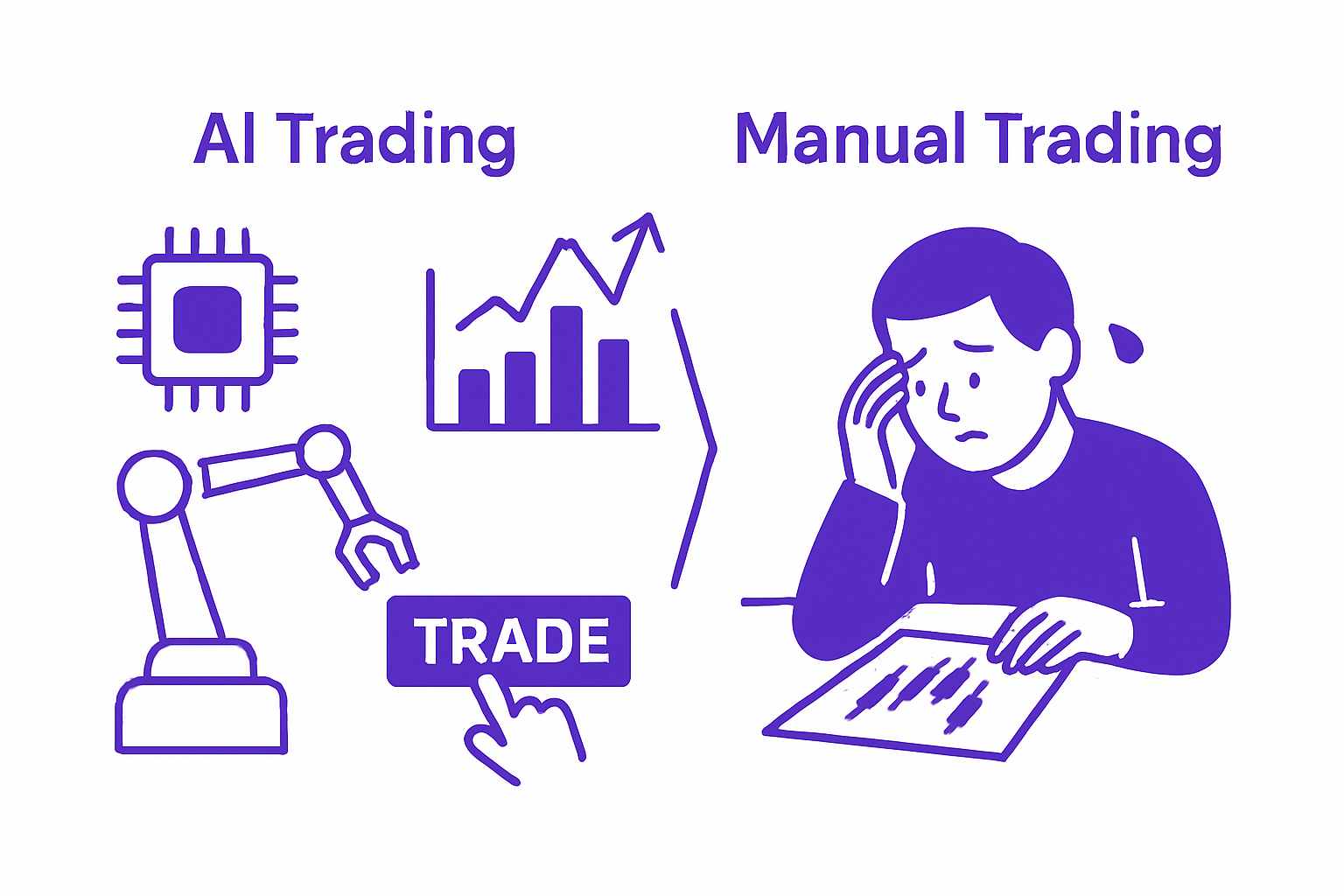
The performance dynamics between manual and AI trading reveal compelling insights. Algorithmic trading systems aim to optimize factors like timing, price, and trading volume through predefined computational rules, offering unprecedented efficiency that human traders cannot consistently match. These automated systems can process thousands of market signals simultaneously, execute trades within milliseconds, and maintain a level of disciplined strategy adherence that eliminates emotional bias and impulsive decision-making.
Key comparative aspects between manual and AI trading include:
- Execution Speed: AI trades in microseconds; humans trade in seconds or minutes
- Emotional Control: AI maintains consistent strategy; humans experience psychological fluctuations
- Data Processing: AI analyzes massive datasets; humans have limited cognitive bandwidth
- Adaptability: AI adjusts strategies in real-time; human adaptation is slower
- Cost Efficiency: AI reduces transaction costs; human trading involves more overhead
Ultimately, the most effective trading approach integrates human strategic oversight with AI’s computational capabilities. By recognizing the strengths and limitations of both manual and algorithmic methods, investors can develop hybrid strategies that leverage technological efficiency while maintaining critical human judgment. The future of cryptocurrency trading will not be defined by choosing between human or artificial intelligence, but by creating intelligent systems that seamlessly combine both.
Unlock the Power of AI for Smarter Crypto Trading
The article highlights the challenge of navigating volatile cryptocurrency markets while managing risks and optimizing profits. Many traders struggle with emotional decision-making, rapid market changes, and complex data that overwhelm manual approaches. AI-powered trading offers a breakthrough by automating strategy execution, processing vast market data in real time, and removing emotional bias from trades. Concepts like machine learning, high-frequency trading, and dynamic portfolio optimization are no longer abstract ideas but practical tools you can harness today.
Bring these innovations to life with Darkbot.io, a platform designed to transform your trading experience. Experience seamless integration across multiple exchanges using secure API keys, customize AI-driven strategies tailored to your goals, and leverage real-time analytics to stay ahead of the market. Whether you are a new trader or seasoned investor, the ease of automated trade execution and risk management can elevate your performance and confidence in unpredictable markets.
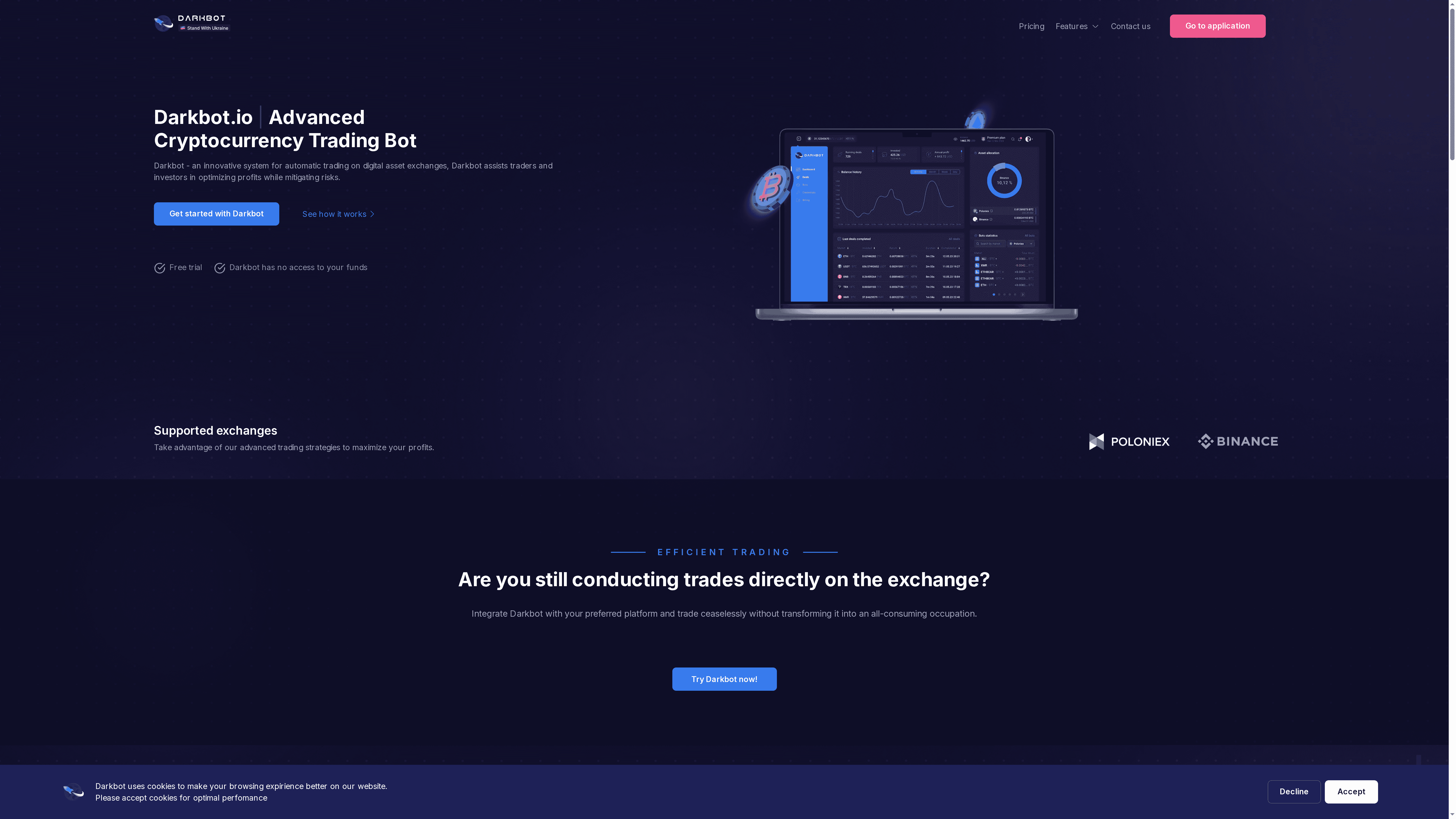
Take control of your crypto trading now by exploring how AI can maximize your gains with precision and consistency. Visit Darkbot.io and start automating your strategies today. Discover comprehensive features like multiple simultaneous bots and automated portfolio rebalancing that empower you to trade smarter and faster.
Frequently Asked Questions
What are the main benefits of using AI in trading?
AI enhances trading by processing large datasets rapidly, identifying market patterns, executing trades with speed and precision, and eliminating emotional decision-making, resulting in more consistent and informed strategies.
How does AI optimize trading strategies in cryptocurrency markets?
AI optimizes trading strategies by employing advanced techniques like machine learning, predictive analytics, and real-time data processing, allowing for dynamic adjustments based on market conditions and improving overall performance.
What risks are associated with AI trading systems?
AI trading systems face risks such as algorithmic complexity leading to errors, cybersecurity vulnerabilities, potential market manipulation, and dependency on technical infrastructure, which necessitates robust risk management practices.
How does AI compare to manual trading approaches?
AI trading offers superior execution speed, emotional control, and data processing capabilities compared to manual trading, which relies on human intuition and can be subject to psychological fluctuations, making AI a more efficient option for many traders.
Recommended

Start trading on Darkbot with ease
Come and explore our crypto trading platform by connecting your free account!
Free plan available • No credit card required