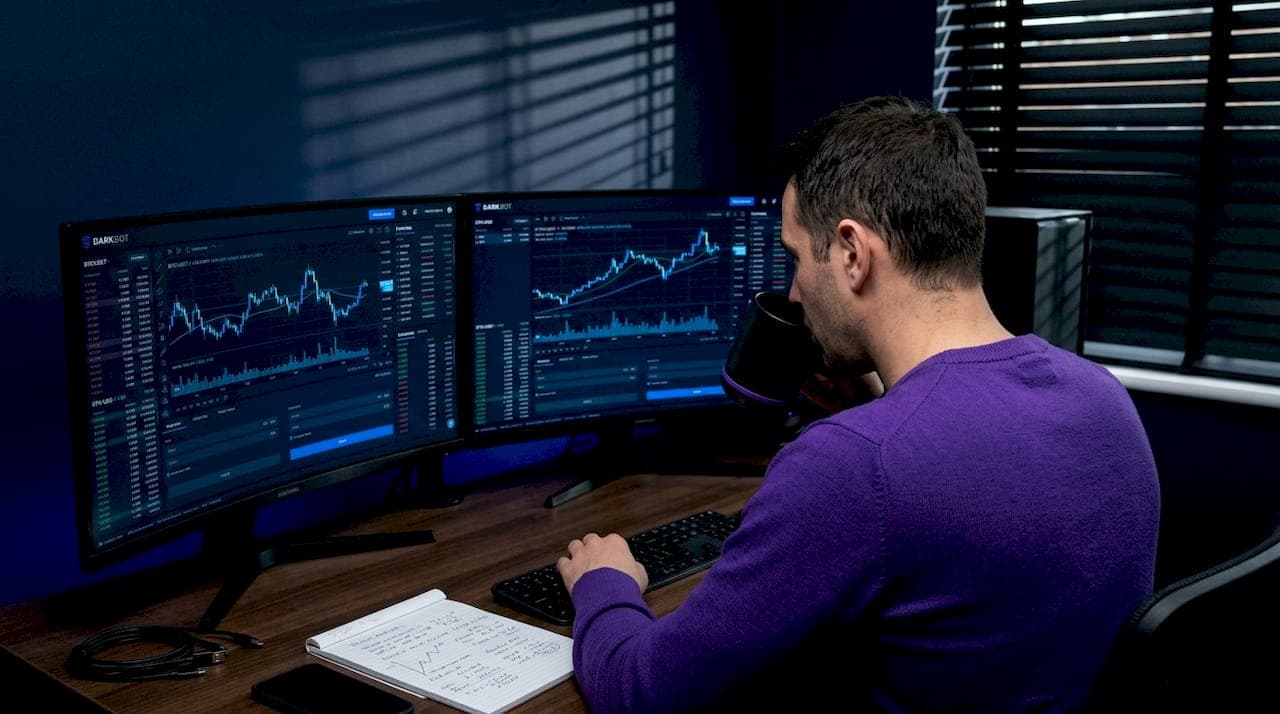
Why Use Trading Bots for Swing Trading Efficiency

Market swings can turn quick wins into sudden losses, especially for American and Canadian swing traders searching for smarter ways to handle volatility. With automated bots promising to execute trades and analyze trends around the clock, the appeal is strong. Still, it’s vital to recognize that while bots deliver discipline and help reduce market mispricing as proven in recent research, they come with risks like market manipulation and artificial liquidity. Discover how to balance technology with strategy for better results.
Key Takeaways
| Point | Details |
|---|---|
| Understanding Swing Trading Bots | They automate trading strategies, effectively analyzing market trends over days or weeks. |
| Risk Management is Essential | Successful implementation requires comprehensive risk protocols and continuous monitoring. |
| AI and Machine Learning Enhance Performance | These technologies improve analytical precision and enable adaptive trading strategies. |
| Combining Automated and Manual Trading | A hybrid approach leverages the strengths of both methods for optimal results. |
Swing Trading Bots Explained and Debunked
Swing trading bots represent sophisticated algorithmic tools designed to automate trading strategies across financial markets, with particular effectiveness in cryptocurrency and stock trading environments. These automated systems execute trades based on predetermined parameters, analyzing market trends and price movements to identify potential profit opportunities. Unlike high-frequency trading algorithms, swing trading bots operate on longer timeframes, typically holding positions for several days to weeks.
The core functionality of swing trading bots relies on advanced mathematical models and technical analysis indicators. Automated trading algorithms have demonstrated potential to impose trading discipline while reducing market mispricing. These bots can simultaneously monitor multiple market indicators, executing trades with precision that human traders might miss. Key features often include trend analysis, momentum tracking, volatility assessment, and risk management protocols that help minimize potential losses.
However, swing trading bots are not infallible investment solutions. Research indicates potential risks such as market manipulation through algorithmic trading, which can create artificial liquidity and misleading price movements. Traders must understand that while bots provide systematic execution, they cannot guarantee profits. Successful implementation requires continuous monitoring, periodic strategy refinement, and a comprehensive understanding of underlying market dynamics.
Pro tip: Always backtest your swing trading bot strategies using historical market data and start with smaller investment amounts to validate performance before committing significant capital.
Key Features of Automated Swing Trading
Automated swing trading bots represent advanced technological solutions that transform traditional trading approaches by leveraging sophisticated algorithms and real-time market analysis. These intelligent systems are designed to identify and execute trades across multiple financial markets, with a primary focus on capturing price movements that occur over several days or weeks. Advanced technical indicators enable these bots to process complex market data with unprecedented speed and accuracy.
The core functionality of swing trading bots encompasses several critical features that distinguish them from traditional trading methods. Key capabilities include automated trend detection, which allows bots to continuously scan market conditions and identify potential trading opportunities. Precise market analysis techniques enable these systems to incorporate multiple data points such as historical price patterns, trading volume, market sentiment, and technical indicators to make informed trading decisions.
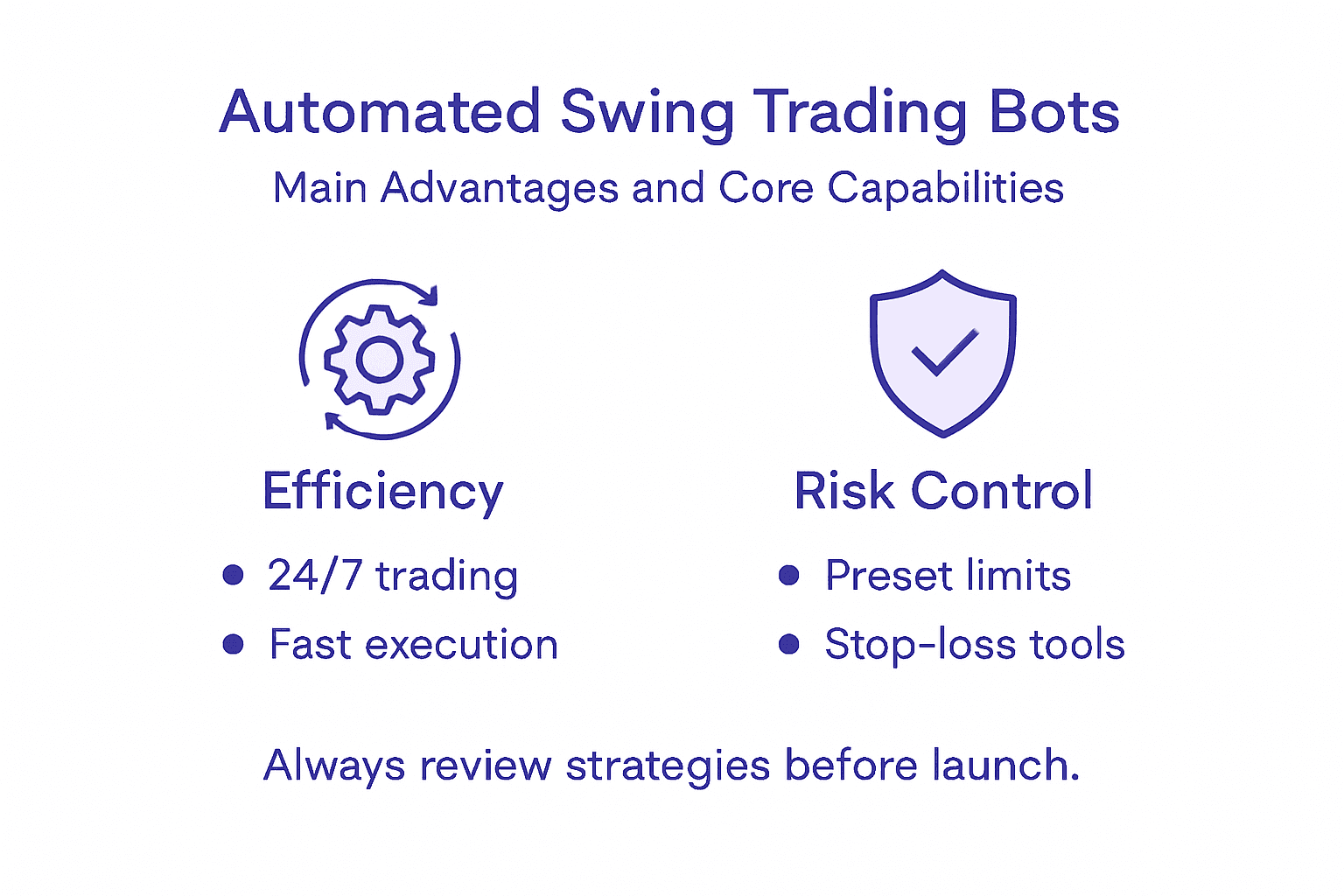
Risk management represents another crucial component of automated swing trading technologies. These sophisticated systems integrate advanced stop-loss mechanisms, portfolio diversification strategies, and real-time risk assessment protocols. By systematically analyzing market volatility and implementing predefined risk parameters, swing trading bots can help traders minimize potential losses while maintaining the potential for consistent returns. The automation process removes emotional decision-making, ensuring trades are executed based on objective mathematical models and predetermined strategy rules.

Pro tip: Configure your swing trading bot with multiple risk management layers and start with conservative settings to understand its performance before gradually increasing complexity.
How AI and Machine Learning Enhance Results
Artificial Intelligence and machine learning represent revolutionary technologies that are fundamentally transforming swing trading strategies by introducing unprecedented levels of analytical precision and adaptive intelligence. Deep learning algorithms enable traders to extract complex market insights that traditional analysis methods cannot capture, processing massive datasets with remarkable speed and nuanced understanding. These advanced systems can identify intricate patterns and nonlinear relationships within financial markets that human traders might easily overlook.
Machine learning models excel at continuous adaptation, allowing swing trading bots to dynamically adjust their strategies based on real-time market conditions. By analyzing historical price movements, volume trends, and market sentiment, these intelligent systems develop increasingly sophisticated predictive capabilities. The algorithms can learn from past trading performance, incrementally refining their decision-making processes to optimize entry and exit points, risk management protocols, and overall trading efficiency.
The most sophisticated AI-powered trading platforms integrate multiple machine learning techniques, including neural networks, statistical modeling, and probabilistic analysis. These technologies work synergistically to create robust trading frameworks that can anticipate market shifts, evaluate potential risks, and execute trades with minimal human intervention. The computational power of machine learning allows for instantaneous processing of complex financial data, enabling traders to make more informed decisions faster than ever before.
Pro tip: Regularly retrain your machine learning trading models with recent market data to ensure they remain adaptive and responsive to changing market dynamics.
Comparing Bots With Manual Swing Trading
The comparison between automated trading bots and manual swing trading reveals a complex landscape of technological advantages and human intuition. Trading robots can reduce market mispricing while simultaneously introducing unique challenges that human traders must carefully consider. Automated systems excel at processing vast amounts of data, executing trades with mathematical precision, and maintaining disciplined trading strategies without emotional interference.
Manual trading offers distinct advantages that computational systems cannot fully replicate. Human traders bring contextual understanding, geopolitical insight, and nuanced decision-making capabilities that algorithms might miss. While bots can rapidly analyze historical patterns and execute trades based on predefined parameters, experienced traders can interpret subtle market signals, economic news, and emerging trends that require sophisticated judgment beyond pure numerical analysis.
The most effective approach often involves a hybrid strategy that leverages the strengths of both automated and manual trading methods. Well-tuned trading bots can complement human decision-making by handling repetitive analytical tasks, executing trades with speed and consistency, and maintaining strict risk management protocols. Successful traders increasingly view bots as powerful tools that augment human capabilities rather than complete replacements for strategic thinking and market intuition.
Here’s a side-by-side comparison of automated swing trading bots and manual swing trading methods:
| Aspect | Automated Bots | Manual Swing Trading | Hybrid Strategy |
|---|---|---|---|
| Decision Process | Rule-based algorithms | Human intuition and analysis | Combines rules with personal insight |
| Data Processing Speed | Instantaneous, large-scale | Limited by individual capacity | Faster than manual, with human oversight |
| Emotional Influence | None | Emotional biases may occur | Reduces emotional bias, retains judgment |
| Adaptability | Adapts to parameters, not context | Responds to market news and events | Reacts to changing conditions and strategy |
| Maintenance Needed | Requires tech updates and monitoring | Needs regular market research | Involves monitoring both bot and market |
Pro tip: Develop a balanced trading approach by using bots for systematic execution while reserving critical strategic decisions for human analysis and intervention.
Managing Risk and Security With Automation
Automated trading systems require comprehensive risk management strategies that go beyond traditional investment approaches. Effective risk controls protect traders through sophisticated mechanisms like stop-loss orders, position sizing controls, and real-time monitoring. These advanced security protocols help mitigate potential financial vulnerabilities by establishing predefined boundaries that prevent excessive losses and maintain disciplined trading behavior.
Security in automated trading encompasses multiple layers of protection, including advanced encryption, secure API credential management, and robust authentication protocols. Traders must implement multi-factor authentication, regularly update access credentials, and utilize platforms with sophisticated cybersecurity infrastructure. Robust security measures prevent operational failures by creating barriers against unauthorized access, data breaches, and potential algorithmic manipulation.
The complexity of risk management in automated trading demands continuous oversight and adaptive strategies. Successful traders develop comprehensive approaches that combine technological safeguards with strategic human intervention. This includes setting precise risk parameters, establishing emergency halt mechanisms, and maintaining the flexibility to interrupt automated processes when unexpected market conditions emerge. By integrating advanced monitoring tools and maintaining a proactive approach to security, traders can harness the power of automation while protecting their financial interests.
Below is a summary of multi-layered risk management approaches for automated trading:
| Risk Management Layer | Core Benefit | Example Practice |
|---|---|---|
| Stop-Loss Mechanisms | Limits individual trade losses | Auto-sell at preset loss threshold |
| Position Sizing Control | Prevents overexposure to one asset | Invest fixed % per trade |
| Real-Time Monitoring | Detects anomalies or breaches early | Use alerts for unusual bot activity |
| Security Protocols | Protects funds and credentials | Enable two-factor authentication |
Pro tip: Implement a monthly security audit of your trading bot settings, reviewing API permissions, encryption protocols, and access credentials to maintain optimal protection.
Boost Your Swing Trading Efficiency With Advanced Automation
Swing trading can be challenging when you try to balance complex market data, manage risk, and act quickly before opportunities vanish. This article highlights how swing trading bots analyze multiple indicators while minimizing emotional bias and maintaining strict risk controls. If you want to overcome these pain points and automate your strategies for better consistency and speed Darkbot.io offers a sophisticated AI-powered cryptocurrency trading bot platform designed to help traders execute smart swing trades across multiple exchanges.
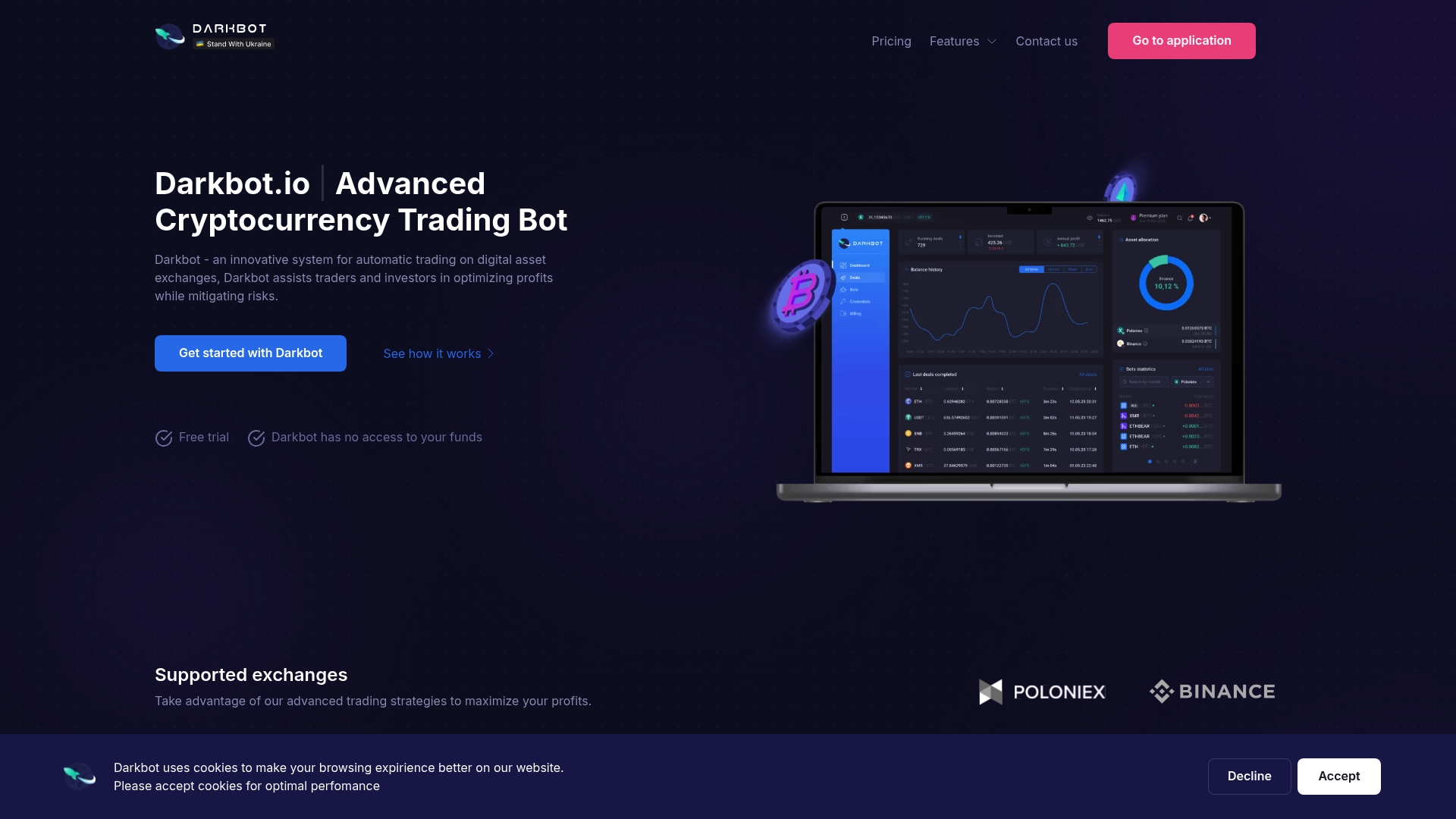
Experience seamless exchange integration, customizable strategies, and real-time analytics that keep you in control while letting automation work tirelessly. Start small with fine-tuned bots and level up your trading game with features like automated rebalancing and portfolio management. Visit Darkbot.io now to simplify your swing trading and capture market moves more efficiently. Don’t wait to transform your approach—explore how automated trading strategies powered by AI can unlock your full trading potential today.
Frequently Asked Questions
What are trading bots for swing trading?
Trading bots for swing trading are automated systems that execute trading strategies based on predefined parameters, analyzing market trends and price movements to identify profit opportunities over longer timeframes, such as several days to weeks.
How do trading bots improve efficiency in swing trading?
Trading bots enhance efficiency by processing vast amounts of market data quickly, executing trades with precision, maintaining disciplined trading strategies without emotional influence, and allowing traders to monitor multiple indicators simultaneously.
What risks should I consider when using a trading bot for swing trading?
While trading bots can be beneficial, they come with risks such as potential market manipulation, algorithmic trading vulnerabilities, and the need for continuous strategy monitoring and refinement to adapt to changing market conditions.
How can I ensure the security of my trading bot?
To secure your trading bot, implement multi-factor authentication, regularly update access credentials, and adhere to robust cybersecurity protocols. Additionally, perform monthly security audits to review and maintain optimal protection.
Recommended

Start trading on Darkbot with ease
Come and explore our crypto trading platform by connecting your free account!
Free plan available • No credit card required