Why Automate Crypto Strategies for Trading Success

Most advice about automated crypto trading overlooks how deeply American investors have embraced these tools. In fact, more than 60 percent of large American crypto traders now use some form of automation to boost efficiency and reduce emotional decisions. As cryptocurrency markets shift faster than ever, understanding the core concepts of automation gives traders a real advantage. This guide clarifies the essentials behind rule-based strategies, algorithmic systems, and practical tech that shape today’s digital asset trading.
Table of Contents
- Automating Crypto Strategies: Core Concepts Explained
- Types of Automated Trading and Key Distinctions
- How Trading Bots Operate and Integrate with Exchanges
- Real-World Use Cases: From Day Trading to Portfolio Management
- Managing Risks and Maximizing Efficiency with Automation
Key Takeaways
| Point | Details |
|---|---|
| Automated Trading Advantages | Automated strategies enhance trading efficiency by removing emotional biases and executing trades with precision and speed. |
| Types of Strategies | Key automated trading methods include High-Frequency Trading, Systematic Trading, Trend Following, Mean Reversion, Arbitrage, and Market Making. |
| Bot Functionality and Integration | Trading bots operate through secure API connections to execute trades based on real-time data analysis while managing risk and performance. |
| Risk Management Techniques | Successful automated trading requires effective risk management strategies, including diversification and dynamic stop-loss protocols, to safeguard investments. |
Automating Crypto Strategies: Core Concepts Explained
Cryptocurrency trading has evolved dramatically with the rise of automated strategies, transforming how traders approach digital asset markets. Algorithmic trading represents a sophisticated approach that leverages computational power to execute trades based on predefined mathematical models and strategic parameters. By removing emotional decision making and human limitations, traders can now implement complex trading techniques with unprecedented precision and speed.
At its core, automated crypto trading involves creating rule-based systems that analyze market conditions and execute trades automatically. These systems utilize advanced algorithms that can process massive amounts of data in microseconds, identifying potential trading opportunities across multiple cryptocurrency exchanges simultaneously. Traders can program specific entry and exit points, risk management protocols, and portfolio rebalancing strategies that operate 24/7 without constant human monitoring.
The fundamental components of an automated crypto trading strategy typically include:
- Market Data Analysis: Real-time price tracking and historical pattern recognition
- Signal Generation: Mathematical models that identify potential trade opportunities
- Risk Management: Predefined stop-loss and take-profit parameters
- Execution Mechanism: Automated order placement across selected exchanges
By implementing systematic review methodologies drawn from machine learning and financial technology, traders can develop robust automated strategies that adapt to changing market conditions. These approaches transform cryptocurrency trading from a manual, emotion-driven process into a data-driven, strategically managed investment technique.
Types of Automated Trading and Key Distinctions
Cryptocurrency traders have multiple sophisticated automated trading approaches, each designed to capitalize on different market dynamics and strategic objectives. High-frequency trading represents one of the most advanced methodologies, characterized by executing numerous trades within milliseconds to capture minute price discrepancies across digital asset markets. These ultra-rapid strategies leverage powerful computational algorithms to identify and exploit microscopic trading opportunities that human traders could never detect.
Another critical approach is systematic trading, which provides a more methodical and structured framework for automated cryptocurrency investments. Systematic trading involves creating predefined rules and mathematical models that guide trading decisions, allowing for consistent and disciplined execution across various market conditions. Unlike high-frequency approaches that focus on speed, systematic strategies emphasize robust rule sets, risk management, and long-term performance optimization.
The primary types of automated trading strategies can be categorized into several distinct models:
- Trend Following: Identifies and trades along established market momentum
- Mean Reversion: Trades based on the statistical probability of prices returning to average levels
- Arbitrage: Exploits price differences across multiple exchanges
- Market Making: Provides liquidity by continuously placing buy and sell orders
Each automated trading approach carries unique characteristics, risk profiles, and computational requirements. Successful implementation demands deep understanding of market mechanics, sophisticated algorithm design, and continuous performance monitoring. Traders must carefully select strategies that align with their risk tolerance, investment goals, and technical capabilities to maximize potential returns while minimizing potential losses.

How Trading Bots Operate and Integrate with Exchanges
Trading bots represent sophisticated technological solutions that automate cryptocurrency trading through complex computational processes. Automated trading systems utilize advanced computer programs capable of generating buy and sell orders automatically, submitting them directly to cryptocurrency exchanges based on predefined algorithmic rules and strategic parameters. These intelligent systems analyze market conditions, execute trades, and manage portfolio positions with unprecedented speed and precision that far surpasses manual trading capabilities.
The integration mechanism between trading bots and cryptocurrency exchanges involves secure API connections that enable real-time data exchange and transaction execution. Traders configure these bots with specific parameters such as entry and exit points, risk management thresholds, and trading volume constraints. Modern predictive market maker platforms have evolved to incorporate advanced machine learning techniques, allowing bots to adapt dynamically to changing market conditions and optimize trading strategies in real time.
Key operational components of trading bots include:
- Market Data Acquisition: Collecting and processing real-time price feeds
- Signal Generation: Identifying potential trading opportunities
- Risk Management: Implementing stop-loss and take-profit mechanisms
- Order Execution: Placing trades across multiple cryptocurrency exchanges
- Performance Tracking: Monitoring and analyzing trading performance
Successful bot integration requires meticulous configuration, ongoing monitoring, and periodic strategy refinement. Traders must carefully balance algorithmic complexity with risk tolerance, ensuring that automated systems align with their specific investment objectives while maintaining robust security protocols and minimizing potential operational vulnerabilities.
Real-World Use Cases: From Day Trading to Portfolio Management
Cryptocurrency trading strategies have expanded dramatically, with automated systems providing sophisticated solutions across multiple investment scenarios. Multi-agent systems now enable advanced portfolio construction techniques that dynamically adapt to rapidly changing market conditions, transforming how investors approach digital asset management. These intelligent frameworks can autonomously analyze and rebalance crypto asset allocations, moving far beyond traditional static investment approaches.
High-frequency trading represents another critical application of automated crypto strategies, particularly for active traders seeking to capitalize on microscopic market opportunities. Hierarchical reinforcement learning frameworks have emerged as powerful tools for executing complex trading strategies, enabling traders to navigate volatile cryptocurrency markets with unprecedented precision and computational sophistication. These advanced systems can process massive amounts of market data, identify trading signals, and execute transactions within milliseconds.
Practical use cases for automated crypto trading strategies span multiple investment profiles:
- Day Trading: Executing rapid trades to capture short-term price movements
- Swing Trading: Identifying and riding medium-term market trends
- Portfolio Rebalancing: Automatically maintaining target asset allocations
- Arbitrage: Exploiting price differences across multiple exchanges
- Passive Income Generation: Creating consistent revenue streams through strategic trading
Successful implementation requires a nuanced approach that balances technological capabilities with strategic insights. Investors must continuously refine their automated systems, understanding that market dynamics are perpetually evolving. The most effective trading strategies combine advanced computational techniques with deep market understanding, allowing for flexible and intelligent asset management.
Managing Risks and Maximizing Efficiency with Automation
Automated cryptocurrency trading strategies introduce powerful risk management capabilities that transform traditional investment approaches. While technological advancements offer unprecedented opportunities, traders must remain critically aware of potential limitations and systemic risks. Evaluating AI-based trading strategies reveals that not all computational approaches guarantee superior performance, emphasizing the critical need for rigorous strategy development and continuous performance monitoring.
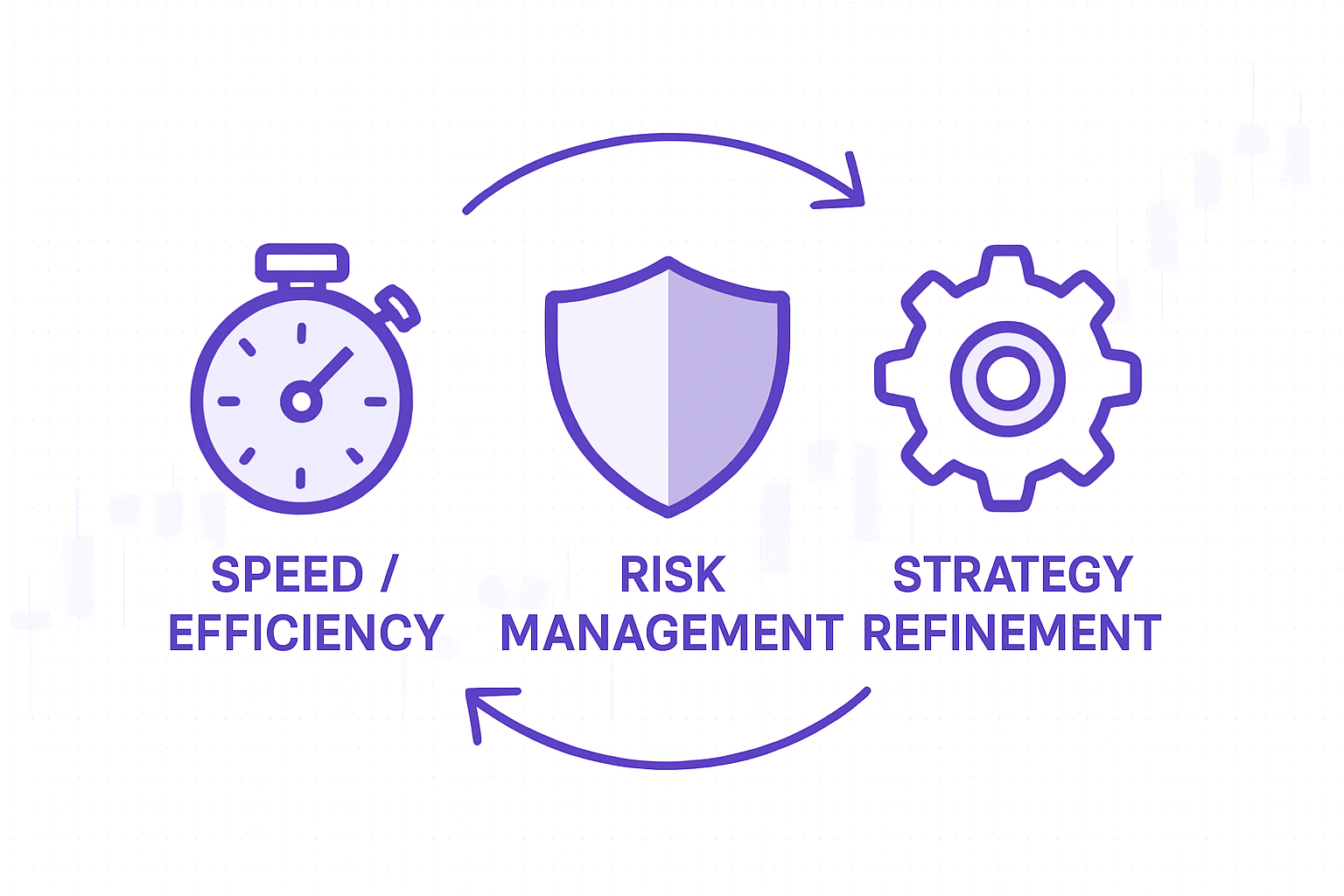
Risk management in automated crypto trading encompasses multiple sophisticated dimensions beyond simple algorithmic execution. Successful strategies integrate advanced protective mechanisms such as dynamic stop-loss protocols, position sizing algorithms, and real-time portfolio rebalancing techniques. These intelligent systems can rapidly adjust to market volatility, implementing predefined risk thresholds that protect investor capital more effectively than manual trading approaches.
Key risk mitigation strategies for automated crypto trading include:
- Diversification: Spreading investments across multiple assets and trading strategies
- Position Sizing: Limiting exposure through intelligent capital allocation
- Volatility Management: Implementing adaptive trading parameters
- Continuous Backtesting: Regularly evaluating strategy performance
- Fail-Safe Mechanisms: Creating automatic shutdown protocols during extreme market conditions
Ultimately, automation represents a powerful tool that amplifies human strategic insights rather than replacing them entirely. Successful traders combine technological sophistication with deep market understanding, creating resilient systems that can adapt to complex and unpredictable cryptocurrency market dynamics. The most effective approach balances computational efficiency with nuanced human oversight, recognizing that technology serves as a complement to, not a replacement for, intelligent investment decision making.
Unlock Trading Success with Automated Crypto Strategies Today
The challenge highlighted in the article is crystal clear: cryptocurrency markets move fast and demand precision, yet manual trading struggles with emotional bias, limited speed, and constant monitoring. Traders face difficulty executing complex strategies like high-frequency trading or portfolio rebalancing while managing risks effectively. You want automation that delivers real-time market data analysis, risk management, and instant execution without the stress of nonstop manual oversight.
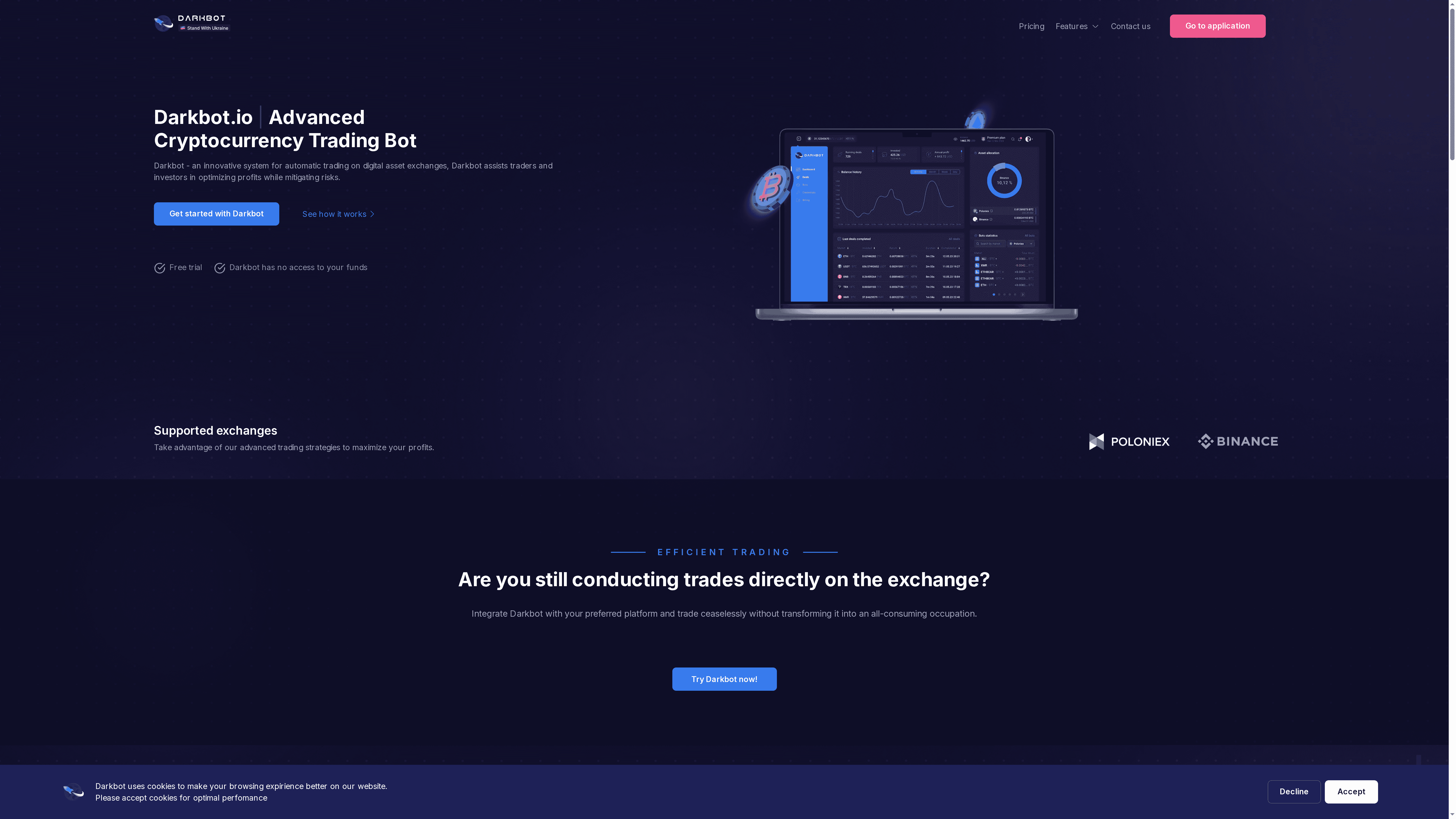
Darkbot.io is built precisely to solve these pain points by offering an advanced automated trading platform that integrates seamlessly with multiple exchanges through secure API keys. With features like customizable strategy fine-tuning, automated portfolio rebalancing, and AI-powered decision making, it transforms the complicated process of crypto trading into an intuitive experience for both novices and experts. Take control of your crypto investments with dependable, secure, and smart algorithms designed to keep pace with the volatile market dynamics covered in the article. Don’t let opportunities slip away because of slow manual actions.
Discover how you can automate your trading strategies efficiently and confidently by visiting Darkbot.io. Experience real-time analytics and risk management tools that align perfectly with the article’s emphasis on balancing computational efficiency and human oversight. Start today at Darkbot.io and move beyond manual trading constraints to maximize your potential profits right now.
Frequently Asked Questions
What are automated crypto trading strategies?
Automated crypto trading strategies use algorithms to execute trades based on predefined rules and market conditions. They allow traders to automate the buying and selling process, minimizing emotional decision-making and enhancing execution speed.
How do trading bots integrate with cryptocurrency exchanges?
Trading bots connect to cryptocurrency exchanges via secure API connections. This enables real-time data exchange, allowing bots to analyze market conditions and execute trades automatically based on user-defined parameters.
What are the main types of automated trading strategies?
The main types of automated trading strategies include trend following, mean reversion, arbitrage, and market making, each designed to exploit different market dynamics and trading opportunities.
How can automated trading strategies manage risks effectively?
Automated trading strategies manage risks through mechanisms such as diversification, position sizing, and dynamic stop-loss protocols. These systems can adapt to market volatility and implement predefined risk thresholds to protect investor capital.
Recommended

Start trading on Darkbot with ease
Come and explore our crypto trading platform by connecting your free account!
Free plan available • No credit card required