Cryptocurrency Portfolio Balancing Guide for Automated Trading
Most American cryptocurrency traders face the same challenge as their peers in high-inflation countries: keeping a portfolio balanced while prices swing wildly. More than 60 percent of crypto investors report losing track of allocations during volatile markets. In a world where slow reaction means lost value, efficient tools and clear processes for automated rebalancing and risk monitoring are crucial. Explore practical steps to regain control and manage every asset with confidence, no matter how fast the market moves.
Quick Summary
| Key Point | Explanation |
|---|---|
| 1. Assess Current Holdings | Create a detailed inventory of your crypto assets, noting quantities, purchase prices, and market values. |
| 2. Define Trading Goals | Clarify your risk tolerance, investment horizon, and desired strategies to guide your portfolio construction. |
| 3. Set Asset Allocation Targets | Allocate cryptocurrencies based on risk tiers to ensure balanced exposure and align with investment objectives. |
| 4. Implement Automated Rebalancing | Use automated tools to maintain your asset allocation and manage portfolio adjustments without consistent monitoring. |
| 5. Analyze Portfolio Performance | Regularly evaluate performance metrics and risk assessments to ensure your portfolio meets strategic goals. |
Step 1: Assess existing crypto holdings and trading goals
Successfully managing your cryptocurrency portfolio begins with a comprehensive evaluation of your current digital assets and investment objectives. This critical first step helps you understand where you stand and where you want to go with your crypto investments.
Start by conducting a detailed inventory of your existing cryptocurrency holdings across all platforms and wallets. Catalog each asset’s current quantity, purchase price, current market value, and percentage allocation in your portfolio. Cryptoasset valuation requires understanding fundamental models and market volatility so track not just quantities but also performance metrics. Look beyond simple price tracking and examine each asset’s underlying technology, market capitalization, trading volume, and recent price trends. Pay special attention to project fundamentals like development team credibility, technological innovation, and long-term viability.
Here’s a summary of key crypto asset metrics to track for effective portfolio management:
| Metric | What It Measures | Why It Matters |
|---|---|---|
| Market Value | Current price x quantity | Assesses total asset worth |
| Percentage Allocation | Share of total portfolio | Monitors diversification level |
| Trading Volume | Asset activity over time | Reveals liquidity and market interest |
| Volatility | Frequency of price changes | Evaluates risk and price stability |
Next, define your trading goals with precision. Investors must decide their risk tolerance, investment horizon, and desired diversification level recognizing cryptocurrency’s inherent volatility. Are you seeking short-term trading profits or long-term asset appreciation? Do you prefer aggressive growth strategies or more conservative, stability-focused approaches? Your goals will directly influence portfolio construction, asset selection, and risk management techniques. Consider factors like capital preservation, potential returns, liquidity needs, and your overall financial ecosystem.
Pro tip: Create a structured spreadsheet that tracks your crypto assets dynamically, allowing real-time performance monitoring and swift strategic adjustments.
Step 2: Connect exchanges to portfolio management tool
Seamlessly integrating your cryptocurrency exchanges with a centralized management platform empowers you to gain comprehensive insights and control over your digital asset portfolio. This crucial step transforms fragmented trading activities into a unified investment strategy.

Portfolio management research emphasizes the importance of integrating data from various sources through secure API connections. Begin by identifying the exchanges where you currently hold cryptocurrency assets. Access each exchange’s API settings and generate unique API keys specifically designed for read only and trading permissions. Critical security practice involves creating API keys with restricted withdrawal capabilities to prevent unauthorized transfers. Carefully review the specific connection requirements for your chosen portfolio management tool such as acceptable authentication methods, required permission levels, and potential regional restrictions.
Cryptocurrency portfolio management tools enable aggregation of holdings across multiple platforms facilitating centralized tracking and analysis. After generating your API keys, navigate to your portfolio management platform and locate the exchange connection section. Input the generated API credentials precisely matching the platform’s instructions. Verify the connection by confirming that your exchange balances and transaction histories synchronize correctly. Monitor the initial sync process to ensure all assets are accurately represented and no discrepancies exist between your exchange records and portfolio management tool.
Pro tip: Generate unique API keys for each portfolio management tool and regularly rotate these credentials to maintain optimal security and minimize potential unauthorized access risks.
Step 3: Set asset allocation targets for optimal balance
Establishing strategic asset allocation targets is fundamental to building a resilient and performance-driven cryptocurrency portfolio. This step transforms your investment approach from reactive trading to proactive portfolio management, ensuring systematic risk control and potential growth optimization.
Advanced asset allocation strategies incorporate dynamic portfolio rebalancing using sophisticated on-chain analytics and volatility-weighted models to help investors make data-driven decisions. Begin by categorizing your cryptocurrencies into distinct risk tiers such as blue chip assets like Bitcoin and Ethereum, mid-tier altcoins, and emerging blockchain projects. Assign percentage allocations based on your personal risk tolerance and investment horizon. Conservative investors might allocate 60 to 70 percent to established cryptocurrencies, while more aggressive investors could distribute funds across a broader range of digital assets with higher potential returns but increased volatility.
Research exploring optimal cryptocurrency portfolio composition recommends balanced exposure to maximize diversification benefits while maintaining risk adjusted returns. Implement a structured allocation strategy that considers market capitalization, technological fundamentals, and historical performance. Regularly review and adjust your targets quarterly or semi annually to align with evolving market conditions and your personal financial objectives. Utilize automated rebalancing tools to maintain your predetermined asset allocation percentages, ensuring your portfolio remains aligned with your initial strategic framework.
Comparing asset allocation strategies based on risk tolerance:
| Investor Profile | Main Asset Focus | Expected Volatility | Targeted Returns |
|---|---|---|---|
| Conservative | Mostly Bitcoin, Ethereum | Lower | Modest, steady |
| Balanced Diversifier | Mixed cap cryptocurrencies | Moderate | Balanced, diversified |
| Aggressive Growth | Emerging altcoins | High | High, with more risk |
Pro tip: Create a clear asset allocation spreadsheet with predefined thresholds that trigger rebalancing actions when individual asset percentages drift beyond your established tolerance levels.
Step 4: Activate automated rebalancing strategies
Automated rebalancing strategies transform your cryptocurrency portfolio management from manual intervention to systematic precision. This critical step empowers you to maintain your carefully crafted asset allocation strategy without constant personal monitoring and manual trades.
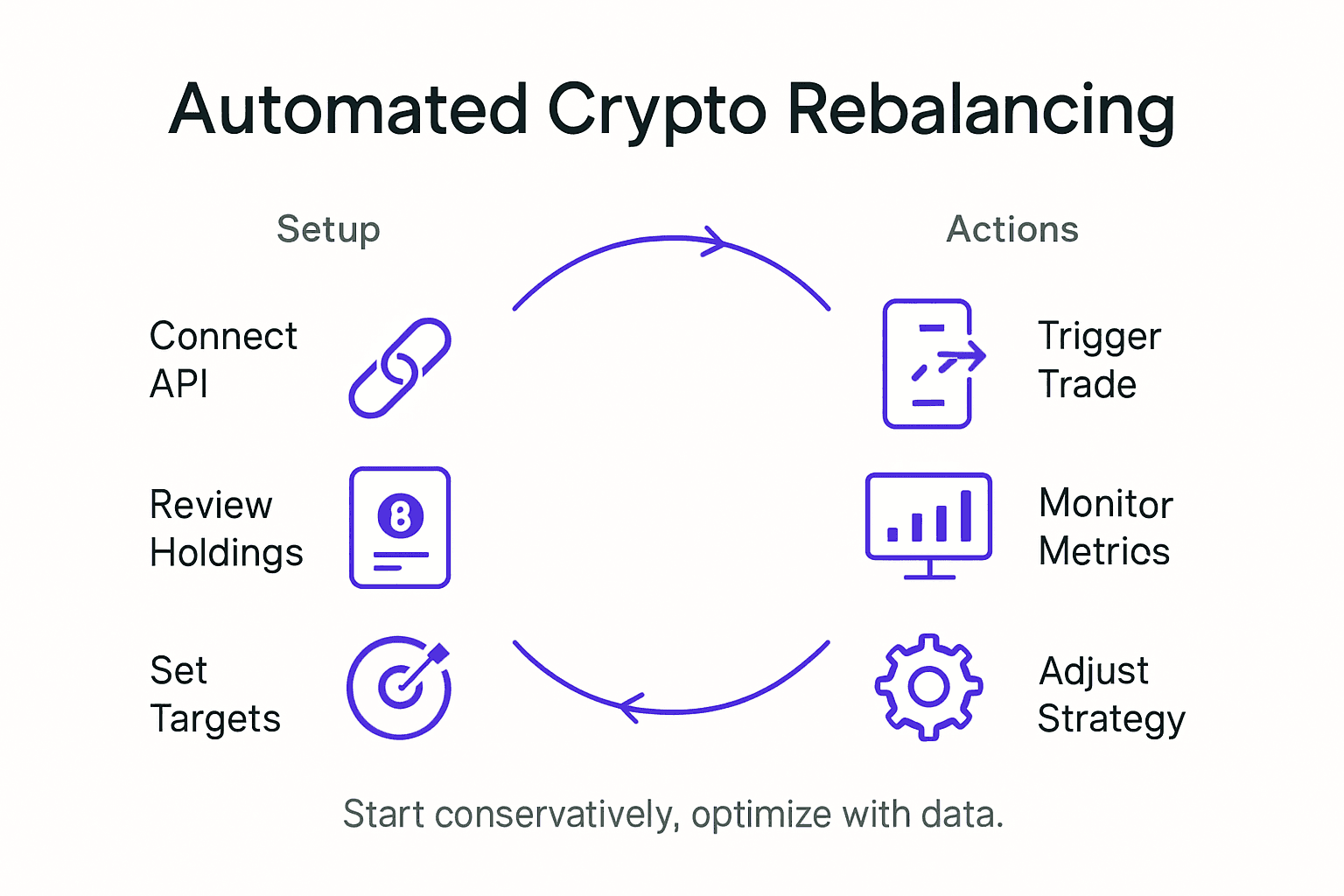
Crypto portfolio rebalancing tools offer automated mechanisms for maintaining desired asset allocations by executing trades when asset weights deviate beyond predefined thresholds. Configure your rebalancing strategy by first establishing clear parameters such as maximum allowable deviation percentage (typically 5 to 10 percent from target allocations), rebalancing frequency, and transaction cost thresholds. Select between threshold-based rebalancing that triggers trades when asset percentages drift from target ranges and time-based rebalancing that automatically adjusts portfolio composition at set intervals like monthly or quarterly.
Implements your chosen rebalancing approach by selecting appropriate settings within your portfolio management platform. Carefully define rules that balance portfolio maintenance with cost efficiency. Consider factors like transaction fees, minimum trade sizes, and potential tax implications when setting up automated rebalancing. Prioritize strategies that minimize unnecessary trading while maintaining your desired asset allocation framework. Regularly monitor and fine tune your automated rebalancing settings to ensure they continue to align with your evolving investment objectives and market conditions.
Pro tip: Start with conservative rebalancing settings and gradually optimize your strategy by analyzing performance metrics and transaction costs over multiple rebalancing cycles.
Step 5: Verify portfolio performance and risk metrics
Validating your cryptocurrency portfolio requires systematic analysis of key performance indicators and comprehensive risk assessment. This crucial step transforms raw trading data into actionable insights that drive intelligent investment decisions.
Advanced portfolio optimization frameworks now incorporate sophisticated risk measurement techniques to help investors understand their true portfolio risk profile. Begin by calculating critical metrics such as total return percentage, Sharpe ratio, maximum drawdown, and volatility. Compare your portfolio performance against benchmark indices like Bitcoin or Ethereum to contextualize your returns. Pay close attention to risk adjusted metrics that reveal how efficiently your portfolio generates returns relative to the inherent market volatility. Track metrics like standard deviation to quantify price fluctuations and potential downside risk, ensuring your portfolio maintains an acceptable risk tolerance aligned with your original investment strategy.
Utilize your portfolio management platform’s analytics dashboard to generate comprehensive performance reports. Analyze detailed breakdowns of individual asset performance, correlation between different cryptocurrencies, and historical volatility trends. Look for opportunities to optimize your portfolio by identifying assets that consistently underperform or demonstrate excessive risk. Implement a disciplined review process that involves quarterly performance assessments, allowing you to make data driven adjustments to your asset allocation and trading strategies. Remember that performance verification is an ongoing process requiring continuous monitoring and strategic refinement.
Pro tip: Develop a standardized performance tracking spreadsheet with automated calculations to streamline your periodic portfolio review and simplify complex performance metric assessments.
Take Control of Your Crypto Portfolio with Automated Precision
Balancing a cryptocurrency portfolio can be overwhelming with all the constant market shifts and the need for timely rebalancing strategies. This guide highlights the challenges like managing asset allocation targets, connecting multiple exchanges securely, and maintaining risk-adjusted returns. If you want to eliminate manual errors while optimizing your portfolio through proactive automation, you need a solution that evolves with your goals and market dynamics.
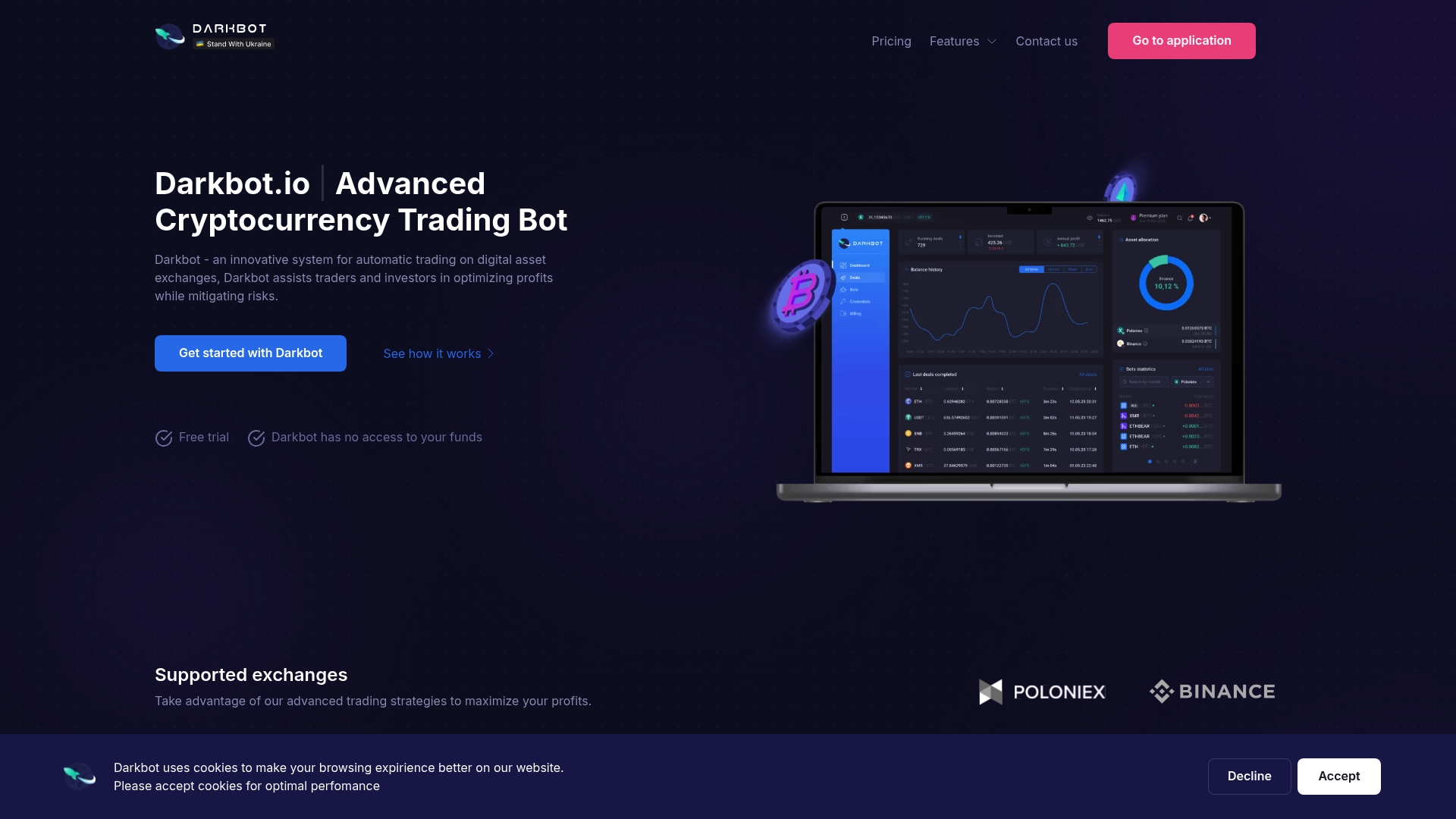
Discover how Darkbot.io empowers you to seamlessly integrate your exchanges using secure API keys and unlock advanced automated rebalancing strategies tailored to your risk tolerance. With our AI-driven platform, you can efficiently track performance metrics and execute trades that keep your portfolio aligned with your investment objectives. Don’t wait for market volatility to dictate your success. Visit Darkbot.io today to start automating your trading strategies and confidently manage your cryptocurrency assets with ease and security.
Frequently Asked Questions
How do I assess my existing cryptocurrency holdings?
Start by creating a detailed inventory of your current digital assets, noting the quantity, purchase price, current market value, and allocation percentage of each asset. Utilize this information to evaluate performance metrics and the fundamentals of each asset, allowing for informed decision-making.
What should I consider when setting asset allocation targets?
Define your risk tolerance and investment goals to create a balanced asset allocation strategy. For example, allocate 60 to 70 percent to established cryptocurrencies for conservative portfolios, while more aggressive investors may consider a wider range of altcoins with higher volatility.
How can I connect my exchanges to a portfolio management tool?
Identify the exchanges where you hold cryptocurrency and generate API keys with restricted permissions for secure integration. Follow the instructions provided by your chosen portfolio management tool to correctly input your API credentials and verify the synchronization of your assets.
What are automated rebalancing strategies and how do I set them up?
Automated rebalancing strategies adjust your asset allocations based on predefined thresholds, helping you maintain balance without manual intervention. Set parameters like maximum deviation percentage and rebalancing frequency to streamline your strategy, ensuring your portfolio stays aligned with your investment goals.
How can I verify the performance and risk metrics of my portfolio?
Calculate key performance indicators such as total return percentage and Sharpe ratio to assess your portfolio’s efficiency compared to benchmarks. Regularly analyze performance reports and conduct quarterly reviews to make necessary adjustments based on identified risks and performance trends.
What tools can help automate my portfolio management processes?
Look for comprehensive portfolio management tools that facilitate data aggregation from multiple exchanges and support automated rebalancing strategies. Choose a tool that offers tailored analytics to streamline your tracking and enhance your decision-making process.
Recommended

Start trading on Darkbot with ease
Come and explore our crypto trading platform by connecting your free account!
Free plan available • No credit card required