Cryptocurrency Trading Strategies 2025: AI’s Role in Volatile Markets

Most american crypto day traders in Argentina, Turkey, and Nigeria now rely on sophisticated AI algorithms to survive extreme inflation and wild price swings. High inflation in these countries has fueled demand for automated trading strategies that instantly react to shifting markets. Discover how advanced approaches prioritize adaptive risk controls and multi-source data analysis—offering a smarter way to profit in environments where traditional methods often fail.
Key Takeaways
| Point | Details |
|---|---|
| AI-Driven Strategies | Cryptocurrency trading in 2025 leverages advanced AI technologies for rapid decision-making and dynamic risk management, enhancing trading outcomes. |
| Adaptive Risk Management | Successful traders implement sophisticated, real-time risk management strategies that can adjust automatically to market changes. |
| Regulatory Compliance | Staying compliant with evolving regulations is essential; traders must adopt proactive measures for documentation and security. |
| Multi-Dimensional Analysis | Modern strategies integrate multiple data sources for comprehensive market analysis, surpassing traditional trading practices. |
What Defines Crypto Trading Strategies in 2025
Cryptocurrency trading strategies in 2025 represent a sophisticated convergence of technological innovation, data analytics, and adaptive market intelligence. The emerging landscape is characterized by increasingly nuanced approaches that transcend traditional trading methodologies, focusing on multi-dimensional market analysis with unprecedented precision.
Modern crypto trading strategies now prioritize complex algorithmic frameworks that assess market dynamics across multiple dimensions. Traders increasingly utilize advanced AI technologies to evaluate asset performance through intricate lenses including market capitalization tiers, liquidity patterns, volatility profiles, and institutional participation signals. These strategies go beyond simple price tracking, developing predictive models that integrate macroeconomic indicators, cross-market correlations, and real-time sentiment analysis.
The core differentiator in 2025 crypto trading strategies is their adaptive intelligence. Successful approaches now emphasize dynamic risk management, employing machine learning algorithms that can instantaneously recalibrate trading parameters based on emerging market conditions. This means strategies are no longer static blueprints but living, breathing systems capable of autonomous adjustment in response to complex market signals.
Pro tip: Develop a robust, AI-enhanced trading strategy that can dynamically adapt to market volatility by implementing multi-layered risk assessment protocols and continuous algorithmic retraining.
Here’s a concise overview comparing traditional and AI-driven crypto trading in 2025:
| Aspect | Traditional Trading | AI-Driven Trading |
|---|---|---|
| Decision Speed | Minutes to hours | Milliseconds |
| Data Sources | Price charts, news | Real-time, multi-source analytics |
| Risk Management | Manual stop-loss, portfolio checks | Algorithmic, adaptive controls |
| Emotional Bias | High | Eliminated by automation |
Popular and Emerging Strategy Types
Cryptocurrency trading strategies in 2025 have evolved into sophisticated approaches that blend quantitative analysis, technological innovation, and adaptive intelligence. Pairs trading strategies represent a prime example of this sophisticated approach, utilizing advanced statistical arbitrage methods that leverage historical asset co-movements and market correlations.
The landscape of crypto trading strategies now encompasses a diverse range of methodologies, from foundational techniques to cutting-edge approaches. Key strategy types include:
- Institutional Momentum Strategies: Tracking large-scale institutional investment patterns
- On-Chain Data Analysis: Utilizing blockchain transaction data for predictive insights
- AI-Enhanced Arbitrage: Leveraging machine learning to identify and exploit market inefficiencies
- Sentiment-Driven Trading: Analyzing social media and market sentiment for trade signals
Advanced strategies are increasingly focusing on niche market segments, combining data from multiple sources to create more nuanced trading approaches. These methods go beyond traditional price tracking, incorporating complex factors like whale movement tracking, exchange reserve analysis, and real-time hype cycle monitoring across emerging asset classes such as AI tokens and tokenized real-world assets.

Pro tip: Develop a hybrid trading strategy that combines multiple analytical approaches, integrating both on-chain data and machine learning insights to create a more robust and adaptive trading methodology.
AI and Automation in Trading Execution
Cryptocurrency trading execution in 2025 represents a transformative landscape where artificial intelligence and automated systems fundamentally reshape trading methodologies. AI-driven technologies have evolved from experimental tools to critical infrastructure, enabling traders to navigate increasingly complex and volatile digital asset markets with unprecedented precision and adaptability.
The core capabilities of AI in trading execution center on three primary dimensions:
- Rapid Decision Processing: Analyzing massive datasets in milliseconds
- Dynamic Risk Management: Instantaneously adjusting trading parameters
- Predictive Pattern Recognition: Identifying subtle market signals invisible to human traders
Automated trading frameworks now integrate sophisticated machine learning algorithms that can process complex market regimes with minimal human intervention. These systems leverage advanced statistical models, real-time data streams, and probabilistic forecasting to execute trades with a level of sophistication that dramatically outperforms traditional manual trading approaches. The integration of AI enables traders to simultaneously monitor multiple market indicators, assess risk portfolios, and make split-second execution decisions across global cryptocurrency exchanges.
The technological progression has transformed trading from a human-centric activity to an algorithmic ecosystem where machine intelligence drives strategic decision-making. AI agents can now interpret nuanced market signals, understand contextual market dynamics, and execute trades with precision that eliminates emotional bias and human error.
Pro tip: Develop a modular AI trading strategy that allows continuous learning and adaptive parameter adjustment, ensuring your automated system can evolve alongside rapidly changing market conditions.
Managing Volatility and Risk in Crypto Markets
Advanced risk management strategies have become essential in navigating the complex and unpredictable cryptocurrency markets of 2025. Modern traders recognize that successful risk mitigation requires a sophisticated, multi-dimensional approach that goes far beyond traditional investment strategies, incorporating adaptive techniques tailored to the unique characteristics of digital assets.
The core risk management framework for cryptocurrency trading now encompasses several critical dimensions:
- Liquidity Analysis: Assessing market depth and transaction potential
- Volatility Filtering: Dynamically adjusting exposure based on market conditions
- Correlation Mapping: Understanding asset interdependencies
- Portfolio Diversification: Spreading risk across multiple digital asset classes
Traders must develop nuanced strategies that account for the rapid shifts inherent in cryptocurrency markets. This means implementing dynamic risk control mechanisms that can instantaneously recalibrate portfolio allocations, leverage ratios, and trading parameters. Sophisticated algorithms now enable real-time risk assessment, allowing traders to maintain precise control over potential downside exposure while capitalizing on emerging market opportunities.
The most effective risk management approaches integrate advanced quantitative techniques with machine learning capabilities. These systems can process complex market signals, predict potential volatility clusters, and automatically execute protective measures such as stop-loss orders or portfolio rebalancing with a level of speed and precision impossible for human traders.
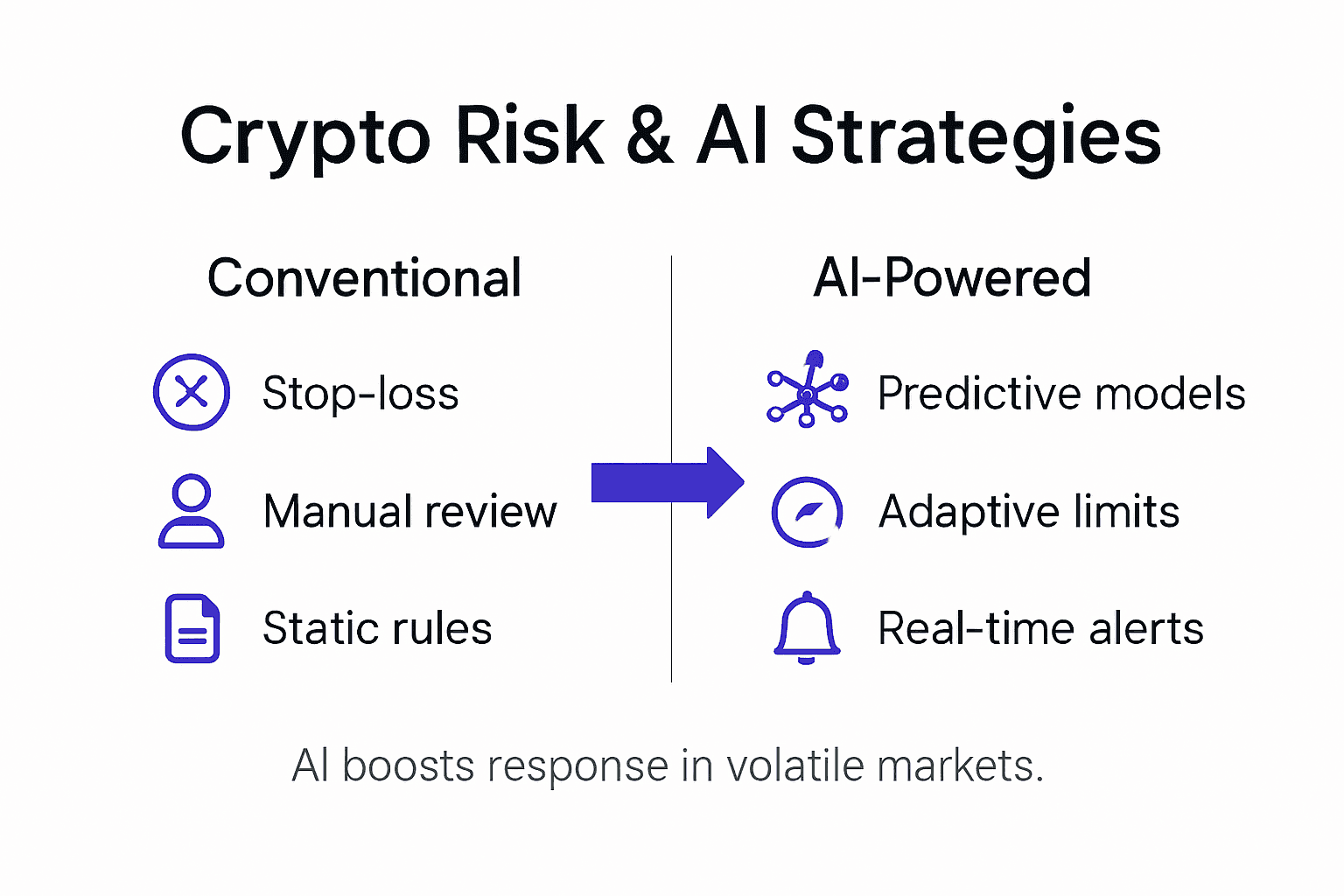
Pro tip: Implement a multi-layered risk management strategy that combines automated stop-loss mechanisms, dynamic portfolio rebalancing, and machine learning-driven volatility prediction to protect against unexpected market movements.
The table below summarizes key risk management techniques specific to crypto in 2025:
| Technique | Main Purpose | Benefit for Traders |
|---|---|---|
| Volatility Prediction | Identify sudden market swings | Reduces surprise losses |
| Automated Rebalancing | Adjusts asset weights | Maintains optimal risk profile |
| Liquidity Monitoring | Tracks trading conditions | Prevents illiquid trades |
| Correlation Mapping | Reveals asset relationships | Improves diversification |
Compliance, Security, and Common Mistakes
Cryptocurrency compliance frameworks have become increasingly sophisticated in 2025, reflecting the maturation of digital asset markets and heightened regulatory expectations. Traders and institutional investors must navigate a complex landscape of legal requirements that demand unprecedented levels of transparency, risk management, and operational integrity.
The most critical compliance and security challenges for cryptocurrency traders include:
- Regulatory Documentation: Maintaining comprehensive Know Your Customer (KYC) and Anti-Money Laundering (AML) records
- Operational Security: Implementing robust key management and multi-factor authentication protocols
- Transaction Traceability: Ensuring complete and auditable transaction histories
- Jurisdictional Compliance: Understanding and adhering to region-specific digital asset regulations
Cryptocurrency market reviews highlight several common mistakes that can compromise trader security and regulatory compliance. These include inadequate security practices, poor record-keeping, insufficient risk assessment, and neglecting to stay updated on evolving regulatory landscapes. Successful traders must develop a proactive approach to compliance, treating regulatory adherence not as a burden but as a critical component of sustainable trading strategies.
The most effective approach to navigating compliance and security challenges involves continuous education, robust technological infrastructure, and a commitment to transparency. This means investing in advanced security technologies, maintaining meticulous documentation, and developing adaptive strategies that can quickly respond to changing regulatory environments.
Pro tip: Implement a comprehensive compliance management system that includes automated regulatory tracking, real-time security monitoring, and periodic third-party security audits to minimize operational risks.
Harness AI-Powered Trading to Master Volatile Crypto Markets
Navigating cryptocurrency trading in 2025 demands more than just intuition and manual effort. The article highlights the challenge of managing rapidly shifting market volatility and the critical need for dynamic risk management using adaptive AI-driven strategies. If unpredictable swings and complex data analysis feel overwhelming, you are not alone. Key pain points like instantaneous decision-making, multi-source analytics, and continuous strategy optimization require powerful tools designed for traders aiming to stay ahead.
Darkbot.io answers this challenge by offering an advanced automated cryptocurrency trading bot platform that integrates AI and machine learning. With features like seamless exchange integration, customizable trading strategies, real-time analytics, and automated rebalancing, Darkbot.io empowers both novice and experienced traders to execute sophisticated trading tactics without emotional bias or delay.
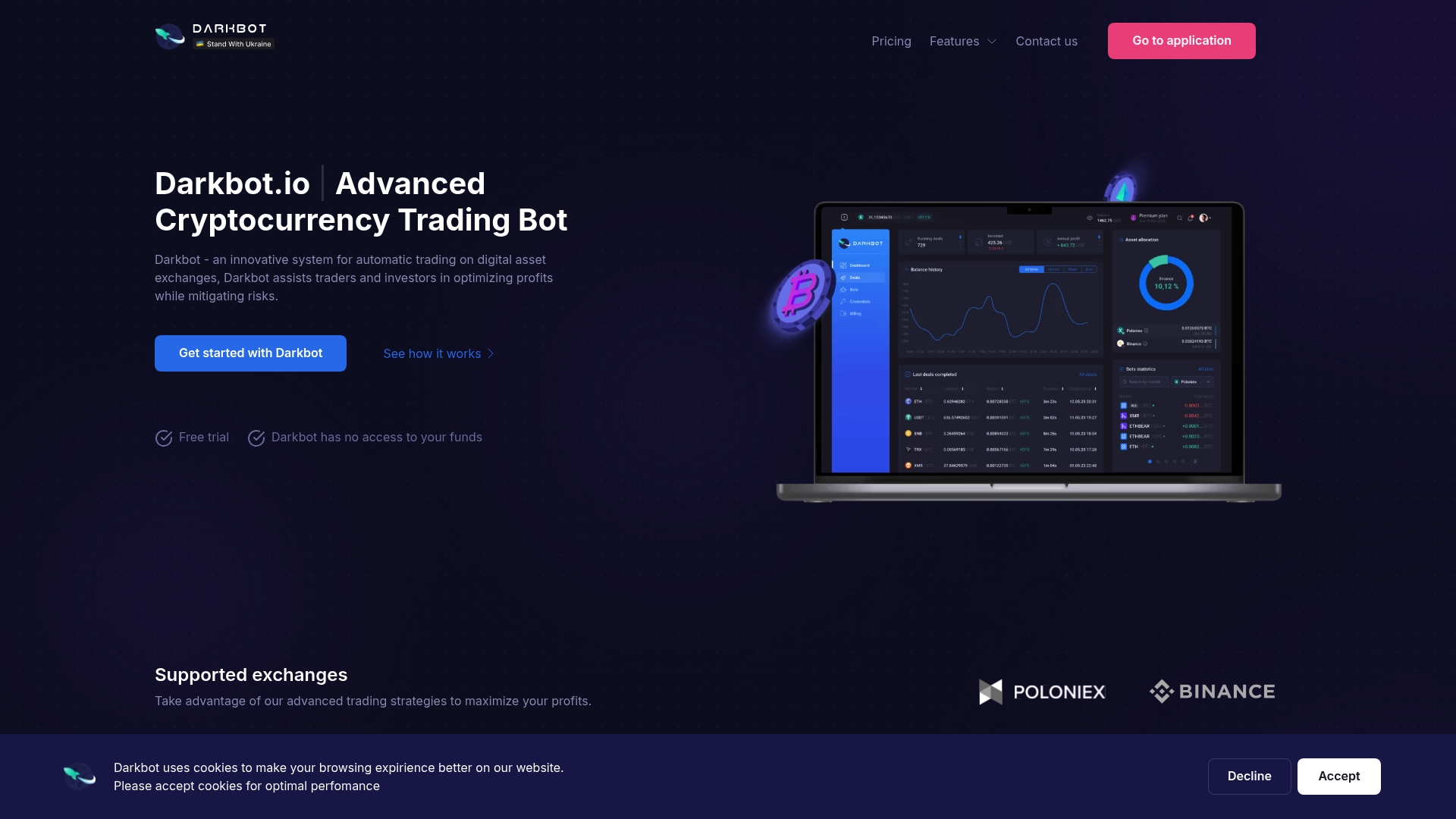
Experience how your trading can evolve by using Darkbot.io to implement AI-enhanced trading strategies tailored for volatile markets. Automate decision-making and risk management with a platform built to adapt as fast as the market changes. Take control now and transform volatility into opportunity by starting your journey with Darkbot.io.
Frequently Asked Questions
What are the main features of cryptocurrency trading strategies in 2025?
Cryptocurrency trading strategies in 2025 emphasize adaptive intelligence, complex algorithmic frameworks, and multi-dimensional market analysis. They incorporate advanced AI technologies, dynamic risk management, and real-time sentiment analysis to navigate volatility.
How does AI enhance trading execution in cryptocurrency markets?
AI enhances trading execution by enabling rapid decision processing, dynamic risk management, and predictive pattern recognition. It analyzes large datasets quickly and adjusts trading strategies in real-time, significantly outperforming traditional manual trading approaches.
What types of trading strategies are popular in 2025?
Popular trading strategies in 2025 include institutional momentum strategies, on-chain data analysis, AI-enhanced arbitrage, and sentiment-driven trading. These methods leverage a combination of quantitative analysis and technological advancements.
How can traders manage volatility and risk in cryptocurrency markets?
Traders can manage volatility and risk by implementing advanced risk management strategies, including liquidity analysis, volatility filtering, correlation mapping, and automated rebalancing. These techniques help maintain control over potential losses while capitalizing on market opportunities.
Recommended

Start trading on Darkbot with ease
Come and explore our crypto trading platform by connecting your free account!
Free plan available • No credit card required