Cryptocurrency Trading Strategy Guide 2025: Automate Success

Over 60 percent of American cryptocurrency traders face challenges adapting to rapid market changes. Understanding how to systematically assess conditions and set clear objectives can mean the difference between steady growth and costly mistakes. This step-by-step guide breaks down proven methods for American investors to build automated crypto trading strategies with confidence, covering everything from market analysis to risk management and ongoing performance improvement.
Quick Summary
| Key Insight | Explanation |
|---|---|
| 1. Assess market conditions carefully | Analyze volatility, volume trends, and sentiment to develop a strong trading strategy. Understand how different cryptocurrencies interact with one another. |
| 2. Set clear and adaptable objectives | Define specific goals related to risk tolerance and investment focus, while remaining flexible to market changes. Quantify your targets for clarity. |
| 3. Optimize and backtest strategies thoroughly | Create a robust trading approach by defining parameters and rigorously testing strategies against historical data to ensure effectiveness. |
| 4. Implement comprehensive risk management | Establish protocols to mitigate losses and enhance long-term sustainability. Use stop losses and dynamic position sizing to maintain discipline. |
| 5. Continuously monitor and refine strategies | Develop a system to track performance over time, adjusting strategies based on data insights and maintaining a commitment to improvement. |
Step 1: Assess Market Conditions and Define Objectives
In this critical first phase of cryptocurrency trading strategy development, you will systematically analyze current market dynamics and establish clear, measurable objectives. The goal is to transform raw market data into actionable insights that will guide your automated trading approach.
To effectively assess market conditions, you need a multifaceted approach. Start by examining price volatility, trading volume trends, and market sentiment across different cryptocurrencies. Research analyzing cryptocurrency predictability suggests leveraging machine learning techniques for more nuanced market understanding. Pay close attention to factors like historical price movements, correlation between different digital assets, and emerging market trends. This comprehensive analysis will help you develop a robust trading strategy that adapts to changing market conditions.
During this assessment, define specific and realistic objectives that align with your risk tolerance and investment goals. Are you seeking short term gains or long term portfolio growth? Will you focus on major cryptocurrencies or explore emerging altcoins? Quantify your targets precisely: target return percentages, acceptable drawdown levels, and maximum risk per trade. Understanding how speculative retail trader behaviors influence market returns can provide additional strategic insights into setting appropriate trading objectives.
Pro tip: Always maintain flexibility in your objectives. Market conditions evolve rapidly in cryptocurrency trading, so design your strategy with built-in adaptability to pivot when data signals meaningful changes.
Step 2: Select and Configure Automated Trading Tools
In this crucial step, you will identify and set up the right automated trading tools that align with your strategic objectives and market assessment. The goal is to transform your trading strategy from theoretical concept into a functional automated system.
Research exploring advanced algorithmic trading approaches suggests leveraging sophisticated techniques like ensemble deep reinforcement learning when selecting and configuring your trading tools. Begin by evaluating platforms that offer robust API integrations, customizable strategy parameters, and comprehensive risk management features. Look for tools that support multiple exchanges, provide real-time analytics, and allow seamless backtesting of your trading algorithms. Key considerations include execution speed, fee structures, supported cryptocurrencies, and the platform’s historical performance.
When configuring your automated trading tools, focus on precise parameter optimization. Define specific entry and exit conditions, set stop loss and take profit levels, and establish clear rules for position sizing. Advanced data science pipelines recommend systematic design and meticulous algorithm evaluation to ensure your trading approach remains disciplined and consistent. Integrate risk management protocols that automatically adjust your strategy based on market volatility, and implement safeguards that prevent excessive trading or potential catastrophic losses.
Pro tip: Always start with small capital allocation when testing a new automated trading configuration. This approach allows you to validate strategy performance with minimal financial risk while gathering critical performance data.
Step 3: Customize and Backtest Trading Strategies
In this pivotal stage of your cryptocurrency trading strategy development, you will transform your initial concept into a robust, data-validated trading approach. Your goal is to meticulously design and rigorously test a strategy that can withstand real market complexities and deliver consistent performance.

Advanced neural network research reveals sophisticated techniques for customizing algorithmic trading systems in cryptocurrency markets, highlighting the importance of multi-timeframe trend analysis and precise strategy calibration. Start by identifying your specific trading parameters such as entry and exit triggers, position sizing rules, risk management protocols, and asset selection criteria. Break down each component systematically and ensure they align with your initial market assessment and trading objectives. Pay special attention to creating flexible rules that can adapt to different market conditions while maintaining a disciplined approach to risk control.
Backtesting serves as your critical validation mechanism. Utilize historical market data to simulate your strategy across various market scenarios, examining performance metrics like total return, maximum drawdown, win rate, and risk adjusted returns. Research into optimal trading techniques emphasizes the significance of balancing profitability with comprehensive risk management during strategy development. Run multiple simulation iterations, adjusting parameters incrementally to refine your approach. Remember that successful backtesting requires extensive data coverage, realistic transaction cost modeling, and a commitment to objective performance evaluation.
Pro tip: Always introduce intentional friction in your backtesting process by including conservative estimates for trading fees, slippage, and potential market impact to ensure your strategy remains robust under real world trading conditions.
Step 4: Implement Risk Management Protocols
In this critical phase of your cryptocurrency trading strategy, you will establish robust safeguards that protect your capital and ensure long term sustainability. Your primary objective is to design a comprehensive risk management framework that mitigates potential losses and maintains consistent trading performance.
Advanced machine learning research demonstrates the importance of technical analysis indicators in evaluating cryptocurrency market risks and making informed trading decisions. Begin by defining clear risk parameters including maximum portfolio drawdown percentage, individual trade risk limits, and total capital allocation per trading strategy. Implement stop loss mechanisms that automatically exit positions when predetermined loss thresholds are reached. Consider employing position sizing techniques that dynamically adjust trade volumes based on market volatility and your account’s risk tolerance. These adaptive protocols will help you maintain disciplined trading behavior and prevent catastrophic capital erosion during unpredictable market movements.
Develop a multi layered risk management approach that includes diversification strategies, correlation analysis, and continuous performance monitoring. Machine learning algorithms provide sophisticated methods for predicting potential market volatility and managing associated risks across different cryptocurrency assets. Establish clear rules for portfolio rebalancing, set strict position sizing limits relative to your total capital, and create automated alerts that notify you of significant market changes or strategy performance deviations. Regularly review and recalibrate your risk management protocols to ensure they remain effective in changing market conditions.
Pro tip: Create a risk management dashboard that provides real time visibility into your trading strategy’s performance metrics, allowing you to make swift and informed adjustments when market conditions shift.
Here is a comparison of common risk management tools used in crypto trading:
| Tool | Main Function | Business Impact |
|---|---|---|
| Stop Loss Orders | Auto-exit losing trades | Minimizes single-trade losses |
| Position Sizing | Adjusts trade size to risk | Prevents overexposure to volatility |
| Diversification | Spreads exposure across assets | Reduces impact of asset downturns |
| Correlation Limits | Avoids highly correlated assets | Mitigates portfolio risk concentrations |
Step 5: Monitor Performance and Refine Approaches
In this final stage of your cryptocurrency trading strategy development, you will transition from static strategy design to dynamic performance optimization. Your objective is to create a continuous improvement framework that adapts your trading approach based on real world market performance and emerging data insights.
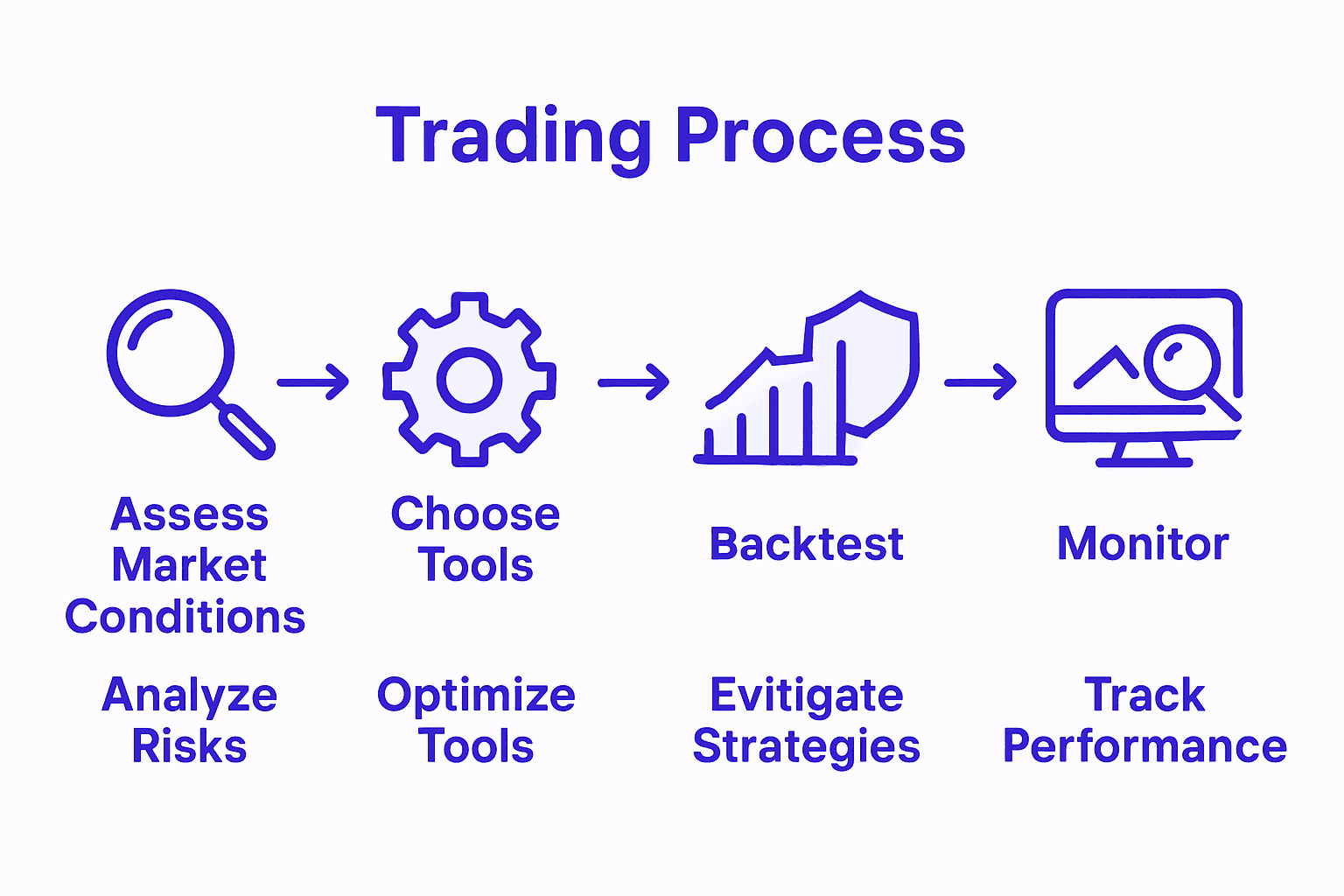
Advanced algorithmic trading research highlights the importance of sophisticated performance monitoring techniques using ensemble deep reinforcement learning methods for cryptocurrency markets. Establish a comprehensive performance tracking system that captures key metrics including total return, Sharpe ratio, maximum drawdown, win rate, and risk adjusted performance. Implement automated reporting mechanisms that generate periodic performance summaries, allowing you to quickly identify strengths and weaknesses in your trading strategy. Pay special attention to metrics that reveal consistent performance patterns rather than focusing solely on short term results.
Data science pipelines recommend systematic approaches to algorithmic strategy evaluation that go beyond surface level analysis. Develop a structured refinement process where you incrementally adjust strategy parameters based on statistically significant performance data. Create comparison frameworks that test minor variations of your existing strategy, using controlled experiments to isolate the impact of specific parameter changes. Remember that successful strategy refinement is an iterative process requiring patience, analytical rigor, and a commitment to objective performance assessment.
Pro tip: Implement a quarterly strategy review process where you comprehensively analyze your trading performance, comparing actual results against your initial backtesting predictions and making data driven refinements.
Here is a summary of key performance metrics to track for cryptocurrency trading strategies:
| Metric | What It Measures | Why It Matters |
|---|---|---|
| Total Return | Overall profit or loss | Assesses strategy success |
| Maximum Drawdown | Largest peak-to-trough decline | Determines risk of major losses |
| Win Rate | Percentage of profitable trades | Evaluates trade consistency |
| Sharpe Ratio | Risk-adjusted return | Compares performance vs risk taken |
| Risk Adjusted Return | Return relative to volatility | Gauges efficiency of returns |
Automate Your Cryptocurrency Trading Strategy for 2025 Success
Navigating the fast-paced crypto market demands an advanced, adaptive approach to trading strategy automation and risk management. This guide highlights the need for precise strategy customization, rigorous backtesting, and continuous performance monitoring — all challenges that require powerful tools to overcome. If you seek to reduce manual effort while increasing trading efficiency and managing volatility risks effectively, automation is the key.
Unlock your full trading potential today with Darkbot.io, the AI-powered platform designed to automate your cryptocurrency trading strategies seamlessly across multiple exchanges. With features such as API integration, real-time analytics, and flexible strategy fine-tuning, Darkbot.io empowers both novice and experienced traders to implement robust risk management protocols and dynamic portfolio rebalancing. Start optimizing your trades and protect your capital with an intuitive interface and dependable technology. Explore your options now at Darkbot.io and transform complex market data into automated success.
Frequently Asked Questions
How can I assess market conditions for my automated cryptocurrency trading strategy?
To assess market conditions, analyze price volatility, trading volume trends, and market sentiment across various cryptocurrencies. Begin by gathering historical price data and evaluating correlations between assets. This information will guide you in developing a trading strategy that is adaptable to market changes.
What automated trading tools should I consider for cryptocurrency trading?
Consider tools that offer robust API integrations, customizable strategy parameters, and strong risk management features. Look for platforms that support multiple exchanges and allow for real-time analytics to optimize your trading strategy.
How should I customize and backtest my cryptocurrency trading strategies?
Start by defining specific trading parameters such as entry and exit triggers and position sizing rules. Conduct backtesting using historical data to simulate your strategy’s performance, making adjustments as needed to improve outcomes based on your findings.
What risk management protocols should I implement in my trading strategy?
Implement clear risk parameters, including maximum portfolio drawdown and individual trade risk limits. Use stop-loss orders and position sizing techniques to mitigate losses, ensuring your strategy remains disciplined during market fluctuations.
How do I monitor and refine my cryptocurrency trading strategy over time?
Establish a performance tracking system to capture key metrics like total return and maximum drawdown. Regularly review your strategy’s performance and adjust parameters based on data insights, ideally doing this quarterly to maintain optimal effectiveness.
What key performance metrics should I track for my cryptocurrency trading strategies?
Track metrics such as total return, maximum drawdown, and win rate to assess your strategy’s effectiveness. Focusing on risk-adjusted returns can also help evaluate the efficiency of your trading approach, enabling more informed decision-making.
Recommended

Start trading on Darkbot with ease
Come and explore our crypto trading platform by connecting your free account!
Free plan available • No credit card required