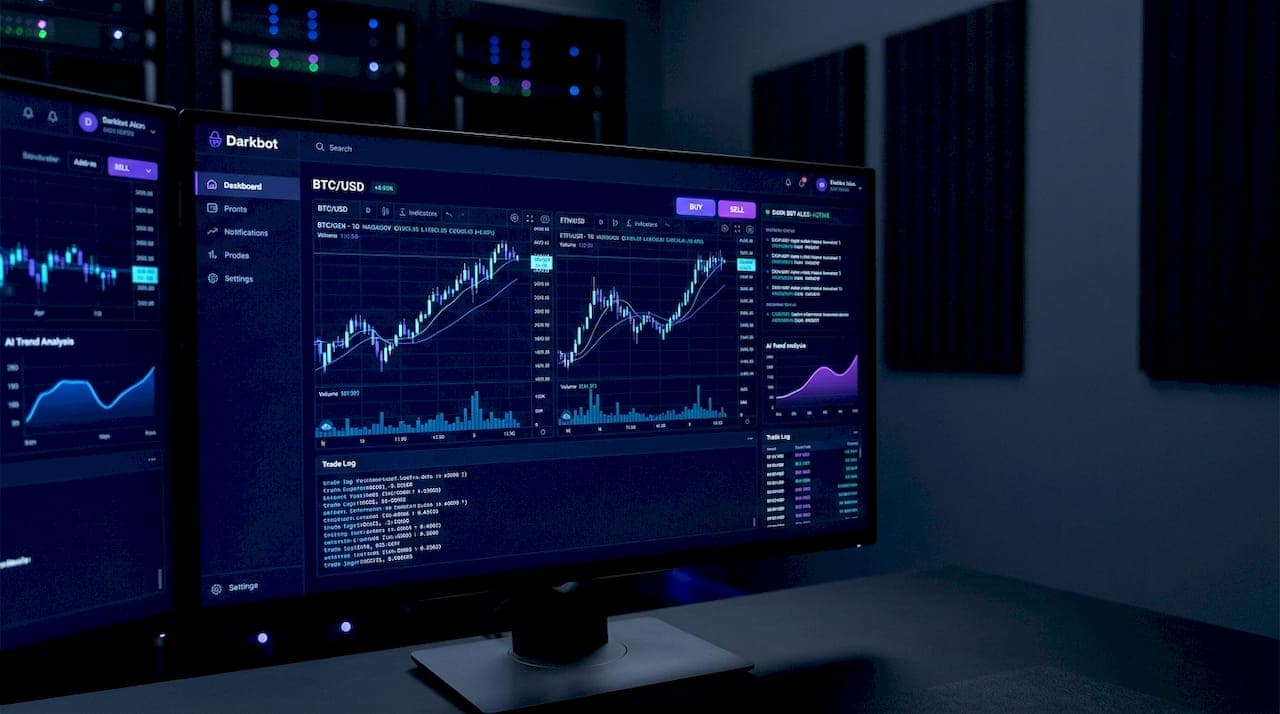
Machine Learning in Crypto Trading 2025 Explained

Over one third of American cryptocurrency traders now rely on algorithms driven by machine learning. The rapid growth of digital assets has made markets more complex than ever, and identifying profitable patterns without advanced tools is nearly impossible. With the right strategies, machine learning promises smarter trading decisions, sharper predictions, and stronger risk management. Discover how these techniques are shaping the American crypto landscape and changing how traders compete in global markets.
Table of Contents
- Defining Machine Learning in Crypto Trading
- Major Types of Trading Algorithms Used
- How Machine Learning Optimizes Strategies
- Real-World Crypto Trading Applications
- Risks, Limitations, and Regulatory Trends
Key Takeaways
| Point | Details |
|---|---|
| Machine Learning Enhances Trading Precision | Advanced algorithms analyze market data, improving the accuracy and speed of trading decisions. |
| Dynamic Strategy Adaptation | Machine learning enables continuous learning from market data, allowing traders to refine their strategies in real time. |
| Identifying Risk and Opportunities | Machine learning algorithms can effectively identify potential trading risks and opportunities, enhancing overall portfolio management. |
| Regulatory Considerations | The rise of algorithmic trading necessitates attention to regulatory frameworks to mitigate risks while promoting market efficiency. |
Defining Machine Learning in Crypto Trading
Machine learning represents a transformative approach to cryptocurrency trading, enabling traders to leverage advanced algorithms that can analyze complex market patterns and make predictive decisions. At its core, machine learning in crypto trading involves training computational models to recognize intricate price movement signals, market trends, and potential trading opportunities with unprecedented speed and accuracy.
In practical terms, machine learning algorithms process vast datasets of historical cryptocurrency price information, trading volumes, market sentiment indicators, and external economic signals to generate predictive models. Researchers have demonstrated that sophisticated techniques like Support Vector Machines and Artificial Neural Networks can effectively forecast Bitcoin price movements, providing traders with data-driven insights that transcend traditional manual analysis.
The fundamental mechanics of machine learning in crypto trading involve several key processes:
- Data Collection: Gathering comprehensive market data from multiple exchanges and timeframes
- Feature Engineering: Identifying and extracting relevant trading signals and predictive indicators
- Model Training: Using historical data to teach algorithms pattern recognition and decision-making strategies
- Predictive Modeling: Generating probabilistic forecasts about potential price movements and market trends
By integrating advanced machine learning techniques, traders can develop more robust, adaptive trading strategies that respond dynamically to rapidly changing cryptocurrency markets. The technology enables automated decision-making that can process exponentially more information than human traders, potentially reducing emotional bias and improving overall trading performance.
Major Types of Trading Algorithms Used
Algorithmic trading has revolutionized cryptocurrency markets by enabling automated, precise trading strategies that can execute complex instructions faster than human traders. These algorithms are sophisticated computational models designed to analyze market conditions, identify trading opportunities, and execute transactions with minimal human intervention, transforming how digital assets are traded across global exchanges.
Within the cryptocurrency ecosystem, several primary types of trading algorithms dominate the landscape:
- Trend Following Algorithms: Track and capitalize on sustained market momentum
- Mean Reversion Algorithms: Identify price deviations from historical averages
- Arbitrage Algorithms: Exploit price differences across multiple exchanges
- Market Making Algorithms: Provide liquidity by continuously buying and selling assets
High-frequency trading represents a cutting-edge subset of algorithmic trading, characterized by extremely rapid trade execution and advanced computational techniques. These algorithms can process market data and generate trading decisions in microseconds, allowing traders to capitalize on minute price fluctuations that would be imperceptible to human traders.

The most sophisticated trading algorithms incorporate machine learning and artificial intelligence, enabling dynamic adaptation to changing market conditions. These advanced systems continuously learn from historical trading data, refine their strategies, and develop increasingly nuanced approaches to predicting cryptocurrency price movements and executing optimal trading decisions.
How Machine Learning Optimizes Strategies
Machine learning transforms cryptocurrency trading strategies by introducing unprecedented levels of adaptability, precision, and predictive power. Advanced reinforcement learning techniques enable trading algorithms to dynamically adjust their approaches based on real-time market data, creating strategies that evolve and improve with each trading cycle.
The optimization process involves several critical components:
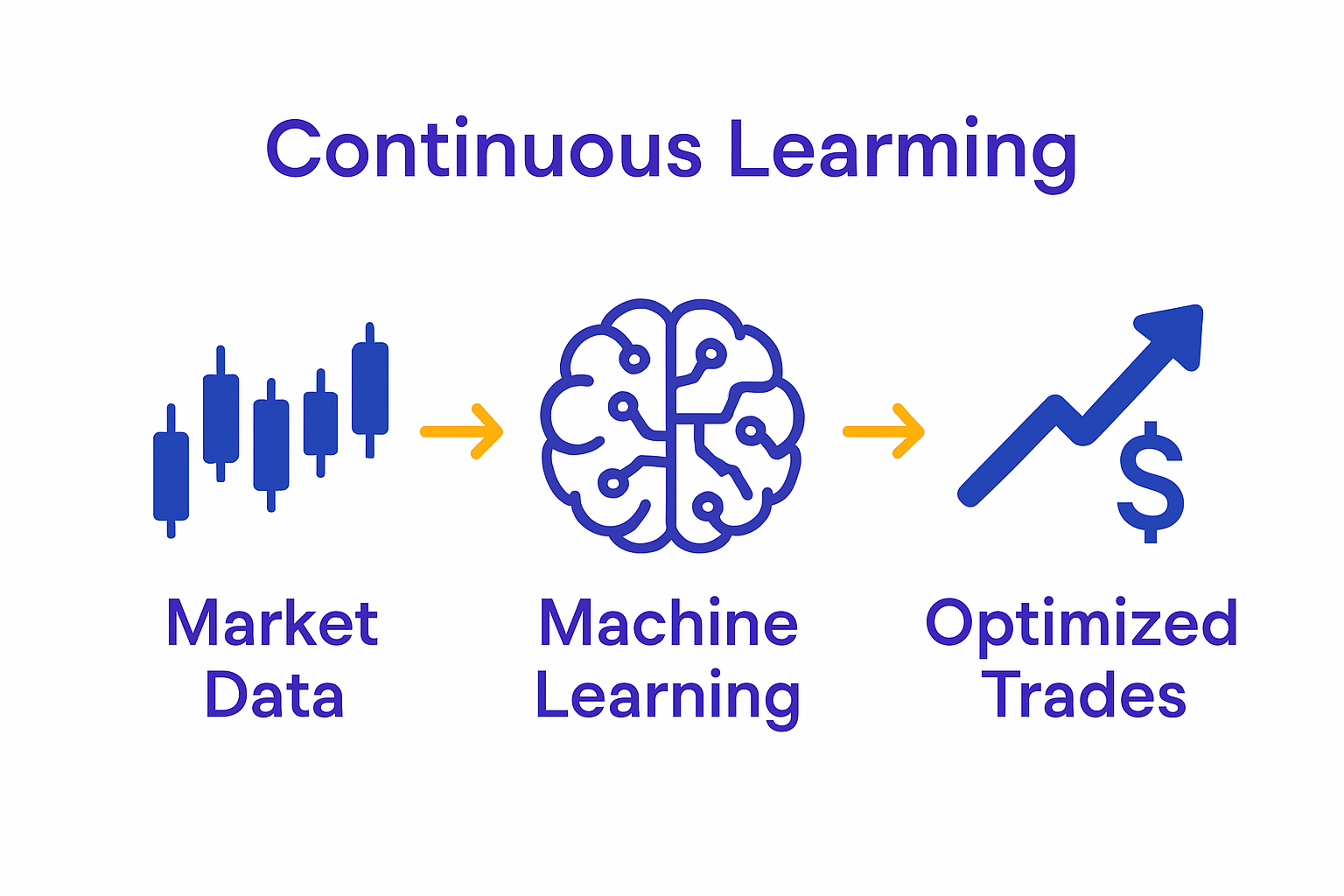
- Continuous Learning: Algorithms analyze historical and current market data
- Pattern Recognition: Identifying complex market signals invisible to human traders
- Risk Assessment: Dynamically calculating potential trade outcomes
- Strategy Refinement: Automatically adjusting trading parameters
Hierarchical reinforcement learning frameworks represent a breakthrough in trading strategy optimization, enabling algorithms to make sophisticated decisions across multiple timeframes and market conditions. These advanced systems can simultaneously evaluate short-term price movements and long-term market trends, creating multi-dimensional trading strategies that adapt faster than traditional algorithmic approaches.
By integrating machine learning, traders can develop intelligent systems that not only execute trades but continuously learn and improve. The technology transforms trading from a reactive process to a proactive, data-driven strategy that can anticipate market movements, manage risks more effectively, and generate more consistent performance across volatile cryptocurrency markets.
Real-World Crypto Trading Applications
Advanced machine learning techniques are revolutionizing cryptocurrency trading by enabling sophisticated strategies that go beyond traditional market analysis. These cutting-edge approaches transform raw market data into actionable trading insights, allowing traders to navigate the complex and volatile crypto ecosystem with unprecedented precision and efficiency.
Real-world applications of machine learning in crypto trading span several critical domains:
- Price Prediction: Forecasting cryptocurrency price movements
- Risk Management: Identifying and mitigating potential trading risks
- Portfolio Optimization: Dynamically rebalancing asset allocations
- Sentiment Analysis: Interpreting market psychology and external factors
- Arbitrage Detection: Identifying cross-exchange trading opportunities
Empirical research demonstrates the remarkable potential of machine learning algorithms in predicting Bitcoin price fluctuations, showcasing how advanced computational techniques can extract meaningful patterns from massive, complex datasets. These algorithms can process millions of data points simultaneously, uncovering subtle market signals that human traders might easily miss.
The practical implementation of machine learning in crypto trading represents a paradigm shift, enabling traders to develop adaptive, intelligent systems that continuously learn and improve. By leveraging sophisticated algorithms, traders can now create more resilient, data-driven strategies that respond dynamically to the ever-changing cryptocurrency market landscape, ultimately reducing human error and maximizing potential returns.
Risks, Limitations, and Regulatory Trends
Machine learning in cryptocurrency trading presents a complex landscape of technological potential and inherent challenges. While these advanced algorithms offer unprecedented trading capabilities, they simultaneously introduce significant risks that demand careful consideration and strategic management.
Key risks and limitations in machine learning-driven crypto trading include:
- Overfitting: Algorithms that perform exceptionally well on historical data but fail in live markets
- Data Quality Dependencies: Performance critically tied to input data accuracy and comprehensiveness
- Computational Overhead: High processing requirements and associated infrastructure costs
- Unpredictable Market Conditions: Difficulty adapting to unprecedented or black swan events
- Potential Systemic Vulnerabilities: Risk of widespread algorithmic trading failures
Algorithmic trading has raised substantial concerns regarding market manipulation and fairness, prompting increased regulatory scrutiny across global financial markets. High-frequency trading mechanisms have been particularly criticized for their potential to exacerbate market volatility and create systemic risks that can destabilize cryptocurrency ecosystems.
Regulatory trends are rapidly evolving to address these challenges, with governments and financial authorities developing sophisticated frameworks to monitor and control machine learning-driven trading strategies. The future of crypto trading will likely involve a delicate balance between technological innovation and robust regulatory oversight, ensuring that advanced algorithms enhance market efficiency while protecting individual investors from potential systemic risks.
Harness Machine Learning to Elevate Your Crypto Trading Today
Machine learning breakthroughs highlighted in “Machine Learning in Crypto Trading 2025 Explained” reveal critical challenges like overfitting, managing volatile market conditions, and the need for continuous strategy optimization. If you are seeking a reliable way to automate adaptive trading strategies while reducing emotional bias and computational overhead, embracing an AI-driven platform is essential. Concepts such as predictive modeling, risk assessment, and portfolio optimization demand sophisticated tools designed for real-time decision-making and dynamic market adaptation.
Don’t let complexity slow your crypto gains. At Darkbot.io, we offer an advanced automated cryptocurrency trading bot solution that puts machine learning power directly in your hands. Effortlessly connect your exchanges, customize multi-bot strategies, and benefit from continuous portfolio rebalancing and insightful analytics. Start your journey with confidence through our friendly interface and personalized support. Take control and optimize your crypto trading before the next market wave hits by visiting Darkbot.io and exploring how our platform transforms intelligent trading into effortless action.
Frequently Asked Questions
What is machine learning in crypto trading?
Machine learning in crypto trading involves using advanced algorithms to analyze market patterns and make predictive trading decisions based on vast datasets of historical prices, trading volumes, and market sentiments.
How do machine learning algorithms optimize trading strategies?
Machine learning algorithms optimize trading strategies by continuously learning from real-time and historical data, recognizing patterns, assessing risks, and automatically refining trading parameters to adapt to market changes.
What are the major types of trading algorithms used in cryptocurrency?
The major types of trading algorithms in cryptocurrency include trend following, mean reversion, arbitrage, and market making algorithms, each designed to capitalize on different market opportunities.
What risks are associated with machine learning in crypto trading?
Key risks include overfitting to historical data, dependence on data quality, high computational demands, challenges in unpredictable market conditions, and potential systemic vulnerabilities related to algorithmic trading failures.
Recommended

Start trading on Darkbot with ease
Come and explore our crypto trading platform by connecting your free account!
Free plan available • No credit card required