Machine Learning in Trading Strategies: Crypto Automation Explained

Most crypto traders in Venezuela and Argentina barely have time to watch the markets, yet the pressure to grow wealth and protect funds from inflation keeps rising. When trading manually, missing opportunities is almost guaranteed. American hedge funds now rely on machine learning to execute thousands of trades automatically, making rapid decisions that ordinary traders simply cannot match. Discover how automation and smart risk management can bring similar power to your own trading, even with limited screen time.
Key Takeaways
| Point | Details |
|---|---|
| Machine Learning Enhances Trading | Machine learning algorithms analyze historical market patterns and adapt to evolving market conditions for better trading strategies. |
| Diverse Model Types Available | Various machine learning models, including decision trees and deep learning, have unique strengths and limitations tailored for trading applications. |
| Automated Systems Provide Speed | Automated trading systems execute trades instantly, eliminating emotional decision-making and enhancing efficiency in cryptocurrency markets. |
| Risk Management is Crucial | Implementing robust risk management strategies is essential to safeguard investments and adapt to market fluctuations effectively. |
Machine Learning in Trading Strategies Defined
Machine learning represents a transformative approach to trading strategies, enabling automated systems to analyze complex financial data and make intelligent decisions. At its core, machine learning in trading involves developing algorithmic models that can learn from historical market patterns and adapt to changing market conditions.
Trading algorithms leverage sophisticated techniques like deep learning architectures to process vast amounts of financial information. These models typically analyze multiple data points including historical price movements, market volatility, trading volumes, and macroeconomic indicators to generate predictive insights. Supervised learning models dominate this space, focusing on training algorithms using labeled historical trading data to recognize potential future market trends.
Proprietary trading firms increasingly deploy machine learning techniques to develop sophisticated trading strategies. These strategies often involve analyzing extensive order book data with hundreds of feature variables to predict financial instrument prices and optimize trading execution. However, the field remains complex, with ongoing challenges around model transparency and potential market manipulation risks.
Pro Tip: Always validate machine learning trading models using out-of-sample testing and maintain strict risk management protocols to mitigate potential algorithmic trading vulnerabilities.
Major Types of Machine Learning Models Used
Machine learning models in trading represent a diverse ecosystem of algorithmic approaches designed to extract meaningful insights from complex financial data. These models range from traditional statistical techniques to advanced neural network architectures, each offering unique capabilities for analyzing market dynamics and generating trading signals.
Traditional supervised learning models like decision trees and support vector machines remain fundamental to trading strategy development. These models excel at pattern recognition, classification, and predictive analysis by learning from labeled historical market data. Random forest algorithms, another powerful supervised technique, aggregate multiple decision trees to enhance prediction accuracy and reduce overfitting risks.
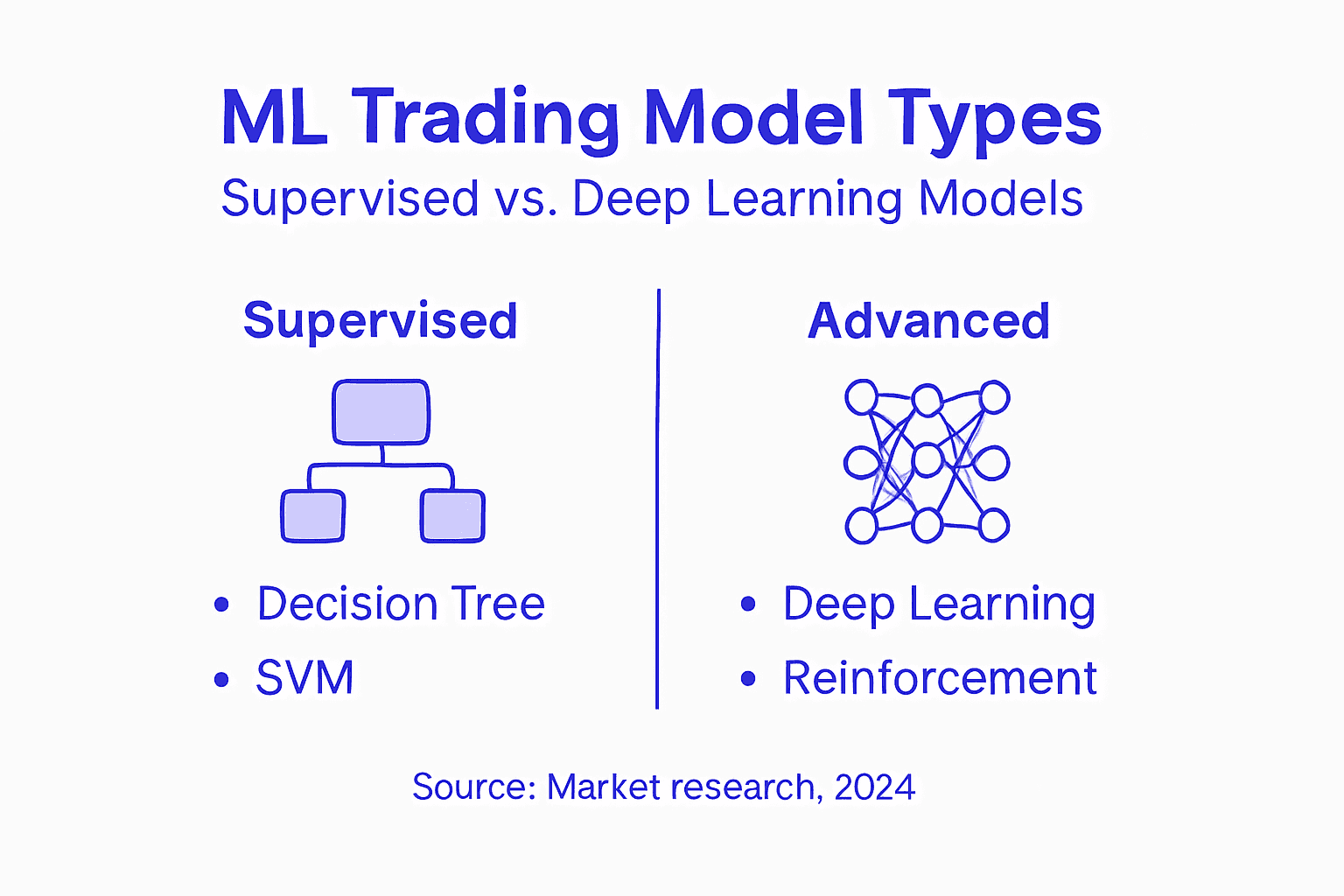
More sophisticated approaches include deep learning and reinforcement learning models that can adapt dynamically to evolving market conditions. Hybrid models combining convolutional neural networks, gated recurrent units, and gradient boosting algorithms have demonstrated superior performance in predicting market trends, especially in volatile cryptocurrency markets. These advanced architectures can process multiple data streams simultaneously, capturing complex nonlinear relationships that traditional statistical models might miss.
Pro Tip: Develop a comprehensive model validation framework that includes out-of-sample testing, cross-validation, and continuous performance monitoring to ensure your machine learning trading models remain robust and adaptive.
Here’s how major machine learning model types in trading compare:
| Model Type | Typical Use Case | Strengths | Key Limitation |
|---|---|---|---|
| Decision Trees | Pattern recognition | Easy to interpret | Prone to overfitting |
| Random Forest | Risk management, classification | High accuracy, reduces variance | Slower with large data sets |
| Deep Learning | Predicting trends, signal generation | Handles complex nonlinear data | Requires significant data, opaque |
| Reinforcement Learning | Dynamic strategy adaptation | Learns optimal actions over time | Difficult to train, unstable |
How Automated Crypto Trading Works Today
Automated crypto trading represents a sophisticated technological approach that transforms traditional trading methodologies by leveraging advanced computational techniques. Unlike manual trading, these systems operate continuously, making split-second decisions based on predefined algorithms and real-time market data analysis.
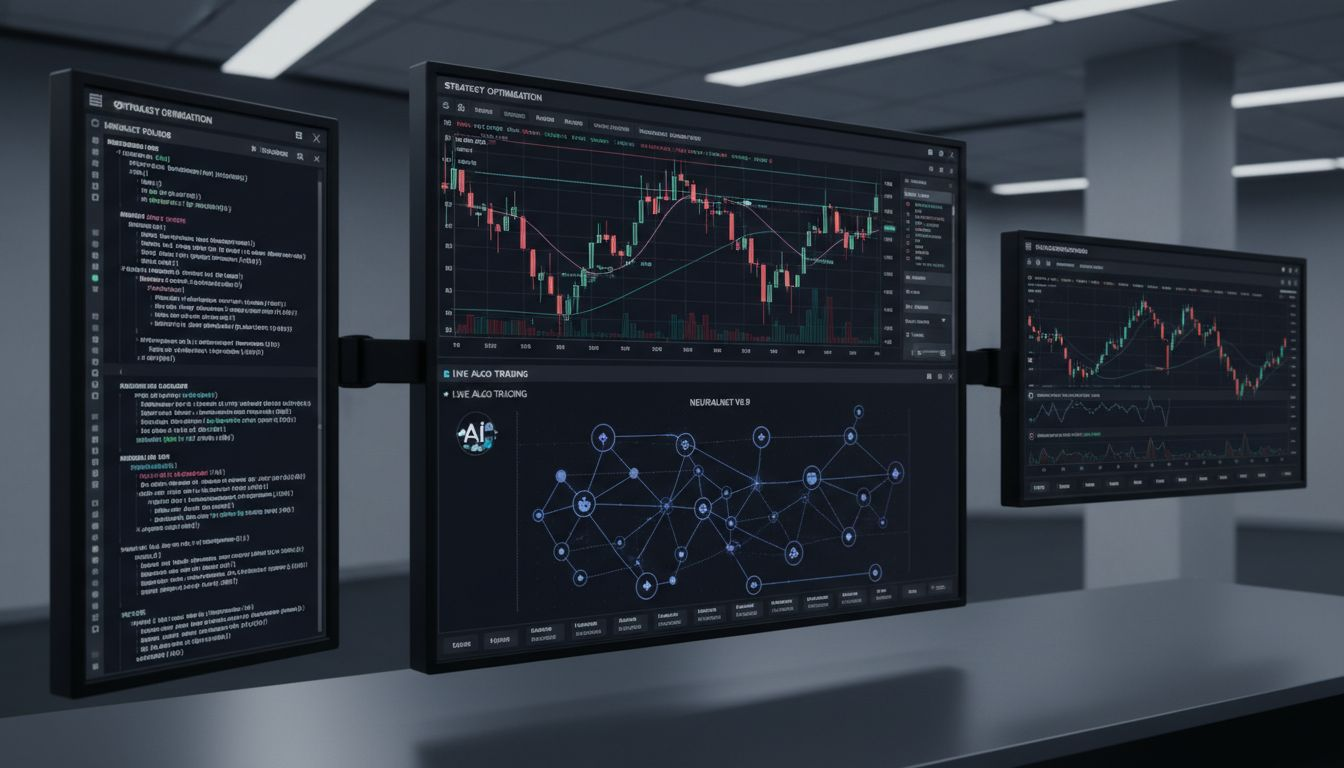
Algorithmic trading bots enable traders to execute complex strategies without constant human monitoring. These intelligent systems scan multiple cryptocurrency exchanges simultaneously, identifying potential trading opportunities by analyzing price movements, market trends, volume indicators, and other critical financial metrics. The automation eliminates emotional decision-making, ensuring trades are executed based on logical, pre-programmed parameters.
The core functionality of automated crypto trading involves multiple sophisticated components. Traders configure specific entry and exit rules, risk management protocols, and position sizing parameters that guide the bot’s behavior. Machine learning algorithms enhance these systems by continuously adapting strategies based on performance data, learning from past trades to optimize future decision-making. Advanced bots can integrate technical indicators, sentiment analysis, and predictive modeling to create robust, dynamic trading approaches that respond instantaneously to market fluctuations.
Pro Tip: Regularly backtest and validate your automated trading strategies using historical data to ensure reliability and refine algorithmic performance before deploying real capital.
The table below summarizes key automated crypto trading system features and their business impacts:
| Feature | Business Impact | Example Benefit |
|---|---|---|
| Real-time Execution | Seizes opportunities instantly | Faster order placement |
| Multi-exchange Monitoring | Broadens market reach | Arbitrage opportunities |
| Automated Risk Controls | Limits downside and protects portfolio | Auto stop-loss implementation |
| Continuous Strategy Adaptation | Improves long-term performance | Learns from new data daily |
Key Benefits and Common Drawbacks for Traders
Automated trading systems offer cryptocurrency traders a powerful technological approach to market engagement, presenting both significant advantages and potential challenges. These sophisticated platforms leverage advanced computational techniques to transform traditional trading methodologies, providing traders with unprecedented capabilities for market analysis and strategy execution.
The primary benefits of automated trading include enhanced decision-making capabilities. Traders gain the ability to process massive amounts of market data instantaneously, eliminating emotional biases that often compromise manual trading performance. These systems can simultaneously monitor multiple cryptocurrency exchanges, execute trades with millisecond precision, and apply complex risk management protocols that would be impossible for human traders to implement manually.
However, automated trading is not without substantial risks. Potential drawbacks include algorithmic vulnerabilities such as overfitting, where trading models become too narrowly tailored to historical data and fail to adapt to changing market conditions. Technical challenges like system failures, unexpected market events, and the complexity of developing robust predictive models can undermine trading performance. Additionally, traders must navigate regulatory uncertainties and the ongoing need for continuous model monitoring and refinement.
Pro Tip: Implement a rigorous validation process that includes extensive backtesting, paper trading, and gradual capital allocation to thoroughly assess your automated trading strategy’s reliability before full deployment.
Managing Risk and Avoiding Costly Mistakes
Risk management represents the critical foundation of successful algorithmic cryptocurrency trading, demanding sophisticated strategies that go beyond simple intuition. Traders must develop comprehensive approaches that anticipate potential vulnerabilities and protect their investment capital against unexpected market fluctuations.
Machine learning provides powerful risk monitoring techniques that enable traders to proactively identify and mitigate potential trading risks. These advanced algorithms continuously analyze multiple data streams, including historical price movements, market sentiment, economic indicators, and real-time trading signals to create dynamic risk assessment models. By integrating sophisticated predictive analytics, traders can establish early warning systems that detect potential market disruptions before they significantly impact portfolio performance.
The most effective risk management strategies incorporate multiple layers of protection. This includes implementing strict position sizing rules, diversifying across different cryptocurrency assets, establishing clear stop-loss mechanisms, and continuously validating trading models. Traders must remain vigilant about potential algorithmic biases, ensuring their models can adapt to changing market conditions without becoming overly rigid or susceptible to historical data limitations. Regular model retraining, comprehensive backtesting, and maintaining flexibility in trading parameters are essential for long-term sustainability.
Pro Tip: Develop a comprehensive risk management framework that includes setting maximum drawdown limits, implementing automated stop-loss triggers, and maintaining a disciplined approach to position sizing and capital allocation.
Unlock Smarter Crypto Trading with Automated Machine Learning
Navigating the complexities of machine learning in trading strategies can be daunting. You want powerful solutions that adapt to volatile markets, offer real-time risk management, and eliminate emotional trading mistakes. This article highlights the challenges of developing and maintaining robust automated crypto trading models—issues like model transparency, dynamic strategy adaptation, and comprehensive risk controls. Darkbot.io addresses these pain points by providing an advanced automated cryptocurrency trading platform built on AI and machine learning technologies designed specifically to optimize profits and mitigate risks across multiple exchanges.
With features like seamless API integration, customizable strategy setups, and continuous portfolio rebalancing, Darkbot.io empowers both novice and experienced traders to harness machine learning’s advantages without the technical hassle. Experience dependable execution with tools that continuously learn from market data and adjust for real-world conditions—all wrapped in an intuitive interface with personalized support.
Ready to transform your crypto trading strategy into an optimized, automated powerhouse?
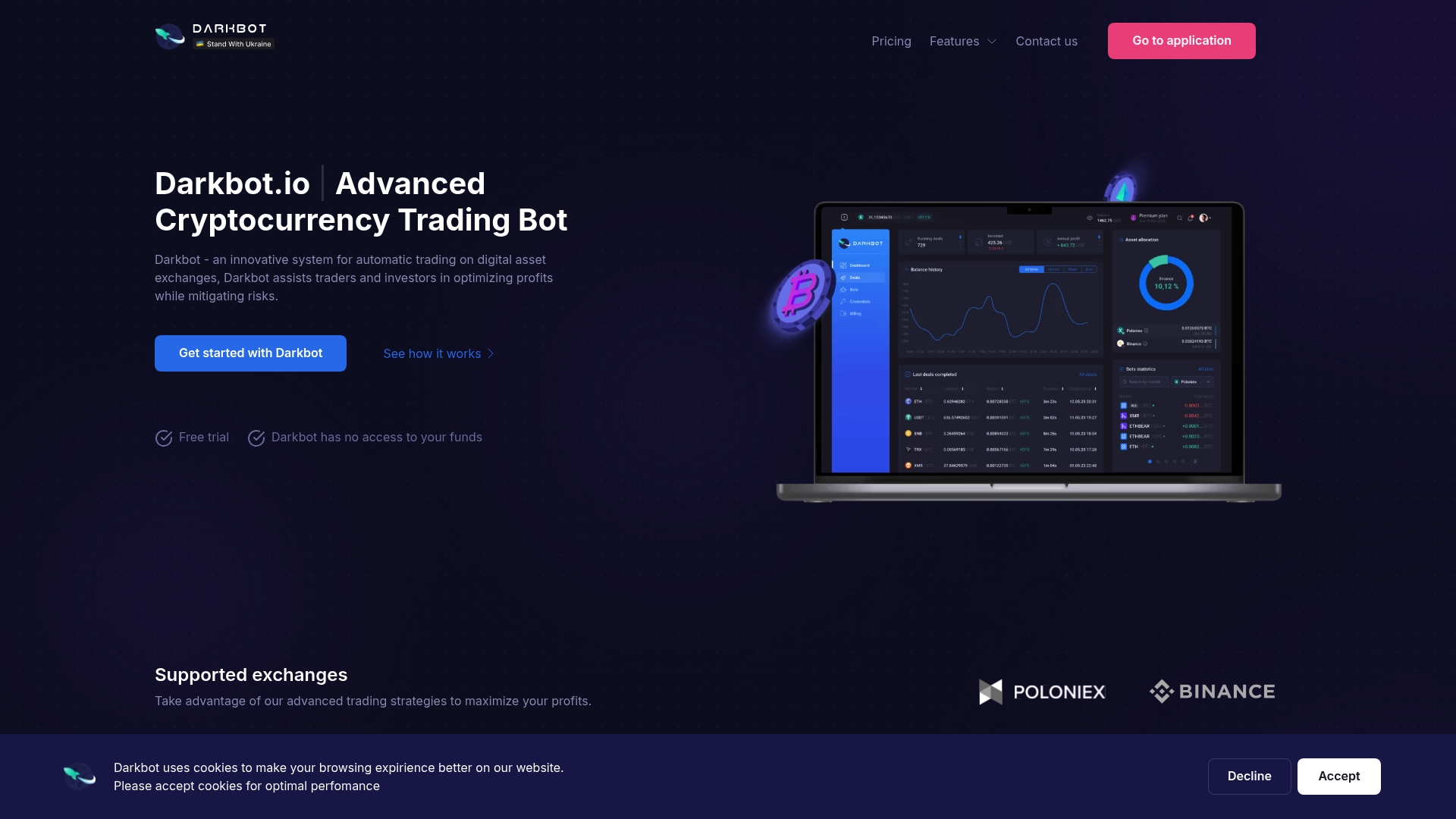
Explore how easy it is to get started with Darkbot.io. Unlock continuous strategy adaptation, automated risk management, and multi-exchange execution today. Visit Darkbot.io now and take the next step toward smarter crypto automation.
Frequently Asked Questions
What is machine learning in trading strategies?
Machine learning in trading strategies refers to the use of algorithmic models that analyze historical market data to make informed trading decisions. These models can adapt to changing market conditions, often utilizing techniques like deep learning to process complex financial information.
How do automated crypto trading systems work?
Automated crypto trading systems operate using predefined algorithms to analyze market data and execute trades without human intervention. They continuously monitor multiple exchanges, making split-second decisions based on real-time price movements and market trends.
What are the major types of machine learning models used in trading?
Major types of machine learning models in trading include decision trees, random forests, deep learning, and reinforcement learning. Each model has unique strengths, such as pattern recognition or dynamic strategy adaptation, and can be used for various trading tasks.
What are the risks of using automated trading systems?
Automated trading systems carry risks such as algorithmic vulnerabilities like overfitting, technical failures, and the potential inability to adapt to changing market conditions. It’s crucial to implement thorough risk management strategies and continually validate trading models.
Recommended
- Why Automate Crypto Strategies for Trading Success
- Machine Learning in Crypto Trading: Impact and Advantages
- Trading Bot Algorithms: Optimizing Crypto Profits
- Crypto Trading Automation Benefits: Smarter, Safer Investing
- Mastering Bitcoin Trading: From Fundamentals to Profitable Strategies - JF Consult | Digital Innovation Consulting

Start trading on Darkbot with ease
Come and explore our crypto trading platform by connecting your free account!
Free plan available • No credit card required