Role of AI in Trading: Transforming Crypto Markets

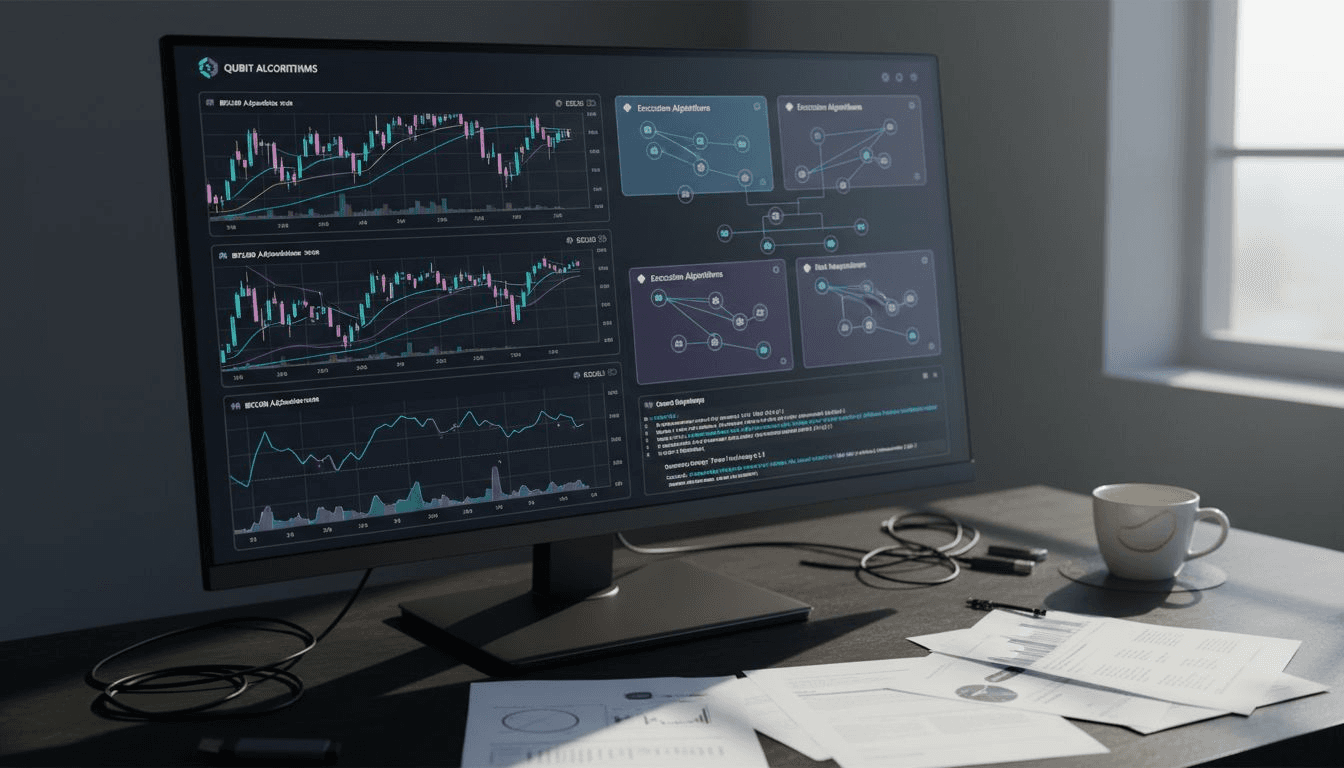
Most American traders now rely on Artificial Intelligence to analyze complex financial markets, a shift that has redefined modern trading. With AI systems capable of evaluating millions of data points at lightning speed, advanced predictive models are rewriting the rules of both traditional and cryptocurrency trading. This rapid evolution is making sophisticated market decisions more accessible, revealing how American investors can gain a competitive edge by embracing AI-powered trading technologies.
Table of Contents
- Defining AI In Modern Trading Systems
- Types Of AI Algorithms Used In Crypto
- How Automated AI Bots Optimize Strategies
- Real-World Applications In Cryptocurrency Markets
- Risks, Security, And Safety Best Practices
Key Takeaways
| Point | Details |
|---|---|
| AI Transforms Trading Systems | AI enhances trading through predictive models and machine learning, enabling faster and more accurate decision-making. |
| Diverse Algorithms in Crypto | Various AI algorithms, such as reinforcement learning and deep learning, are employed in cryptocurrency trading for better prediction and strategy adaptation. |
| Automated Bots Enhance Efficiency | AI trading bots leverage real-time data analysis to optimize strategies and execute trades rapidly, outpacing human capabilities. |
| Importance of Security and Transparency | Ensuring transparency in AI-driven decisions and implementing robust security measures are vital for risk management in trading environments. |
Defining AI in Modern Trading Systems
Artificial Intelligence (AI) has transformed trading systems from static computational tools into dynamic, adaptive platforms capable of making sophisticated financial decisions. At its core, AI represents a revolutionary approach to processing market data, enabling traders to leverage advanced predictive models that go far beyond traditional analytical methods.
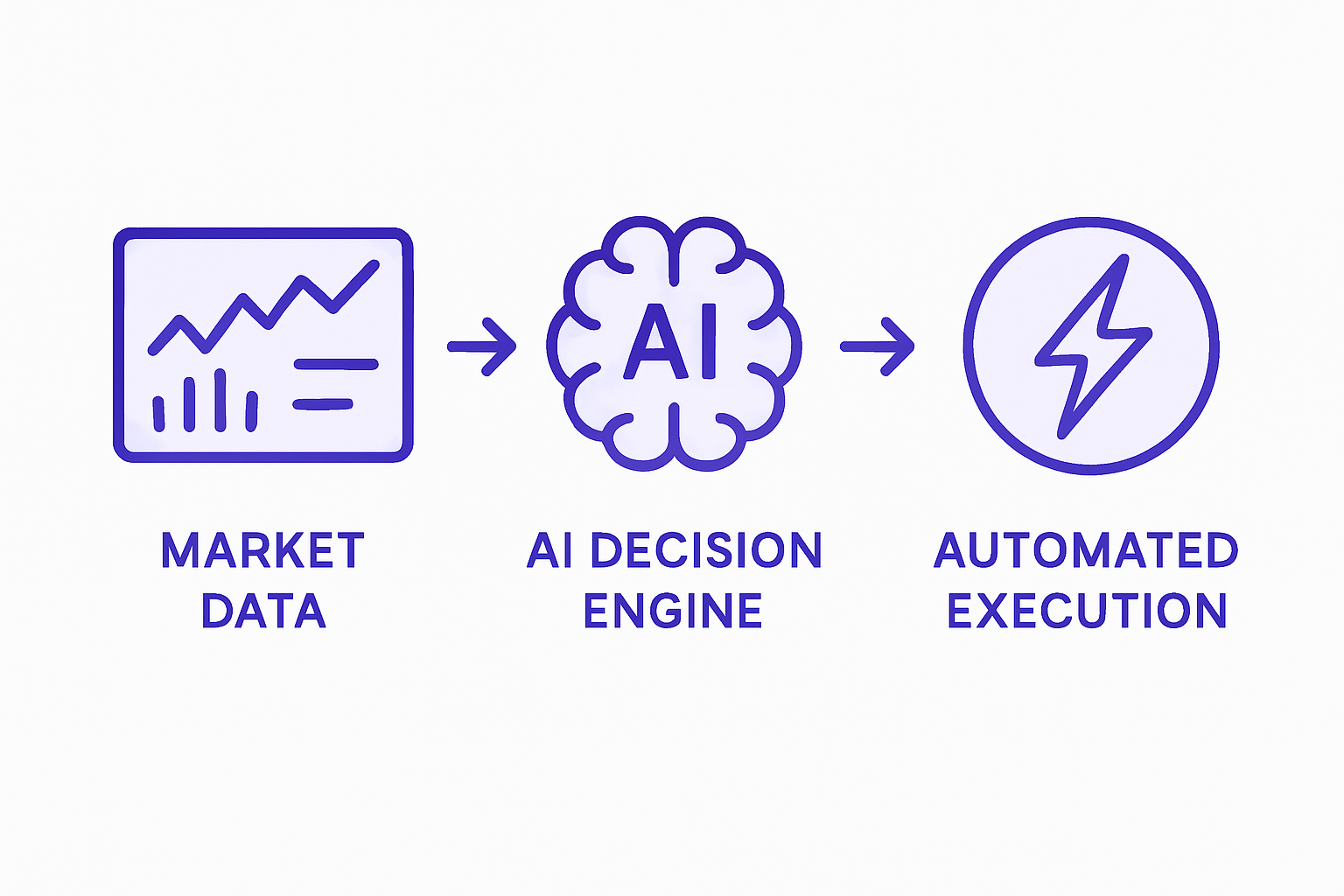
In modern trading ecosystems, AI functions as a sophisticated decision-making engine, utilizing complex machine learning algorithms to analyze massive datasets and identify potential trading opportunities. These systems can process millions of data points simultaneously, detecting subtle market patterns that human traders might overlook. The key innovation lies in AI’s ability to learn and adapt, continuously refining its predictive accuracy through iterative analysis.
The technological evolution of AI-driven trading systems has introduced several groundbreaking capabilities:
- Predictive Market Analysis: Generating probabilistic forecasts based on historical and real-time market data
- Algorithmic Strategy Execution: Implementing complex trading strategies with millisecond-level precision
- Risk Management: Dynamically adjusting portfolio allocations to minimize potential losses
- Pattern Recognition: Identifying complex market trends invisible to traditional analytical approaches
Moreover, the contemporary trading landscape demands not just computational power, but also transparency and interpretability in AI models. Modern AI trading systems are increasingly designed to provide clear rationales for their decision-making processes, building trust among traders and regulators by demystifying the complex algorithms driving financial strategies.
Types of AI Algorithms Used in Crypto
Artificial Intelligence algorithms in cryptocurrency trading represent a sophisticated ecosystem of computational techniques designed to extract meaningful insights from complex market dynamics. These advanced algorithms leverage multiple machine learning and statistical approaches to predict price movements, manage risk, and optimize trading strategies with unprecedented precision.
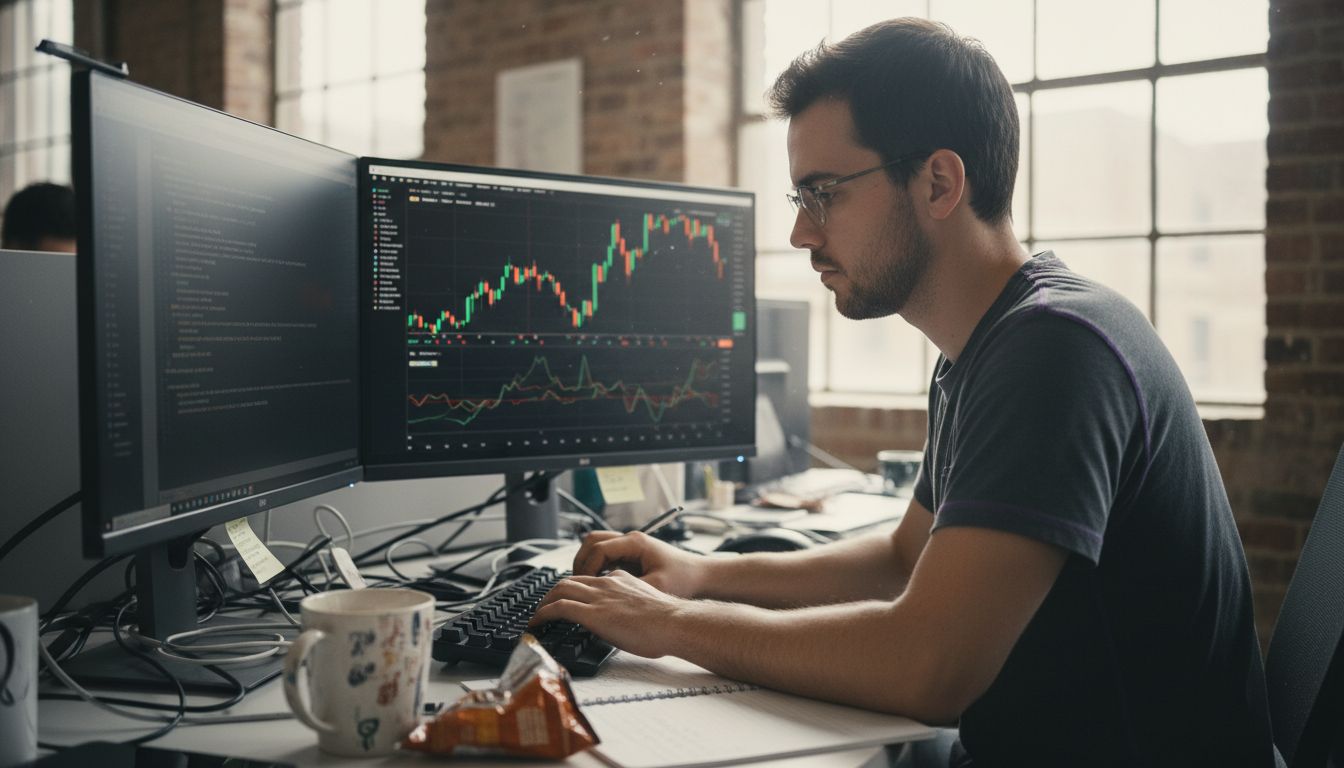
One of the most prominent AI approaches in crypto trading is deep learning, which includes specialized architectures like Autoencoder-CNN-GANs that process financial time series data. These complex neural network models can simultaneously analyze historical price patterns, detect anomalies, and generate predictive forecasts. By integrating convolutional neural networks with generative adversarial networks, these algorithms create robust models capable of understanding intricate market behaviors that traditional analytical methods might miss.
The primary types of AI algorithms used in cryptocurrency trading include:
-
Reinforcement Learning Algorithms
- Deep Q-Networks (DQN)
- Twin-Delayed DDPG (TD3) for dynamic strategy adaptation
- Policy Gradient Methods
-
Supervised Learning Models
- Random Forest Classifiers
- Support Vector Machines
- Gradient Boosting Algorithms
-
Unsupervised Learning Techniques
- Clustering Algorithms
- Anomaly Detection Networks
- Dimensionality Reduction Models
Deep reinforcement learning algorithms like TD3 represent a particularly promising frontier in crypto trading. These models can continuously learn and adapt their trading strategies by receiving feedback from market performance, essentially creating an intelligent system that evolves its decision-making processes in real time. Unlike static trading algorithms, reinforcement learning approaches can dynamically adjust to changing market conditions, potentially generating more responsive and intelligent trading strategies.
How Automated AI Bots Optimize Strategies
Automated AI trading bots represent a sophisticated technological breakthrough in cryptocurrency markets, transforming traditional trading approaches through intelligent, data-driven decision-making processes. These advanced systems leverage complex algorithms to analyze market conditions, execute trades, and optimize investment strategies with a level of speed and precision impossible for human traders.
Algorithmic trading systems now integrate multi-timeframe trend analysis with high-frequency execution, enabling unprecedented strategic optimization. By simultaneously processing data across different time intervals, these AI bots can detect subtle market patterns, anticipate potential price movements, and make instantaneous trading decisions that capitalize on fleeting market opportunities.
Key optimization strategies employed by automated AI bots include:
-
Real-Time Market Analysis
- Continuous monitoring of multiple cryptocurrency exchanges
- Instant detection of price discrepancies
- Rapid execution of arbitrage opportunities
-
Risk Management Techniques
- Dynamic portfolio rebalancing
- Automated stop-loss implementations
- Adaptive position sizing based on market volatility
-
Predictive Performance Modeling
- Statistical pattern recognition
- Machine learning-driven strategy refinement
- Probabilistic outcome forecasting
The systematic programming and evaluation of algorithmic trading strategies represents a critical advancement in financial technology. By implementing data science pipelines, AI bots can continuously learn and adapt their trading approaches, creating increasingly sophisticated models that evolve with changing market conditions. This dynamic approach allows traders to leverage computational intelligence for more effective, responsive, and potentially more profitable trading strategies.
Real-World Applications in Cryptocurrency Markets
Artificial Intelligence has revolutionized cryptocurrency trading by transforming abstract computational capabilities into practical, actionable strategies that generate tangible market advantages. The integration of AI technologies has created a sophisticated ecosystem where intelligent systems can analyze, predict, and execute complex trading operations with unprecedented efficiency and accuracy.
Advanced AI algorithms now process multiple trading strategies simultaneously, including sophisticated approaches like mean reversion, arbitrage, and news-based trading. These intelligent systems can simultaneously monitor global cryptocurrency exchanges, detect price discrepancies, and execute trades within milliseconds, capabilities that far surpass traditional human trading methodologies.
Real-world AI applications in cryptocurrency markets encompass several critical domains:
-
Arbitrage Optimization
- Cross-exchange price monitoring
- Instant transaction execution
- Minimal latency trading
-
Predictive Market Analysis
- Sentiment analysis from social media
- Technical indicator interpretation
- Historical pattern recognition
-
Risk Management
- Automated portfolio rebalancing
- Dynamic stop-loss implementations
- Volatility-based position sizing
High-frequency trading strategies now leverage AI’s ability to mimic human intelligence, enabling rapid execution of multiple complex orders across different cryptocurrency platforms. These advanced systems can process massive datasets, identify emerging market trends, and make split-second decisions that would be impossible for human traders, effectively transforming cryptocurrency markets into more efficient, data-driven environments.
Risks, Security, and Safety Best Practices
Artificial Intelligence in cryptocurrency trading introduces powerful capabilities alongside complex risks that demand sophisticated mitigation strategies. The rapid evolution of AI technologies creates an unprecedented landscape where technological potential must be carefully balanced against potential vulnerabilities and systemic risks.
Explainable AI systems have become crucial for building regulatory trust, ensuring transparency in autonomous trading decision-making processes. By implementing clear, interpretable algorithms, traders can demonstrate the rational basis for AI-driven trades, reducing concerns about unpredictable or manipulative trading behaviors.
Key security and risk management best practices include:
-
Technical Risk Mitigation
- Implement robust encryption protocols
- Use multi-factor authentication
- Regular security audits and penetration testing
- Continuous algorithmic performance monitoring
-
Operational Security
- Limit API key permissions
- Use hardware security modules
- Implement strict access controls
- Create comprehensive backup strategies
-
Algorithmic Safeguards
- Develop adaptive risk management rules
- Set strict position sizing limits
- Implement automated stop-loss mechanisms
- Design circuit breaker protocols
Comprehensive risk assessment frameworks are essential for maintaining market efficiency and addressing potential data biases. Sophisticated traders must proactively address challenges like algorithmic overfitting, potential systemic biases, and unexpected market interactions. By developing robust, transparent, and adaptable AI trading systems, investors can leverage technological advantages while maintaining critical risk management principles.
Unlock the Full Potential of AI-Powered Crypto Trading Today
Navigating the rapidly evolving world of cryptocurrency markets demands more than just knowledge. You need intelligent, automated solutions that harness advanced AI algorithms like those discussed in “Role of AI in Trading: Transforming Crypto Markets.” Darkbot.io empowers you to overcome challenges such as risk management, real-time market analysis, and strategy optimization by offering an intuitive platform where you can deploy multiple simultaneously running bots across major exchanges. With features like seamless API integration, portfolio rebalancing, and real-time analytics, you gain true control over your trading strategies with precision and confidence.
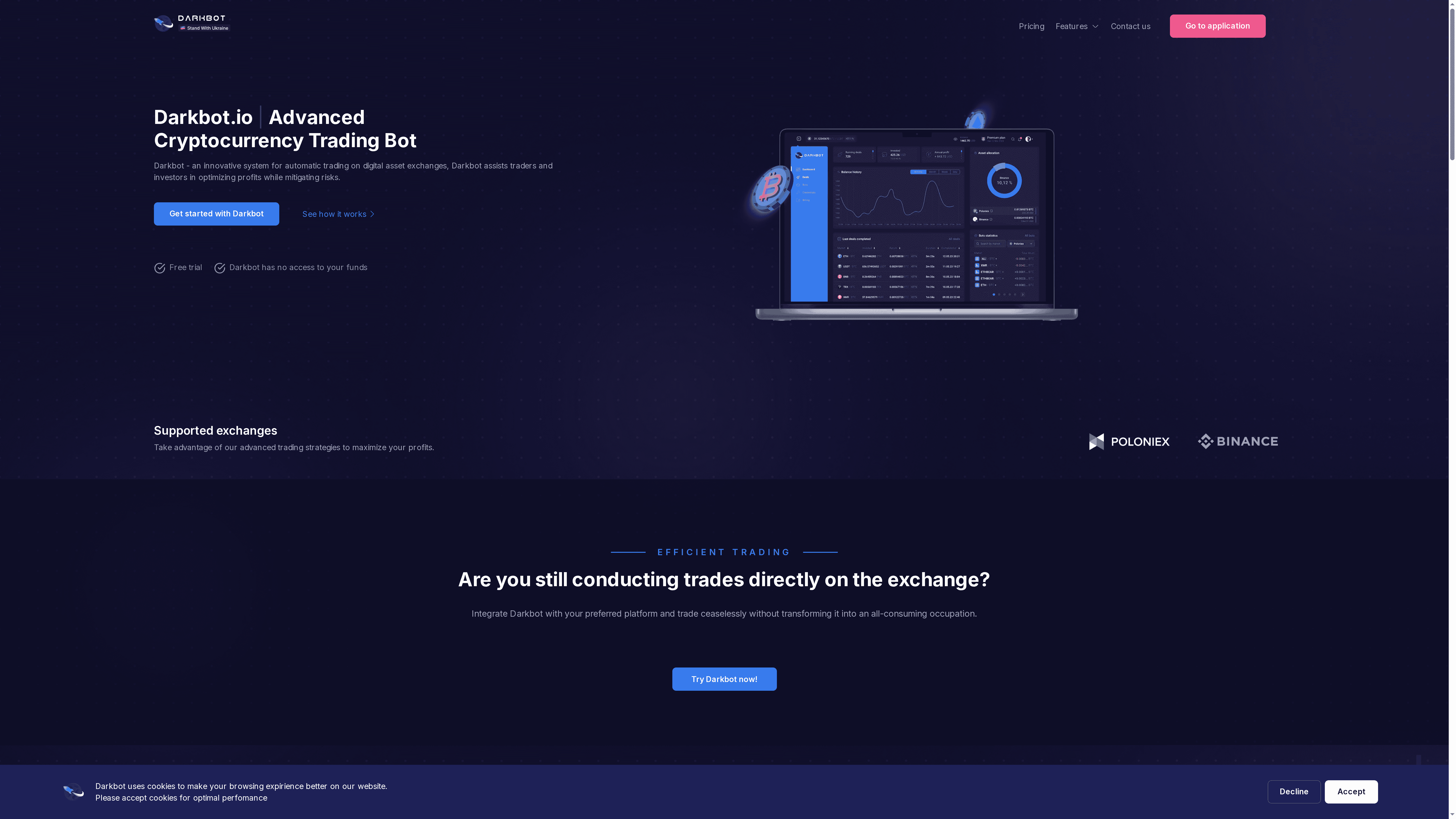
Take the next step in transforming your crypto trading approach. Experience firsthand how Darkbot.io’s advanced AI trading bots can optimize profits and minimize risks in volatile markets. Start automating your strategies now by visiting Darkbot.io and explore detailed insights on automated trading solutions. Discover why traders trust Darkbot.io to make intelligent decisions that outperform manual efforts. Act today to streamline your trading and unlock smarter, faster crypto market action.
Frequently Asked Questions
What is the role of AI in modern trading systems?
AI transforms trading systems into dynamic platforms capable of making sophisticated financial decisions by leveraging advanced predictive models to process market data and identify opportunities.
How do AI algorithms improve cryptocurrency trading?
AI algorithms, such as deep learning and reinforcement learning, enhance cryptocurrency trading by predicting price movements, managing risks, and optimizing trading strategies with greater accuracy than traditional methods.
What are the primary types of AI algorithms used in crypto trading?
The primary types include reinforcement learning algorithms, supervised learning models, and unsupervised learning techniques, each designed to analyze market data and make informed trading decisions.
What are the security best practices for using AI in trading?
Security best practices include implementing robust encryption protocols, using multi-factor authentication, conducting regular security audits, and developing adaptive risk management rules to mitigate potential risks.
Recommended

Start trading on Darkbot with ease
Come and explore our crypto trading platform by connecting your free account!
Free plan available • No credit card required