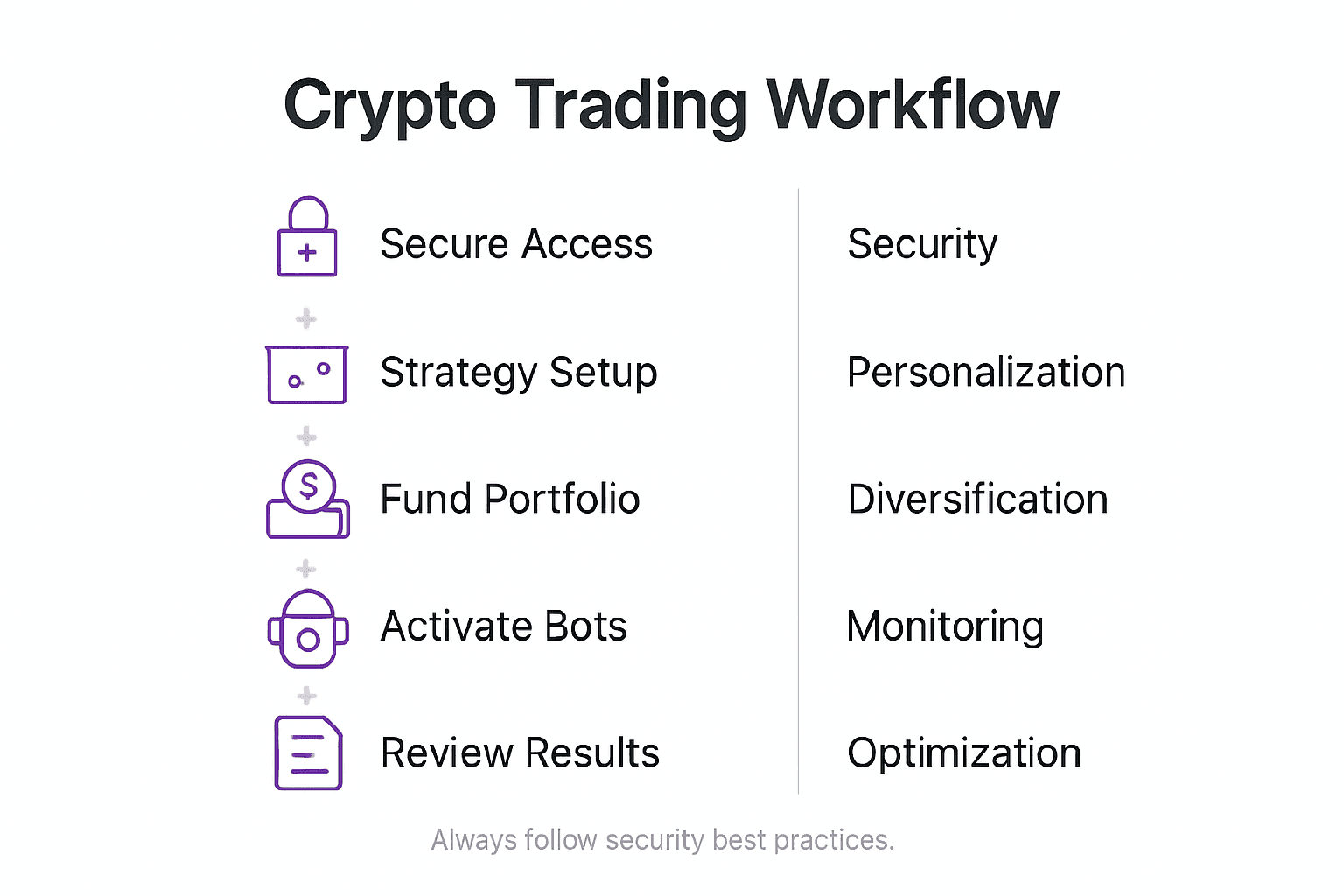
Step by Step Trading Workflow for Automated Crypto Success
Managing a cryptocurrency portfolio can feel overwhelming for busy American professionals and students trying to balance work, classes, and market swings. With over 60% of novice traders making costly mistakes due to manual management, automated solutions are quickly becoming the smart choice worldwide. This step-by-step guide explains how to securely set up trading bots, personalize your strategies, and efficiently monitor your results so you can trade smarter with limited time.
Quick Summary
| Key Insight | Explanation |
|---|---|
| 1. Use Secure API Connections | Limit API permissions to prevent unauthorized access and ensure robust security measures are in place. |
| 2. Tailor Trading Strategies | Personalize your trading strategies to align with your risk tolerance and investment goals for better outcomes. |
| 3. Diversify Your Portfolio | Spread investments across various categories to manage risk while maximizing potential returns. |
| 4. Monitor Bot Performance | Regularly track performance metrics and make necessary adjustments to optimize trading efficiency. |
| 5. Conduct Monthly Reviews | Create a structured review process to analyze strategy changes and their impact on your portfolio’s performance. |
Step 1: Set Up Exchange Connections Securely
Connecting your trading bot to cryptocurrency exchanges requires strategic API management and security protocols. Your goal in this step is to establish a secure integration that protects your funds while enabling automated trading functionality.
Start by selecting reputable exchanges and creating dedicated API keys specifically for your trading bot. When generating these keys, carefully limit API permissions to exclude withdrawal capabilities. This prevents potential unauthorized fund transfers and minimizes security risks. Focus on keys that only allow trading and reading account information.
Most major cryptocurrency exchanges provide robust API management interfaces where you can customize key permissions. Prioritize platforms offering multiple security layers like two-factor authentication and IP address whitelisting. Review each exchange’s security settings meticulously and generate unique API credentials exclusively for your automated trading system. Always use strong unique passwords and consider using hardware security keys for additional protection.
Here’s a summary comparing core API security features across major exchanges:
| Security Feature | High-Profile Exchanges | Small Exchanges | Business Impact |
|---|---|---|---|
| 2-Factor Authentication | Always offered | Rarely offered | Strong access control |
| IP Whitelisting | Often available | Seldom present | Limits exposure to breaches |
| Granular Permissions | Standard feature | Limited options | More control over bot access |
| Hardware Key Support | Available | Not available | Extra layer against hacks |
Pro tip: Rotate your API keys every 60-90 days and immediately revoke any keys you suspect might have been compromised to maintain optimal trading security.
Step 2: Customize Trading Strategies Effectively
Customizing trading strategies involves transforming generic automated trading approaches into personalized systems that match your specific risk tolerance and financial goals. Your mission in this step is to design a unique trading strategy that aligns with your investment objectives while leveraging the advanced capabilities of your automated trading platform.
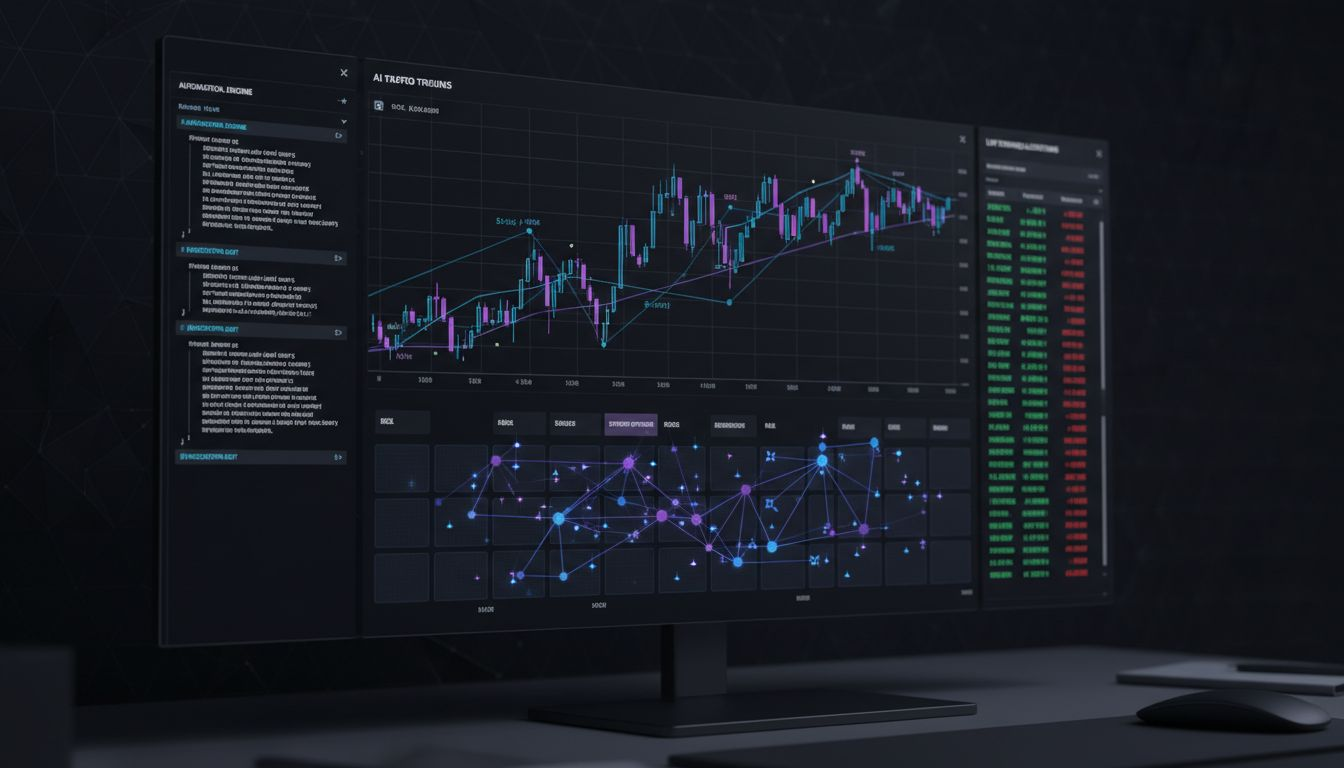
Begin by analyzing your investment profile and risk appetite. Some traders prefer aggressive strategies targeting higher returns with increased volatility while others prioritize steady growth and capital preservation. When developing your approach, consider factors like trading frequency, position sizing, asset selection, and risk management parameters. Trading strategy development requires careful evaluation of your personal financial landscape and technological capabilities.
Most advanced trading platforms offer modular strategy configuration where you can fine tune multiple variables. Experiment with different technical indicators like moving averages, relative strength index (RSI), and Bollinger Bands to create nuanced entry and exit signals. Pay close attention to backtesting results and be prepared to iterate your strategy based on performance metrics. Remember that successful automated trading is an ongoing process of continuous optimization and adaptation.
Pro tip: Start with conservative strategy settings and gradually increase complexity as you gain confidence in your automated trading system’s performance.
Step 3: Allocate and Fund Your Portfolio
Building a well-structured cryptocurrency portfolio requires strategic planning and thoughtful asset distribution. Your objective is to create a balanced investment approach that maximizes potential returns while managing risk through intelligent allocation and funding mechanisms.
Start by developing a diversification strategy that spreads your investment across different cryptocurrency categories. Portfolio management best practices recommend balancing large-cap stable cryptocurrencies, emerging altcoins, stablecoins, and potential high-growth tokens. Consider allocating approximately 50-60% to established cryptocurrencies like Bitcoin and Ethereum, 20-30% to mid-tier altcoins, and 10-20% to higher risk emerging projects. This approach helps mitigate volatility while providing exposure to different market segments.
When funding your portfolio, use regulated exchanges with strong security protocols and transfer funds incrementally. Connect your preferred payment methods securely and consider using multiple funding sources to distribute risk. Automated portfolio management platforms can help you maintain target allocations through periodic rebalancing, ensuring your investment strategy remains aligned with your original risk tolerance and financial objectives.
Below is a reference table outlining typical cryptocurrency portfolio categories and their key characteristics:
| Category | Typical Allocation | Example Assets | Main Benefit |
|---|---|---|---|
| Large-Cap Stable | 50-60% | Bitcoin, Ethereum | Lower volatility, reliability |
| Mid-Tier Altcoins | 20-30% | Solana, Cardano | Growth potential, diversity |
| Emerging Projects | 10-20% | New tokens | High upside, higher risk |
| Stablecoins/Cash | 5-10% | USDT, USDC | Liquidity, fast deployment |
Pro tip: Always maintain a small cash reserve within your portfolio to capitalize on unexpected market opportunities and manage potential short-term volatility.
Step 4: Activate Bots and Monitor Performance
Activating your automated trading bots marks the transition from strategic planning to real-world execution. Your primary goal is to launch your carefully configured trading systems and establish a robust monitoring framework that ensures consistent performance and quick adaptation to market changes.
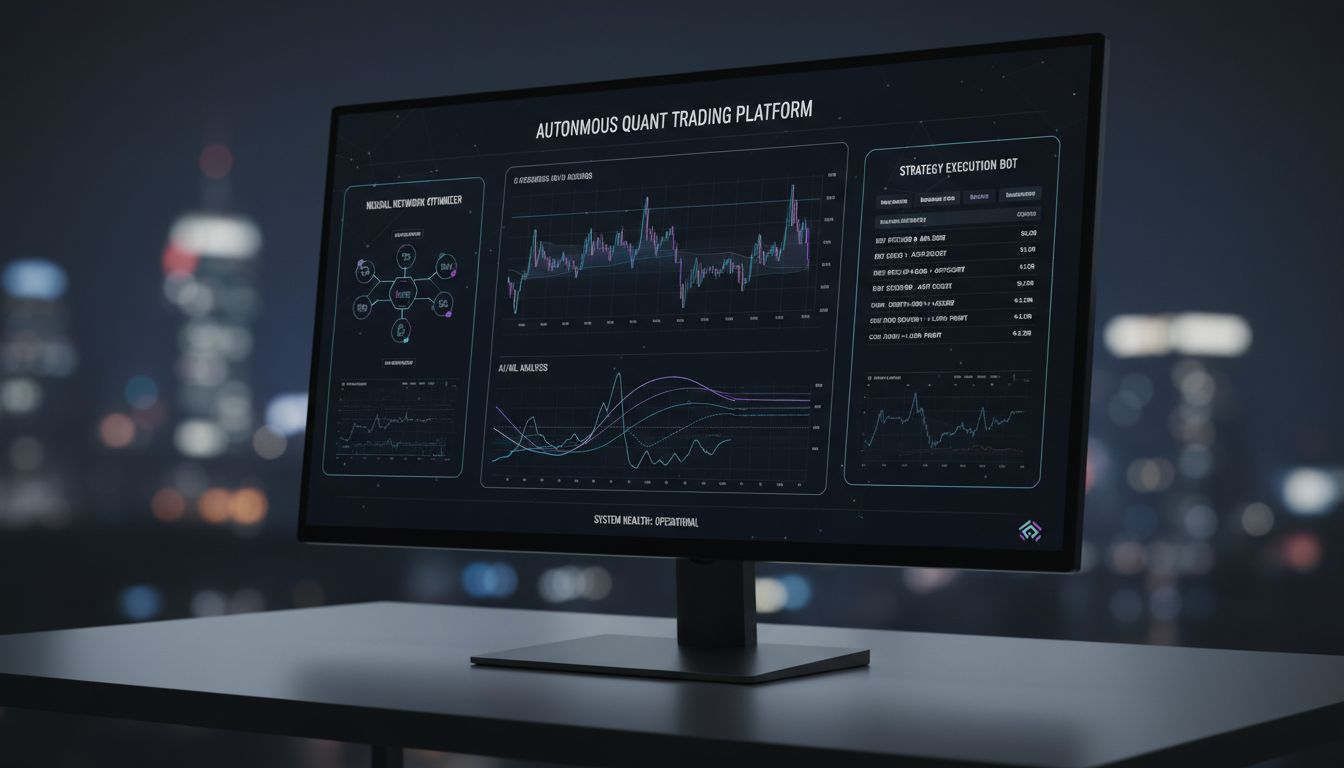
Setting up crypto trading bots requires a systematic approach to launching and tracking automated trading strategies. Begin by carefully reviewing your bot configurations one final time before activation. Ensure all API connections are secure and trading permissions are correctly set. Most advanced platforms provide intuitive dashboards that display real-time metrics including trade execution statistics, current positions, profit and loss statements, and risk management indicators.
Continuous monitoring is critical for maintaining bot performance. Regularly check your trading dashboard to track key performance indicators such as win rate, average trade profit, total portfolio value, and individual trade metrics. Be prepared to make incremental adjustments to your strategy based on observed performance. Advanced trading platforms often include automated alerts that notify you of significant market movements or potential strategy deviations, allowing you to respond quickly and maintain optimal trading efficiency.
Pro tip: Set up email or mobile notifications for critical trading events and allocate at least 30 minutes weekly to review and fine-tune your automated trading system.
Step 5: Review Results and Adjust Strategies
Reviewing and refining your automated trading strategy is a critical ongoing process that transforms raw performance data into actionable insights. Your mission is to systematically analyze trading results and make intelligent adjustments that continuously optimize your portfolio’s performance.
Crypto trading strategy evaluation requires a disciplined approach to performance analysis. Start by examining comprehensive performance metrics such as total returns, win rate, maximum drawdown, and risk adjusted returns. Look beyond simple profit numbers and dig into the underlying patterns of your trading bot’s behavior. Pay attention to how your strategy performs across different market conditions and identify specific scenarios where your current approach might be underperforming.
Advanced trading platforms provide sophisticated analytics tools that help you understand the nuanced details of your trading performance. Use these dashboards to compare your strategy against benchmark indices, analyze individual trade execution quality, and identify potential areas for improvement. Be prepared to make incremental adjustments to your trading parameters such as position sizing, entry and exit triggers, or risk management thresholds. Remember that successful automated trading is an iterative process of continuous learning and adaptation.
Pro tip: Create a structured monthly review process where you document strategy changes and track their specific impact on overall portfolio performance.
Unlock Automated Crypto Success with Darkbot.io
The journey to mastering automated cryptocurrency trading begins with overcoming challenges like securing API keys without withdrawal permissions, customizing trading strategies tailored to your risk appetite, and maintaining a balanced portfolio while actively monitoring bot performance. This article clearly outlines these pain points making it evident that traders need a reliable, secure, and flexible solution to automate complex workflows efficiently.
Darkbot.io answers this call by providing an advanced SaaS platform that simplifies every step mentioned — from seamless exchange integration to real-time analytics for performance review. Its AI-powered trading bots empower you to fine-tune strategies and manage multiple digital asset exchanges with confidence, all through an intuitive interface designed for both beginners and experienced traders.
Enhance your trading efficiency today with features like secure API management, strategy customization, automated portfolio rebalancing, and continuous performance monitoring. Explore how Step by Step Trading Workflow for Automated Crypto Success meets your trading goals and reduces manual effort for smarter investment decisions.
Take control of your automated trading journey now
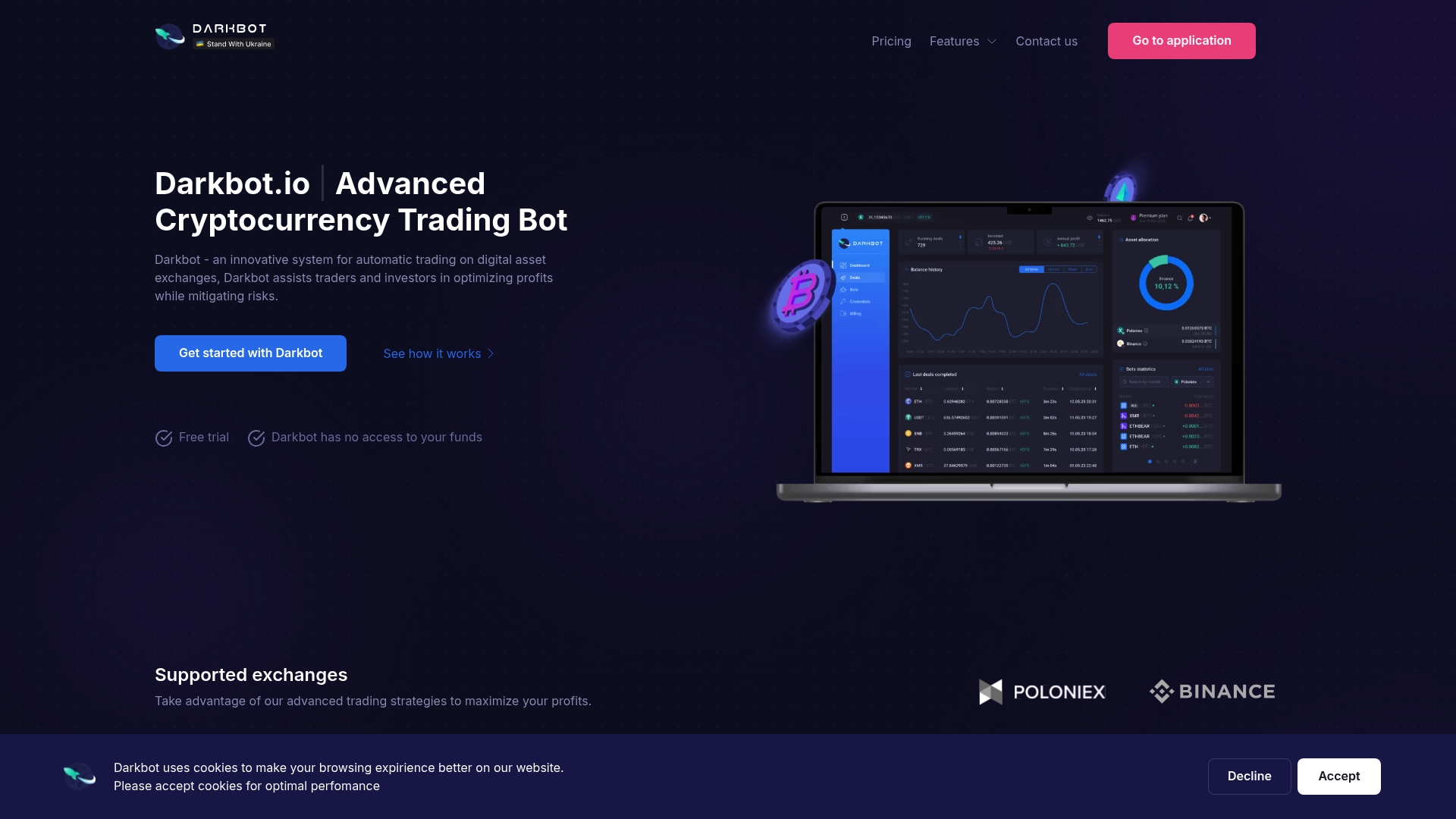
Experience the difference with Darkbot.io’s trusted, secure, and user-friendly platform. Visit https://darkbot.io to start optimizing your crypto trades instantly. Don’t wait—empower your portfolio with automation that adapts as markets evolve.
Frequently Asked Questions
What are the initial steps to set up my automated trading bot securely?
To set up your automated trading bot securely, begin by selecting reputable cryptocurrency exchanges and generating dedicated API keys with limited permissions to exclude withdrawal capabilities. Review the security settings of each exchange to utilize features like two-factor authentication and IP whitelisting to enhance your security.
How can I customize my trading strategy for better performance?
To customize your trading strategy effectively, analyze your investment profile and risk appetite. Focus on developing clear parameters such as trading frequency, position sizing, and asset selection, and utilize various technical indicators to create entry and exit points tailored to your goals.
What is the best way to allocate my cryptocurrency portfolio?
A well-structured cryptocurrency portfolio should diversify across different categories, such as large-cap stable coins and mid-tier altcoins. Aim to allocate approximately 50-60% to established cryptocurrencies, 20-30% to mid-tier altcoins, and a smaller percentage to emerging projects to help manage risk and volatility.
How do I activate my trading bots and monitor their performance?
To activate your trading bots, carefully review all configurations and ensure secure API connections before launching your trading strategies. Regularly monitor key performance indicators through your trading dashboard and be prepared to adjust your strategies based on market changes and performance outcomes.
How often should I review my automated trading results?
You should conduct a structured review of your automated trading results at least monthly to evaluate performance metrics such as total returns and win rates. Document any strategy changes you make and track their specific impact on your overall portfolio performance to ensure continuous improvement.
What precautions should I take to maintain the security of my trading bot?
To maintain the security of your trading bot, rotate your API keys every 60-90 days and immediately revoke any keys you suspect might be compromised. Additionally, use strong, unique passwords and consider incorporating hardware security keys for an extra layer of protection.
Recommended

Start trading on Darkbot with ease
Come and explore our crypto trading platform by connecting your free account!
Free plan available • No credit card required