7 Essential Crypto Trading Tips for Beginners

Over $1 trillion shifts through cryptocurrency markets each year, drawing in american and international traders alike. For busy professionals who crave smart, automated solutions, the crypto space promises profits but also brings a maze of new terms and technical tasks. Learning the basics is your first safeguard. This guide grounds you in essential crypto language and practical steps so you can trade more confidently while still having time for your career and life.
Quick Summary
| Key Message | Explanation |
|---|---|
| 1. Master Basic Crypto Terms | Understanding fundamental terms like wallets, mining, and exchanges builds your confidence in trading. Familiarity eases navigation of the crypto landscape. |
| 2. Select a Secure Trading Platform | Choose platforms that prioritize security, regulatory compliance, and offer a user-friendly interface to ensure safer trading experiences. |
| 3. Set Clear Investment Goals | Define your investment objectives based on risk tolerance and timeframe to navigate the volatile market with strategic clarity. |
| 4. Start With Small Investments | Begin trading with small amounts to gain experience without risking significant capital, allowing for skill development and risk management. |
| 5. Regularly Monitor Your Strategy | Continuously analyze and adapt your trading approach based on performance metrics to stay effective in the ever-changing crypto market. |
1. Understand Basic Crypto Terminology
Cryptocurrency can seem like a complex world with its own unique language, but breaking down the fundamental terminology is your first step toward confident trading. Understanding key crypto concepts will help you navigate this digital financial landscape with greater ease and precision.
At its core, cryptocurrency operates on blockchain technology a decentralized digital ledger that records all transactions transparently and securely. Blockchain represents a series of interconnected transaction blocks that cannot be altered retroactively, ensuring data integrity across the network.
Some critical terms every beginner should master include:
Wallet: A digital storage system for your cryptocurrency, similar to a bank account but entirely online. These can be software based (on your computer or smartphone) or hardware based (physical devices that store your digital assets).
Mining: The process by which new cryptocurrency tokens are created and transactions are verified by solving complex mathematical problems. Miners use powerful computers to validate network transactions and receive cryptocurrency as a reward.
Exchange: Online platforms where you can buy, sell, and trade different cryptocurrencies. These digital marketplaces function like stock exchanges but specifically for digital assets.
Tokens vs Coins: While often used interchangeably, tokens represent assets built on an existing blockchain (like Ethereum), while coins have their own independent blockchain (like Bitcoin).
By familiarizing yourself with these foundational terms, you will develop a more nuanced understanding of how cryptocurrency systems function. Comprehensive vocabulary resources can help you continue expanding your knowledge.
Pro tip: Create a personal glossary of crypto terms and review it regularly to reinforce your understanding and build confidence in cryptocurrency trading conversations.
2. Choose a Reliable Trading Platform
Selecting the right cryptocurrency trading platform is a critical decision that can significantly impact your investment success. Robust regulatory compliance and security standards are fundamental when evaluating potential trading platforms.
A reliable trading platform serves as the foundation of your cryptocurrency investment strategy. Global research on retail crypto trading platforms highlights several key factors you should consider before committing your funds.
Essential Platform Selection Criteria:
Security Features: Look for platforms with strong encryption, two factor authentication, and cold storage options for digital assets. Platforms that prioritize security protect your investments from potential cyber threats.
Regulatory Compliance: Choose exchanges registered with financial authorities and demonstrating transparent operational practices. Regulated platforms provide greater accountability and investor protection.
Trading Fees: Compare transaction costs, withdrawal fees, and hidden charges across different platforms. Lower fees can significantly improve your overall investment returns.
Asset Variety: Select platforms offering a diverse range of cryptocurrencies. A broad selection allows for more flexible investment strategies and portfolio diversification.
User Interface: Prioritize platforms with intuitive designs and robust analytical tools. Ease of use can dramatically improve your trading experience and decision making process.
Pro tip: Always start with a small initial investment on a new platform to test its performance, user experience, and reliability before committing larger funds.
3. Set Clear Investment Goals
Successful cryptocurrency trading begins with establishing precise and realistic investment objectives. Effective policy frameworks for crypto asset investing emphasize the importance of creating transparent and well-defined investment strategies.
Defining your investment goals helps you navigate the volatile cryptocurrency market with purpose and discipline. Your goals should reflect your financial situation, risk tolerance, and long-term objectives.
Types of Investment Goals:
Short Term Trading: Aimed at generating quick profits by taking advantage of market price fluctuations. This approach requires active monitoring and quick decision making.
Long Term Holding: Focuses on accumulating cryptocurrency assets with potential for significant future value appreciation. This strategy involves less frequent trading and more patient investment.
Passive Income Generation: Utilizing strategies like staking or yield farming to earn consistent returns from cryptocurrency investments.
Key Considerations for Goal Setting:
Risk Tolerance: Assess how much potential loss you can comfortably manage. Cryptocurrency markets are highly volatile, so align your goals with your personal financial risk threshold.
Investment Amount: Determine the capital you are willing to invest. Never invest more than you can afford to lose entirely.
Time Horizon: Define the duration you plan to keep your investments. Different goals require different time commitments and strategies.
Diversification Strategy: Spread your investments across multiple cryptocurrencies to minimize risk and maximize potential returns.
Pro tip: Write down your investment goals and review them quarterly to ensure your strategy remains aligned with your financial objectives and market conditions.
4. Start With Small Investments
Foundational steps for entering the cryptocurrency market emphasize the critical importance of starting with modest investment amounts. Cryptocurrency trading presents significant opportunities but also substantial risks, making a conservative initial approach essential for long term success.
Beginning with small investments allows you to develop crucial trading skills without risking substantial financial resources. Think of these initial trades as your practical education in cryptocurrency markets.
Why Start Small:
Learning Opportunity: Small investments provide hands-on experience with real market dynamics. You will understand trading mechanics, platform interfaces, and market volatility without overwhelming financial pressure.
Risk Management: Limiting initial capital protects you from significant losses while you develop trading expertise. Beginner cryptocurrency courses consistently recommend this strategy for new traders.
Strategy Development: Small trades enable you to test and refine trading strategies with minimal financial consequences. You can experiment with different approaches and learn from actual market interactions.
Recommended Investment Approach:
Start Small: Begin with 1% to 5% of your total investment budget. This approach provides exposure without excessive risk.
Gradual Scaling: Increase investment amounts only after demonstrating consistent understanding and successful smaller trades.
Continuous Learning: Treat each small trade as a learning experience. Analyze your decisions, track performance, and adjust strategies accordingly.
Emotional Control: Small investments help manage emotional responses to market fluctuations, teaching discipline and rational decision making.
Pro tip: Create a dedicated spreadsheet to track your small trades, recording entry points, exit strategies, and lessons learned from each transaction.
5. Use Automated Trading Bots Effectively
AI-powered trading mechanisms offer cryptocurrency traders powerful tools for executing sophisticated investment strategies with precision and speed. Automated trading bots can help manage complex trading decisions while reducing emotional interference in your investment approach.
Trading bots are software programs designed to execute trades automatically based on predefined algorithms and market conditions. Decentralized finance platforms increasingly rely on algorithmic trading mechanisms that enable rapid, data driven decision making.
Critical Bot Configuration Strategies:
Clear Parameter Setting: Establish precise entry and exit points, risk tolerance levels, and trading volume limits before activating any automated trading system.
Continuous Monitoring: Regularly review bot performance and be prepared to adjust strategies based on changing market conditions. Automated does not mean hands off.
Risk Management: Set strict stop loss parameters to protect your investments from significant unexpected market movements.
Understanding Bot Limitations:
No Guaranteed Profits: Bots execute strategies based on historical data and predefined rules. They cannot predict unpredictable market shifts with absolute certainty.
Technical Knowledge Required: Successful bot usage demands understanding of trading algorithms, market indicators, and platform specific configurations.
Complementary Tool: View trading bots as sophisticated assistants that enhance your trading capabilities rather than replace strategic human decision making.
Pro tip: Start with conservative bot settings and incrementally increase complexity as you gain confidence and understand the specific nuances of your chosen trading platform.
6. Practice Secure Management of API Keys
Cryptographic key management represents a critical security practice for cryptocurrency traders using automated trading platforms. API keys are your digital access credentials that enable interactions with trading exchanges, making their protection paramount to safeguarding your financial assets.
An API key functions like a digital password, allowing secure communication between your trading bot and cryptocurrency exchanges. However, these keys can become significant vulnerability points if not managed carefully.
Essential API Key Security Practices:
Restricted Permissions: Generate API keys with minimal necessary trading permissions. Avoid creating keys with full account access or withdrawal capabilities.
Limited Exchange Scope: Use separate API keys for different trading activities. This approach minimizes potential damage if one key becomes compromised.
Regular Key Rotation: Implement systematic key rotation strategies by periodically generating and replacing your existing API keys. This practice reduces the window of potential unauthorized access.
Secure Storage Methods:
Encryption: Store API keys using strong encryption methods. Never save keys in plain text documents or unprotected digital locations.
Limited Access: Restrict API key visibility to authorized personnel only. Use password managers or secure digital vaults for storage.
Two Factor Authentication: Enable additional security layers whenever possible to protect your API key access points.
Monitoring and Audit:
Transaction Review: Regularly audit all transactions performed using your API keys.
Immediate Revocation: Develop a quick response protocol for immediately revoking compromised API keys.
Pro tip: Create a dedicated, encrypted spreadsheet with a secure password to track your API keys, including generation dates, permitted actions, and last audit timestamps.
7. Monitor and Adjust Your Strategy Regularly
Reinforcement learning strategies in cryptocurrency trading demonstrate the critical importance of continuous strategy evaluation and dynamic adaptation. The cryptocurrency market evolves rapidly, making static trading approaches increasingly ineffective.
Successful trading requires an ongoing commitment to analyzing performance, understanding market shifts, and proactively adjusting your investment strategy. Think of your trading approach as a living system that needs regular maintenance and tuning.
Key Strategy Monitoring Components:
Performance Tracking: Maintain detailed records of all trades, including entry points, exit points, profits, and losses. Use spreadsheets or specialized tracking software to maintain comprehensive documentation.
Key Performance Indicators:
Profit Margin: Calculate your overall returns and compare them against benchmark market performance.
Win Rate: Measure the percentage of successful trades versus total trades executed.
Risk Adjusted Returns: Evaluate your strategy based on returns relative to the risk taken.
Adaptation Techniques:
Technical Indicator Review: Regularly assess moving averages, relative strength index, and other technical indicators to identify potential strategy adjustments.
Market Sentiment Analysis: Monitor broader cryptocurrency market trends, news events, and regulatory changes that might impact your trading approach.
Portfolio Rebalancing: Periodically reassess and redistribute your investments to maintain optimal risk exposure.
Automated Analysis Tools: Utilize trading platforms with built in performance tracking and strategy optimization features.
Learning Cycle:
Continuous Education: Stay informed about new trading techniques, market developments, and emerging cryptocurrency technologies.
Experimental Approach: Test modified strategies with small investment amounts before full implementation.
Pro tip: Schedule a monthly trading strategy review where you critically analyze your performance metrics, identifying both successful tactics and areas requiring improvement.
Below is a comprehensive table summarizing the key concepts, strategies, and steps involved in understanding and engaging in cryptocurrency trading as discussed in the article.
| Topic | Description | Key Considerations |
|---|---|---|
| Basic Crypto Terminology | Introduction to terms like blockchain, wallet, mining, exchange, and distinctions between tokens and coins. | Reviewing these terms enables confident navigation within the cryptocurrency realm. |
| Choosing a Trading Platform | Critical factors such as platform security, regulatory compliance, fee structures, asset variety, and user interface are outlined to guide selection. | Conduct careful comparison across platforms to ensure a secure and favorable investment environment. |
| Setting Investment Goals | Identifying and formulating objectives like short-term trading, long-term holding, or passive income generation. | Clear goals assist in aligning strategies with individual financial situations and risk tolerances. |
| Starting Small Investments | Strategies emphasizing modest initial trades to minimize risk while gaining experience in trading. | Deploying small amounts enables practical learning and strategy testing without overwhelming losses. |
| Utilizing Trading Bots | Insight into the application, configuration, and limitations of automated trading software. | Employ bots as a supplement that requires attentive management and strategy refinement. |
| Managing API Keys | Secure practices for handling API keys such as using encryption, restricted permissions, and regular audits. | Proper API management prevents unauthorized access and protects digital investments. |
| Strategy Monitoring and Adjustment | Advice on continuously evaluating trading performance, refining strategies, and reacting to market changes. | Regular review ensures adaptation to evolving market conditions and optimization of trading outcomes. |
Automate Your Crypto Trading Journey with Confidence
Navigating the complex world of cryptocurrency trading requires clear goals, constant monitoring, secure management of API keys, and effective automation. If the challenges of setting up reliable trading strategies and managing multiple exchange APIs feel overwhelming, Darkbot.io offers a powerful solution tailored just for you. Our advanced automated cryptocurrency trading bot leverages AI and machine learning to optimize your trades, manage risks, and continuously adapt your strategies.
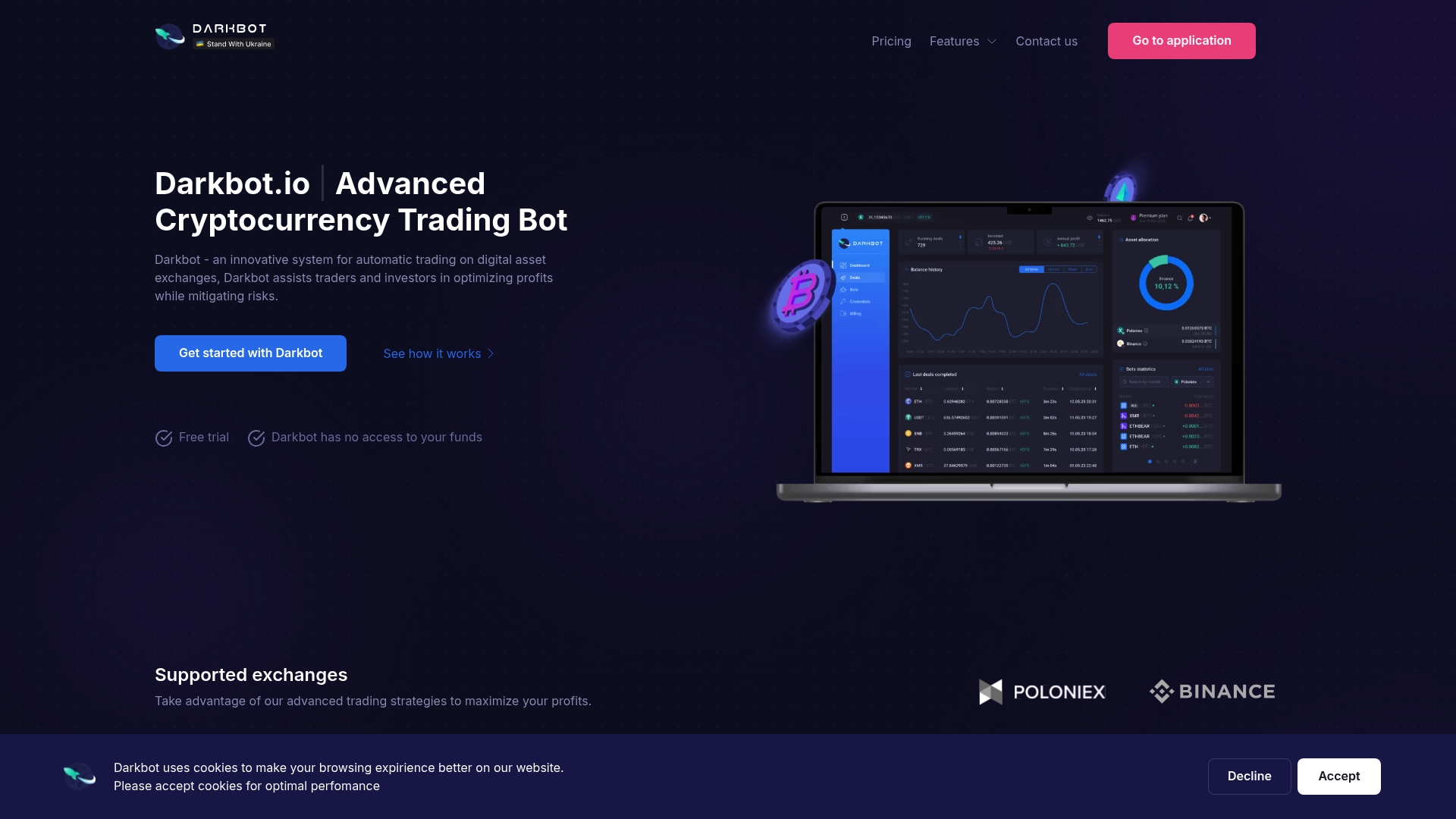
Take control of your crypto investments today with dependable security features and seamless exchange integration via API keys. Whether you are starting small or scaling your trading activities, explore how automated rebalancing and strategy customization can simplify your trading process. Visit Darkbot.io now to experience an intuitive platform designed to boost your trading efficiency and confidence. Start building your personalized crypto portfolio with automation at your side.
Frequently Asked Questions
What is the best way to understand basic crypto terminology?
To understand basic crypto terminology, start by researching essential terms like Wallet, Mining, and Exchange. Break down each concept into simple definitions and create a personal glossary for regular review.
How do I choose a reliable trading platform for cryptocurrency?
To choose a reliable trading platform, prioritize security features, regulatory compliance, and a user-friendly interface. Evaluate platforms by comparing transaction fees and the variety of available assets before making your decision.
What should I consider when setting clear investment goals in cryptocurrency trading?
When setting investment goals, assess your risk tolerance, define the amount you are willing to invest, and determine your time horizon. Use these factors to create specific goals, such as short-term trading or long-term holding strategies.
Why is it important to start with small investments in cryptocurrency?
Starting with small investments allows you to gain hands-on experience without risking significant capital. Consider limiting your initial investment to 1% to 5% of your total budget to protect your finances while you learn.
How can I effectively use automated trading bots in my crypto trading strategy?
To use automated trading bots effectively, set clear parameters for entry and exit points and continuously monitor their performance. Begin with conservative settings to minimize risk and adjust strategies as you become more familiar with the trading environment.
What are effective practices for managing my API keys securely?
For secure management of API keys, implement restricted permissions, use separate keys for different functions, and regularly rotate keys. Store them using strong encryption and limit access to enhance your security measures.
Recommended

Start trading on Darkbot with ease
Come and explore our crypto trading platform by connecting your free account!
Free plan available • No credit card required