Crypto Trading Risk Explained: Smarter Automation Choices
Nearly every american crypto trader faces a steeper challenge with risk than those in traditional finance, as digital assets can erase months of returns in hours. For busy professionals and gig workers managing small accounts, staying ahead of market swings feels intimidating. This guide reveals the practical concepts and automation tools that help ambitious traders worldwide control losses and keep more of their hard-earned capital, even when volatility spikes unexpectedly.
Key Takeaways
| Point | Details |
|---|---|
| Understanding Crypto Risks | Cryptocurrency trading entails unique risks such as market volatility, operational challenges, and regulatory uncertainties, requiring sophisticated risk management strategies. |
| Automation in Risk Management | Automated trading platforms enhance risk management through algorithmic controls, but they also introduce new risks such as cybersecurity threats and system failures. |
| Common Trading Misconceptions | Many traders fall victim to psychological biases, assuming quick profits are guaranteed and underestimating the complexities of cryptocurrency markets. |
| Diversification Strategy | Implementing portfolio diversification and strict stop-loss limits is crucial for mitigating potential losses in cryptocurrency investments. |
Crypto Trading Risk Definition and Core Concepts
Cryptocurrency trading represents a complex landscape characterized by unprecedented financial volatility and unique risk profiles. Unlike traditional financial markets, crypto trading involves inherent structural risks that demand sophisticated understanding and strategic management. Investors entering this domain must recognize that digital asset markets operate with significantly different dynamics compared to conventional stock or commodity exchanges.
At its core, crypto trading risk encompasses multiple interconnected dimensions beyond simple price fluctuations. These include market fragmentation, liquidity challenges, technological vulnerabilities, and regulatory uncertainties. Systematic risk assessment becomes critical, requiring traders to evaluate not just potential financial losses, but also technological and operational risks embedded within blockchain ecosystems. The decentralized nature of cryptocurrencies introduces additional complexity, where market movements can be dramatically influenced by technological developments, regulatory announcements, and global sentiment shifts.
Understanding crypto trading risk requires a multifaceted approach that goes beyond traditional financial risk modeling. Sophisticated investors utilize advanced techniques like value-at-risk (VaR) models and quantile-based forecasting to predict potential downside scenarios. These analytical methods help traders develop probabilistic frameworks for managing potential losses, recognizing that crypto markets demonstrate substantially higher volatility compared to traditional asset classes. Predictive modeling becomes a crucial tool in developing resilient trading strategies that can adapt to rapid market transformations.
Pro tip: Always allocate no more than 5-10% of your total investment portfolio to cryptocurrency assets to maintain balanced risk exposure and prevent catastrophic financial disruptions.
Types of Crypto Trading Risks Today
Cryptocurrency trading presents a complex risk landscape that extends far beyond traditional financial market challenges. Crypto trading risks encompass multiple critical dimensions that investors must carefully navigate. These risks are not monolithic but represent a sophisticated network of interconnected vulnerabilities that can dramatically impact investment outcomes.
The primary categories of crypto trading risks include market volatility, operational challenges, technological vulnerabilities, and regulatory uncertainties. Market volatility remains the most visible risk, characterized by extreme price fluctuations that can cause significant financial losses within minutes. Operational risks involve cybersecurity threats, platform reliability, and potential exchange failures. Technological vulnerabilities stem from blockchain infrastructure weaknesses, smart contract limitations, and potential protocol exploitations that can compromise entire trading ecosystems.
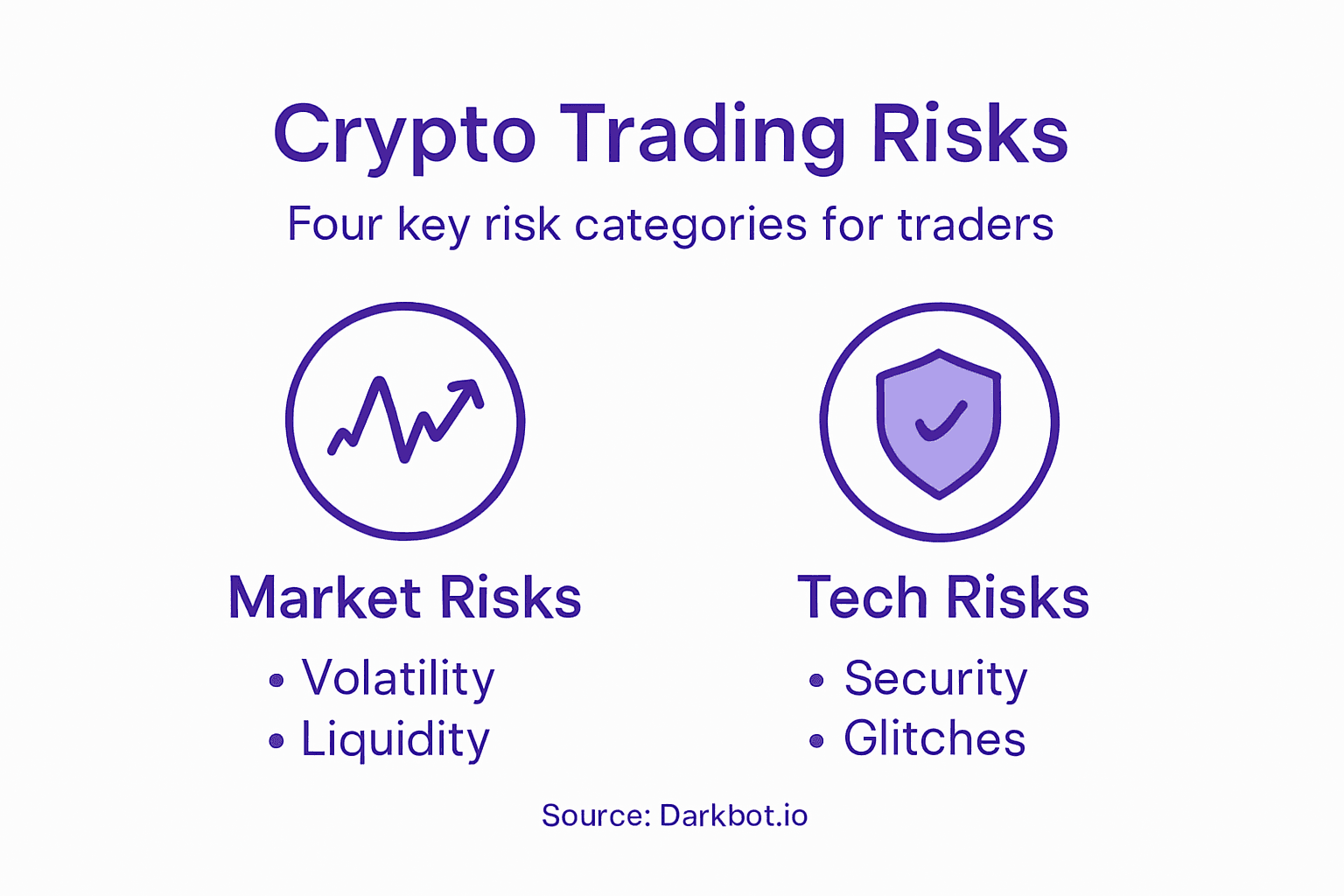
Regulatory risks represent another critical dimension of crypto trading challenges. Global jurisdictions maintain inconsistent approaches to cryptocurrency regulation, creating potential legal uncertainties that can instantly transform market dynamics. Investors must also contend with liquidity risks, which emerge from market fragmentation and potential sudden withdrawal of trading volumes. The interconnectedness of cryptocurrency markets with traditional financial systems introduces additional systemic risks, where localized disruptions can trigger broader financial cascades.
Below is a summary of common types of crypto trading risks and their unique characteristics:
| Risk Type | Unique Challenge | Key Impact on Traders |
|---|---|---|
| Market Volatility | Rapid price swings | Potential for swift losses |
| Operational | Platform and cybersecurity gaps | Account freezes or loss |
| Technological | Exploitable blockchain bugs | Asset theft or frozen funds |
| Regulatory | Unclear or shifting laws | Asset bans or sudden selloffs |
| Liquidity | Limited buyers or sellers | Wider spreads, harder exits |
Pro tip: Develop a comprehensive risk management strategy that includes setting strict stop-loss parameters, diversifying across multiple cryptocurrency assets, and continuously monitoring your portfolio’s risk exposure.
How Automation Affects Risk Management
Automated trading platforms fundamentally transform risk management strategies by introducing sophisticated technological interventions into cryptocurrency investment processes. Automation enables traders to implement more precise, consistent, and data-driven risk control mechanisms that transcend traditional human decision-making limitations. By leveraging algorithmic models and real-time analytics, investors can establish more robust defensive strategies against market volatility.
Algorithmic risk management represents a sophisticated approach to mitigating potential losses. Automated systems continuously monitor market conditions, execute predefined risk parameters, and respond instantaneously to emerging threats. These systems can implement complex risk controls such as automatic stop-loss orders, portfolio rebalancing, and dynamic asset allocation strategies that would be impossible to execute manually. The key advantage lies in removing emotional decision-making and replacing it with systematic, rule-based interventions that maintain disciplined investment approaches.
However, automation is not without its inherent risks. Technological vulnerabilities can introduce new challenges, including potential system failures, algorithm biases, and unexpected market interactions. Cybersecurity threats become increasingly critical as automated trading platforms become more complex. Investors must carefully design their automated systems with comprehensive fail-safes, including redundant risk management protocols, continuous monitoring mechanisms, and adaptive learning algorithms that can respond to unprecedented market conditions.
This table highlights key differences between manual and automated crypto risk management approaches:
| Risk Management Approach | Human Involvement | Response Speed | Main Limitation |
|---|---|---|---|
| Manual | Full | Slower, delayed | Emotional biases, slow execution |
| Automated | Minimal, programmed | Immediate, real-time | Reliance on tech, possible glitches or errors |
Pro tip: Implement multi-layered risk management automation by combining algorithmic controls, periodic manual reviews, and diversified strategy approaches to minimize potential systemic vulnerabilities.
Common Mistakes and Misconceptions in Crypto Trading
Psychological biases significantly impact crypto trading decisions, leading traders into repetitive patterns of costly mistakes. Novice investors frequently underestimate the complexity of cryptocurrency markets, approaching trading with oversimplified expectations and unrealistic profit projections. The volatile nature of digital assets demands a sophisticated understanding that goes far beyond casual investment strategies.
Market misconceptions represent a critical challenge for cryptocurrency traders. Many individuals erroneously believe that crypto trading guarantees rapid wealth accumulation, disregarding the substantial risks involved. Common fallacies include assuming all cryptocurrencies perform similarly, believing technical analysis provides infallible predictive power, and expecting consistent returns. Traders often fall prey to the fear of missing out (FOMO), making impulsive investment decisions driven by market hype rather than fundamental analysis and structured risk management.
Technological overconfidence poses another significant risk in crypto trading. Investors mistakenly view automated trading systems and complex algorithms as foolproof solutions, overlooking the inherent unpredictability of cryptocurrency markets. While advanced tools can enhance trading efficiency, they cannot eliminate market uncertainty. Successful trading requires a balanced approach that combines technological sophistication with disciplined risk management, continuous learning, and a realistic understanding of market dynamics.
Pro tip: Develop a structured trading journal to document every transaction, analyze your decision-making patterns, and systematically identify and eliminate recurring psychological biases that negatively impact your investment performance.
Proven Strategies for Minimizing Crypto Losses
Portfolio diversification remains a critical strategy for managing crypto investment risks, enabling traders to spread potential losses across multiple digital assets. Sophisticated investors recognize that no single cryptocurrency represents a guaranteed investment, and strategic allocation can significantly mitigate downside exposure. By constructing a balanced portfolio with varied market capitalizations, technological foundations, and geographic representations, traders can create more resilient investment approaches.
Risk management requires a multifaceted approach that goes beyond simple asset selection. Implementing strict stop-loss parameters allows automatic portfolio protection by establishing predetermined exit points during market volatility. Advanced traders utilize quantitative models that assess historical price movements, market correlations, and volatility indicators to develop adaptive risk control mechanisms. These systematic approaches replace emotional decision-making with data-driven strategies that maintain disciplined investment protocols.
Technological tools and analytical frameworks provide additional layers of protection against potential crypto trading losses. Stress testing investment scenarios, conducting regular portfolio rebalancing, and maintaining conservative leverage positions can dramatically reduce unexpected financial vulnerabilities. Investors should continuously monitor market conditions, regulatory developments, and technological shifts that might impact cryptocurrency valuations, ensuring proactive rather than reactive risk management strategies.
Pro tip: Allocate no more than 5-10% of your total investment portfolio to cryptocurrencies, and within that allocation, diversify across at least 4-6 different digital assets to minimize concentration risk.
Take Control of Crypto Trading Risks with Smarter Automation
Navigating the complex landscape of cryptocurrency trading risk requires more than just knowledge it demands smart tools that help you manage volatility, operational challenges, and regulatory uncertainties seamlessly. If you want to reduce emotional decision-making, implement precise risk controls like stop-losses, and automate your portfolio rebalancing with confidence Darkbot.io offers the advanced solution tailored to meet these exact needs. By integrating AI-driven automation and strategy customization across multiple exchanges you gain the edge to respond instantly to market shifts while minimizing human error.
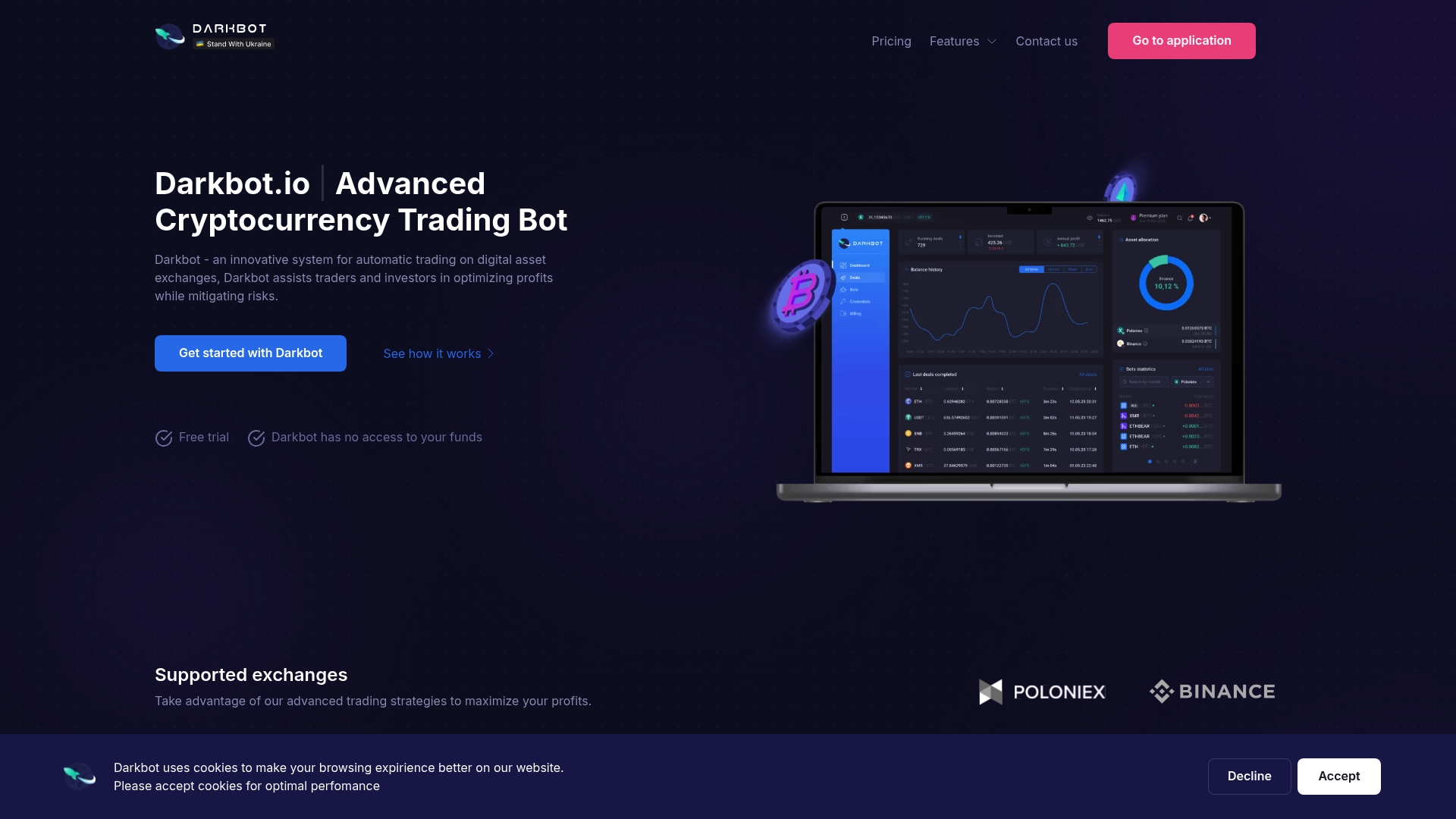
Discover how automated risk management can transform your crypto trading experience starting today at Darkbot.io. Explore our platform features including multiple simultaneous bots, customizable strategies, and real-time analytics all designed to help you stay ahead in volatile markets. Start automating with ease and safeguard your investments by visiting Darkbot.io now. Take the first step toward smarter crypto trading risk mitigation.
Frequently Asked Questions
What are the main risks associated with cryptocurrency trading?
Crypto trading risks include market volatility, operational challenges, technological vulnerabilities, regulatory uncertainties, and liquidity risks. Each of these risks can significantly impact traders and their investment outcomes.
How can automated trading improve risk management in cryptocurrency trading?
Automated trading improves risk management by allowing investors to implement precise, consistent risk control mechanisms. It can execute predefined risk parameters and respond instantaneously to emerging market threats, thus minimizing emotional decision-making.
What common mistakes do traders make in the cryptocurrency market?
Common mistakes include underestimating market complexity, assuming all cryptocurrencies perform similarly, falling for the fear of missing out (FOMO), and overestimating the reliability of automated trading systems. These misconceptions can lead to costly investment decisions.
What are effective strategies to minimize losses in crypto trading?
Effective strategies for minimizing crypto losses include portfolio diversification, setting strict stop-loss parameters, employing quantitative models, conducting stress testing, and regularly monitoring market conditions and regulatory developments.
Recommended
- Crypto Trading Automation Benefits: Smarter, Safer Investing
- Machine Learning in Trading Strategies: Crypto Automation Explained
- Why Use Crypto Trading Bots for Profits and Safety
- Why Automate Crypto Strategies for Trading Success
- Role of Automation in Retail – Transforming Growth | Reddog Consulting Group
- 7 Key Examples of Compliance Risks for Fintech Startups

Start trading on Darkbot with ease
Come and explore our crypto trading platform by connecting your free account!
Free plan available • No credit card required