Crypto Trading Strategy Optimization for Profitable Automation
More than sixty percent of American crypto traders now automate part of their portfolio management to stay ahead in volatile markets. For those living in high-inflation countries, protecting capital and enhancing returns is even more urgent. Automated trading powered by AI not only streamlines complex strategy execution but also helps tech-savvy traders control risk and make faster decisions. This guide covers smart steps to set up a robust, AI-driven approach tailored to your unique needs, wherever you trade.
Quick Overview
| Key Point | Explanation |
|---|---|
| 1. Select a Reliable Trading Platform | A solid trading platform is essential for executing your automated strategies effectively. |
| 2. Define Clear Strategy Parameters | Establish precise rules for entry, exit, and risk management to ensure consistent trading outcomes. |
| 3. Conduct Thorough Backtesting | Evaluate your strategy against historical data to identify performance strengths and weaknesses. |
| 4. Monitor Bot Performance Continuously | Set up real-time tracking to oversee trading metrics and enable quick responses to market changes. |
| 5. Adapt Strategies with Real-Time Data | Use machine learning to optimize trades based on current market conditions for better decision-making. |
Step 1: Set Up Automated Trading Tools
Setting up automated trading tools allows cryptocurrency traders to execute strategies systematically and efficiently. This section will walk you through the critical steps of configuring your automated trading environment.
The foundational process begins with selecting a robust trading platform that supports machine learning trading algorithms. Modern crypto trading platforms provide API integrations that enable seamless automated strategy execution. You will need to connect your preferred cryptocurrency exchange accounts, generate secure API keys with appropriate trading permissions, and configure your bot’s specific trading parameters.
Successful automation requires careful strategy definition. This means establishing clear entry and exit rules, defining risk management protocols, and selecting appropriate technical indicators for your trading logic. Algorithmic trading systems need well-defined parameters that can be objectively programmed, such as moving average crossovers, relative strength indexes, or volatility-based triggers. When designing these rules, focus on creating repeatable, statistically validated decision frameworks that can be consistently applied across different market conditions.
Pro Tip: Always start with a paper trading mode to validate your automated strategy’s performance before committing real capital.
Here’s a summary of essential automated crypto trading setup elements and their impact:
| Setup Element | Purpose | Business Impact |
|---|---|---|
| Trading Platform | Executes algorithms via API | Enables strategy automation |
| API Key Configuration | Secures access and trading permissions | Protects assets and accounts |
| Strategy Parameters | Defines trading logic and risk thresholds | Improves consistency |
| Paper Trading | Tests strategies without real capital | Reduces initial losses |
Step 2: Customize Crypto Trading Strategies
Customizing cryptocurrency trading strategies transforms your automated trading approach from generic to personalized, enabling you to align algorithmic performance with your specific investment goals and risk tolerance. This section will guide you through the essential steps of tailoring your trading strategy to maximize potential returns while managing risk effectively.

The customization process begins with multi-objective strategy optimization, which involves fine-tuning your trading parameters across multiple dimensions. This means adjusting variables such as entry and exit points, position sizing, risk management thresholds, and technical indicator configurations. You will need to analyze historical market data, backtest different parameter combinations, and identify the optimal settings that balance return potential with acceptable risk levels.
Effective strategy customization requires continuous refinement and adaptation. Different cryptocurrencies exhibit unique volatility patterns and market behaviors, so your automated strategy must be flexible enough to adjust to changing market conditions. Consider implementing machine learning techniques that can dynamically recalibrate strategy parameters based on recent performance metrics. This adaptive approach ensures your trading system remains responsive to evolving market dynamics, helping you maintain a competitive edge in the fast-moving cryptocurrency trading landscape.
Pro Tip: Develop multiple strategy variations and use performance tracking to systematically rotate between them based on market regime detection.
Step 3: Backtest and Analyze Performance
Backtesting transforms your cryptocurrency trading strategy from theoretical concept to validated approach by rigorously evaluating its potential performance using historical market data. This critical step helps you understand how your automated strategy would have performed under different market conditions, providing insights into its potential strengths and weaknesses before risking actual capital.
The backtesting process involves detecting and preventing overfitting risks through systematic evaluation techniques. You will need to simulate your trading strategy across multiple historical periods, analyzing key performance metrics such as total return, maximum drawdown, Sharpe ratio, and win rate. This means carefully selecting representative market segments that capture different volatility environments, ensuring your strategy demonstrates consistent performance across bull markets, bear markets, and sideways trading conditions. Pay close attention to transaction costs, slippage, and realistic execution assumptions to ensure your backtest results reflect actual trading constraints.
Comprehensive performance analysis goes beyond simple return calculations. Evaluate your strategy’s risk adjusted metrics, examining how it performs during market stress periods and comparing its performance against benchmark indices. Look for strategies that demonstrate robust characteristics such as low correlation with broader market movements, consistent risk management, and the ability to adapt to changing market dynamics. Advanced traders often develop multiple strategy variations and use comparative backtesting to identify the most promising approaches for live trading deployment.
Compare core performance metrics for crypto strategy backtesting:
| Metric | What It Reveals | Why It Matters |
|---|---|---|
| Sharpe Ratio | Risk-adjusted returns | Measures strategy quality |
| Max Drawdown | Largest portfolio loss | Assesses risk exposure |
| Win Rate | Percentage of trades won | Highlights reliability |
| Total Return | Overall net gain | Evaluates profitability |
Pro Tip: Always use out of sample data segments to validate your strategy performance and prevent potential confirmation bias in your backtesting approach.
Step 4: Deploy and Monitor Automated Bots
Deploying and monitoring automated trading bots represents the critical final stage of your cryptocurrency trading strategy implementation. This phase transforms your carefully designed algorithm from a theoretical construct into a live trading mechanism capable of executing real world transactions across digital asset exchanges.
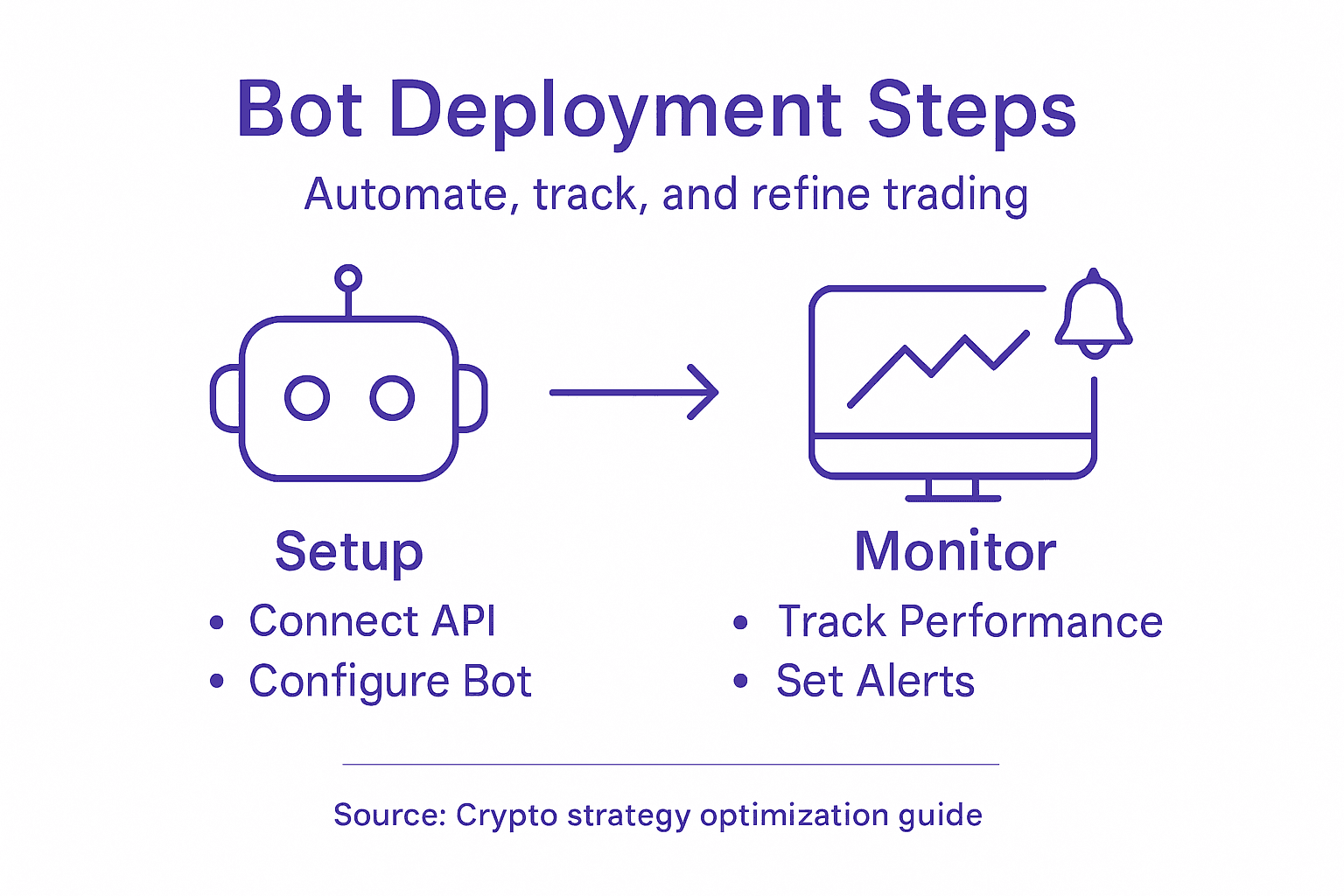
The deployment process begins with configuring automated trading infrastructure using secure API connections between your trading platform and selected cryptocurrency exchanges. You will need to generate API keys with appropriate trading permissions, implement robust risk management protocols, and establish precise trading parameters that align with your predefined strategy. Careful configuration ensures your bot can execute trades automatically while maintaining strict controls over position sizing, stop loss mechanisms, and overall portfolio exposure.
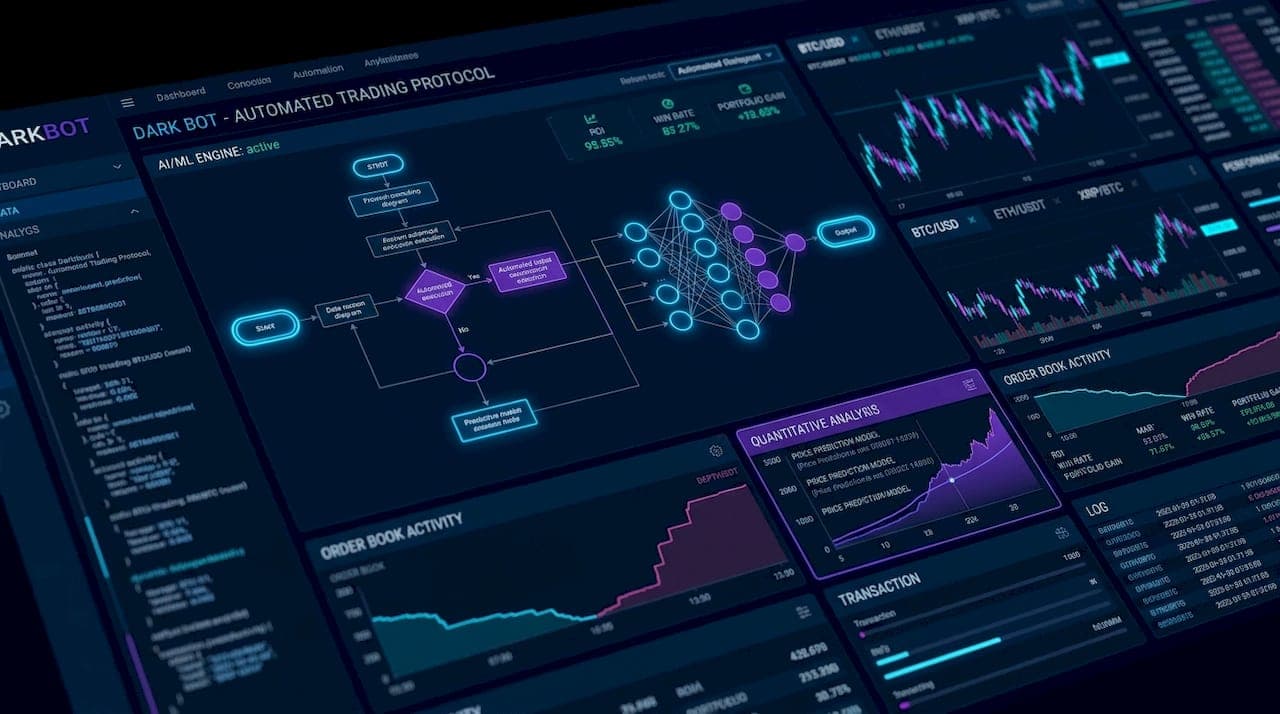
Successful bot monitoring requires establishing a comprehensive performance tracking system that provides real time insights into your trading operations. This involves setting up detailed dashboards that track key metrics such as total portfolio value, individual trade performance, win rate, risk adjusted returns, and comparative benchmark analysis. Advanced traders create multi tiered monitoring approaches that include automated alerts for significant market movements, potential strategy deviations, or risk threshold breaches. Your monitoring system should provide granular visibility into bot performance while enabling quick manual intervention if unexpected market conditions emerge.
Pro Tip: Configure multiple notification channels including email and mobile alerts to ensure you can rapidly respond to critical trading events or unexpected bot behavior.
Step 5: Refine Strategies Using Real-Time Data
Refined cryptocurrency trading strategies emerge from continuous adaptation and intelligent data processing. This step transforms your automated trading approach from static to dynamically responsive, enabling your bot to make more intelligent decisions based on evolving market conditions.
The refinement process centers on intraday algorithmic trading techniques that leverage real-time market data to update and optimize your trading strategy. You will need to implement machine learning models capable of processing streaming price information, volume indicators, market sentiment signals, and other relevant data points. This involves creating adaptive algorithms that can recalibrate strategy parameters such as entry and exit points, risk management thresholds, and position sizing based on current market dynamics.
Successful strategy refinement requires a systematic approach to data integration and model updating. Advanced traders develop multi layer feedback mechanisms that continuously evaluate trading performance, identifying patterns of success and potential improvement areas. This means establishing sophisticated data pipelines that can ingest and analyze market information in near real-time, allowing your trading bot to make instantaneous adjustments to its trading logic. The goal is to create a self learning system that can dynamically respond to market volatility, reduce unnecessary trade executions, and optimize overall portfolio performance.
Pro Tip: Implement a rigorous backtesting framework that allows you to simulate strategy refinements using historical and current market data before live deployment.
Boost Your Crypto Trading Strategy with Darkbot.io
Optimizing and automating cryptocurrency trading strategies presents complex challenges like fine-tuning risk thresholds, adapting to volatile markets, and ensuring consistent performance without the pitfalls of overfitting. If you find yourself seeking a dependable solution to set up, customize, backtest, and deploy your crypto strategies effectively while leveraging real-time market data Darkbot.io delivers exactly that. With advanced AI and machine learning capabilities, Darkbot.io empowers you to automate your trading across multiple exchanges with secure API integration and personalized strategy refinement.
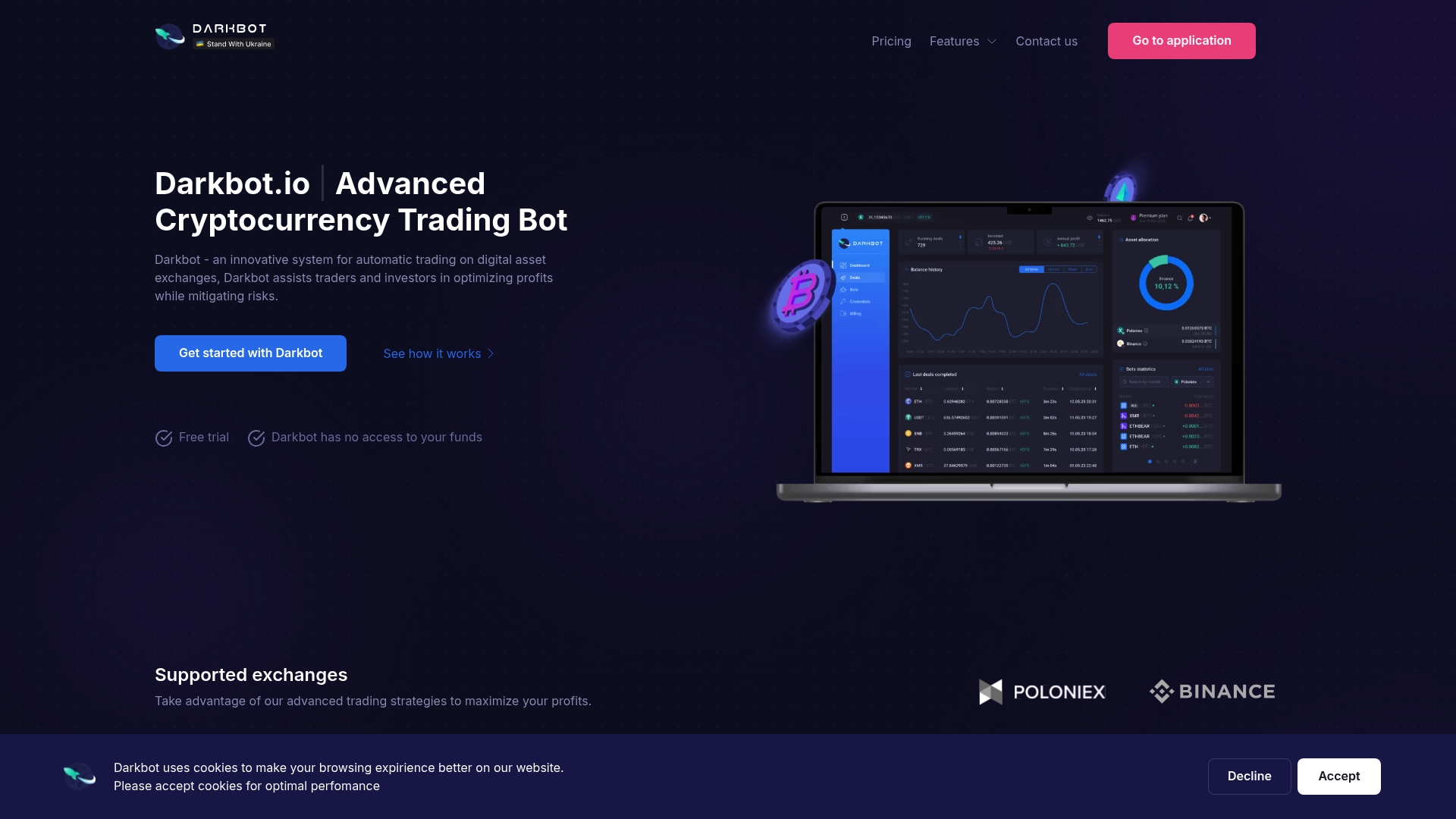
Take control of your crypto portfolio today by visiting Darkbot.io and experience seamless strategy customization and automated rebalancing designed for both beginners and experienced traders. Don’t wait to reduce manual effort and improve your returns with trusted, real-time analytics and performance monitoring. Discover how easy it is to bring your algorithmic strategies to life on the Darkbot.io platform now.
Frequently Asked Questions
How can I set up automated trading tools for cryptocurrency?
To set up automated trading tools, begin by selecting a trading platform that supports API integrations. Connect your cryptocurrency exchange accounts, generate secure API keys, and define your trading parameters to execute strategies automatically.
What are the key components for customizing my crypto trading strategy?
The key components for customizing a crypto trading strategy include adjusting entry and exit points, position sizing, and risk management thresholds. Analyze historical market data and backtest different parameter combinations to find the optimal settings that align with your investment goals.
How do I backtest a cryptocurrency trading strategy effectively?
To backtest a cryptocurrency trading strategy, simulate your approach using historical market data to evaluate key performance metrics such as total return and maximum drawdown. Ensure to test across various market conditions to verify consistent performance and avoid overfitting.
What metrics should I monitor after deploying my automated trading bots?
After deploying automated trading bots, monitor metrics such as total portfolio value, individual trade performance, and win rate. Establish a performance tracking system that allows for real-time insights and set up alerts for critical trading events.
How can I refine my trading strategy using real-time data?
Refine your trading strategy by implementing machine learning models that process streaming market data. Create adaptive algorithms that continuously adjust entry and exit points and risk thresholds based on the latest market signals to enhance trading performance.
Recommended

Start trading on Darkbot with ease
Come and explore our crypto trading platform by connecting your free account!
Free plan available • No credit card required