7 key advantages of automated crypto trading in 2026
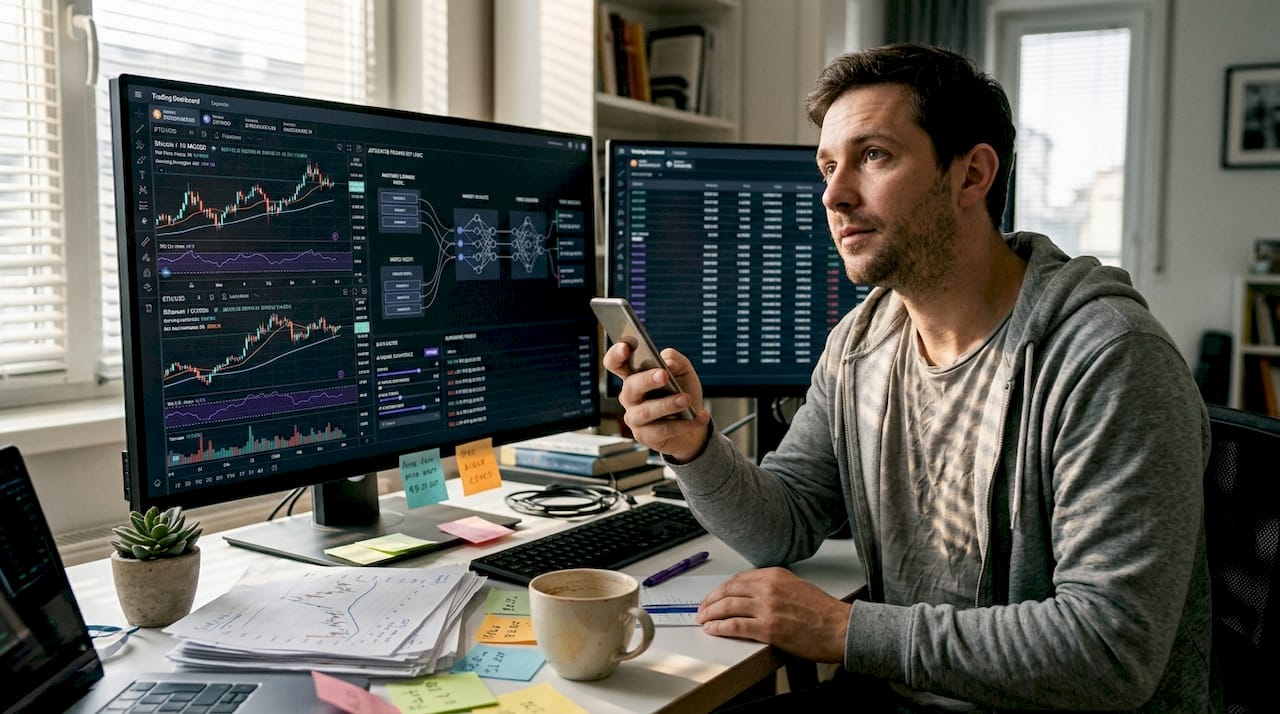
Keeping up with crypto markets manually is exhausting. Prices shift in seconds, opportunities vanish before you can act, and emotional decisions quietly drain your portfolio. That’s exactly why more traders are turning to automated trading solutions. AI-based strategies outperform buy-and-hold by 20%+ ROI in empirical simulations, which tells you something important: the edge in crypto isn’t just about what you trade, it’s about how you trade it. This article breaks down the mechanics, the data, and the real advantages of automation so you can make smarter decisions with your capital.
Key Takeaways
| Point | Details |
|---|---|
| Superior performance | Automated trading systems consistently outperform manual trading and buy-and-hold strategies. |
| Better risk management | Algorithms optimize risk controls, limiting drawdowns and protecting capital. |
| Continuous optimization | Automation enables ongoing strategy and portfolio refinement for maximum returns. |
| 24/7 execution | Bots never sleep, capturing opportunities day and night across volatile markets. |
How automated trading works in cryptocurrency markets
Automated trading means using software, algorithms, and AI to execute trades on your behalf based on rules you define. Instead of watching charts all day, you set your strategy, and the system handles execution. The core components are a trading algorithm (the logic), a bot (the executor), and often a machine learning layer that adapts the strategy over time based on market conditions.
Here’s what makes this powerful in crypto specifically: markets run 24 hours a day, 7 days a week, across dozens of exchanges simultaneously. No human can monitor all of that. A bot can. It reacts in milliseconds, never gets tired, and never second-guesses itself mid-trade.

Understanding algorithmic trading in 2025 gives you a clearer picture of how these systems have evolved and why they’re now accessible to individual traders, not just institutional desks. The barrier to entry has dropped significantly, and the performance gap between automated and manual trading keeps widening.
Pro Tip: Start with a single, well-defined strategy before running multiple bots. Complexity without clarity leads to conflicting signals and poor results.
Automated systems also integrate directly with exchanges via API keys, meaning your funds stay on the exchange while the bot executes trades securely. No manual order entry, no missed entries, no emotional overrides.
Seven key advantages of automated crypto trading
Now that the mechanics are clear, let’s look at the concrete advantages you can put to work.
- 24/7 market coverage: Bots never sleep. They monitor and trade around the clock, capturing opportunities during Asian sessions, weekend volatility spikes, and overnight breakouts that manual traders simply miss.
- Execution speed and precision: Algorithms execute in milliseconds. In a market where a 0.5% price move can happen in seconds, speed is a genuine competitive advantage.
- Emotionless decision-making: Fear and greed are the two biggest account killers in crypto. Automation removes both from the equation entirely. The bot follows the rules, period.
- Consistent risk management: Automated systems apply stop-losses, position sizing, and drawdown limits consistently on every single trade, not just when you remember to set them.
- Backtesting capability: Before risking real capital, you can test your strategy against years of historical data to see how it would have performed. This is something manual traders rarely do rigorously.
- Real-time adaptation: Advanced AI-powered bots adjust parameters as market conditions shift, rather than waiting for you to notice something has changed.
- Scalability: One trader can run multiple bots across multiple pairs and exchanges simultaneously, something physically impossible to do manually.
The performance data backs this up. The SAC algorithm delivered 152% excess returns with a Sharpe ratio of 2.81 on ETH/USDT, a risk-adjusted result that manual strategies struggle to match.
“Automation doesn’t just save time. It systematically removes the variables that cause most traders to underperform: timing errors, emotional bias, and inconsistent execution.”
For a deeper look at how these benefits stack up in practice, the breakdown of automated trading advantages and crypto trading advantages explained are worth reading alongside this article.
Pro Tip: Backtesting is only as good as the data you use. Always test across multiple market cycles, including bull runs, bear markets, and sideways periods, to get a realistic picture of strategy performance.
Comparing manual vs automated trading: Performance and risk data
To quantify these advantages, let’s look at real-world performance benchmarks from recent research.
| Metric | Manual trading | Automated trading |
|---|---|---|
| BTC/USDT returns | Baseline | 37.2% higher returns |
| ETH/USDT profit (ADCAT) | Variable | $1,291 net profit |
| Maximum drawdown | Higher exposure | 4.6% drawdown |
| Sharpe ratio (SAC) | Below 1.5 typical | 2.81 |
| Execution speed | Seconds to minutes | Milliseconds |
| Emotional bias | High | None |
| Operating hours | Limited | 24/7 |
These numbers aren’t theoretical. They come from empirical testing on live market data. A 37.2% improvement in BTC/USDT returns is the kind of difference that compounds dramatically over time.
“Risk-adjusted returns matter more than raw gains. A strategy with a Sharpe ratio above 2.0 is considered exceptional. Automated AI strategies are consistently hitting that benchmark.”
For traders focused on maximizing risk-adjusted performance, understanding AI trading strategy optimization and reviewing AI trading strategies examples will help you connect these benchmarks to real implementation choices.
Optimizing risk management through automation
With performance clearly favoring automation, smart risk management remains a core driver for traders who want to protect capital while growing it.
Manual risk management is inconsistent by nature. You might set a stop-loss on one trade and forget it on the next. Automated systems don’t have that problem. Every trade follows the same rules, every time.
Here’s how automation tightens risk controls in practice:
- Dynamic stop-losses: Bots adjust stop-loss levels in real time as price moves, locking in profits while limiting downside exposure.
- Position sizing rules: Automation enforces maximum position sizes relative to portfolio value, preventing overexposure to any single asset.
- Drawdown limits: Systems can pause trading automatically when a portfolio drops beyond a defined threshold, protecting capital during extreme volatility.
- Real-time monitoring: Bots track multiple risk metrics simultaneously across all open positions, something no human trader can do at scale.
- Correlation management: Advanced systems avoid stacking correlated positions that would amplify losses if a sector-wide move occurs.
Automated systems achieved only 4.6% drawdown compared to significantly higher vulnerability in manual trading approaches. That’s not a small difference. In a market that can drop 30% in a week, keeping drawdown under 5% is a major structural advantage.
For traders building out their risk frameworks, smart automation risk management and crypto trading risk explained offer practical frameworks you can apply directly to your setup.
Automation in strategy optimization and portfolio management
Finally, let’s look at how automated trading supercharges strategy optimization and portfolio returns over time.
The real power of AI-driven automation isn’t just execution speed. It’s the ability to continuously learn from market data and refine strategies without manual intervention. Traditional portfolio rebalancing requires you to notice drift and act on it. Automated systems do this continuously, keeping your allocations aligned with your target risk profile.
Here’s a practical framework for using automation in portfolio management:
- Define target allocations: Set percentage targets for each asset in your portfolio based on your risk tolerance and return goals.
- Set rebalancing triggers: Automate rebalancing when any asset drifts more than a defined percentage from its target, rather than on a fixed calendar schedule.
- Apply strategy optimization loops: Use machine learning to test parameter variations continuously, replacing underperforming settings with better ones based on live data.
- Monitor performance metrics: Track Sharpe ratio, drawdown, and win rate in real time to catch strategy degradation early.
- Diversify across strategies: Run multiple bots with different logic simultaneously to reduce dependence on any single approach.
The results speak clearly. AI-driven automation generated $1,291 profit through strategy optimization on ETH/USDT, demonstrating that continuous learning translates directly into measurable gains.
| Strategy type | Optimization method | Key benefit |
|---|---|---|
| Trend following | Parameter tuning via ML | Adapts to changing momentum |
| Mean reversion | Real-time threshold adjustment | Captures range-bound moves |
| Portfolio rebalancing | Drift-triggered automation | Maintains target risk profile |
| Arbitrage | Speed-based execution | Exploits price gaps instantly |
For traders who want to go deeper, machine learning in crypto trading and AI’s role in volatile markets cover the technical foundations behind these optimization methods in practical terms.
Get started with AI-powered crypto trading
If you’re ready to put automation to work for your crypto portfolio, the gap between knowing and doing is smaller than you think. The data is clear: automated systems outperform manual trading on returns, risk management, and consistency. The question isn’t whether automation works. It’s whether you’re using it.
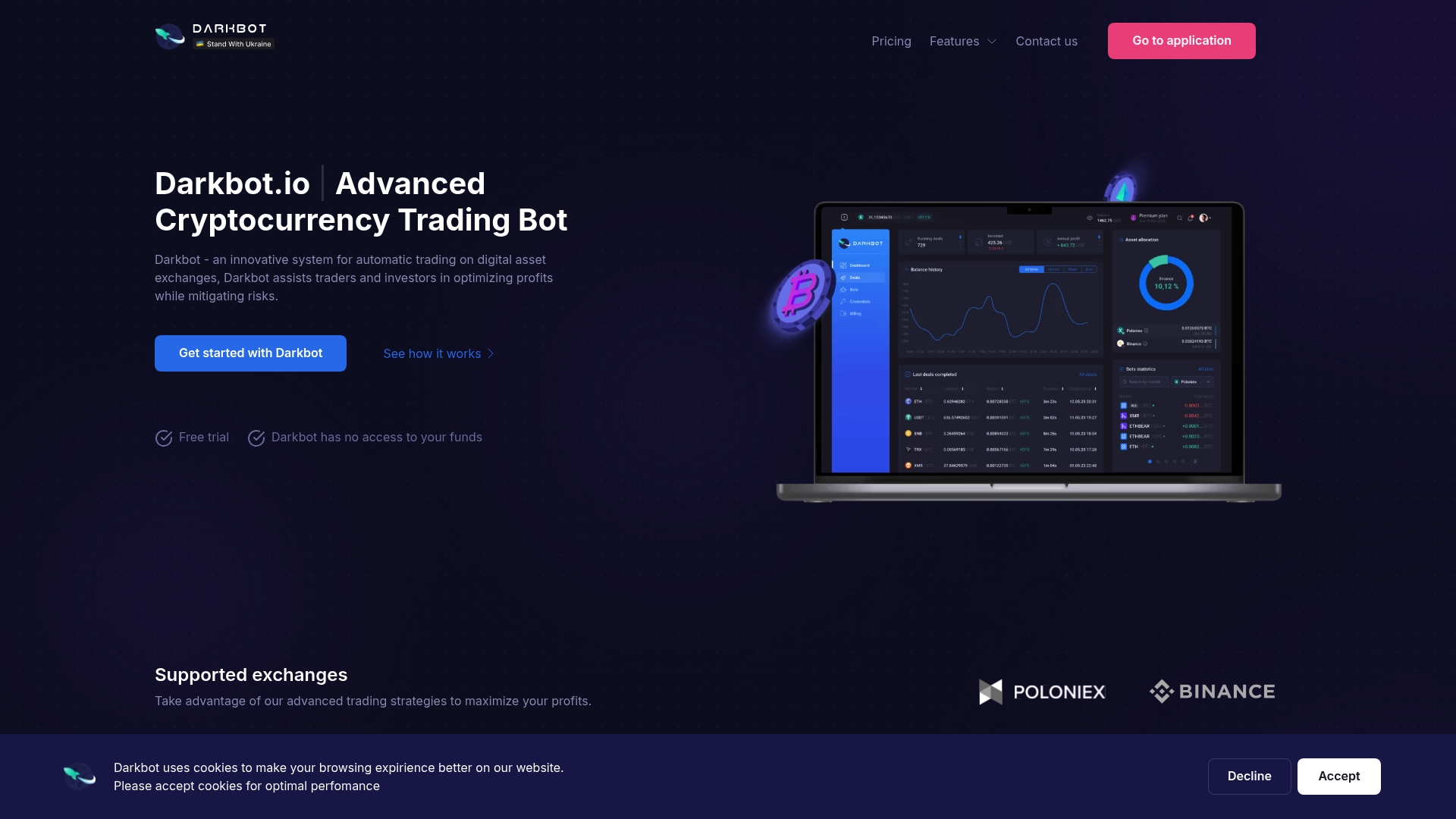
The Darkbot trading bot gives you access to AI-powered strategies, seamless exchange integration via API keys, and real-time analytics across multiple trading pairs. Whether you’re running your first bot or managing a diversified portfolio, Darkbot’s portfolio management tools handle rebalancing, risk controls, and strategy optimization automatically. Flexible pricing plans, including a free tier, mean you can start testing without committing capital to the platform itself. The next step is simply getting started.
Frequently asked questions
What is automated trading and how does it work in crypto?
Automated trading uses algorithms and AI to buy or sell cryptocurrencies based on predefined strategies, executing trades automatically 24/7. AI-based strategies outperform buy-and-hold by 20%+ ROI, making automation a measurable upgrade over manual approaches.
Can automated trading improve returns compared to manual trading?
Yes. Studies show automated trading can deliver 20% to 152% higher returns while reducing risk through optimized, data-driven strategies that remove emotional decision-making from the process.
How does automation help with risk management in crypto trading?
Automation enables dynamic risk controls like real-time stop-losses and enforced drawdown limits, protecting capital more efficiently than manual oversight. Automated systems achieved only 4.6% drawdown compared to higher exposure in manual trading.
Do automated trading bots require constant monitoring?
No. Bots operate continuously based on pre-set instructions, removing the need for active oversight. That said, periodic performance reviews are recommended to catch strategy drift and ensure your parameters still match current market conditions.
Recommended

Start trading on Darkbot with ease
Come and explore our crypto trading platform by connecting your free account!
Free plan available • No credit card required