Algorithmic Trading: Automating Crypto for Profit and Control

Managing trades in the nonstop world of cryptocurrency while tackling full schedules can test even the most seasoned professionals. Automated trading offers a smarter, data-driven way to handle fast-moving markets like Bitcoin and Ethereum, allowing you to keep pace without staying glued to every price movement. By embracing machine learning systems and systematic strategies, experienced traders can target greater efficiency, reduce emotional trading mistakes, and adapt quickly to the demands of digital asset investing.
Key Takeaways
| Point | Details |
|---|---|
| Algorithmic Trading Enhances Performance | Utilizing machine learning and automated systems can significantly improve trading outcomes in cryptocurrencies like Bitcoin and Ethereum. |
| Diverse Strategies Are Essential | Different algorithmic trading strategies require careful selection and optimization to suit various market conditions. |
| Risk Management Is Crucial | Effective algorithmic trading must incorporate robust risk management protocols to navigate market volatility. |
| Security and Compliance Challenges Exist | Traders must prioritize cybersecurity and remain compliant with regulations to mitigate risks associated with algorithmic trading. |
What Algorithmic Trading Means for Crypto
Algorithmic trading represents a sophisticated technological approach to cryptocurrency market participation, leveraging advanced computational techniques to execute trades automatically. By utilizing machine learning systems and pre-programmed rules, these algorithms transform how traders interact with volatile digital asset markets. Emerging research demonstrates that algorithmic trading can significantly enhance trading performance across major cryptocurrencies like Bitcoin and Ethereum.
The core functionality of algorithmic crypto trading involves several critical mechanisms:
- Automated trade execution based on predefined strategies
- Real-time market data processing and analysis
- Rapid decision-making without emotional interference
- Simultaneous monitoring of multiple cryptocurrency exchanges
- Risk management through systematic trading rules
These computational systems fundamentally differ from traditional human trading by processing massive datasets instantaneously. Algorithmic trading platforms can evaluate complex market signals, including social media sentiment, price movements, and trading volume, within milliseconds. This enables traders to capitalize on microscopic market inefficiencies that would be impossible to detect manually.

Cryptocurrency markets present unique challenges that make algorithmic trading particularly valuable. High volatility, 24/7 market operation, and complex interconnected global exchanges require computational approaches that can adapt rapidly. Advanced technological systems are reshaping crypto trading behaviors, introducing more structured and data-driven investment strategies that reduce human error and emotional decision-making.
Here is a comparison of traditional trading versus algorithmic trading in the crypto market:
| Aspect | Traditional Trading | Algorithmic Trading |
|---|---|---|
| Decision Speed | Minutes to hours | Milliseconds |
| Emotional Influence | High | None |
| Market Coverage | Single market focus | Multiple markets simultaneous |
| Consistency | Variable | Rigidly systematic |
Pro tip: Start with a conservative algorithmic trading strategy, allocating only a small percentage of your portfolio to automated systems while you learn and refine your approach.
Types of Algorithmic Trading Strategies
Algorithmic trading strategies in cryptocurrency markets encompass a diverse range of computational approaches designed to capitalize on market inefficiencies and optimize trading performance. Sophisticated research reveals that different strategies perform uniquely across various digital assets, requiring careful selection and tailored implementation.
Key algorithmic trading strategies in cryptocurrency markets include:
- Trend Following Strategies
- Moving Average Crossover
- Momentum Trading
- Relative Strength Index (RSI) Based Approaches
- Mean Reversion Strategies
- Bollinger Band Trading
- Statistical Arbitrage
- Pairs Trading
- Breakout Strategies
- Channel Breakout
- Support and Resistance Trading
- Volatility Breakout
Technical indicators play a crucial role in defining these strategies. Advanced trading systems utilize complex oscillators like Ichimoku Cloud, MACD, and Keltner Channels to generate trading signals across different timeframes. These computational models can process market data within milliseconds, identifying potential trading opportunities that human traders would likely miss.
Each strategy carries unique risk profiles and performance characteristics. Swing trading algorithms, for instance, aim to capture gains from short to medium-term price movements, while high-frequency trading strategies execute multiple trades within seconds. The effectiveness of these approaches depends on market conditions, specific cryptocurrency characteristics, and the underlying computational logic.
Below is a summary of popular algorithmic trading strategies and their ideal market conditions:
| Strategy Type | Example Approach | Works Best In |
|---|---|---|
| Trend Following | Moving Average Cross | Sustained market trends |
| Mean Reversion | Pairs Trading | Sideways price action |
| Breakout | Channel Breakout | High volatility periods |
Pro tip: Backtest multiple algorithmic strategies using historical data before committing real capital, and continuously monitor and adjust your approach based on market performance.
How Automated Trading Bots Work
Automated trading bots are sophisticated computer programs designed to execute cryptocurrency trades with minimal human intervention. Advanced machine learning systems analyze complex market data in real-time, making split-second trading decisions based on predefined algorithmic strategies.
The core operational components of automated trading bots include:
- Data Collection Mechanisms
- Real-time market price tracking
- Order book monitoring
- Volume and liquidity analysis
- Decision-Making Modules
- Algorithmic strategy implementation
- Risk management protocols
- Trade execution rules
- Execution Systems
- Direct exchange API connections
- Automated trade placement
- Instant transaction processing
These computational systems leverage multiple data inputs to generate trading signals. Innovative trading algorithms now incorporate advanced techniques like social media sentiment analysis, enabling bots to process information from diverse sources such as Twitter feeds and cryptocurrency forums. This multi-dimensional approach allows for more nuanced and responsive trading strategies that can adapt to rapidly changing market conditions.
The underlying architecture of trading bots typically involves complex machine learning models that continuously learn and refine their decision-making processes. These models use supervised learning techniques to analyze historical market data, identify patterns, and develop probabilistic trading approaches that aim to maximize potential returns while managing inherent risks.
Pro tip: Configure your trading bot with strict risk management parameters, including maximum loss thresholds and position sizing rules, to protect your investment during volatile market conditions.
Benefits and Limitations of Algorithmic Trading
Algorithmic trading represents a powerful technological approach to cryptocurrency investment, offering significant advantages while simultaneously presenting complex challenges. Comprehensive market research reveals a nuanced landscape of potential benefits and inherent risks that traders must carefully navigate.
The key benefits of algorithmic trading include:
- Operational Efficiency
- Faster trade execution
- Elimination of emotional decision-making
- Consistent strategy implementation
- Market Performance
- Improved liquidity
- Reduced transaction costs
- Enhanced market price discovery
- Risk Management
- Precise position sizing
- Automated stop-loss mechanisms
- Systematic risk control
Advanced computational models demonstrate that while algorithmic trading can optimize investment strategies, it simultaneously introduces significant operational complexities. These systems are not infallible and can suffer from critical limitations such as overfitting, data quality dependencies, and potential challenges in adapting to sudden market disruptions.
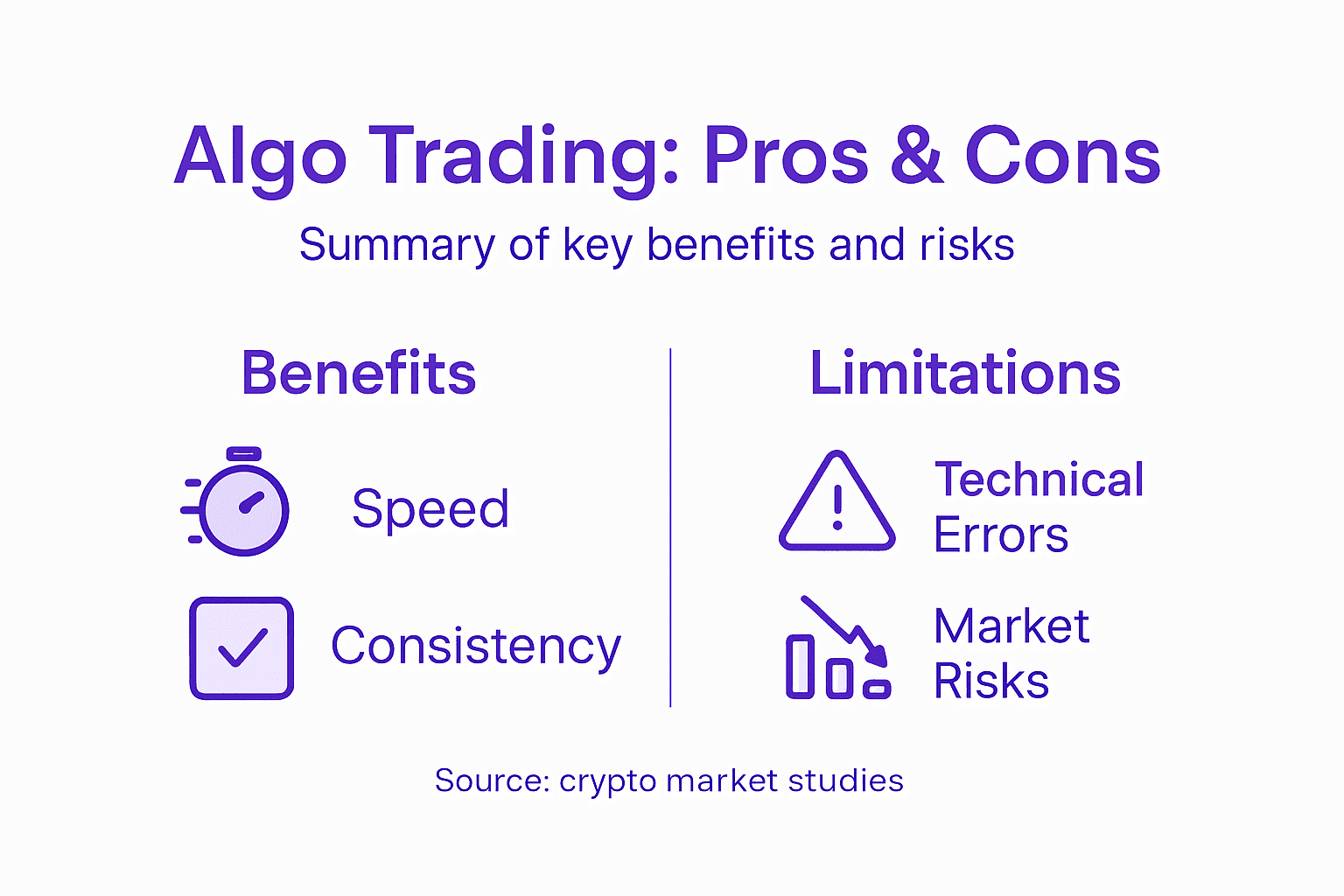
The most sophisticated algorithmic trading approaches recognize both the technology’s potential and its inherent constraints. Successful implementation requires continuous monitoring, regular strategy refinement, and a deep understanding of the underlying mathematical models driving trading decisions. Traders must remain vigilant, acknowledging that no algorithm can perfectly predict market movements or eliminate all investment risks.
Pro tip: Regularly backtest and validate your algorithmic trading strategy using multiple market scenarios to identify potential weaknesses and ensure robust performance across different market conditions.
Risks, Security, and Legal Compliance
Algorithmic trading introduces complex security and regulatory challenges that demand sophisticated understanding and proactive management. Regulatory investigations highlight the critical importance of maintaining robust cybersecurity protocols and adhering to evolving legal frameworks in cryptocurrency markets.
The primary security and compliance risks include:
- Cybersecurity Vulnerabilities
- API key exposure
- Potential unauthorized access
- Data breach risks
- Regulatory Compliance Challenges
- Cross-border trading restrictions
- Anti-money laundering requirements
- Know Your Customer (KYC) regulations
- Algorithmic Trading Risks
- Model manipulation potential
- Unexpected market behavior
- Systematic trading errors
Comprehensive legal frameworks underscore the necessity of implementing rigorous security measures and maintaining transparent operational practices. Cryptocurrency algorithmic trading platforms must continuously update their systems to prevent potential exploitations, protect user data, and ensure compliance with international financial regulations.
Successful risk management requires a multifaceted approach that combines technological sophistication with legal vigilance. Traders and platform developers must remain adaptable, implementing advanced encryption technologies, conducting regular security audits, and maintaining comprehensive documentation of trading activities to mitigate potential legal and operational risks.
Pro tip: Implement multi-factor authentication, use hardware security keys, and maintain detailed transaction logs to enhance your algorithmic trading platform’s security and regulatory compliance.
Automate Your Crypto Trading for Consistent Profit and Control
Algorithmic trading can feel overwhelming with challenges like rapid market volatility and the need for split-second decision-making without emotional bias. You want reliable automation that implements sophisticated strategies such as mean reversion or breakout trading while managing risk effectively. Darkbot.io offers a trusted solution designed to address these exact pain points by providing advanced AI-powered bots that execute your trading strategies automatically across multiple exchanges.
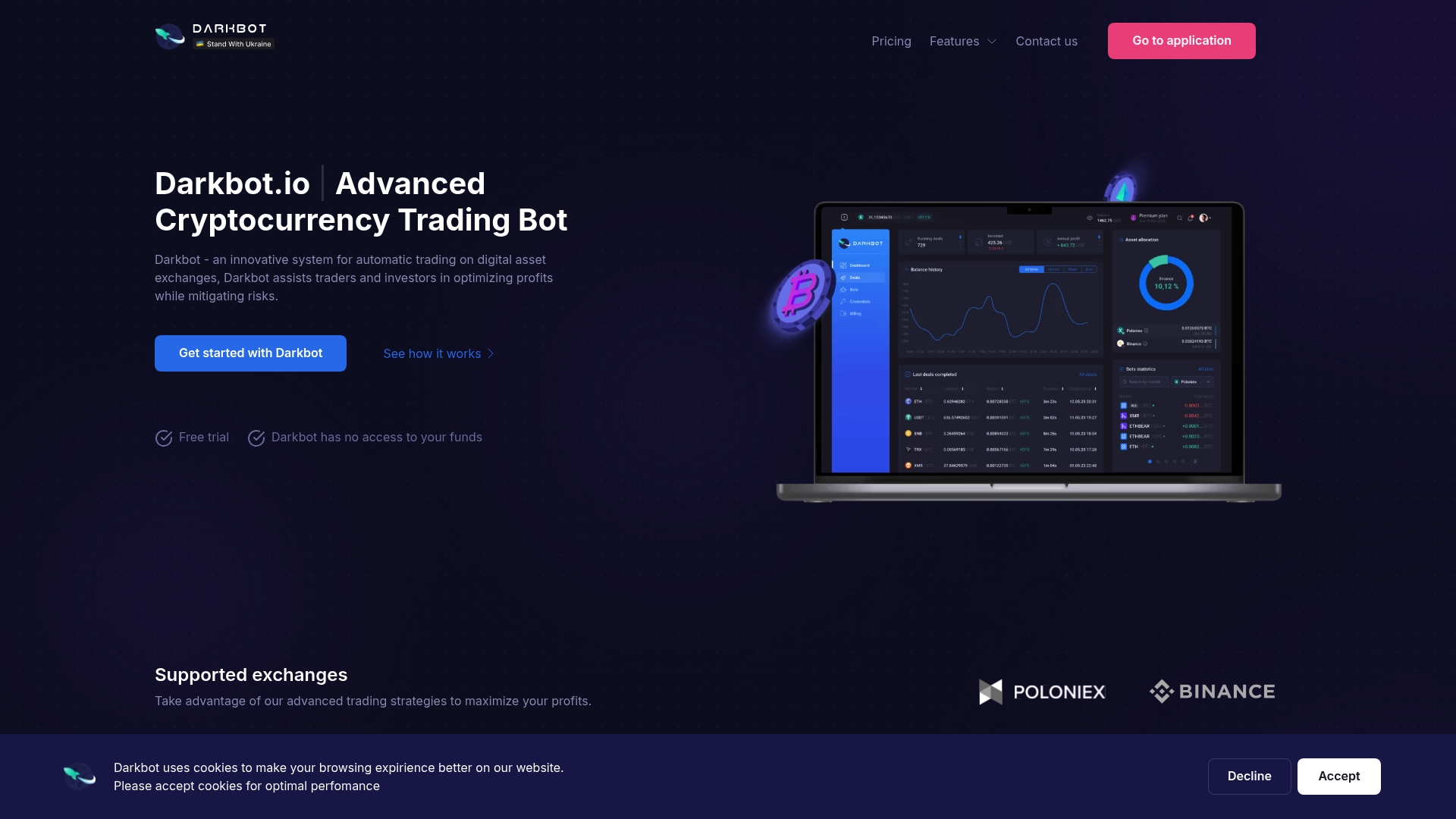
Start optimizing your crypto portfolio today with Darkbot.io. Experience seamless integration through API keys, customize your strategies for diverse market conditions, and gain real-time analytics to fine-tune your automated trading approach. Take control of your investments and reduce manual effort by joining a platform built for both novice and expert traders. Visit Darkbot.io now and transform how you trade cryptocurrency with dependable automation and intelligent risk management.
Frequently Asked Questions
What is algorithmic trading in cryptocurrency?
Algorithmic trading in cryptocurrency involves using computer algorithms to automate trading decisions and execute trades based on predefined strategies. This approach leverages advanced computational techniques to optimize trading performance and minimize emotional influence.
How does automated trading work for cryptocurrencies?
Automated trading for cryptocurrencies utilizes trading bots that analyze real-time market data, make trading decisions based on specific algorithms, and execute trades automatically without human intervention. These bots can process large amounts of data quickly, allowing for efficient trading.
What are the primary benefits of using algorithmic trading?
The main benefits of algorithmic trading include faster trade execution, elimination of emotional decision-making, consistent strategy implementation, improved liquidity, reduced transaction costs, and precise risk management through automated mechanisms.
What risks are associated with algorithmic trading?
Algorithmic trading carries risks such as cybersecurity vulnerabilities, regulatory compliance challenges, potential model manipulation, unexpected market behavior, and systematic trading errors. It’s essential for traders to implement robust security measures and continuously monitor their systems.
Recommended

Start trading on Darkbot with ease
Come and explore our crypto trading platform by connecting your free account!
Free plan available • No credit card required