Step by Step Trading Bot Guide for Automated Crypto Profits
Over 40 percent of American cryptocurrency investors have tried automated trading platforms in pursuit of better results. With digital assets rising in popularity and complexity, knowing how to launch secure trading bots matters more than ever for those seeking an edge in the ever-evolving market. This guide breaks down the essential steps every American trader needs to confidently set up exchanges, protect accounts, and optimize trading strategies for real world success.
Quick Summary
| Key Point | Explanation |
|---|---|
| 1. Secure Exchange Accounts | Establishing secure accounts with strong passwords and two-factor authentication is essential for safe trading. |
| 2. Generate Limited API Keys | Create API keys with restricted permissions to ensure your trading bot can trade without unauthorized access. |
| 3. Customize Trading Bot Settings | Tailor your bot’s settings including risk management and trading indicators to align with your specific trading strategy. |
| 4. Monitor Trading Bot Performance | Implement monitoring tools to track key performance indicators and adjust strategies for optimal results. |
| 5. Analyze and Adjust Strategies | Regularly evaluate your trading bot’s performance against benchmarks to refine strategies and improve consistency. |
Step 1: Set Up Your Exchange Accounts and API Keys
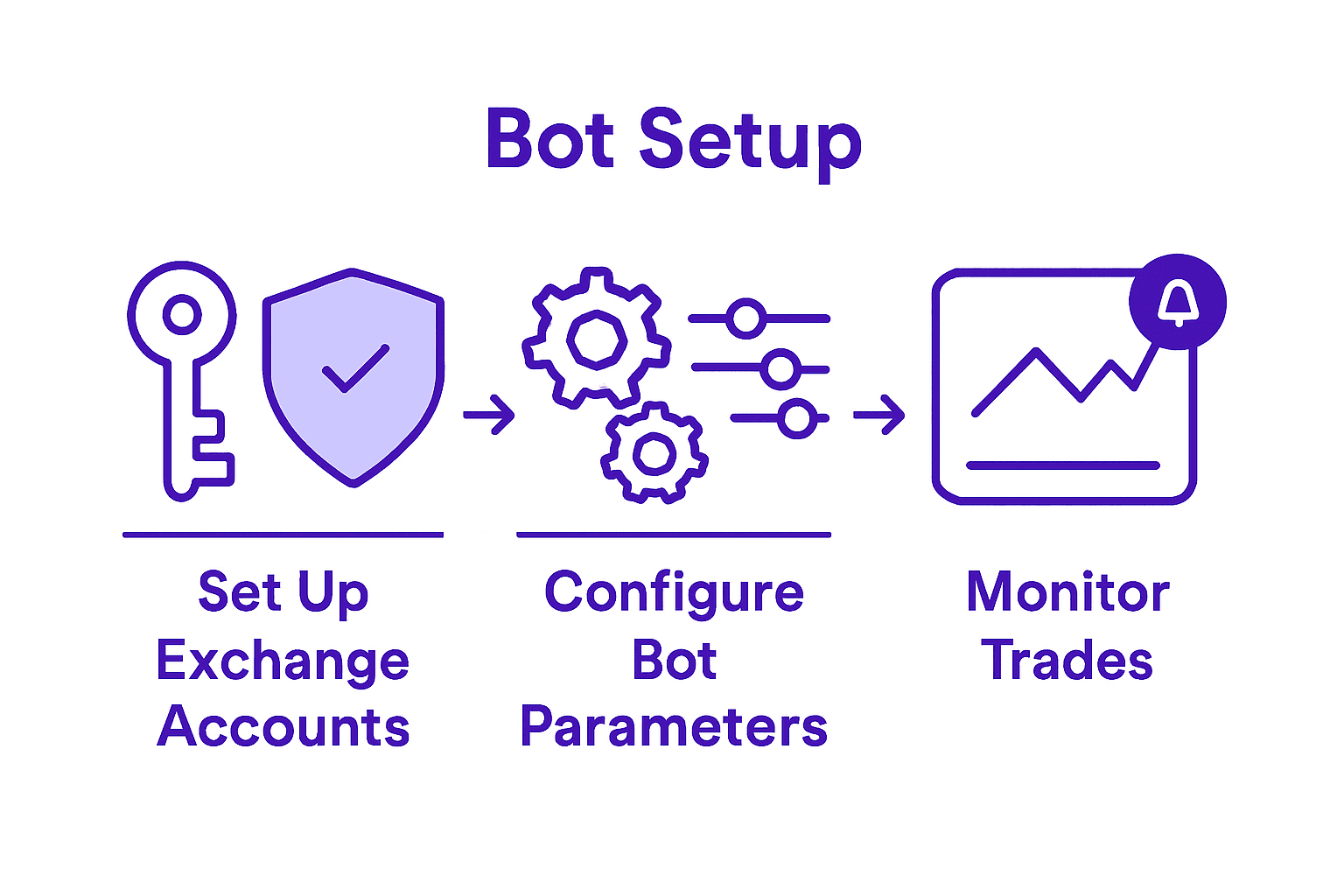
Setting up secure and reliable exchange accounts serves as the critical foundation for automated cryptocurrency trading. In this step, you will create verified accounts on top trading platforms and generate the essential API keys needed to connect your trading bot.
Begin by selecting reputable cryptocurrency exchanges that support API trading, such as Binance, Coinbase Pro, or Kraken. Each platform requires a systematic verification process to ensure account security and compliance. Comprehensive account registration guidelines recommend creating strong unique passwords and enabling two factor authentication immediately after registration. Verify your identity through the platform’s Know Your Customer (KYC) procedures by uploading government issued identification and proof of address documents.
Once your account is fully verified, navigate to the API management section to generate trading keys. These API keys will authenticate your trading bot’s access to execute trades on your behalf. Select permissions carefully, typically restricting API access to trading functions only and avoiding withdrawal permissions. Copy and securely store your API key and secret key, preferably using a password manager or encrypted storage solution. Never share these credentials or store them in unsecured locations.
Pro tip: Create separate API keys for each trading platform with limited trading permissions to minimize potential security risks if one set of credentials becomes compromised.
Here is a summary of key security measures for exchange account setup:
| Security Measure | Purpose | Best Practice |
|---|---|---|
| Two-factor authentication | Prevent unauthorized access | Enable after registration |
| Strong unique passwords | Reduce password breach risk | Use password manager |
| KYC verification | Ensure compliance and deter fraud | Submit valid documents |
| API key permission limits | Avoid unauthorized transactions | Allow only trading actions |
| Encrypted storage | Protect sensitive API credentials | Store in password manager |
Step 2: Configure Your Trading Bot Platform
Configuring your trading bot platform represents a pivotal moment in establishing automated cryptocurrency trading infrastructure. This crucial step transforms your trading strategy from theoretical concept to operational reality.
Start by selecting a compatible trading bot platform that integrates seamlessly with your chosen exchanges. Specialized automated trading systems offer sophisticated features for executing complex trading strategies across multiple cryptocurrency markets. Popular platforms like Crypto Trading Bots Explained: Complete Expert Guide provide comprehensive frameworks for strategy implementation.
Carefully review and configure your bot’s core settings including risk management parameters trading frequency capital allocation and specific trading indicators. Most platforms allow granular customization of entry and exit rules enabling you to translate your unique trading strategy into programmable logic. Select appropriate technical indicators like moving averages relative strength index or bollinger bands to define your automated trading conditions. Thoroughly backtest your configuration using historical market data to validate strategy performance before deploying real capital.
Pro tip: Create multiple trading bot configurations with varying risk profiles and allocate smaller capital percentages to experimental strategies to minimize potential losses during initial testing phases.
Step 3: Customize Trading Strategies and Risk Settings
Customizing your trading bot requires strategic configuration of sophisticated parameters that transform algorithmic potential into practical trading performance. This critical phase defines the precise rules and risk management protocols governing your automated investment approach.
Advanced algorithmic trading frameworks provide nuanced mechanisms for developing adaptive trading strategies that respond dynamically to market conditions. Implementing robust risk management involves setting specific parameters like maximum trade size percentage stop loss thresholds and portfolio allocation limits. Modular trading development platforms enable granular customization of entry and exit signals using technical indicators such as moving averages relative strength index and bollinger bands. Configure your bot to execute trades only when multiple confirmation signals align minimizing impulsive or emotionally driven transactions.
Pay close attention to portfolio diversification by establishing maximum allocation percentages for individual cryptocurrencies and implementing position sizing rules that prevent overexposure to any single asset. Advanced strategies might include implementing trailing stop losses dynamic risk scaling and correlation based portfolio rebalancing techniques. Leverage backtesting tools to simulate your strategy across different market scenarios ensuring consistent performance and identifying potential vulnerabilities before deploying real capital.
Pro tip: Implement a gradual strategy testing approach by initially allocating no more than 5 percent of your total trading capital to new bot configurations and incrementally increasing exposure only after demonstrating consistent positive performance metrics.
Step 4: Activate and Monitor Automated Trades
Activating your trading bot marks the transition from theoretical strategy to live market engagement. This critical phase transforms your carefully designed algorithmic approach into real time trading execution across cryptocurrency markets.
Advanced crypto exchange API integration requires meticulous attention to authentication protocols and real time market data synchronization. Initiate your bot by verifying your API connections and confirming that trading permissions are correctly configured. Start with minimal trade sizes to validate system performance and gradually increase exposure as your bot demonstrates consistent execution accuracy. Implement comprehensive monitoring tools that track key performance indicators including total trade volume profit margins win rate and maximum drawdown metrics.
Establish a robust monitoring workflow that includes daily and weekly performance reviews. Configure automatic notifications for significant trading events such as unexpected market volatility substantial position changes or strategy deviation alerts. Leverage Automated Crypto Trading: Streamlining Strategy Execution platforms that offer real time analytics dashboards enabling rapid strategy adjustments. Periodically validate your bot performance against benchmark market indices and be prepared to pause or recalibrate strategies during extended unfavorable market conditions.
Pro tip: Create a dedicated spreadsheet or monitoring dashboard that tracks your bot performance across multiple dimensions including daily returns risk adjusted performance and correlation with broader market trends to maintain a comprehensive understanding of your automated trading system.
Step 5: Verify Performance and Adjust Strategies
Verifying trading bot performance requires systematic analysis and continuous refinement of your automated cryptocurrency trading approach. This critical phase transforms raw trading data into actionable insights that drive strategic improvements.
Advanced performance evaluation libraries provide sophisticated tools for comprehensively analyzing trading strategy effectiveness. Assess your bot performance through multiple key metrics including total return percentage Sharpe ratio maximum drawdown and win rate. AI driven trading bot development emphasizes the importance of real time market adaptation strategies. Implement a structured review process that compares your bot performance against benchmark indices and historical market conditions.
Develop a disciplined approach to strategy adjustment by establishing clear performance thresholds that trigger automatic or manual intervention. Create comparative analyses between different trading configurations documenting specific modifications and their corresponding performance impacts. Utilize advanced statistical techniques like Monte Carlo simulations to stress test your trading strategies across various market scenarios. Pay special attention to risk adjusted returns and consistency of performance rather than focusing solely on absolute profit numbers.
Pro tip: Maintain a detailed trading journal documenting each strategy modification including specific parameter changes market conditions and resulting performance metrics to build a comprehensive understanding of your automated trading system evolution.
The table below highlights key performance metrics for evaluating trading bots:
| Performance Metric | What It Measures | Why It Matters |
|---|---|---|
| Sharpe ratio | Risk-adjusted return | Assesses reward vs. volatility |
| Win rate | Percentage of profitable trades | Indicates strategy consistency |
| Maximum drawdown | Largest portfolio decline | Gauges potential loss severity |
| Total return | Overall portfolio growth | Measures profit effectiveness |
Take Control of Your Crypto Trading Journey with Darkbot.io
Automating your cryptocurrency trading requires careful setup, precise risk management, and continuous performance monitoring as outlined in the “Step by Step Trading Bot Guide for Automated Crypto Profits.” You want a reliable solution that simplifies API integration, offers customizable strategies, and delivers real-time analytics to help you make smarter decisions while protecting your investments. Darkbot.io is designed exactly for traders and investors seeking to overcome these challenges confidently.
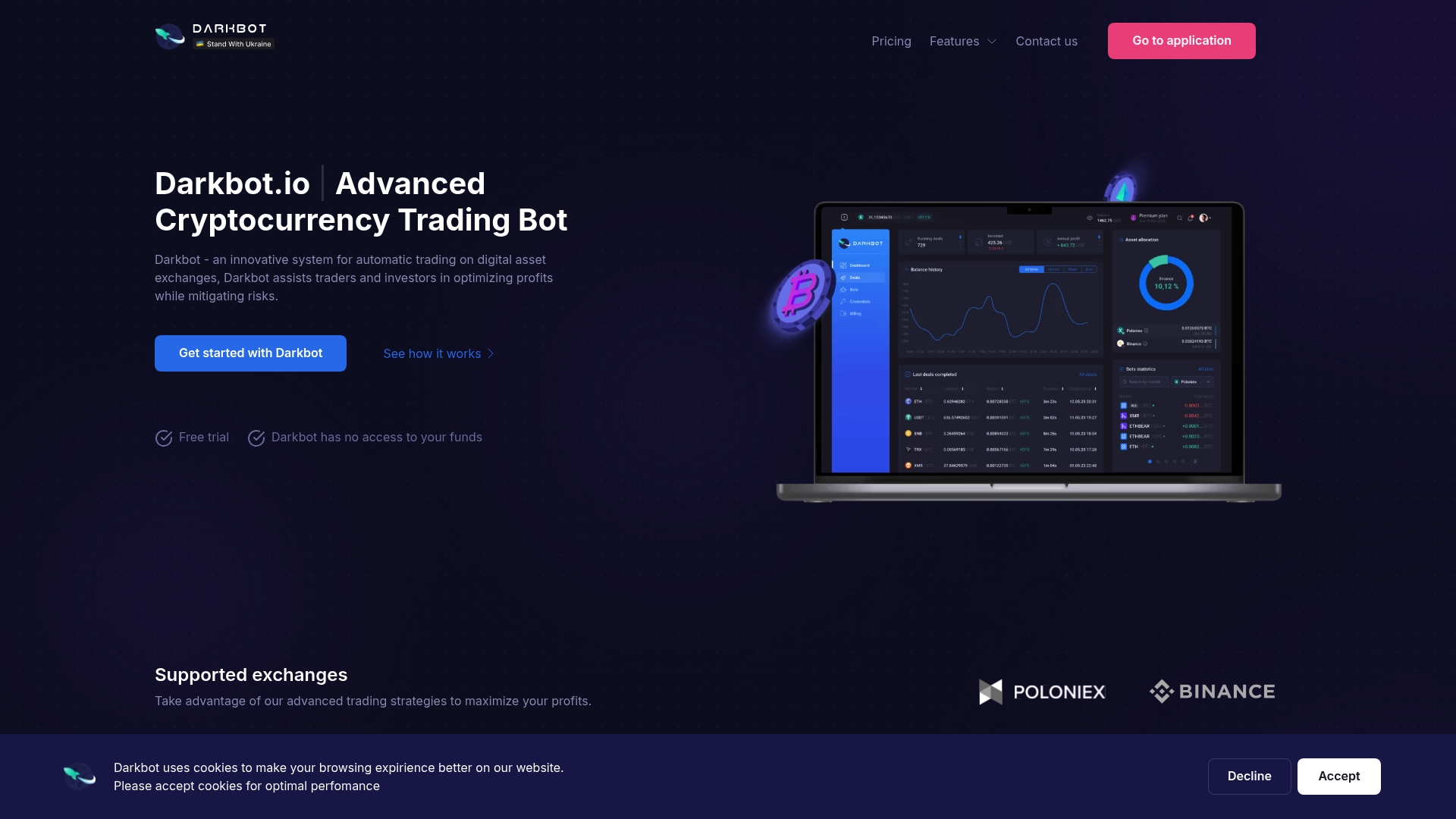
Discover how Darkbot.io empowers you with advanced AI-driven algorithms and seamless exchange connectivity through secure API keys. Experience intuitive portfolio management, strategy fine-tuning, and automated rebalancing without the manual effort. Start testing your strategies risk-free with our flexible pricing plans including a free tier. Visit Darkbot.io now and take your first step towards consistent, automated crypto profits with an industry-leading platform built to meet your needs.
Frequently Asked Questions
How do I set up my cryptocurrency exchange accounts for trading bots?
To set up your cryptocurrency exchange accounts, choose reputable platforms like Binance or Kraken and complete their verification processes. Generate API keys with limited permissions for trading and securely store them using a password manager.
What are the essential steps in configuring my trading bot platform?
Start by selecting a compatible trading bot platform that connects with your exchanges. Configure core settings such as risk management parameters and specific trading indicators to align with your trading strategy.
How can I customize my trading strategies and risk settings for the bot?
To customize your trading strategies, define your entry and exit rules while implementing robust risk management protocols. Set parameters like stop loss thresholds and portfolio allocation limits to ensure balanced exposure across cryptocurrency assets.
What should I monitor after activating my trading bot for live trades?
After activating your trading bot, monitor key performance indicators including total trade volume and profit margins. Set up automatic notifications for significant events to quickly respond to market changes or strategy deviations.
How do I verify my trading bot’s performance and make adjustments?
Verify your trading bot’s performance by analyzing metrics like total return and win rate against benchmark indices. Keep a detailed trading journal to document any modifications and their impacts on performance, allowing for informed strategy adjustments.
Recommended

Start trading on Darkbot with ease
Come and explore our crypto trading platform by connecting your free account!
Free plan available • No credit card required