Why Traders Switch Automation Platforms in 2026
TL;DR:
- Traders switch automation platforms due to performance gaps, pricing constraints, and feature limitations. Effective migration involves phased testing, strategic planning, and built-in risk controls to avoid failure. AI tools and architecture-focused upgrades are reshaping how traders approach automation in 2026.
Switching automation platforms is defined as the deliberate migration from one algorithmic execution environment to another, driven by measurable gaps in performance, scalability, or strategy capability. Why traders switch automation platforms comes down to three core constraints: execution latency that erodes edge, pricing structures that punish growth, and feature ceilings that block strategy evolution. These are not abstract concerns. Uptime dropping below 99.5% for two consecutive months, P95 execution latency rising 30% or more, and support ticket volume climbing 25% per 1,000 orders without revenue growth are all documented operational signals that a platform has become a bottleneck. AI-driven strategy builders and platform-agnostic architecture are now reshaping what traders expect from automation infrastructure in 2026.
Why traders switch automation platforms: the core performance triggers
Performance degradation is the most measurable reason traders initiate a platform change. Specific thresholds matter here. Uptime below 99.5% for two consecutive months signals systemic instability, not a one-off incident. In crypto markets that trade 24 hours a day, seven days a week, even brief outages during high-volatility windows translate directly into missed execution or uncontrolled exposure.
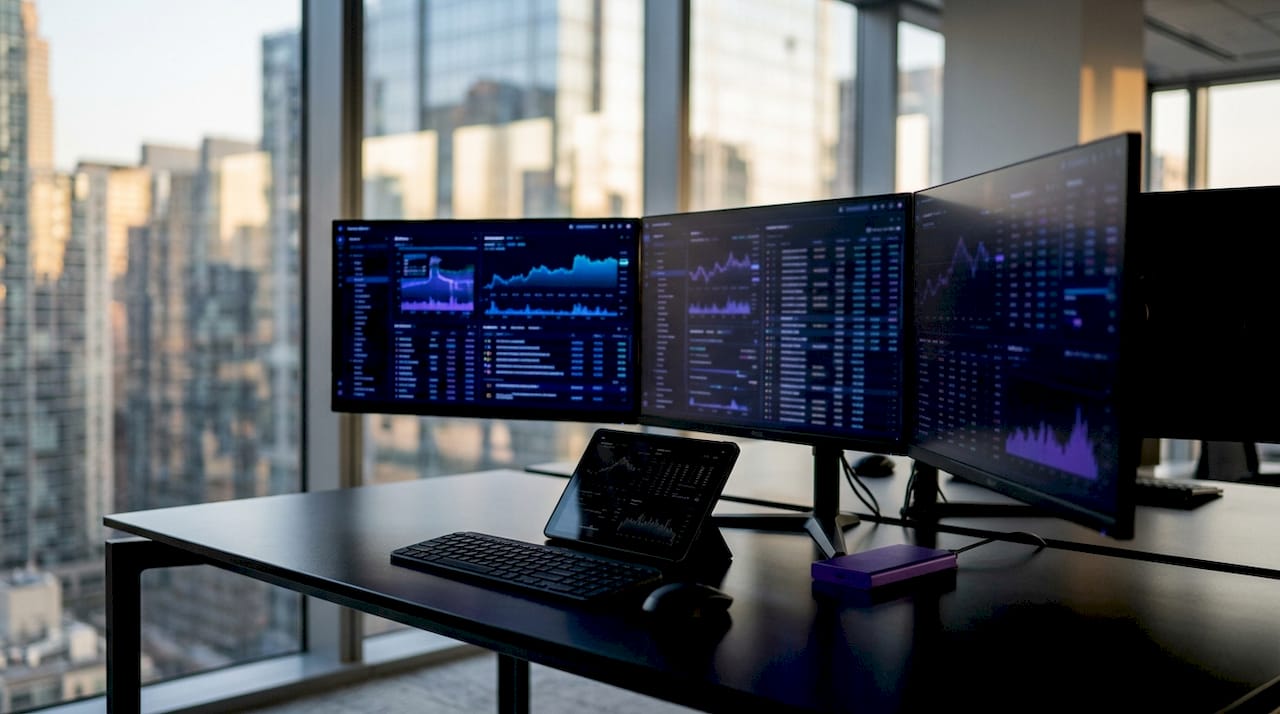
Execution latency is the second hard trigger. A P95 latency increase of 30% or more breaks any strategy that depends on speed, including scalping, arbitrage, and momentum-based approaches. Retail automation platforms frequently suffer from single-threaded execution, which creates latency slippage at scale. Institutional setups address this by decentralizing signal generation and order execution into separate processes, a design choice that most entry-level platforms do not support.
The operational friction metric is often overlooked. When support tickets rise 25% per 1,000 orders while revenue stays flat, the platform is consuming operational capacity without contributing to growth. That ratio is a reliable leading indicator that migration planning should begin.
| Metric | Warning threshold | Implication |
|---|---|---|
| Uptime | Below 99.5% for 2+ months | Systemic instability risk |
| P95 execution latency | Increase of 30% or more | Speed-sensitive strategies break down |
| Support ticket growth | Up 25% per 1,000 orders, flat revenue | Platform is an operational drag |
| Feature time-to-ship | Longer than 2–3 weeks | Development velocity has stalled |
Pro Tip: Track P95 latency, not average latency. Averages mask the worst-case executions that actually damage your strategy’s edge. Log every order with timestamps and review the distribution weekly.
How feature ceilings and pricing models push traders toward new tools
Feature limitations are a subtler but equally decisive reason for platform changes. Per-account and per-asset pricing structures penalize traders who scale. A trader running 20 simultaneous strategies across multiple exchanges faces costs that grow linearly with portfolio size, not with actual platform usage. Development costs exceeding $8,000 per month and the absence of native trading channels are documented triggers that accelerate migration decisions.
Webhook-driven architectures create a specific latency problem for short-timeframe strategies. Each signal passes through an external HTTP call before reaching the exchange, adding unpredictable delay. For strategies operating on one-minute or five-minute candles, that delay is not acceptable. Traders who discover this architectural constraint mid-deployment face a difficult choice: rebuild the strategy around the platform’s limits or migrate to one with native execution pipelines.
The rise of AI-based strategy builders is reshaping trader expectations around coding dependency in automation. Platforms that require proprietary scripting languages or deep programming knowledge now compete against tools that allow traders to describe a strategy in plain language and receive executable logic in return. That shift reduces the barrier to strategy iteration and makes platforms without these capabilities feel dated.
| Feature gap | Impact on trader |
|---|---|
| Per-account pricing | Scaling cost grows faster than returns |
| Webhook-only execution | Latency breaks short-timeframe strategies |
| No native AI strategy builder | Higher coding dependency, slower iteration |
| No global kill switch | Risk exposure during drawdown events |
Pro Tip: Before signing a new platform contract, model your projected order volume at 3x and 10x your current size. If the pricing structure becomes punitive at scale, the platform will constrain your growth before your strategy does.
What are the challenges of transitioning automation platforms?
74% of migration failures cite inadequate planning, insufficient scoping, and poor adoption management as the primary causes. The technology itself is rarely the problem. Traders who treat a platform switch as a purely technical task consistently underestimate the operational and behavioral changes required.
The most common mistake is the “lift-and-shift” approach: copying existing configurations directly onto a new platform without reviewing the underlying logic. Migrating without cleaning core business logic often recreates the same problems on new infrastructure. A broken risk parameter or a poorly defined entry condition executes just as badly on a better platform. The migration becomes an expensive exercise that changes the environment but not the outcome.
Traders must also distinguish between platform architectural limits and implementation issues before committing to a switch. A platform-agnostic adapter layer, where core strategy logic is isolated from the execution environment, allows modular substitution without legacy drag. This design principle is the difference between a migration that improves outcomes and one that simply relocates problems.
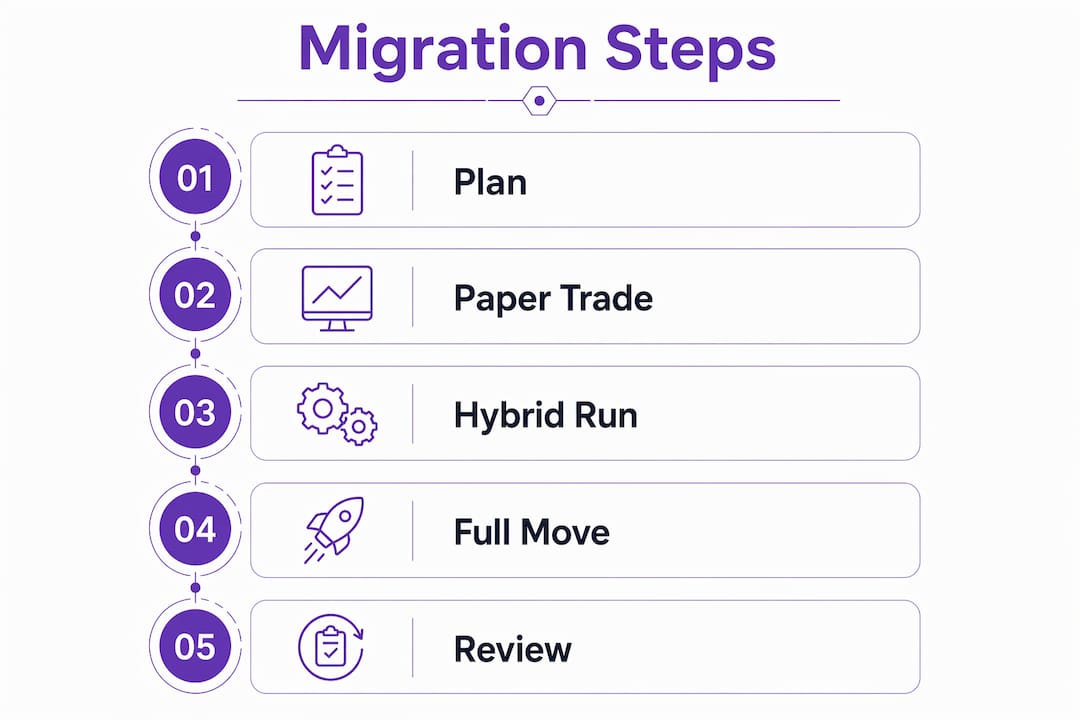
The steps below represent a structured migration framework that addresses both technical and operational risk:
- Audit existing strategies before migration. Identify which rules are platform-dependent and which are portable.
- Run paper trading for at least one month on the new platform to validate execution behavior without capital at risk.
- Execute a hybrid phase lasting two to three months, where the new platform handles a subset of strategies while the legacy system remains active.
- Monitor full automation for three to six months before decommissioning the old setup.
- Verify team adoption at each phase. Operational training and process documentation reduce the risk of human error during transition.
A phased transition approach produces a 78% success rate and significantly better risk-adjusted results over 18 months, compared to a 63% failure rate for traders who attempt an unstructured automated transition.
How do automation platforms affect risk management and strategic flexibility?
Automation removes the human pause between signal and execution. Automated systems execute trades in milliseconds, while manual execution takes seconds. That speed advantage is real, but it also means errors propagate faster. A misconfigured parameter in an automated system can generate a sequence of bad orders before a trader can intervene.
The behavioral benefit is equally significant. Automation executes rules with 100% consistency, eliminating the emotional overrides that affect manual traders at a documented rate of 34%. That consistency is the foundation of any systematic trading approach. Without it, backtested performance and live performance diverge in ways that are difficult to diagnose.
Risk controls must be built into the platform architecture, not layered on top of strategy logic. Hard-coded global kill switches that operate independently of individual strategy rules are the minimum standard for serious automation. These switches flatten all positions instantly when a drawdown threshold is breached, regardless of what any individual bot is doing.
Ongoing parameter management is non-negotiable. Automated strategies require adjustment roughly every six months as market regimes shift, with crypto markets experiencing four to six regime changes annually. A platform that supports adaptive strategy tuning and real-time monitoring reduces the operational burden of keeping strategies aligned with current conditions.
Key risk management capabilities to evaluate in any platform:
- Global kill switch independent of strategy-level logic
- Real-time drawdown monitoring with configurable alerts
- Position-level and portfolio-level exposure limits
- Regime detection or volatility-adjusted parameter scaling
- Audit logs for every order and parameter change
Pro Tip: Test your kill switch in a paper trading environment before going live. Confirm it triggers correctly under simulated drawdown conditions. A kill switch that has never been tested is not a risk control.
Key takeaways
Traders switch automation platforms when measurable performance gaps, pricing constraints, and feature limitations exceed the cost and friction of migration.
| Point | Details |
|---|---|
| Performance thresholds matter | Uptime below 99.5% and P95 latency rising 30% are hard signals to migrate. |
| Pricing structures penalize scale | Per-account and per-asset models become punitive as strategy count grows. |
| Phased migration reduces failure | Paper trading, hybrid execution, and monitored full automation produce the best outcomes. |
| Lift-and-shift migrations fail | Moving broken logic to a new platform recreates the same problems at higher cost. |
| Risk controls must be architectural | Global kill switches and drawdown limits belong in the platform layer, not the strategy layer. |
What I’ve learned from watching traders switch platforms
Grisha here. The traders I’ve seen make successful platform transitions share one habit: they diagnose before they decide. They pull latency logs, map their pricing against projected scale, and identify exactly which constraint is limiting them. The traders who struggle start with a destination in mind and work backward to justify the move.
The “lift-and-shift” trap is more common than most people admit. I’ve watched traders migrate to architecturally superior platforms and reproduce identical underperformance within three months because they carried over the same flawed entry logic and the same undisciplined position sizing. The platform was never the problem.
I’m also skeptical of traders who automate everything immediately. The hybrid approach, where automation handles execution but a human reviews signal quality and regime fit, produces more durable results. AI-driven strategy tools are genuinely useful for reducing coding dependency and accelerating iteration, but they do not replace the judgment required to know when a strategy has stopped working.
The most underrated part of any platform switch is the kill switch. Traders spend weeks evaluating entry logic and almost no time verifying that their risk controls actually work. Test the kill switch first. Build the strategy second.
— Grisha
Darkbot’s approach to systematic crypto automation
Traders who have identified clear performance or feature gaps in their current setup need a platform built around execution discipline, not marketing promises.
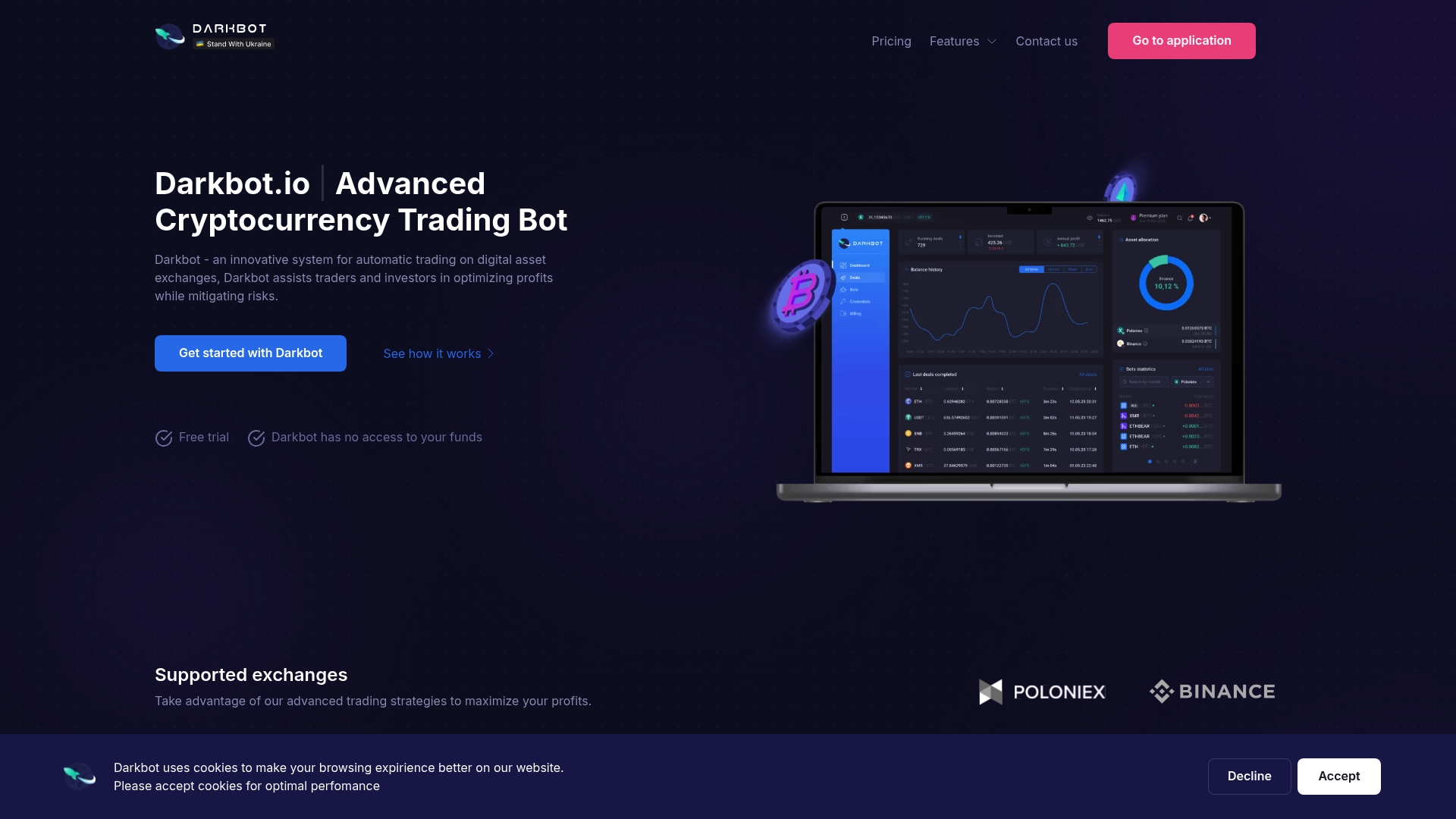
Darkbot is an AI-powered crypto trading automation platform designed for traders who prioritize systematic execution and structured risk control. Its AI-based strategy builder reduces coding dependency, allowing traders to iterate on logic without proprietary scripting knowledge. The platform supports multiple simultaneous bots, portfolio-level risk controls, and real-time analytics across major exchanges via API integration. For traders evaluating their next platform, Darkbot’s automation capabilities offer a structured environment for disciplined, repeatable execution. Pricing tiers include free, standard, and premium options, making the platform accessible at different stages of scaling. The fintech branding context around trader platform expectations continues to evolve, and Darkbot is built to meet the operational standards that serious crypto traders now require.
FAQ
Why do traders switch automation platforms?
Traders switch when platforms fail measurable performance thresholds, including uptime below 99.5%, P95 latency increases of 30% or more, and pricing structures that penalize scaling. Feature gaps such as missing AI strategy builders and webhook-only execution are additional triggers.
What is the safest way to migrate to a new trading platform?
A phased approach works best: one month of paper trading, two to three months of hybrid execution, then three to six months of monitored full automation. This structure produces a 78% success rate compared to unstructured transitions.
What causes most automation platform migrations to fail?
74% of migration failures stem from inadequate planning and poor adoption management, not technical issues. Migrating without auditing and refactoring core strategy logic is the most common operational mistake.
How does automation affect risk management in crypto trading?
Automation executes rules consistently and eliminates emotional overrides, but it also propagates errors faster than manual trading. Hard-coded global kill switches and portfolio-level drawdown limits are the minimum risk controls required for safe automated operation.
How often do automated crypto strategies need adjustment?
Automated strategies typically require parameter adjustments within six months of deployment. Crypto markets experience four to six regime changes annually, making ongoing monitoring and adaptive tuning a core operational requirement, not an optional task.
Recommended

Start trading on Darkbot with ease
Come and explore our crypto trading platform by connecting your free account!
Free plan available • No credit card required