API Keys in Crypto: 70% of Exchanges Support IP Security

Despite 70% of major crypto exchanges offering IP whitelisting for API keys, most traders ignore this critical security layer. API keys serve as the authentication backbone for automated cryptocurrency trading, yet widespread confusion about their configuration exposes portfolios to unnecessary risk. This guide clarifies how API keys enable secure bot operations, the security features protecting your assets, and practical steps to implement best practices that professional traders rely on daily.
Key Takeaways
| Point | Details |
|---|---|
| Authentication Method | API keys verify bot identity without sharing exchange passwords, using cryptographic credentials |
| Permission Control | Customizable scopes restrict bot operations to specific actions like read-only access or trade execution |
| Security Features | IP whitelisting, two-factor authentication, and tailored permissions significantly reduce unauthorized access risks |
| Management Practice | Regular key rotation, separate keys per bot, and activity monitoring prevent security breaches |
| Common Pitfall | Over 50% of users misconfigure permissions, creating vulnerabilities that expose trading accounts |
Understanding API Keys in Cryptocurrency Trading
API keys function as digital credentials that authenticate your trading bot’s identity to cryptocurrency exchanges without requiring your account password. Think of them as specialized access cards that grant entry to specific rooms in a building rather than handing over the master key to your entire home.
API keys authenticate and authorize bots without passwords and define the permission scope for bot operations. This selective access model lets you control exactly what actions your bot can perform. Nearly all major exchanges support API key integration, making them the industry standard for connecting external applications to your trading account.
The permission structure typically includes several access levels:
- Read-only access for portfolio monitoring and data analysis
- Trade execution permissions for buying and selling assets
- Withdrawal capabilities (which should almost always remain disabled)
- Account management functions for balance checks and transaction history
Understanding these fundamental mechanics is essential before deploying any cryptocurrency trading bot terminology in live markets. Your security posture depends entirely on how you configure these credentials during initial setup.
How API Keys Enable Automated Crypto Trading Bots
Automated trading bots communicate with exchanges through API keys in a continuous cycle of requests and responses. Each time your bot needs to check your portfolio balance, execute a trade, or rebalance assets, it sends an authenticated request using your API credentials. This process happens hundreds or thousands of times daily, enabling the real-time responsiveness that makes automation valuable.
Automated trading systems rely on real-time API key data flow to synchronize trades within milliseconds. The speed of this communication determines whether your bot captures profitable opportunities or misses them entirely. Market conditions change rapidly, and delays of even a few seconds can mean the difference between profit and loss.
Follow these steps to optimize your API key setup for bot performance:
- Generate separate API keys for each bot or trading strategy you deploy
- Configure rate limits according to your exchange’s API quota to avoid throttling
- Test connections in sandbox environments before going live with real capital
- Monitor API call frequency to ensure your bot stays within exchange limits
- Document which keys control which bots for easier troubleshooting
Managing multiple API keys might seem complex initially, but segregation provides crucial benefits. If one bot experiences issues or needs updates, you can revoke its specific key without disrupting your other automated strategies. This compartmentalization also limits potential damage if a key becomes compromised.
Pro Tip: Set up alerts for API rate limit warnings. Most exchanges notify you when you approach your quota, giving you time to optimize bot behavior before hitting hard limits that pause trading.
For detailed setup instructions, review this API key integration guide and learn to automate crypto trading efficiently with proper configuration.
Security Implications and Risk Management with API Keys
API key security features create multiple defensive layers between your assets and potential attackers. IP whitelisting, two-factor authentication, and permission scopes significantly reduce risk of unauthorized API key usage when properly configured. These controls work together to verify not just what actions are permitted, but also who can initiate those actions and from where.

Permission scopes represent your first line of defense. When generating an API key, exchanges typically offer granular control over capabilities. A well-configured trading bot needs only read access to market data and execution permissions for buy/sell orders. Withdrawal permissions should remain disabled unless absolutely necessary, and even then, consider setting strict withdrawal limits.
IP whitelisting restricts API key usage to specific internet addresses you control. If an attacker somehow obtains your API credentials, they cannot use them from their own network location. Kraken API security documentation shows how major exchanges implement this feature, which 70% of platforms support yet many traders overlook.
Common security failures include:
- Creating keys with full account access when limited permissions suffice
- Skipping IP whitelist configuration for convenience
- Reusing the same API key across multiple bots or services
- Never rotating keys after initial setup
- Storing keys in plain text files or unsecured locations
Compare security configurations to understand trade-offs:
| Security Feature | Protection Level | Setup Complexity | Operational Impact |
|---|---|---|---|
| Read-Only Permissions | Low | Minimal | No trading capability |
| Trade-Only Permissions | Medium | Low | Enables bot trading, blocks withdrawals |
| IP Whitelisting | High | Moderate | Restricts access to specific networks |
| 2FA on Key Creation | Very High | Moderate | One-time authentication burden |
| Regular Key Rotation | Very High | High | Requires periodic reconfiguration |
Pro Tip: Create a security checklist that you review quarterly. Include items like verifying current IP whitelists, confirming permission scopes match current needs, and checking for any unauthorized API calls in your exchange activity logs.
Explore comprehensive crypto bot security best practices to build a robust defense strategy that protects both your automated systems and underlying capital.
Common Misconceptions About API Keys in Crypto Trading
Many traders assume API keys provide inherent security simply by existing, but the reality is far more nuanced. Your configuration choices determine actual security levels, not the keys themselves. An API key with full permissions and no IP restrictions offers barely more protection than sharing your password directly.
The belief that exchanges configure optimal security by default creates dangerous complacency. Most platforms default to permissive settings to ensure compatibility with various applications. Over 50% of users misuse API key permissions, leading to elevated security risks that could easily be avoided with proper configuration.
Frequent misconceptions include:
- Thinking one API key setup is sufficient for all trading activities
- Assuming withdrawal permissions are necessary for automated trading (they rarely are)
- Believing that API keys never need updating after initial creation
- Expecting exchanges to monitor and alert you about risky key configurations
- Trusting that deleted bots automatically revoke their API access
API key permissions vary dramatically across exchanges, and what constitutes “read-only” access on one platform might include additional capabilities on another. Always verify exactly what permissions you’re granting before activating a key. The few minutes spent reviewing documentation can prevent catastrophic losses.

Another persistent myth suggests that complex API secrets provide better security than simple ones. In reality, exchanges generate cryptographically secure keys regardless of perceived complexity. Your security depends on how you store and use these credentials, not their apparent randomness to human eyes.
For clarity on proper implementation, review this guide debunking API key misconceptions that separates security theater from genuine protection.
Best Practices for Creating and Managing API Keys
Regular key rotation, IP whitelisting, and permission tailoring are critical best practices that professional traders implement systematically. Creating secure API keys requires deliberate choices at every configuration step, starting with the initial generation process.
Follow this systematic approach for optimal API key security:
- Generate keys with the minimum permissions required for your specific use case
- Enable two-factor authentication before creating any API credentials
- Configure IP whitelisting immediately using your bot’s static IP address
- Create separate keys for each bot, exchange, and trading strategy
- Document each key’s purpose, creation date, and associated bot in a secure password manager
- Set calendar reminders for quarterly key rotation
- Revoke keys immediately when discontinuing any bot or service
Storing API credentials securely is equally important as configuring them properly. Never commit keys to version control repositories, even private ones. Use environment variables or dedicated secret management tools designed for sensitive credentials. Cloud-based bots should leverage platform-specific secret storage like AWS Secrets Manager or similar services.
Monitor your exchange activity logs weekly at minimum. Look for API calls from unexpected IP addresses, unusual trading patterns, or access attempts outside your normal operational hours. Most exchanges provide detailed logs showing every action taken via API, giving you an audit trail to detect potential compromises early.
Pro Tip: When rotating keys, generate the new key before revoking the old one. Test the new credentials thoroughly in your bot’s configuration, then delete the old key only after confirming everything works correctly. This approach prevents accidental downtime from configuration errors.
Implement these practices using this step-by-step API key management workflow and reinforce your overall security with comprehensive bot security best practices.
Secure Your Automated Crypto Trading with Darkbot
Darkbot provides seamless, secure API key integration that implements all the best practices covered in this guide. Our platform supports tailored permission scopes, mandatory IP whitelisting, and two-factor authentication requirements that protect your capital while enabling sophisticated automated strategies.
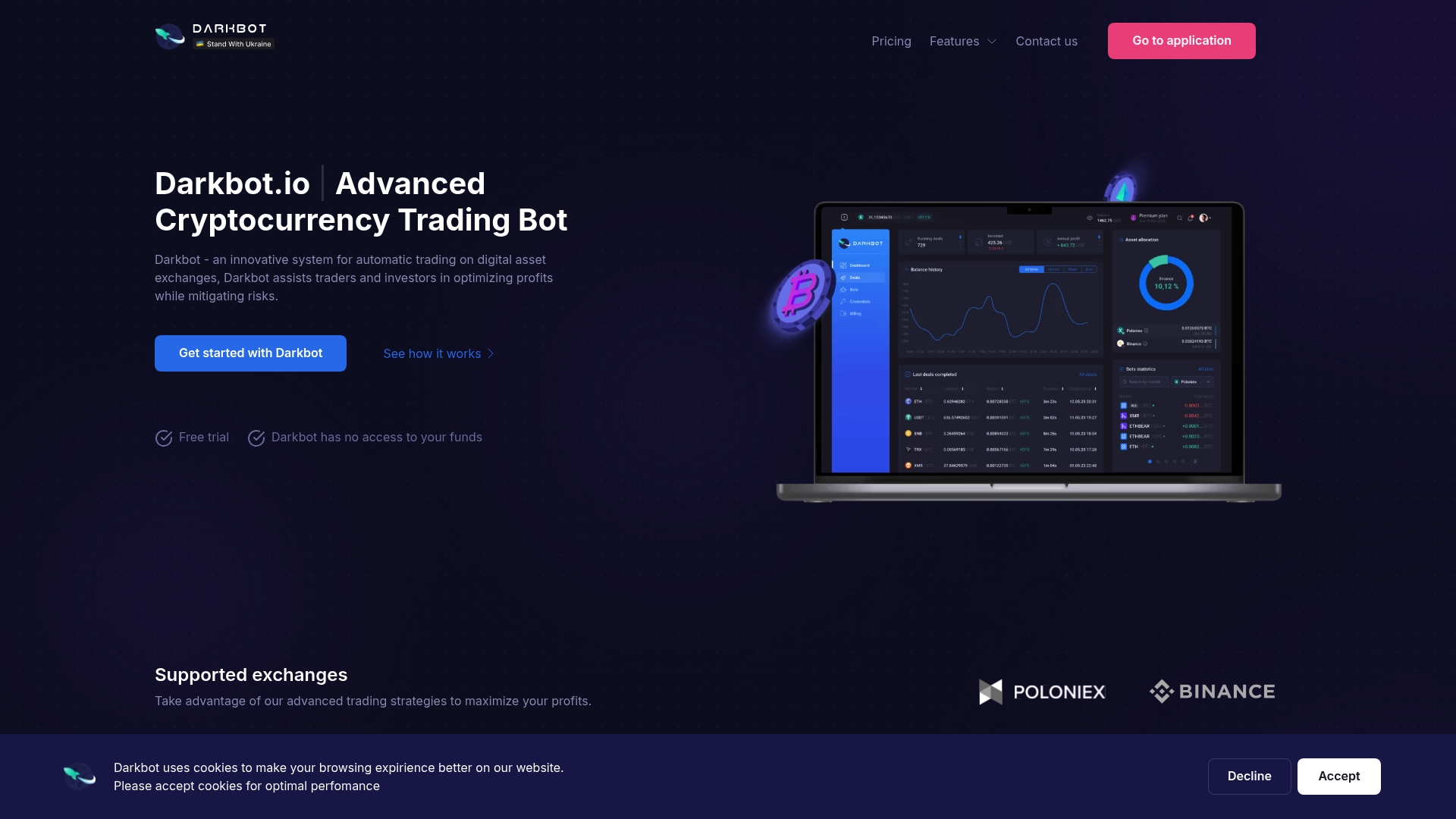
Whether you’re just starting with bot automation or optimizing existing strategies, Darkbot’s intuitive interface simplifies complex API management tasks. Explore our comprehensive trading bot setup guide to get started, or visit Darkbot official site to see how our AI-powered trading algorithms leverage secure API key integration with Darkbot for maximum efficiency and peace of mind.
Frequently Asked Questions About API Keys in Crypto Trading
What are the risks if my API key is compromised?
Compromised API keys allow attackers to execute trades, potentially manipulating your portfolio or causing financial losses through unauthorized transactions. If withdrawal permissions are enabled, attackers could drain your entire account balance to addresses you don’t control. Even read-only keys expose sensitive information about your trading strategies and holdings.
Can I set withdrawal limits on API keys?
Most exchanges allow you to disable withdrawal permissions entirely when creating API keys, which is the recommended approach for trading bots. Some platforms also support withdrawal limits that cap the maximum amount per transaction or daily total. Always verify these settings match your actual needs rather than accepting default configurations.
How often should I rotate my API keys?
Rotate API keys quarterly at minimum, or immediately after any suspected security incident, team member departure, or significant bot configuration change. High-value accounts should consider monthly rotation. The process takes only a few minutes but dramatically reduces exposure window if credentials are unknowingly compromised.
Is IP whitelisting available on all exchanges?
While 70% of major exchanges support IP whitelisting, smaller or newer platforms may lack this feature. Always check your exchange’s API documentation for available security options. If IP whitelisting is unavailable, compensate with stricter permission limits and more frequent key rotation.
How do permission scopes affect bot capabilities?
Permission scopes directly control which exchange functions your bot can access, from simple read-only market data to full account management. Overly permissive scopes create unnecessary risk, while overly restrictive settings prevent your bot from executing its intended strategy. Match permissions precisely to your bot’s documented requirements for optimal security and functionality.
Recommended

Start trading on Darkbot with ease
Come and explore our crypto trading platform by connecting your free account!
Free plan available • No credit card required