Portfolio rebalancing explained for crypto traders 2026

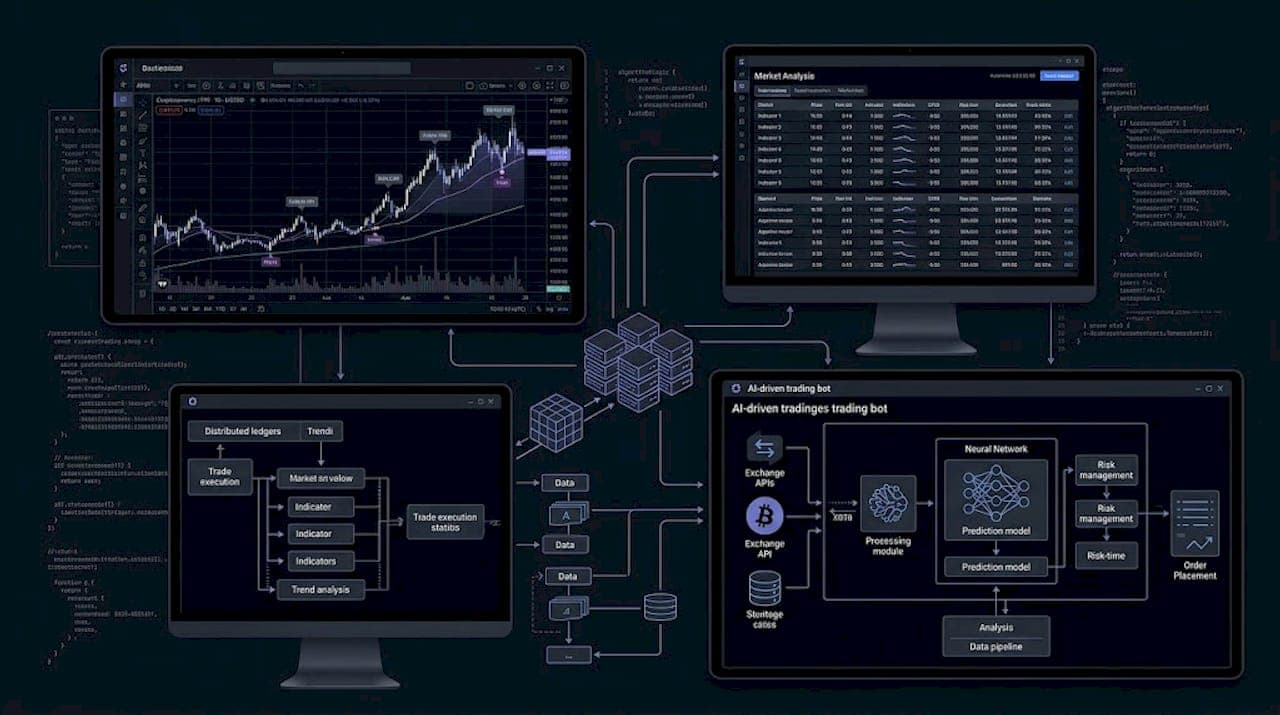
Many crypto traders believe rebalancing means constantly selling winners and buying losers, inevitably cutting into returns. That misconception stops them from using one of the most powerful risk management tools available. Strategic portfolio rebalancing actually helps you maintain target allocations amid extreme volatility, enforce disciplined profit-taking, and control downside risk without sacrificing long-term gains. This guide walks you through proven rebalancing methods, advanced AI-driven techniques, and practical execution tips tailored specifically for cryptocurrency markets in 2026.
Key takeaways
| Point | Details |
|---|---|
| Rebalancing maintains risk alignment | Adjusting asset weights back to targets prevents portfolio drift and keeps risk within your tolerance levels. |
| Hybrid strategies optimize costs | Combining threshold triggers with time intervals balances transaction costs against rebalancing benefits. |
| AI models enhance performance | Machine learning techniques can improve risk-adjusted returns by dynamically adapting to market conditions. |
| Fees and taxes matter significantly | Transaction costs and capital gains taxes can erode rebalancing benefits if you adjust too frequently. |
| Automation reduces emotional bias | Systematic rules and automated execution prevent panic-driven decisions during volatile periods. |
What is portfolio rebalancing and why it matters in crypto
Portfolio rebalancing involves periodically adjusting your holdings back to predetermined target allocations. If you set a 60% Bitcoin, 30% Ethereum, 10% stablecoin portfolio and Bitcoin surges, it might grow to represent 75% of your total value. Rebalancing means selling some Bitcoin and buying Ethereum or stablecoins to restore the original 60/30/10 split.
Crypto markets experience far greater volatility than traditional assets, with daily swings of 10% or more during turbulent periods. This volatility accelerates portfolio drift, where your actual allocations deviate significantly from targets within weeks rather than months. Without periodic adjustments, your portfolio’s risk profile shifts dramatically, often becoming far more aggressive than intended.
The primary benefits of systematic rebalancing include:
- Risk management by preventing overconcentration in volatile assets
- Maintaining strategic alignment with your investment thesis and goals
- Enforcing disciplined profit-taking by selling high performers
- Systematic buying of undervalued assets during corrections
- Reducing emotional decision-making during market extremes
Ignoring rebalancing in crypto markets can transform a balanced portfolio into a speculative bet on whichever asset happens to rally hardest.
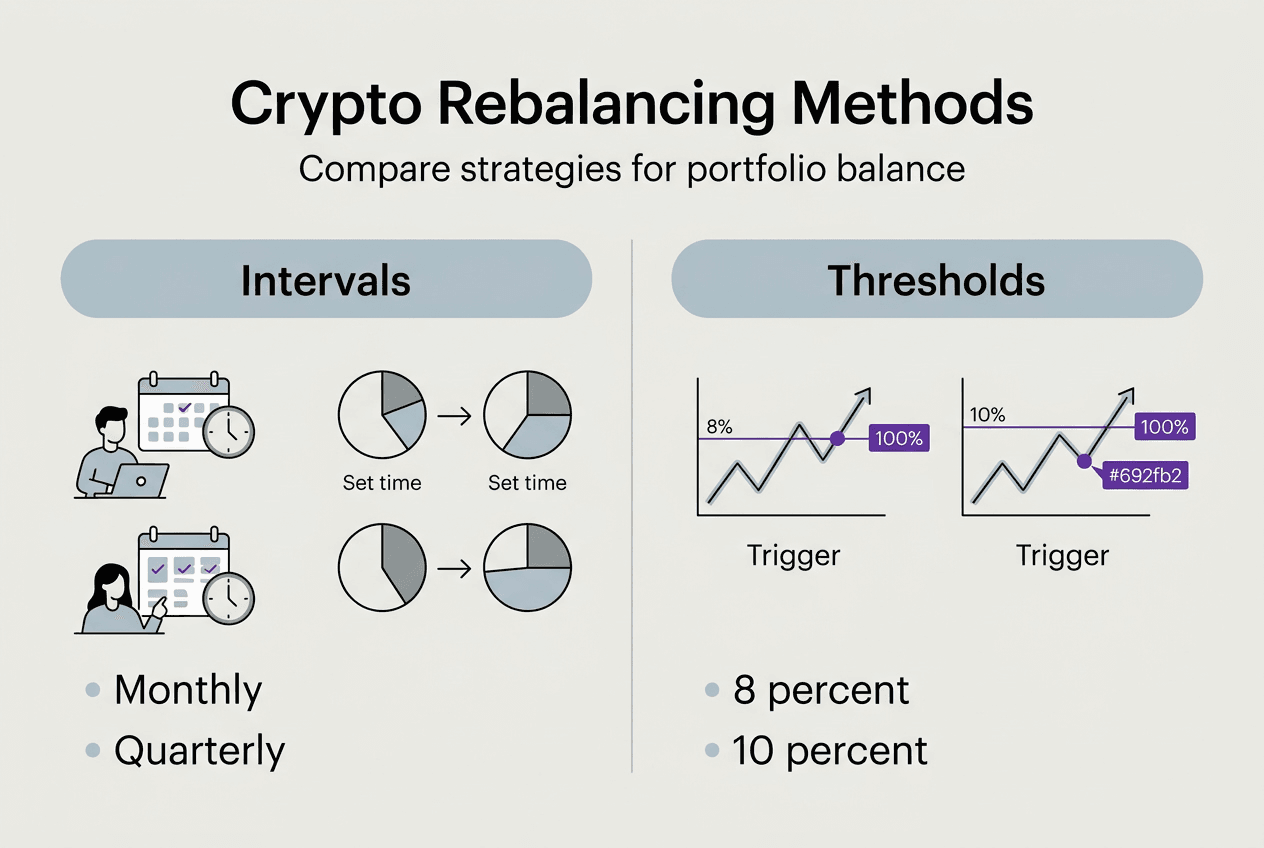
Traders typically use two basic approaches: time-based intervals like monthly or quarterly adjustments, or threshold-based triggers when any asset drifts beyond a set percentage from target. Many successful crypto investors combine both methods, checking allocations quarterly but only rebalancing when drift exceeds 8 to 10 percent. This portfolio balancing guide provides additional context on establishing your baseline allocation strategy.
The core principle remains simple. Rebalancing forces you to sell assets that have appreciated beyond targets and buy those that have underperformed, systematically implementing the buy low, sell high discipline that most traders struggle to execute emotionally.
Common portfolio rebalancing methods and their effectiveness
Three primary rebalancing strategies dominate crypto portfolio management, each with distinct trade-offs between performance, costs, and complexity.
Time-based or naive rebalancing adjusts your portfolio at fixed intervals regardless of market conditions. You might rebalance monthly, quarterly, or annually on predetermined dates. This method offers simplicity and predictability but ignores actual portfolio drift, potentially triggering unnecessary transactions when allocations remain close to targets or missing opportunities when drift accelerates between scheduled dates.
Threshold-based rebalancing monitors your portfolio continuously and triggers adjustments only when any asset deviates beyond a specified percentage from its target weight. A 10% threshold means you rebalance when Bitcoin drifts from 60% target to either 54% or 66% actual allocation. Research shows threshold rebalancing outperformed simple holding by 77.1% median return in cryptocurrency backtests, primarily by capitalizing on mean reversion after extreme moves.

Hybrid strategies combine both approaches, checking allocations at regular intervals but only executing trades when drift exceeds thresholds. This method balances the systematic discipline of calendar rebalancing with the cost efficiency of threshold triggers.
| Method | Performance | Transaction Costs | Best Use Case | | — | — | — | | Time-based | Moderate | Medium to high | Stable markets, tax-loss harvesting | | Threshold-based | Higher returns | Lower, event-driven | Volatile markets, active management | | Hybrid | Optimal balance | Lowest overall | Most crypto portfolios |
Transaction costs significantly impact rebalancing effectiveness. Every adjustment generates exchange fees, network gas costs for on-chain transfers, and potential slippage in less liquid markets. High transaction fees advise skipping rebalancing on small drifts, particularly when gas fees on Ethereum or other networks spike during congestion.
Tax implications add another layer of complexity. Selling appreciated assets triggers capital gains taxes ranging from 15% to 37% depending on holding period and income level in the United States. Frequent rebalancing in taxable accounts can generate substantial tax bills that offset portfolio benefits. Using stablecoins or directing new capital inflows to underweight positions lets you rebalance without triggering taxable sales.
For most crypto traders, a hybrid approach checking quarterly with 8 to 10 percent thresholds provides the best balance. This frequency captures meaningful drift without excessive trading costs while maintaining reasonable risk control. These portfolio management strategies explore additional allocation frameworks that complement rebalancing discipline.
Pro Tip: Set automated alerts when any asset crosses your threshold rather than manually checking daily, reducing emotional temptation to overtrade while ensuring you catch significant drift.
Advanced techniques: AI, machine learning, and dynamic rebalancing
Sophisticated crypto investors increasingly leverage artificial intelligence and machine learning models to optimize rebalancing decisions beyond simple threshold or calendar rules. These advanced techniques analyze multiple data streams and adapt dynamically to changing market conditions.
Key AI-powered portfolio rebalancing methods include:
- Behavioral reinforcement learning models that learn optimal rebalancing timing from historical patterns
- Momentum-based triggers that adjust based on trend strength rather than fixed thresholds
- Sentiment analysis integration using social media and news data to anticipate volatility
- On-chain metrics like active addresses and exchange flows to gauge market conditions
- Regime-aware models that detect bull, bear, or ranging markets and adapt strategies accordingly
- Tail-risk optimization that prioritizes downside protection during stressed periods
Empirical research demonstrates meaningful performance advantages. Behavioral reinforcement learning models achieved 85% cumulative returns versus 45% for traditional threshold methods in cryptocurrency backtests from 2020 to 2025. These models learned to delay rebalancing during strong trends and accelerate adjustments during mean-reverting periods, optimizing the timing of each trade.
| Technique | Sharpe Ratio | Annual Return | Max Drawdown | Turnover |
|---|---|---|---|---|
| Static allocation | 0.8 | 42% | 55% | 0% |
| Quarterly rebalance | 1.1 | 58% | 48% | 120% |
| Threshold 10% | 1.3 | 68% | 45% | 180% |
| AI momentum model | 1.7 | 85% | 38% | 240% |
| Regime-aware ML | 1.9 | 92% | 35% | 200% |
Regime-aware models segment market conditions into distinct states like high volatility bear markets, low volatility bull markets, or ranging consolidation periods. Each regime triggers different rebalancing rules optimized for those specific conditions. During bull markets with strong momentum, the model might widen thresholds to let winners run. During high volatility corrections, it tightens thresholds to capture mean reversion opportunities more aggressively.
Tail-risk optimization techniques incorporate downside protection directly into rebalancing decisions. These models monitor volatility metrics and correlation breakdowns, increasing defensive asset allocations or reducing position sizes when tail-risk indicators spike. This approach proved particularly valuable during the 2022 crypto winter and subsequent recovery periods.
Transaction cost modeling remains critical even with advanced techniques. Sophisticated models incorporate realistic fee structures, slippage estimates based on order size and liquidity, and tax implications into their optimization objectives. A model that generates 15% higher gross returns but doubles transaction costs may underperform simpler approaches on a net basis.
These machine learning guide resources and AI trading strategies examples demonstrate how algorithmic approaches extend beyond rebalancing into comprehensive portfolio management systems.
Pro Tip: Always backtest AI strategies using realistic transaction costs and tax assumptions rather than idealized conditions, as many published results exclude these critical factors and overstate actual performance.
Practical considerations and common pitfalls in crypto rebalancing
Executing effective rebalancing in real crypto markets involves navigating several practical challenges that can significantly impact results.
Key execution challenges include:
- Gas fees and network congestion on Ethereum and other chains can exceed $50 per transaction during peak periods
- Slippage in illiquid altcoin markets where large orders move prices against you
- Capital gains tax events triggered by every sale, potentially at rates up to 37% for short-term holdings
- Exchange withdrawal limits and verification requirements that delay rebalancing execution
- Emotional resistance to selling winners or buying recent losers during volatile periods
Evaluating whether to execute a planned rebalancing trade requires systematic cost-benefit analysis:
- Calculate the total transaction costs including exchange fees, gas costs, and estimated slippage
- Estimate the tax liability from selling appreciated positions at your marginal rate
- Measure the actual portfolio drift from target allocations in percentage terms
- Compare total costs against the risk reduction benefit of restoring target weights
- Skip the rebalance if costs exceed 2 to 3 percent of the trade value unless drift is extreme
Using stablecoins or directing new capital provides a cost-efficient alternative to selling assets. If Bitcoin has grown from 60% to 70% of your portfolio, you can restore balance by using new deposits to buy underweight Ethereum rather than selling Bitcoin and triggering taxes. This approach works particularly well for accounts receiving regular contributions.
High transaction fees and tax costs can consume 3 to 5 percent of portfolio value annually with monthly rebalancing, completely eliminating the strategy’s risk-adjusted benefits in many scenarios.
Emotional biases represent perhaps the most significant practical challenge. Selling Bitcoin after it rallies 40% feels painful, as you fear missing further gains. Buying Ethereum after it drops 30% triggers loss aversion and recency bias. These psychological barriers cause many traders to abandon rebalancing discipline precisely when it matters most.
Automated execution through rules-based systems or trading bots eliminates emotional interference. You define your thresholds, intervals, and constraints in advance, then let the system execute mechanically without second-guessing each decision. This portfolio management automation approach proves especially valuable during high-stress market conditions when emotional decision-making peaks.
Tax-loss harvesting opportunities can partially offset rebalancing costs. If you need to reduce an overweight position that has declined in value, selling it generates a capital loss you can use to offset other gains or deduct against ordinary income. Strategic rebalancing near year-end can capture these tax benefits while maintaining portfolio alignment.
Liquidity constraints require special attention in crypto markets. Rebalancing a $10,000 portfolio across major assets like Bitcoin and Ethereum poses minimal slippage concerns. Rebalancing a $500,000 portfolio that includes smaller-cap altcoins may require splitting orders across multiple exchanges and time periods to avoid moving markets against yourself.
Optimize your crypto rebalancing with Darkbot
Managing sophisticated rebalancing strategies manually becomes increasingly difficult as your portfolio grows and market volatility accelerates. Professional automation tools can implement the strategies discussed throughout this guide while eliminating emotional bias and execution errors.
Darkbot AI-powered trading bot provides comprehensive portfolio management automation designed specifically for cryptocurrency markets. The platform handles threshold monitoring, optimal execution timing, and multi-exchange coordination, letting you maintain disciplined rebalancing without constant manual intervention.
Key features supporting effective rebalancing include:
- Automated threshold triggers that execute trades only when drift exceeds your specified limits
- Advanced AI models that optimize rebalancing timing based on market conditions and volatility
- Tax-aware trading that minimizes capital gains events and identifies loss-harvesting opportunities
- Multi-exchange integration for optimal liquidity and lowest transaction costs
- Customizable strategies that implement time-based, threshold-based, or hybrid approaches
Whether you manage a conservative stablecoin-heavy portfolio or an aggressive multi-asset allocation, crypto portfolio management services adapt to your specific risk tolerance and goals. The platform’s intuitive interface makes connecting crypto exchange accounts straightforward, with robust security protocols protecting your API keys and trading data.
Explore how professional automation can enhance your crypto portfolio management while reducing the time and emotional energy required to maintain optimal allocations.
Frequently asked questions
What is portfolio rebalancing in crypto?
Portfolio rebalancing adjusts your cryptocurrency holdings back to predetermined target allocations after market movements cause drift. If you set a 50% Bitcoin, 30% Ethereum, 20% stablecoin portfolio and Bitcoin rallies to represent 65% of total value, rebalancing sells some Bitcoin to restore the original 50% target. This maintains your intended risk profile and prevents overconcentration in any single asset.
How often should I rebalance my crypto portfolio?
Most crypto investors benefit from a hybrid approach checking allocations quarterly but only executing trades when any asset drifts beyond 8 to 10 percent from its target weight. This frequency balances risk control against transaction costs and tax implications. Monthly rebalancing typically generates excessive fees and taxes that erode returns, while annual rebalancing allows too much drift in volatile crypto markets.
What are the costs involved in portfolio rebalancing?
Rebalancing costs include exchange trading fees typically ranging from 0.1% to 0.5% per transaction, network gas fees that can reach $50 or more during congestion, and slippage in less liquid markets. Capital gains taxes represent the largest cost, potentially 15% to 37% on profits from sold positions depending on holding period and income level. These combined costs can consume 2% to 5% of portfolio value with frequent rebalancing.
Can AI improve crypto portfolio rebalancing?
Artificial intelligence and machine learning models can significantly enhance rebalancing performance by optimizing timing and adapting to market conditions dynamically. Behavioral reinforcement learning approaches and regime-aware models have demonstrated 40% to 100% higher returns compared to static threshold methods in backtests. However, you must evaluate AI strategies using realistic transaction costs and tax assumptions, as many published results exclude these factors and overstate practical benefits.
Recommended

Start trading on Darkbot with ease
Come and explore our crypto trading platform by connecting your free account!
Free plan available • No credit card required