Automated Portfolio Management Explained: Smarter Crypto Investing
Managing crypto investments in places like Venezuela and Argentina often means juggling rapid price swings with little time and unreliable market access. For tech-savvy investors facing persistent inflation and demanding schedules, automated portfolio management offers a smarter solution. With multi-agent AI frameworks and deep reinforcement learning, these systems provide dynamic trade execution and rapid data analysis, empowering you to adapt strategies and optimize returns—even when you cannot monitor markets around the clock.
Key Takeaways
| Point | Details |
|---|---|
| Automated Portfolio Management Benefits | Utilizes AI and machine learning for data-driven trading, enhancing performance and mitigating emotional biases. |
| Types of Automation | Includes rule-based systems, traditional trading bots, and AI-powered platforms, each varying in adaptability and complexity. |
| Risk Management Strategies | Implement multifaceted safeguards against technological vulnerabilities and cybersecurity threats to protect investments. |
| Common Investor Pitfalls | Investors should avoid over-optimizing strategies and ensure proper manual oversight when using automated systems. |
Automated portfolio management in cryptocurrency
Automated portfolio management in cryptocurrency represents a sophisticated approach to digital asset investment that leverages advanced technologies to optimize trading strategies. Unlike traditional investment methods, this approach uses artificial intelligence and machine learning algorithms to make data-driven decisions across complex and volatile crypto markets.
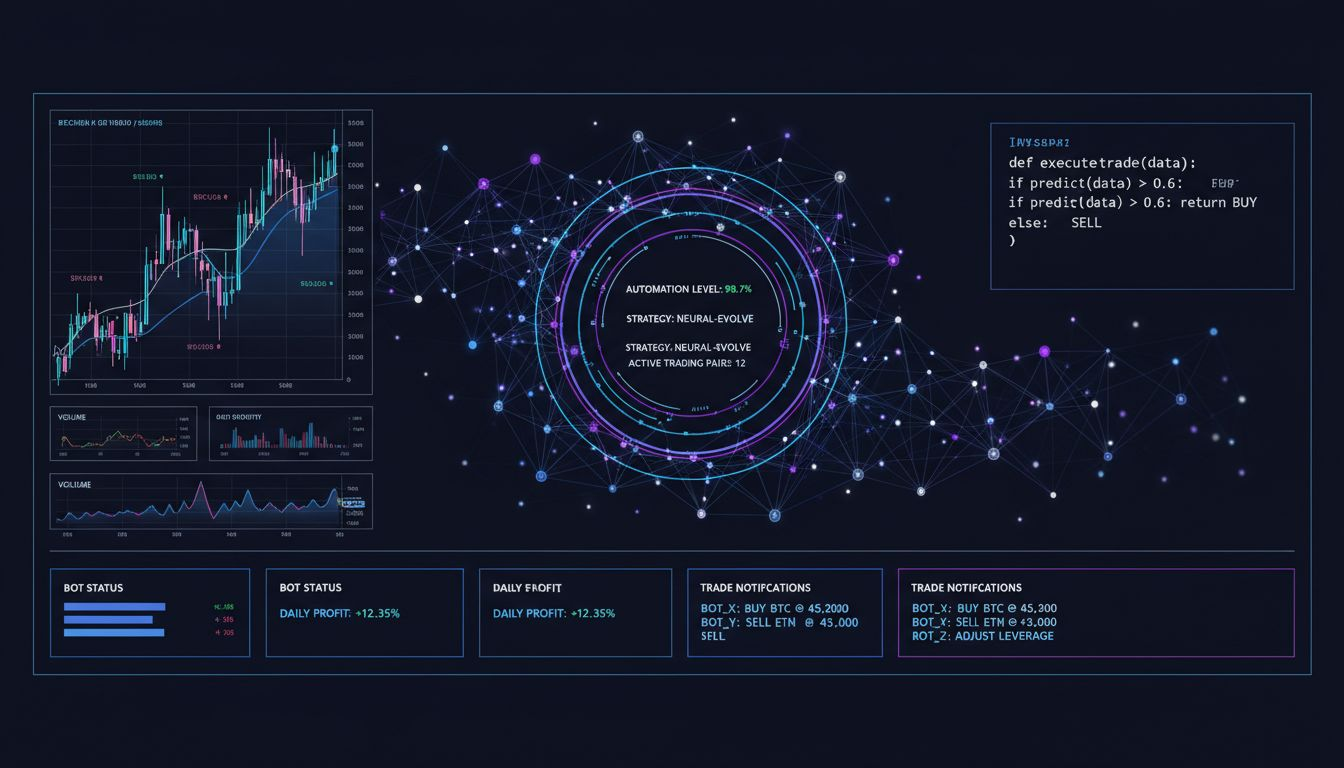
The core mechanism of automated portfolio management involves several critical components that enable intelligent trading and risk mitigation. Multi-agent machine learning frameworks have emerged as powerful tools for analyzing cryptocurrency investment opportunities, allowing investors to process massive amounts of market data with unprecedented speed and accuracy.
Key features of advanced automated crypto portfolio management include:
- Continuous market monitoring and real-time data analysis
- Algorithmic trading strategy execution
- Automatic portfolio rebalancing
- Risk management through diversification
- Performance tracking and optimization
Research demonstrates that deep reinforcement learning approaches can significantly improve portfolio allocation strategies. These techniques enable systematic decision-making by analyzing historical trading patterns and identifying potential investment opportunities across multiple cryptocurrencies.
Pro tip: Always start with a small investment allocation when testing automated portfolio management strategies to understand their performance and risk characteristics.
Types of automation: bots, AI, and rule-based systems
Cryptocurrency trading automation encompasses three primary approaches: rule-based systems, traditional trading bots, and advanced AI-powered platforms. Each type offers unique capabilities for managing digital asset portfolios, with varying levels of complexity and adaptive intelligence.
Rule-based systems operate using predefined logic and fixed trading parameters. Crypto trading bots execute trades based on straightforward conditions like grid trading or dollar-cost averaging strategies. These systems work best in predictable market conditions where established mathematical rules can effectively guide investment decisions.
Key characteristics of different automation types include:
-
Rule-based systems:
- Rely on fixed, predefined trading logic
- Execute trades based on preset conditions
- Work well in stable market environments
- Lower computational complexity
-
Traditional trading bots:
- Follow programmed algorithms
- Limited adaptability to market changes
- Require manual strategy adjustments
- Suitable for basic trading approaches
-
AI-powered systems:
- Leverage machine learning algorithms
- Dynamically adapt to market volatility
- Process vast datasets in real-time
- Continuously optimize trading strategies
Multi-agent AI systems represent the most advanced approach, distributing portfolio management across specialized digital agents. These sophisticated platforms integrate deep reinforcement learning, enabling more nuanced and responsive investment strategies that can quickly analyze and react to complex market dynamics.
Pro tip: Start with rule-based automation to understand basic trading mechanics before transitioning to more complex AI-driven portfolio management approaches.
To help clarify the main types of crypto trading automation, here’s a side-by-side comparison:
| Approach | Adaptability | Complexity | Typical User |
|---|---|---|---|
| Rule-Based System | Fixed, non-adaptive logic | Low | Beginners, cautious investors |
| Traditional Bot | Limited, manual tuning | Medium | Intermediate traders |
| AI-Powered Platform | Dynamic, learns from data | High | Professionals, experienced users |
Core features: strategy, rebalancing, analytics
Automated portfolio management for cryptocurrencies relies on three critical components that transform traditional investment approaches: sophisticated strategy development, intelligent rebalancing mechanisms, and comprehensive analytical frameworks. These interconnected features work together to optimize investment performance and minimize manual intervention.
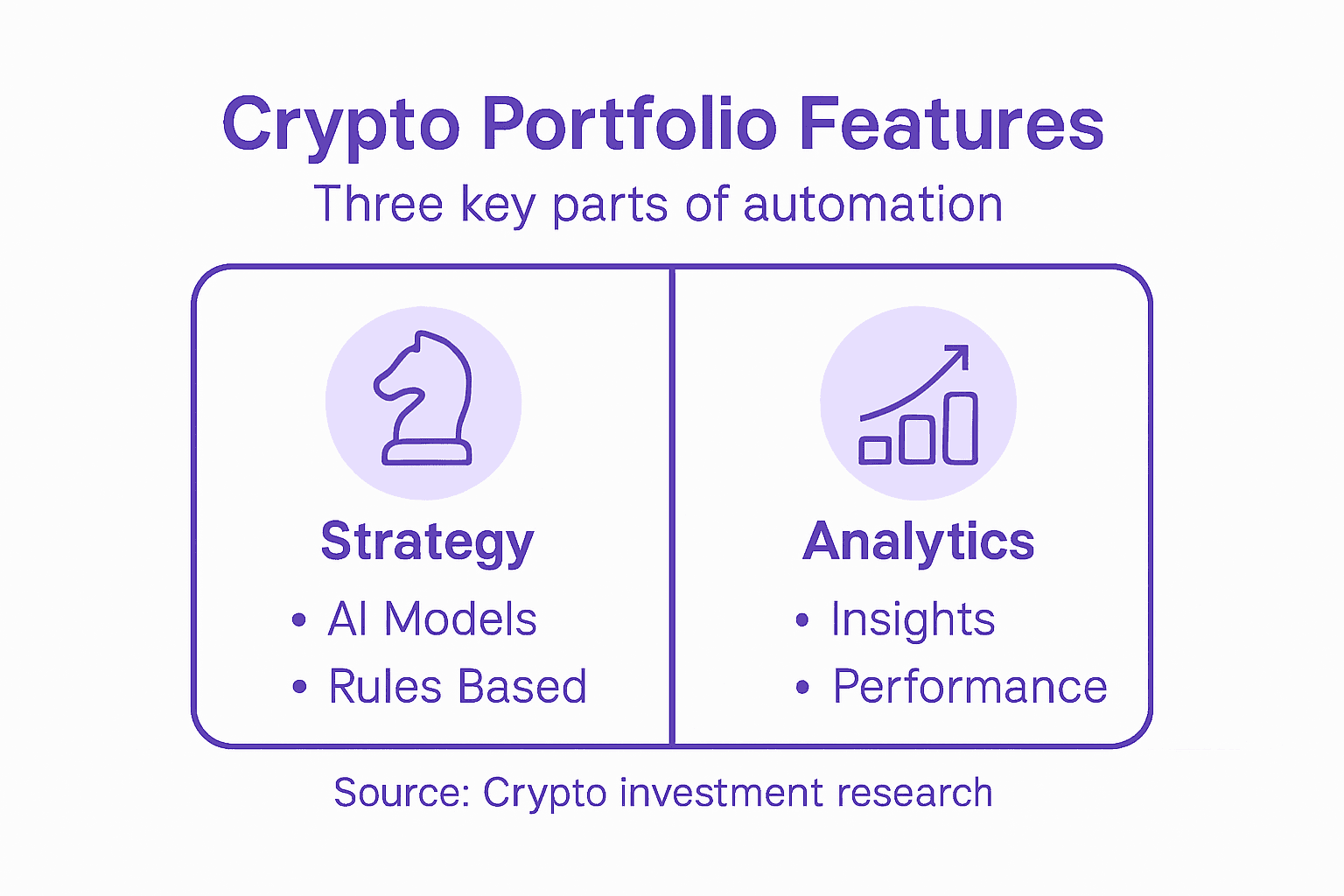
Strategy formation represents the foundational element of automated portfolio management. AI-powered portfolio systems dynamically analyze multiple market indicators, including real-time price movements, trading volumes, on-chain activity, and broader market sentiment to construct adaptive investment strategies.
Key components of advanced portfolio management include:
-
Strategy Development:
- Machine learning algorithm design
- Multi-variable market analysis
- Risk-adjusted strategy optimization
- Continuous performance tracking
-
Portfolio Rebalancing:
- Automated asset allocation adjustments
- Dynamic risk management
- Tax-efficient portfolio optimization
- Custom trigger rule implementation
-
Advanced Analytics:
- Real-time market data processing
- Predictive performance modeling
- Comprehensive risk assessment
- Detailed portfolio performance visualization
Rebalancing represents a sophisticated process that goes beyond traditional calendar-based approaches. Modern systems employ adaptive allocation techniques that respond instantly to market changes, ensuring portfolios remain aligned with predefined risk and return objectives. These intelligent mechanisms continuously monitor market conditions and make precision adjustments to maintain optimal portfolio composition.
Analytics platforms provide transparent, comprehensive insights into portfolio performance, offering granular visibility into investment strategies, risk exposure, and potential optimization opportunities. By transforming complex market data into actionable intelligence, these systems empower investors to make informed decisions with minimal direct intervention.
Pro tip: Configure multiple risk thresholds and rebalancing triggers to create a robust, adaptive portfolio management strategy that responds dynamically to market fluctuations.
Benefits and real-world use cases for investors
Automated portfolio management transforms cryptocurrency investing by introducing systematic, data-driven approaches that mitigate traditional investment challenges. AI-powered portfolio solutions enable investors to navigate complex digital asset markets with unprecedented precision and strategic insight.
The primary benefits of automated crypto portfolio management span multiple dimensions of investment strategy and risk control:
-
Emotional Detachment:
- Eliminates impulsive trading decisions
- Reduces psychological investment biases
- Maintains disciplined investment approach
- Prevents panic selling during market volatility
-
Advanced Risk Management:
- Real-time portfolio monitoring
- Automatic diversification
- Dynamic asset allocation
- Continuous risk threshold tracking
-
Operational Efficiency:
- 24/7 market analysis
- Instantaneous trade execution
- Minimal manual intervention
- Comprehensive performance tracking
Investors across different experience levels can leverage automated systems. Retail investors benefit from simplified portfolio management, while professional traders utilize sophisticated algorithms for complex strategy implementation. Automated platforms transform investor experiences by providing customizable portfolios that adapt to rapidly changing cryptocurrency market conditions.
Real-world use cases demonstrate the versatility of these systems. Quantitative funds apply reinforcement learning for optimized asset allocation, institutional investors deploy advanced analytics to detect market trends, and individual traders gain access to professional-grade investment tools that were previously unavailable.
Pro tip: Start with a small portfolio allocation to test automated management strategies, gradually increasing investment as you understand and trust the system’s performance.
Risks, challenges, and security safeguards
Automated portfolio management in cryptocurrency presents complex risks that require sophisticated mitigation strategies. Crypto trading bot security demands comprehensive approaches to protect investor assets and sensitive financial information across multiple dimensions.
Key risks associated with automated crypto portfolio management include:
-
Technological Vulnerabilities:
- Potential software programming errors
- API connection security gaps
- Algorithmic execution inconsistencies
- Unexpected market interaction scenarios
-
Cybersecurity Threats:
- Potential unauthorized system access
- Data breach risks
- Personal credential exposure
- Platform infrastructure vulnerabilities
-
Financial Risks:
- Unexpected trading losses
- Strategy performance unpredictability
- Market volatility impact
- Potential liquidity constraints
Critical security safeguards involve implementing multi-layered protection mechanisms. These include robust encryption protocols, two-factor authentication, continuous system monitoring, limited API permissions, and regular security audits. Investors should prioritize platforms demonstrating transparent security practices and comprehensive risk management frameworks.
Effective risk mitigation requires a proactive, systematic approach. This involves maintaining diversified investment strategies, setting strict risk tolerance parameters, regularly reviewing automated system performance, and maintaining the flexibility to manually intervene when necessary.
Pro tip: Always enable comprehensive security features, use unique API keys with restricted permissions, and maintain a separate trading account with limited funds when experimenting with automated portfolio management systems.
Here’s a summary of common risks in automated portfolio management and recommended security safeguards:
| Risk Type | Example | Mitigation Strategy |
|---|---|---|
| Technological | Software errors, API gaps | Regular audits, robust testing |
| Cybersecurity | Unauthorized access | Multi-factor authentication, encryption |
| Financial | Unexpected losses | Diversification, strict risk limits |
Common pitfalls and how to avoid them
Automated cryptocurrency portfolio management involves navigating complex challenges that can significantly impact investment outcomes. Key risks in automated trading require careful understanding and proactive management to prevent potential financial losses.
Common pitfalls investors encounter in automated portfolio management include:
-
Strategic Design Mistakes:
- Over-optimizing trading algorithms
- Neglecting market context adaptability
- Ignoring transaction cost implications
- Failing to implement robust risk controls
-
Technical Implementation Errors:
- Inadequate backtesting methodologies
- Poor API connection management
- Insufficient error handling mechanisms
- Lack of comprehensive performance monitoring
-
Psychological Investment Traps:
- Excessive reliance on automation
- Ignoring manual oversight requirements
- Unrealistic performance expectations
- Emotional interference with preset strategies
Successful automated portfolio management demands a disciplined, systematic approach. Investors must continuously validate their strategies, maintain flexible risk parameters, and develop a deep understanding of underlying algorithmic mechanisms. This involves regular strategy refinement, comprehensive performance analysis, and maintaining the ability to manually adjust or suspend automated systems during unexpected market conditions.
Effective risk mitigation requires developing a holistic perspective that balances technological capabilities with human judgment. Investors should view automated systems as sophisticated tools that augment, rather than replace, strategic decision-making processes.
Pro tip: Implement a gradual deployment strategy by allocating a small percentage of your portfolio to automated management, carefully monitoring performance and progressively increasing allocation as you gain confidence in the system.
Elevate Your Crypto Investing with Automated Portfolio Management
Automated portfolio management in cryptocurrency is a powerful way to eliminate emotional trading and optimize your asset allocation through AI-driven strategies. If you want to overcome challenges like market volatility and the complexity of multi-asset rebalancing, mastering these advanced techniques can transform your investment experience. Darkbot.io is specifically designed to help you automate portfolio management with seamless API integration, customizable strategies, and real-time analytics that adapt to ever-changing market conditions.
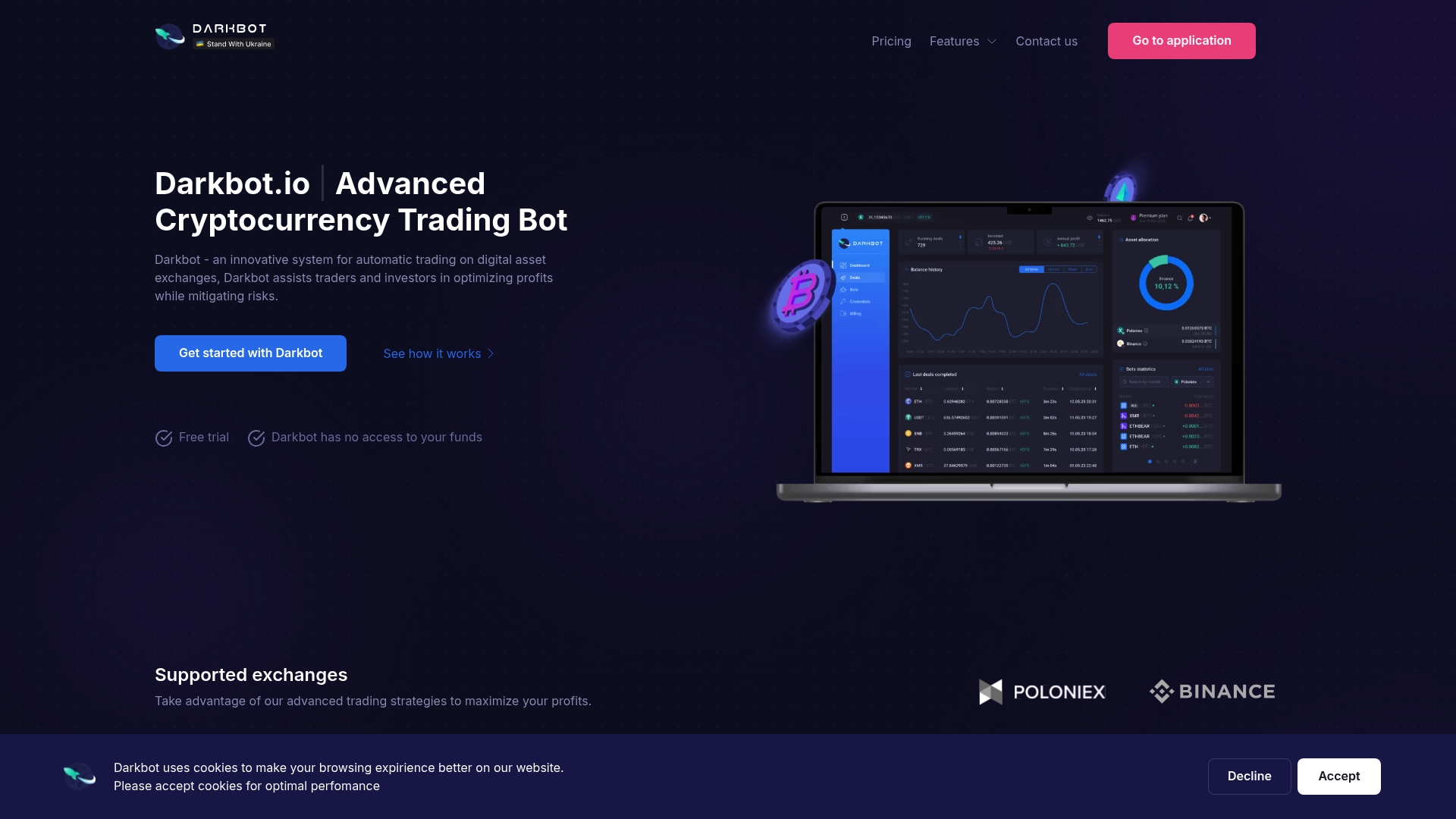
Discover how to make smarter crypto investing effortless by leveraging the sophistication of AI-powered platforms without sacrificing control. Visit Darkbot.io to start automating your trades securely and efficiently. Explore how our platform’s portfolio management and automated rebalancing features can help you reduce manual effort while managing risk dynamically. Take control now and turn complex trading strategies into simple, reliable routines.
Frequently Asked Questions
What is automated portfolio management in cryptocurrency?
Automated portfolio management in cryptocurrency refers to using advanced technologies like artificial intelligence and machine learning to optimize investment strategies, conduct real-time market analysis, and manage trading activities without extensive manual intervention.
How do different types of automation affect cryptocurrency trading?
There are three main types of automation: rule-based systems, traditional trading bots, and AI-powered platforms. Rule-based systems use fixed parameters, traditional bots follow programmed algorithms with some limitations, while AI-powered systems adapt to market changes using machine learning for more dynamic decision-making.
What are the key features of automated portfolio management systems?
Key features include continuous market monitoring, algorithmic trading strategy execution, automatic portfolio rebalancing, risk management through diversification, and performance tracking and optimization, which collectively enhance investment performance.
What are the risks associated with automated portfolio management in cryptocurrency?
Risks include technological vulnerabilities like programming errors and API security gaps, cybersecurity threats such as unauthorized access, and financial risks like unexpected trading losses. Proper security measures and risk mitigation strategies are essential to minimize these risks.
Recommended
- Cryptocurrency Portfolio Management Explained: Smarter Strategies
- Cryptocurrency Portfolio Balancing Guide for Automated Trading
- Crypto Portfolio Management Guide for Smart Automation
- Crypto Trading Strategy Optimization for Profitable Automation
- How to Optimize Investment Strategies Gold for Maximum Return

Start trading on Darkbot with ease
Come and explore our crypto trading platform by connecting your free account!
Free plan available • No credit card required