Trading bot checklist 2026: essential criteria for crypto success

Choosing the right crypto trading bot can feel overwhelming. With hundreds of platforms promising automated profits, many traders rush into decisions that lead to losses, especially in volatile markets. The difference between success and failure often comes down to evaluating bots against proven criteria before risking real capital. This comprehensive checklist walks you through the essential factors to assess in 2026, from strategy alignment and security protocols to risk management and AI capabilities, helping you make informed decisions that protect your investment while maximizing automation potential.
Key takeaways
| Point | Details |
|---|---|
| Match bot to strategy | Choose bots supporting your preferred trading style like scalping, grid trading, or arbitrage for optimal results. |
| Prioritize security first | Implement 2FA, IP restrictions, and encrypted storage for API keys to prevent unauthorized access. |
| Backtest before deployment | Validate strategies using historical data and paper trading to identify flaws without risking capital. |
| Enable risk controls | Ensure automated stop-loss, position sizing, and drawdown monitoring to protect against volatile swings. |
| Understand AI limitations | Treat AI features as enhancement tools, not profit guarantees, and maintain realistic performance expectations. |
1. Define your trading goals and strategy needs
Before evaluating any bot, clarify what you want to achieve. Your trading style dictates which bot features matter most. Bots excel in strategies like grid trading, scalping, trend-following, and arbitrage, each with trade-offs. Scalping requires low latency execution, while grid trading needs precise range configuration. Understanding these distinctions helps you filter platforms that align with your approach.
Consider your desired involvement level. Some traders prefer fully automated solutions that run independently, while others want granular control over parameters. Assess whether you need AI-driven decision making or rule-based logic you can customize. Your risk tolerance plays a crucial role here. Conservative traders should prioritize bots with robust safety features, while aggressive strategies demand sophisticated execution capabilities.
Set clear success metrics before deployment. Define your target ROI, acceptable drawdown limits, and timeframe for evaluation. Establish concrete failure criteria that trigger strategy revision or bot replacement. These benchmarks prevent emotional decision making during market volatility.
Pro Tip: Document your trading goals in a written plan before researching bots. This reference point keeps you focused on features that matter for your specific situation, preventing distraction by flashy capabilities you won’t actually use.
Different strategies require different bot architectures. A step by step trading automation approach helps match technical requirements to your goals. Grid bots need multiple simultaneous order management, arbitrage demands cross-exchange coordination, and trend-following requires sophisticated signal processing. Identifying these needs upfront saves time and prevents costly mismatches.
2. Check for robust backtesting and simulation capabilities
Never deploy a bot strategy without thorough validation. Backtesting strategies on historical data is crucial to identify flaws before live trading. Quality bots provide detailed backtesting engines that replay market conditions across various timeframes and volatility regimes. Look for platforms offering at least two years of historical data across multiple market cycles.
Simulation modes matter just as much as backtesting. Paper trading environments should mirror live conditions including slippage, fees, and order execution delays. Many bots show impressive backtest results but fail in real markets because simulations ignore these practical constraints. Verify that paper trading accounts for realistic trading costs and market impact.
Use backtesting to refine every aspect of your strategy. Test different entry triggers, exit conditions, position sizing rules, and stop-loss placements. Document which parameter combinations perform best across bull markets, bear markets, and sideways consolidation. This systematic approach reveals strategy weaknesses before they cost real money.
Pro Tip: Run backtests across worst-case scenarios like the 2022 crypto crash or sudden regulatory announcements. Strategies that survive extreme stress tests demonstrate resilience you can trust during future volatility.
Backtesting alone doesn’t guarantee success. Markets evolve, and past performance never ensures future results. Combine historical validation with ongoing live monitoring. Start with small position sizes even after positive backtests, gradually scaling as the bot proves itself in current market conditions. The backtesting crypto trading strategies process should be continuous, not a one-time checkbox.
Expert insight: ‘Always backtest your strategy with a bot on historical data’ before committing capital. This fundamental principle separates profitable traders from those who learn expensive lessons through trial and error.
3. Ensure strong API security and access control
API keys are the gateway between your bot and exchange accounts. Compromised keys mean direct access to your funds. API keys should have 2FA enabled, be IP restricted, and stored securely. Verify that your chosen bot platform supports these security layers and provides clear setup guidance.
Secure storage is non-negotiable. Treat your API keys like passwords by storing them encrypted or in a secure password manager, and never share them. Avoid saving keys in plain text files or unencrypted cloud storage. Many platforms offer encrypted vault features specifically designed for credential management.
Understand the permissions you grant through API configuration. Most exchanges allow granular control over what bots can do. Limit permissions to trading only, disabling withdrawal rights whenever possible. This restriction means even if keys are compromised, attackers cannot drain your account. Review permission settings regularly to ensure they match current needs.
Initial API key setup checklist:
- Enable two-factor authentication on your exchange account before creating API keys
- Generate keys with trading permissions only, explicitly denying withdrawal access
- Configure IP whitelisting to restrict access to known addresses where your bot runs
- Store keys in an encrypted password manager or secure vault, never in plain text
- Document which bot uses which keys and their permission levels for audit purposes
Ongoing maintenance steps:
- Rotate API keys every 90 days as a security best practice
- Monitor exchange access logs for unusual activity or unauthorized attempts
- Review and update IP whitelists when infrastructure changes
- Immediately revoke keys if you suspect any compromise
The api key security in crypto trading landscape continues evolving. Stay informed about new security features your exchanges offer. Many platforms now support api keys with ip security as standard, providing an additional protection layer against unauthorized access.
4. Evaluate risk management and safety features
Robust risk controls separate professional-grade bots from amateur tools. Risk management, including position sizing and stop-loss logic, is crucial for bot safety. Automated stop-loss orders should trigger at predetermined loss thresholds, protecting capital during unexpected moves. Take-profit settings lock in gains before reversals occur.
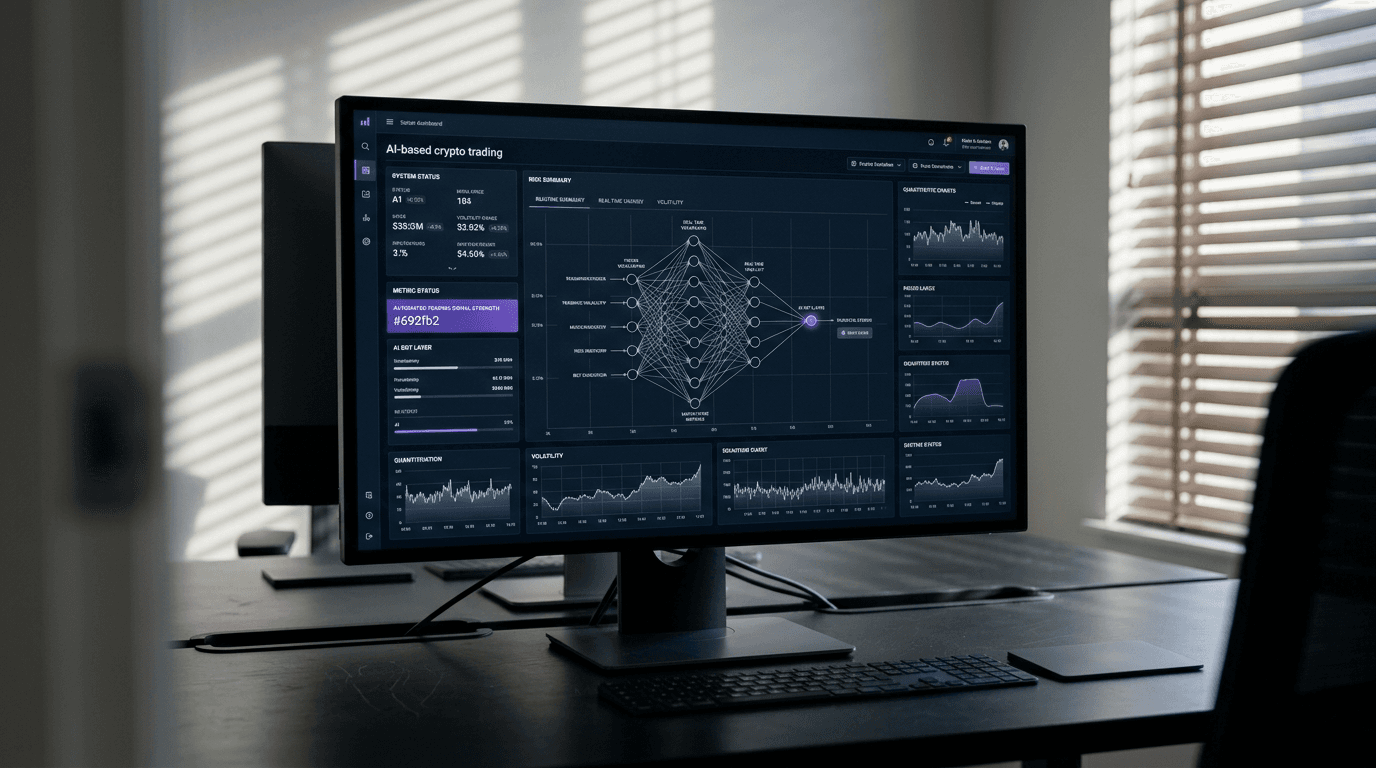
Look for exposure balancing across your portfolio. Quality bots prevent over-concentration in single assets by monitoring total position sizes relative to account value. Volatility-adjusted position sizing automatically reduces exposure during turbulent periods and increases it when markets stabilize. These dynamic controls adapt to changing conditions without manual intervention.
Real-time drawdown monitoring provides crucial safety nets. Circuit breakers should pause trading when losses exceed acceptable limits, preventing catastrophic drawdowns during flash crashes or liquidity events. Evaluate how quickly bots detect and respond to adverse conditions. Delays of even seconds can mean significant losses in fast-moving crypto markets.
| Risk Feature | Static Implementation | Dynamic Implementation |
|---|---|---|
| Stop-loss | Fixed percentage from entry | Adjusts based on volatility metrics |
| Position sizing | Constant allocation per trade | Scales with account equity and risk |
| Drawdown limits | Hard cutoff at threshold | Gradual reduction as losses mount |
| Rebalancing | Scheduled intervals | Triggered by deviation thresholds |
Pro Tip: Test risk controls by simulating worst-case scenarios in paper trading. Intentionally trigger stop-losses and drawdown limits to verify they execute as expected before trusting them with real capital.
Risk management deserves more attention than entry signal optimization. Many traders obsess over perfect timing but neglect position sizing and loss limits. The risk management in crypto trading framework should be your first consideration, not an afterthought. Bots with sophisticated entry logic but weak risk controls consistently underperform simpler strategies with robust safety features.
5. Consider advanced capabilities and AI integration
AI represents a powerful enhancement but not a magic solution. Modern bots integrate AI, quant modeling, and high-frequency execution for consistent performance, yet success still depends on sound underlying strategies. Recognize AI as a tool that amplifies good approaches while equally magnifying flawed ones.
Multi-signal frameworks combine various indicators for more robust decision making. Advanced bots process volatility measures, momentum indicators, volume patterns, and sentiment data simultaneously. This comprehensive analysis reduces false signals compared to single-indicator systems. Look for platforms explaining their signal methodology transparently rather than hiding behind black box algorithms.
Execution features matter as much as strategy logic. Time-weighted average price (TWAP) and volume-weighted average price (VWAP) algorithms minimize market impact for larger orders. Smart order routing finds optimal execution venues across multiple exchanges. These capabilities become essential as position sizes grow beyond simple market orders.
The market recognizes AI’s potential. The AI crypto trading bot market projected to surge from $54.07B in 2026 to $200.27B by 2035 reflects growing adoption. This expansion brings both opportunities and hype. Separate genuine innovation from marketing claims by focusing on measurable performance improvements.
Evaluating AI features systematically:
- Request detailed explanations of how AI models make decisions and what data they process
- Compare AI-driven results against simpler rule-based strategies in backtests to measure actual advantage
- Verify that AI recommendations include confidence scores or uncertainty measures, not just binary signals
- Test AI performance across different market regimes to ensure adaptability rather than overfitting
- Set realistic expectations based on documented performance, not theoretical capabilities or marketing promises
Pro Tip: Platforms offering top ai trading advantages should demonstrate specific use cases where AI outperforms traditional approaches. Demand evidence, not just claims.
AI enhances pattern recognition, adapts to changing correlations, and processes information faster than manual analysis. These benefits complement rather than replace fundamental risk management and strategy discipline. Use AI to refine execution and signal quality while maintaining human oversight of risk parameters and performance evaluation.
6. Compare top bot options with a comprehensive checklist table
Armed with evaluation criteria, compare leading platforms side by side. This systematic approach reveals which bots align best with your specific needs. The table below summarizes critical features across key dimensions established in previous sections.
| Criteria | Basic Bots | Intermediate Platforms | Advanced Solutions | | — | — | — | | Strategy Support | Limited to 1-2 types | Multiple strategies available | Full range plus custom logic | | Backtesting | Basic historical replay | Multi-timeframe analysis | Advanced simulation with costs | | API Security | Standard key support | 2FA and IP restrictions | Encrypted vaults and rotation | | Risk Management | Manual stop-loss only | Automated stops and sizing | Dynamic controls and circuit breakers | | AI Integration | None | Basic signal enhancement | Multi-signal frameworks and smart routing | | Cost Structure | Free or low monthly fee | Mid-tier subscription | Premium pricing with volume tiers | | Community Support | Limited documentation | Active forums and guides | Dedicated support and education |
This comparison helps visualize trade-offs. Budget-conscious beginners might start with basic bots offering essential features, while experienced traders managing larger portfolios justify premium platforms with sophisticated capabilities. Your position on this spectrum determines the optimal choice.
Consider total cost of ownership beyond subscription fees. Factor in exchange trading costs, potential slippage from poor execution, and opportunity costs of limited features. Sometimes paying more for a darkbot ai-powered trading bot with superior risk management and execution saves money compared to cheaper alternatives that generate excessive trading costs or preventable losses.
Usability matters as much as features. A powerful bot you struggle to configure properly underperforms a simpler platform you understand completely. Evaluate user interfaces, documentation quality, and onboarding processes. Many platforms offer free trials or demo accounts, providing risk-free opportunities to assess fit before committing.
Explore Darkbot for automated crypto trading
After evaluating criteria and comparing options, consider platforms that check multiple boxes on your checklist. Darkbot combines AI-driven strategies with comprehensive backtesting, allowing you to validate approaches before deployment. The platform emphasizes security through encrypted API management and supports granular risk controls that adapt to market conditions.
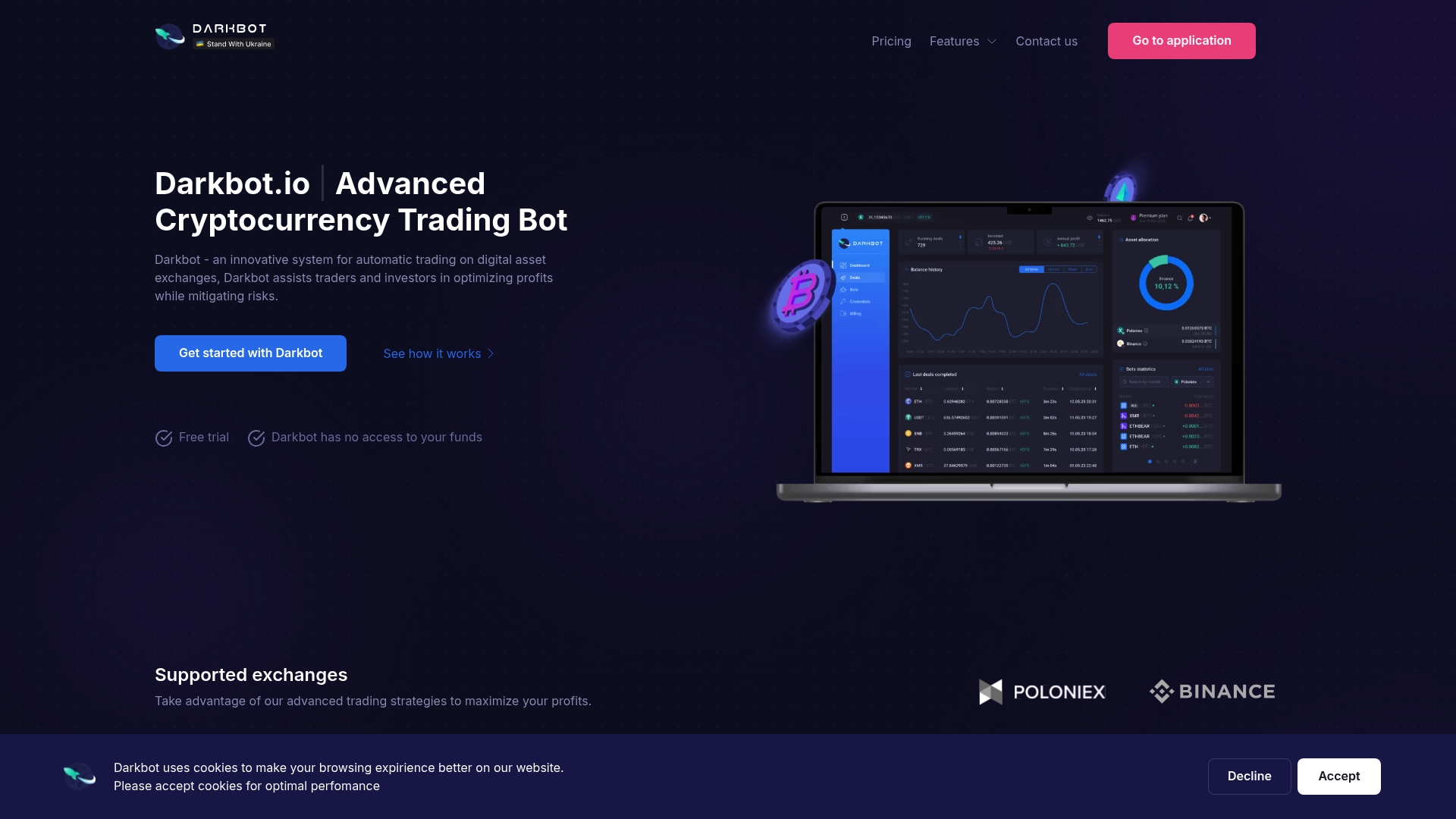
The darkbot ai-powered trading bot offers portfolio-level optimization beyond single-strategy execution. Monitor multiple positions simultaneously, rebalance allocations automatically, and track performance across your entire crypto portfolio from one interface. This holistic approach aligns with the systematic evaluation framework outlined throughout this checklist.
Pro Tip: Use Darkbot’s cryptocurrency portfolio management features to implement dynamic risk monitoring across all your automated strategies. Centralized oversight prevents individual bots from creating excessive combined exposure.
Whether you’re starting with basic automation or scaling sophisticated multi-strategy systems, platforms that prioritize security, testing, and risk management provide the foundation for sustainable success. Explore how comprehensive solutions can streamline your trading workflow while maintaining the protective controls essential in volatile crypto markets.
What is the most important factor when choosing a crypto trading bot?
What is the most important factor when choosing a crypto trading bot?
Strategy alignment and risk management top the priority list. Your bot must support trading approaches that match your goals and risk tolerance while providing robust safety features. Security comes next, as compromised API keys can drain accounts regardless of strategy quality. Never sacrifice these fundamentals for flashy features or marketing promises.
How can I ensure my trading bot remains profitable in volatile markets?
Continuous monitoring and adaptation keep bots profitable as conditions change. Regular backtesting against recent data reveals when strategies lose effectiveness. Paper trading new configurations before deploying them live prevents costly experiments with real capital. Adjust risk parameters like stop-losses and position sizes as volatility shifts, tightening controls during turbulent periods and relaxing them when markets stabilize.
Are AI-powered crypto trading bots worth the hype in 2026?
AI provides genuine value when implemented properly, but it’s not a guaranteed profit generator. The technology excels at pattern recognition and processing multiple signals simultaneously, improving decision quality compared to simple rule-based systems. However, AI amplifies both good and bad strategies. Success depends on sound underlying approaches, proper risk management, and realistic expectations rather than treating AI as a magic solution.
What security measures should I take when using trading bots?
Implement multiple security layers starting with API configuration. Enable two-factor authentication on exchange accounts and create keys with trading permissions only, explicitly denying withdrawals. Use IP whitelisting to restrict access to known addresses. Store keys in encrypted password managers or secure vaults, never in plain text. Rotate credentials every 90 days and monitor exchange access logs for suspicious activity. These practices create defense in depth against unauthorized access.
Recommended

Start trading on Darkbot with ease
Come and explore our crypto trading platform by connecting your free account!
Free plan available • No credit card required