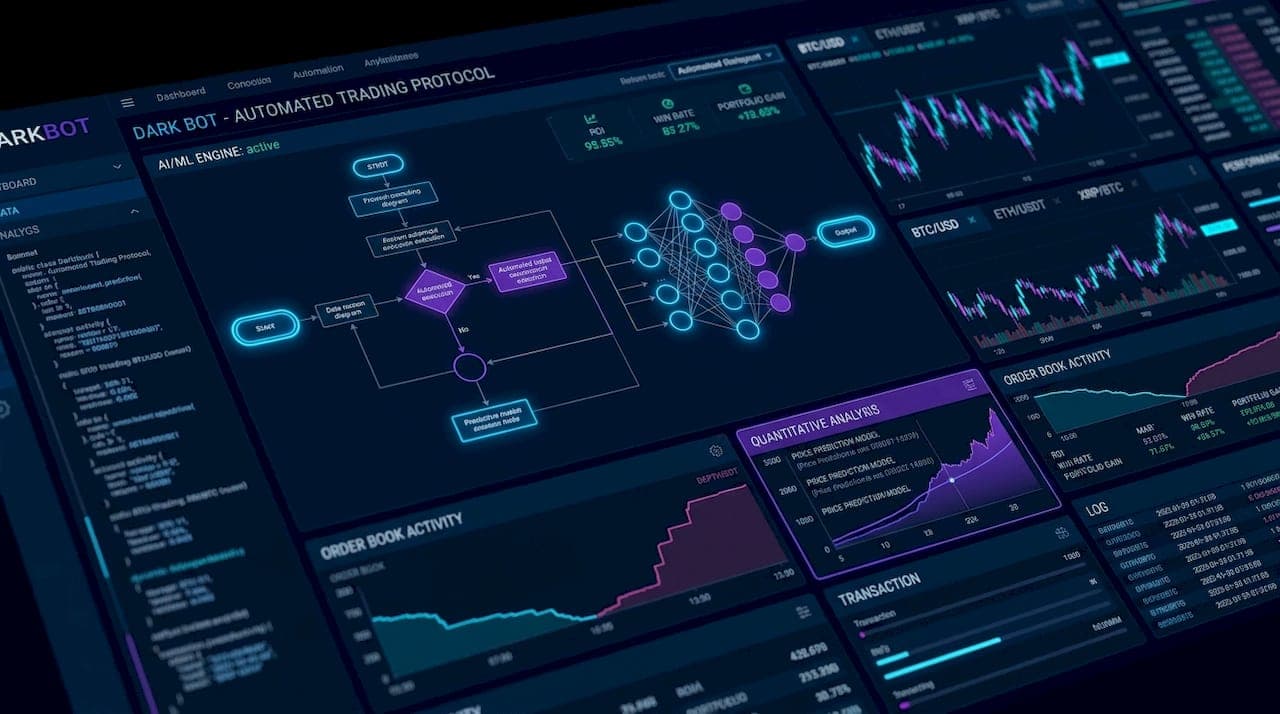
Trading Strategy Optimization: Boosting Crypto Profits

Trading crypto in high-inflation countries brings relentless volatility, unpredictable market shifts, and the real risk of losing capital overnight. For tech-savvy traders, mastering trading strategy optimization is the difference between reactive guesswork and systematic success. By leveraging robust statistical techniques, automation, and AI, you can refine every entry, exit, and risk decision for consistency across trending and chaotic markets. This guide unpacks how to make your strategies reliable, adaptive, and ready for 24/7 execution.
Key Takeaways
| Point | Details |
|---|---|
| Importance of Optimization | Trading strategy optimization improves consistency and reliability across various market conditions. It ensures that your approach performs well beyond just favorable scenarios. |
| Focus on Risk Management | Prioritize optimizing risk controls and position sizing before refining entry signals, as this can significantly impact profitability. |
| Automation Advantage | Implementing automation removes emotional bias and ensures consistent execution, allowing for 24/7 market responsiveness without human fatigue. |
| Ongoing Strategy Tuning | Continuously monitor and tune your strategy based on performance metrics and changing market conditions to maintain its effectiveness. |
What Trading Strategy Optimization Means
Trading strategy optimization is the process of refining how you enter and exit trades, manage risk, and adapt your approach to different market conditions. It’s not about chasing profits through aggressive tactics—it’s about improving the consistency and reliability of your execution.
At its core, optimization answers a fundamental question: Does your trading approach work reliably across various market situations, or does it only perform well in specific conditions? The difference matters enormously when you’re managing real capital.
The Core Components
Effective optimization focuses on three essential areas:
- Entry and exit management: Defining precise conditions for opening and closing positions, not based on intuition but on measurable, repeatable criteria
- Risk assessment: Calculating position sizes, drawdown limits, and loss thresholds before entering a trade
- Market condition testing: Verifying that your approach performs across trending, ranging, and volatile markets—not just the conditions you prefer
These elements work together. A strategy with excellent entry signals but poor risk controls will fail. A strategy with perfect position sizing but inconsistent exits will drain capital through slippage and indecision.
Why Optimization Matters in Crypto
Cryptocurrency markets move 24/7 with sharp volatility. Manual trading in these conditions leads to emotional decisions, missed opportunities, and inconsistent execution. Optimization allows you to codify your decision-making into rules that execute regardless of time of day or market sentiment.

When you optimize, you shift from reactive trading (responding to price movements) to systematic trading (following predetermined logic). This consistency is where most traders struggle—and where automation provides genuine advantage.
The Optimization Process
Proper optimization involves robust statistical methods to test whether your strategy actually works or simply got lucky in recent price action. This means:
- Testing across historical data to identify performance patterns
- Checking for overfitting (optimizing so heavily to past data that the strategy fails going forward)
- Validating through walk-forward analysis to confirm forward-looking reliability
- Adjusting parameters based on evidence, not hope
Without this rigor, you’re essentially guessing. With it, you’re building something verifiable and repeatable.
The difference between a working strategy and a failed one often comes down to how thoroughly you tested it before risking capital.
Optimization Versus Guessing
Many traders optimize by trial and error—testing one variable at a time until something looks good. This approach creates false confidence. True optimization uses systematic search methods that examine multiple variables simultaneously and test the strategy in conditions it hasn’t seen before.
Automated platforms enable this kind of rigorous testing. You can run thousands of simulations overnight instead of manually testing scenarios over weeks.
Pro tip: Start by optimizing your risk controls and position sizing before touching entry signals. Many traders improve profitability more by sizing correctly than by finding the perfect entry.
Types and Methods Used in Crypto
Crypto trading strategies fall into distinct categories based on their approach, time horizon, and decision-making logic. Understanding these types helps you recognize which methods align with your risk tolerance and market conditions.
Each method has different requirements for monitoring, capital allocation, and technical sophistication. The strategy you choose determines how much active oversight you need versus how much automation can handle.
Strategy Types by Time Horizon
Trading methods in crypto are primarily organized by holding period:
- Scalping: Entering and exiting within seconds to minutes, targeting small price movements. Requires fast execution and tight spreads.
- Day trading: Opening and closing positions within a single trading day. Demands constant market attention and quick decision-making.
- Swing trading: Holding positions for days or weeks to capture larger price swings. Allows for less frequent monitoring.
- Position trading: Maintaining trades over weeks or months based on longer-term trends. Suits passive investors with strong conviction.
Each approach has different capital requirements, stress levels, and profit potential. Scalping generates frequent small wins but requires perfect execution. Position trading produces fewer trades but larger individual gains.
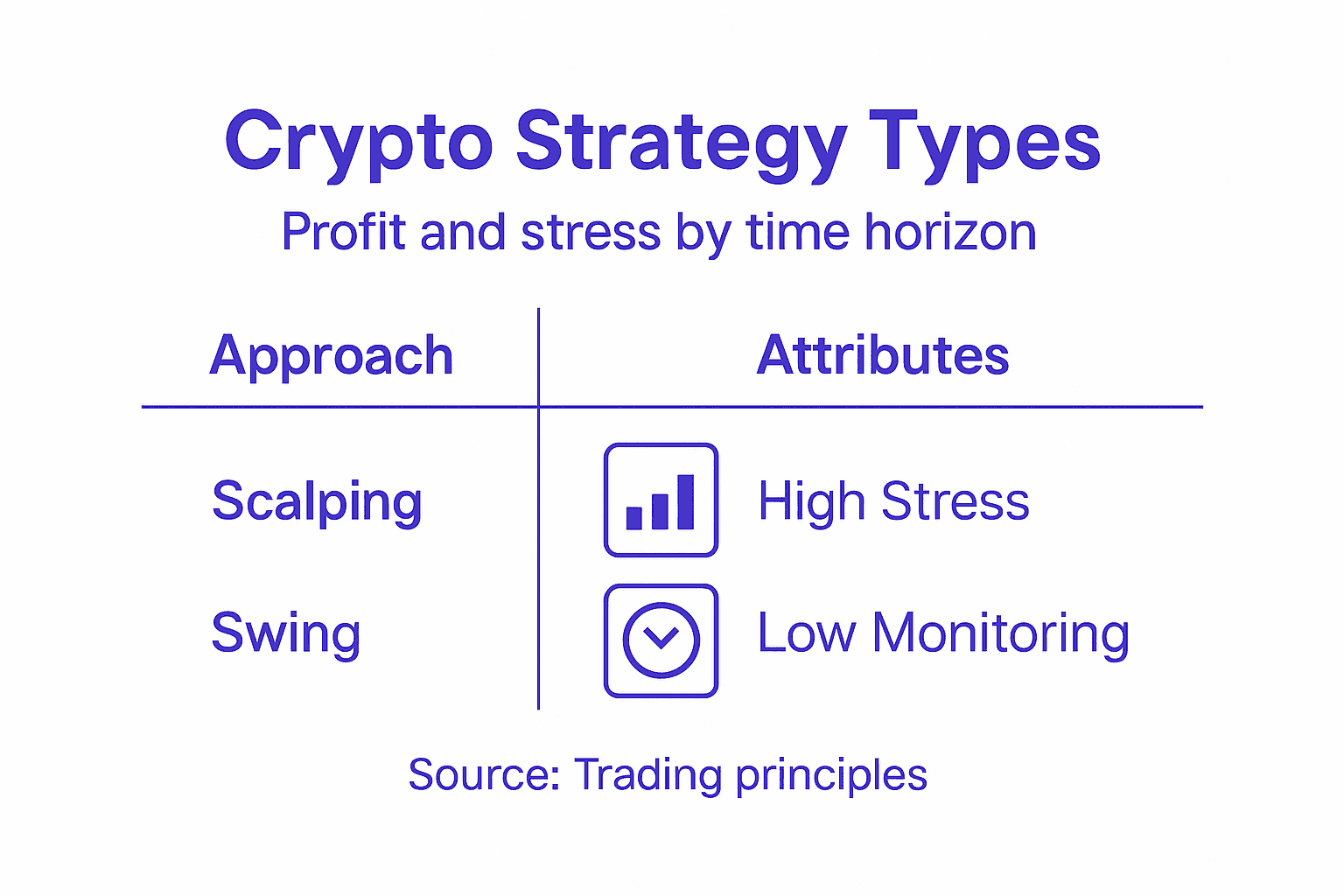
Here’s a comparison of trading strategy types by key characteristics:
| Strategy Type | Typical Holding Period | Monitoring Needed | Stress Level |
|---|---|---|---|
| Scalping | Seconds to minutes | Constant, real-time | Very high |
| Day Trading | Within a single day | High, all session | High |
| Swing Trading | Days to weeks | Moderate, 1-2 times/day | Moderate |
| Position Trading | Weeks to months | Low, weekly review | Low |
Technical Approaches
Beyond time horizons, methods differ in how they generate signals:
Momentum-based methods identify when price acceleration is occurring and trade in that direction. These work well in trending markets but struggle during consolidation.
Mean reversion methods assume prices that move too far will snap back. These profit from overextension but fail when new trends develop.
Pattern recognition looks for chart formations that historically precede price movements. Success depends heavily on proper pattern identification.
Machine learning approaches use ensemble-based models to evaluate multiple data points simultaneously. These can adapt to changing market conditions better than static rules.
Automation and Execution
Most effective crypto optimization combines algorithmic execution methods with systematic rule-based decision making. This allows you to:
- Remove emotional bias from entry and exit decisions
- Execute trades at optimal prices without manual delays
- Operate across multiple pairs or exchanges simultaneously
- Respond to market signals 24/7 without human fatigue
Automation doesn’t guarantee profits, but it ensures your strategy executes exactly as designed, every single time.
The best strategy fails if execution is inconsistent. Automation makes consistency your baseline.
Choosing Your Method
Your chosen method must match three factors: your available time, your risk tolerance, and your technical capabilities. A scalping strategy requires constant attention and high capital efficiency. A swing strategy needs patience and discipline to avoid overtrading.
Most traders succeed by mastering one approach thoroughly rather than jumping between methods. Specialization builds experience and intuition.
Pro tip: Start by backtesting your method across at least 100 trades of historical data before deploying real capital. This reveals whether your approach works or simply feels right.
How Automation and AI Enhance Results
Automation and AI transform crypto trading from a manual, emotionally-driven process into a systematic, data-driven operation. The combination addresses the two biggest obstacles most traders face: inconsistent execution and inability to process information fast enough.
When you automate your strategy, you remove the human variables that derail most traders. When you add AI, you gain analytical capability that exceeds manual analysis.
Removing Emotional Bias
Manual traders struggle with predictable emotional patterns. You hold losing trades hoping they bounce back. You exit winners too early fearing reversal. You overtrade during excitement and freeze during fear.
Automation executes your predetermined rules regardless of market sentiment. No hesitation. No second-guessing. No hope-based decisions. Your strategy either triggers or it doesn’t, based on objective conditions.
This consistency alone improves results significantly. Most traders underestimate how much emotion costs them.
Speed and Data Processing
Crypto markets generate millions of data points across hundreds of trading pairs. Manual analysis can evaluate perhaps three or four charts per hour. A trading bot processes all available data simultaneously.
AI-driven systems use ensemble models like Gradient Boosting to identify actionable trading signals across multiple time frames and pairs. This analytical advantage compounds over hundreds of trades.
AI doesn’t predict price movement perfectly. Instead, it identifies probabilistic patterns that increase your odds in the longer term.
Operational Advantages
Automation provides practical benefits beyond pure trading logic:
- 24/7 market coverage: Executes trades across all time zones without human fatigue
- Consistent position sizing: Always uses correct risk parameters, never overlevers on emotion
- Speed to execution: Enters and exits at optimal prices without manual delays
- Multi-pair management: Monitors dozens of trading pairs simultaneously
- Rapid adjustment: Rebalances or exits based on real-time conditions
These operational advantages matter more than most traders realize. You gain execution quality that’s simply impossible manually.
Below is a summary of automation and AI advantages in crypto trading:
| Advantage | Manual Trading Impact | Automated/AI Impact |
|---|---|---|
| Emotional Bias | High, causes inconsistency | Absent, rules applied objectively |
| Speed of Execution | Slower, can miss trades | Instant, always executes |
| Data Processing Capacity | Few pairs at a time | Dozens of pairs simultaneously |
| Market Coverage | Limited to awake hours | 24/7, never misses opportunities |
| Response to Market Changes | Often delayed | Immediate, rules update in real time |
Data-Driven Adaptation
AI in cryptocurrency trading learns from historical patterns while adapting to changing market conditions. Unlike rigid rule-based systems that break when markets shift, AI-driven approaches can identify when market structure has changed and adjust accordingly.
This doesn’t mean AI predicts the future. It means AI evaluates patterns in real-time and adjusts your strategy’s parameters based on what’s working now.
Automation ensures your strategy executes perfectly. AI ensures your strategy stays relevant as markets change.
The Reality Check
Automation and AI amplify good strategies and accelerate losses from bad ones. A flawed strategy executed perfectly will still fail. A solid strategy executed inconsistently might succeed anyway through randomness.
Automation removes the randomness, exposing whether your logic actually works.
Pro tip: Test your strategy without automation first. Understand why it works before automating it. Automation amplifies your results, not your luck.
Key Risks and Common Pitfalls
Strategy optimization promises better results, but pursuing optimization without understanding risk is how traders lose capital faster. The tools that amplify good strategies also amplify bad ones. Understanding what can go wrong is as important as understanding what can go right.
Crypto trading carries inherent volatility that no optimization can eliminate. Your job is managing that volatility, not pretending it doesn’t exist.
Market and Structural Risks
Cryptocurrency markets present risks that don’t exist in traditional markets:
- Extreme volatility: Prices swing 10-20% in hours based on news or sentiment shifts
- Liquidity gaps: Large positions can’t always fill at expected prices, especially on smaller exchanges
- Regulatory uncertainty: New laws can crater valuations overnight across entire market segments
- Security vulnerabilities: Hacks, platform failures, and smart contract exploits create sudden losses
No optimization strategy protects you from flash crashes or regulatory crackdowns. These are market risks you accept by trading crypto.
The Optimization Trap
The most dangerous pitfall is overreliance on past performance. You test a strategy across six months of historical data, see 45% returns, and deploy capital thinking past results guarantee future success.
They don’t. Markets change. What worked in trending markets fails in choppy ones. What succeeded during bull runs collapses during bear markets.
This is why walk-forward testing matters. You test on historical data, but validate on periods your strategy never saw. If it fails on new data, you haven’t found an edge—you’ve found luck.
Capital Allocation Failures
Many traders optimize entry and exit logic but neglect position sizing. This is backwards. Your position size determines how much you can lose. Your entry determines when.
Common capital allocation mistakes:
- Trading the same size regardless of market volatility
- Increasing position size after losses (trying to recover quickly)
- Allocating too much capital to correlated pairs (false diversification)
- Ignoring margin requirements and liquidation risk on leveraged trades
Your best entry signal means nothing if you’ve sized your position to lose 30% of capital on a normal drawdown.
Emotional Optimization
Automation removes some emotional bias, but traders introduce it during strategy design. You backtest 50 variations of a strategy and pick the one with the best historical returns. You’ve just optimized to luck, not logic.
Approach optimization systematically. Test why a parameter works, not just whether it does. Does a 10-period moving average work because it captures momentum, or because that specific period randomly performed well in your testing window?
The strategy that looks perfect on a chart often fails in live trading because you optimized noise, not signal.
The Realistic Framework
Risk management in crypto trading requires stop-loss orders, position limits, and diversification as non-negotiable foundations. Then optimize your entries and exits. Optimization amplifies your discipline or your recklessness.
Think of it this way: Risk controls are the brakes. Entry signals are the accelerator. You need good brakes before good acceleration matters.
Pro tip: Set your maximum acceptable loss per trade (usually 1-2% of capital) before you optimize anything else. Every parameter choice should serve that limit, not override it.
Best Practices for Ongoing Strategy Tuning
Strategy optimization isn’t a one-time event. Markets evolve, volatility shifts, and what worked last quarter may fail this quarter. Ongoing tuning keeps your strategy responsive to actual market conditions rather than locked into historical patterns.
The goal isn’t constant tinkering. It’s disciplined, data-driven adjustments that improve performance without chasing randomness.
Monitor Key Performance Metrics
You can’t tune what you don’t measure. Establish baseline metrics before you adjust anything:
- Win rate: Percentage of trades that close profitably
- Risk-adjusted returns: Profit relative to volatility experienced (Sortino ratio or similar)
- Drawdown: Maximum peak-to-trough loss during the testing period
- Trade frequency: Number of signals per week or month
- Slippage: Difference between expected and actual entry/exit prices
Track these metrics across different market conditions. Does your strategy perform consistently in trending markets, choppy markets, and volatile spikes? If performance varies dramatically, your strategy is environment-dependent, not robust.
The Tuning Cycle
Dynamic parameter adjustment balances return on investment, risk management, and trade frequency. Rather than optimizing one metric, effective tuning considers tradeoffs:
- Test current parameters on recent live data (not backtested data)
- Identify which parameters consistently underperform
- Adjust one or two parameters at a time—never change everything simultaneously
- Validate changes on new historical data your strategy hasn’t seen
- Paper trade (simulate without real capital) before deploying changes
- Monitor results for 20-30 trades minimum before deciding if the change helped
This cycle takes weeks, not days. Patience matters more than speed.
Adaptation to Market Regime
Markets shift between regimes: trending (directional), ranging (sideways), or volatile (chaotic). A strategy optimized for trending markets often fails during consolidation. Recognize when market regime has changed and adjust accordingly.
Simple approach: Calculate your strategy’s win rate monthly. If it drops below your baseline by more than 10 percentage points, market conditions may have shifted. Review your parameters and test adjustments on this new regime specifically.
Avoid Over-Tuning
The easiest mistake is optimizing so heavily that your strategy only works on the specific data you tested. Genetic algorithm approaches with real-time feedback adapt to volatile markets, but they still require validation on unseen data.
Use walk-forward testing religiously. Test parameter changes on historical data, then validate on the next three months forward. If performance deteriorates going forward, the change didn’t work—discard it.
The best tuning improves performance across all market conditions, not just the ones you’re currently experiencing.
Documentation and Versioning
Track every change you make. Document the date, which parameter changed, why you changed it, and what results you observed. This history shows you patterns in what works versus what doesn’t.
Keep previous versions of your strategy. Sometimes you’ll want to revert if market conditions shift back to an earlier regime.
Pro tip: Limit yourself to tuning your strategy once monthly at most. Frequent changes create false confidence and prevent you from gathering enough trades to assess whether adjustments actually helped.
Take Control of Your Crypto Trading Strategy with Automation
Mastering trading strategy optimization means overcoming emotional bias, managing risk effectively, and adapting smoothly to ever-changing crypto market conditions. The challenges of manual trading described in the article are exactly where Darkbot.io delivers real value. Our advanced automated trading solution harnesses AI and machine learning to remove guesswork and execute your strategies consistently across multiple exchanges through secure API integration.
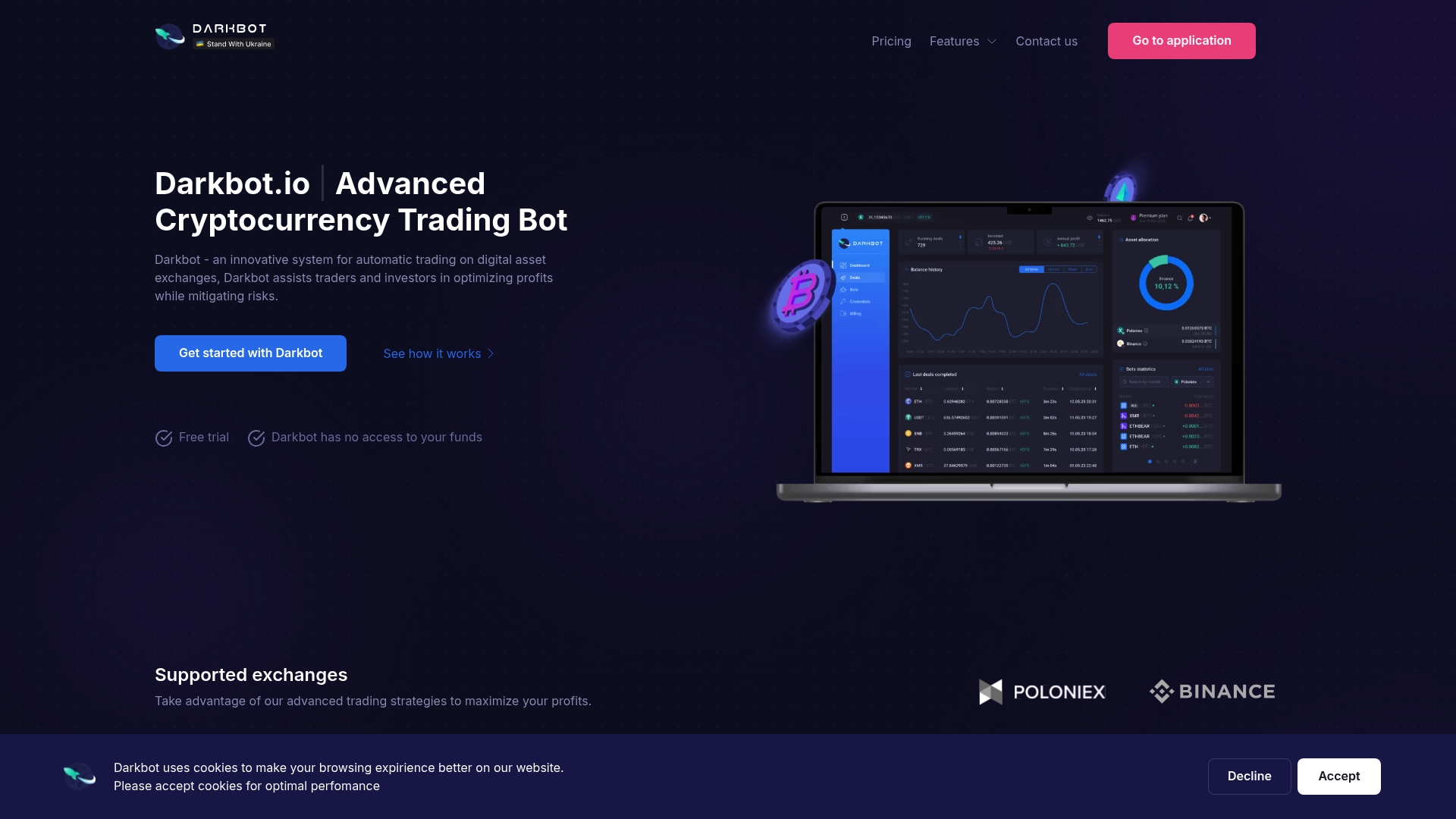
Boost your crypto profits today by automating your risk controls, position sizing, and entry-exit decisions with Darkbot.io. Start fine-tuning your strategies in real time while benefiting from 24/7 market coverage and detailed analytics. Don’t let market volatility or emotional hesitation hold you back. Visit Darkbot.io now to experience effortless algorithmic trading that adapts as markets evolve.
Frequently Asked Questions
What is trading strategy optimization in crypto?
Trading strategy optimization in crypto refers to the process of refining your trading approach, including how to enter and exit trades, manage risk, and adapt to different market conditions to improve consistency and reliability without relying on emotional decisions.
Why is optimization important for cryptocurrency trading?
Optimization is crucial in cryptocurrency trading because the markets are highly volatile and operate 24/7. By optimizing your strategy, you can establish rules that help you make systematic decisions, reducing emotional influences and improving trade execution.
How do I optimize my trading strategy?
To optimize your trading strategy, focus on testing across historical data, checking for overfitting, and validating your approach through walk-forward analysis. Adjust your parameters based on statistical evidence to avoid guessing.
What are some common pitfalls in trading strategy optimization?
Common pitfalls include overreliance on past performance, neglecting proper risk management, and over-tuning your strategy to specific historical data. It’s essential to maintain rigorous testing and adapt strategies to changing market conditions.
Recommended

Start trading on Darkbot with ease
Come and explore our crypto trading platform by connecting your free account!
Free plan available • No credit card required