Python Traders: Freqtrade Alternatives by Backtest, Exchange, Hosting

Darkbot leads the managed alternatives for traders who want AI-assisted automation without server maintenance, while Hummingbot remains the strongest choice for market making and DEX arbitrage, Jesse suits Python-literate researchers who want reproducible backtests, while OctoBot fits traders who want open-source flexibility through a graphical interface instead of raw code. Superalgos rounds out the technical tier for visual, node-based strategy building. Cloud services like 3Commas, Cryptohopper, and Bitsgap trade some control for convenience. The right pick depends on backtesting fidelity, exchange coverage, and how much infrastructure you’re willing to run yourself.
TL;DR:
- Self-hosted platforms like Jesse and Hummingbot require technical setup but offer deeper control over backtest fidelity and exchange support, which is crucial for reliable strategy validation.
- Vectorized backtests are faster but less accurate, so combining candle-by-candle testing with live paper trading provides a more trustworthy assessment of strategy robustness.
- Platforms that support detailed risk management tools, such as stop-loss and position limits, help prevent excessive losses during live trading and should be prioritized.
- Darkbot offers a managed environment with AI pattern evaluation, backtesting, and paper trading, suited for traders who prefer ease of use over full code control while still verifying strategies thoroughly.
- Guarantee claims and opaque order routing are major red flags; verifying backtest results, exchange coverage, and the presence of simulated dry runs is essential before deploying real capital.
Freqtrade Alternatives Compared: Which Platform Fits Your Setup?
Freqtrade earns its reputation among Python-literate crypto traders because it pairs free, open-source strategy development with Hyperopt for parameter optimization and a live-deploy path that mirrors backtest logic almost exactly, according to independent platform benchmarking. Any alternative has to compete on that same axis: can you trust what the backtest tells you, and does the code you tested actually run in production without modification?
That single question splits the market into three groups. Self-hosted, Python-first frameworks (Hummingbot, Jesse, OctoBot, Superalgos, Gekko, Zenbot) give you full control over execution logic at the cost of running your own infrastructure. Cloud-based, largely no-code services (3Commas, Cryptohopper, Bitsgap, Pionex, Altrady) trade that control for convenience and a subscription fee. Managed AI-enabled platforms like Darkbot sit between the two, handling infrastructure while still letting you customize strategy parameters and backtest before committing capital.

Darkbot’s own positioning fits the third category directly. It offers multi-exchange API integration, customizable strategy templates, backtesting and paper trading modes, and support for running multiple bots simultaneously from one account, with a Standard Plan at $12.50 per month and a Premium Plan at $25.00 per month. The AI component evaluates patterns probabilistically rather than issuing price predictions or profit promises, which matters given how the CFTC treats exaggerated AI trading claims.
Here’s how the rest of the field stacks up on the axes that actually change trading outcomes:
- Hummingbot is purpose-built for market making and cross-exchange arbitrage, including decentralized exchange strategies, and remains free and open-source under an Apache-style license structure common to the project’s ecosystem.
- Jesse uses a Python-first syntax designed for reproducible, multi-timeframe backtests, with the same strategy code running in research and live modes without porting.
- OctoBot is a free, open-source, GUI-first bot supporting TradingView connectors, AI connectors, grid and DCA strategies, and over 15 exchanges through CCXT.
- Superalgos replaces code with a node-based visual editor for building and orchestrating data-driven strategies, appealing to traders who think in flowcharts rather than functions.
- 3Commas runs entirely in the cloud with DCA-focused bot templates, TradingView signal integration, and a mobile app for monitoring positions on the go.
- Cryptohopper centers on a strategy marketplace where users can subscribe to or copy strategies built by other traders, reducing the need to write logic from scratch.
- Bitsgap focuses on visual grid trading configuration with a unified dashboard across multiple exchange accounts.
- Pionex builds bots directly into its exchange, so there’s no separate subscription. Costs come entirely from trading fees.
- Altrady offers cloud-based multi-exchange portfolio management with smart trading terminals aimed at active manual and semi-automated traders.
The remaining names in this category, including Exchange Valet, Smart Crypto Bot, Blitz Trading, TrailingCrypto, cleo.finance, Auto Recovery EA, MoonBot, Kioseff Trading, Fox Signals, Zenbot, ARBI BOT, PsychoBot, Cryptotrader, Axion Crypto, Galileo FX, Heiken Ashi EA, Gekko, Origami Tech, TradeStaq, Vector Algorithmics, Themis For Crypto, Le-Trader, Bitsleader, ECG Trade, WolfBot, GoodCrypto, Position Sizer, CryptoHero, Aperium, Tuned, ProfitTradingApp, TradersPost, BravoBot, Midas Protocol Wallet, and LiveTrader, occupy narrower niches: expert advisor style automation for MetaTrader-linked crypto pairs (Auto Recovery EA, Heiken Ashi EA), signal distribution services (Fox Signals), webhook-based order routing from TradingView alerts (TradersPost), and smaller regional or single-feature tools (Position Sizer, WolfBot, GoodCrypto). Most publish limited public documentation on backtest methodology, which matters more than the marketing copy suggests.
| Platform | Type | Coding required | Best for | Pricing model |
|---|---|---|---|---|
| Darkbot | Managed AI SaaS | None | Traders wanting managed automation with AI-assisted optimization | Free / Standard $12.50/mo / Premium $25.00/mo / Enterprise (on request) |
| Hummingbot | Open source | Python (optional for templates) | Market making and DEX arbitrage | Free, self-hosted |
| Jesse | Open source | Python | Reproducible research and backtesting | Free, self-hosted |
| OctoBot | Open source | None (GUI) to optional Python | No-code flexibility with AI/TradingView connectors | Free, self-hosted or cloud tier |
| Superalgos | Open source | None (visual nodes) | Visual strategy building without code | Free, self-hosted |
| 3Commas | Cloud | None | DCA bots and mobile monitoring | Subscription |
| Cryptohopper | Cloud | None (marketplace) | Copy trading and strategy marketplace | Subscription |
| Bitsgap | Cloud | None | Grid trading and multi-exchange dashboards | Subscription |
| Pionex | Exchange-integrated | None | Zero-subscription built-in bots | Trading fees only |
| Altrady | Cloud | None | Multi-exchange portfolio and smart terminals | Subscription |
Before shortlisting anything from this table, weigh what each type actually costs you: engineering time for self-hosted tools, feature lock-in for cloud services, or reduced customization depth for managed platforms.
What Backtesting, Exchange Coverage, and Hosting Actually Change
Backtesting method is the single biggest source of false confidence in this category. Candle-by-candle engines, the approach Freqtrade and Jesse both use, simulate order fills bar by bar in Python, which produces high-fidelity results that closely match live execution behavior. The tradeoff is speed: running a broad hyperparameter sweep across thousands of parameter combinations can take hours on a candle-by-candle engine.
Vectorized or Rust-based engines process entire datasets in bulk operations instead of looping bar by bar, cutting optimization time dramatically. The cost is realism. Vectorized backtests often assume perfect fills at the close price and can miss intrabar slippage, partial fills, or order queue effects that a candle-by-candle simulation would catch. A strategy that looks profitable in a fast vectorized test can perform very differently once it hits candle-by-candle validation or live paper trading. Treat a vectorized result as a screening pass, not a final verdict.

Exchange coverage shapes what strategies are even possible. Platforms built on CCXT, the library that standardizes API calls across exchanges, typically support 15 or more centralized exchanges with consistent order types. OctoBot’s CCXT-based architecture is a clear example. DEX support is a separate capability entirely: it requires wallet integration, gas fee estimation, and on-chain transaction routing, which is why Hummingbot’s DEX and arbitrage focus sets it apart from CEX-only tools. If your strategy needs to move between centralized and decentralized venues, confirm that explicitly. Many platforms that advertise “multi-exchange” support mean multiple CEX accounts only.
Hosting is where the hidden costs live. Self-hosted frameworks are free to download, but you absorb server uptime, exchange connectivity monitoring, and the engineering hours needed to patch and maintain the codebase yourself. Cloud-managed and managed AI platforms shift that burden to the provider in exchange for a subscription fee.
Pro Tip: Run any promising strategy through both a fast vectorized screen and a slower candle-by-candle validation before paper trading. If the two disagree by a wide margin, the strategy is likely overfit to backtest assumptions rather than genuinely robust.
A few trust signals separate serious tools from marketing pages. License type tells you what you can legally modify and redistribute; Freqtrade and most of its open-source peers use GPL-family licenses. GitHub activity, meaning recent commits and open issue resolution, indicates whether a project is actively maintained or effectively abandoned. Paper trading availability, meaning a dry-run mode that mirrors live conditions without capital at risk, should be considered mandatory rather than optional. A platform that skips straight from backtest to live trading with no dry-run step is asking you to skip your own risk control.
How Do You Choose Between These Freqtrade Alternatives?
Start by mapping your own constraints, not the feature list. A Python-literate trader who wants full control over order logic and doesn’t mind running a server belongs in the self-hosted, code-first tier: Hummingbot for market making and arbitrage, Jesse for research-heavy backtesting, OctoBot or Superalgos if you want open-source flexibility with less coding. A trader who wants convenience and is comfortable trading some customization for a managed dashboard fits better with cloud services or a managed AI platform like Darkbot.
Ask these questions before committing capital to any platform, self-hosted or managed:
- What order types does it support, and does the backtest model account for slippage and exchange fees realistically?
- Does the backtest engine produce results that hold up in paper trading, or is there a wide gap between simulated and live performance?
- What are the exchange API rate limits, and how does the platform handle rate-limit errors without silently failing?
- Is there a dry-run or paper trading mode that mirrors live execution conditions exactly?
- Who controls order routing, and can you audit exactly how orders are placed and canceled?
Certain claims should end your evaluation immediately. Any platform promising guaranteed returns or a fixed win rate is misrepresenting how markets work, a pattern the CFTC has specifically flagged in its advisory on AI trading fraud. Opaque order routing, where you can’t see or verify how the platform executes your trades, is a second red flag. A third: no paper trading or dry-run mode at all, which forces you to test with real capital.
A sensible pilot follows four steps regardless of which platform you choose:
- Import a strategy and run it through backtesting using at least one full market cycle of historical data.
- Move to paper trading for several weeks to confirm the strategy behaves consistently with the backtest.
- Allocate a small, defined amount of live capital, treating it as a continuation of the test rather than a full commitment.
- Monitor execution quality and slippage against your backtest assumptions before scaling allocation further.
Skipping any of these four steps to move faster is exactly what independent testing found drives poor outcomes with out-of-the-box bots.
Where Darkbot Fits Among These Alternatives
Darkbot approaches automation from a different starting point than the self-hosted frameworks covered above. Instead of asking traders to write and maintain Python code, it provides a managed environment where strategy customization, backtesting, and paper trading happen through the platform interface, with AI used to evaluate patterns probabilistically and adjust parameters within rules you define rather than to predict prices.
The core feature set maps to the same evaluation criteria used throughout this comparison:
- AI and machine learning assist with strategy optimization by evaluating historical pattern performance, not by forecasting future price movement.
- Multi-exchange API integration connects to major exchanges through secure key-based authentication.
- Strategy customization lets you define entry, exit, and risk parameters rather than relying on a fixed template.
- Backtesting and paper trading modes let you validate a strategy before committing capital.
- Multiple simultaneous bots can run under one account, useful for traders managing several strategies or asset pairs at once.
This fits traders who want the discipline of systematic execution without absorbing server maintenance and exchange connectivity monitoring themselves. It’s a different trade-off than the one self-hosted frameworks make, not a replacement for the control they offer.
Systematic execution means removing emotional decision-making from entries and exits by codifying rules in advance. AI adds probabilistic pattern evaluation and adaptive parameter tuning within those rules. It does not add certainty, and no platform should be evaluated as though it does.
, and belong here once available for publication.
How Were These Freqtrade Alternatives Evaluated?
Evaluation here focused on documented capabilities rather than marketing pages, drawing from project repositories, official documentation, and independent benchmarking sources where available. For open-source frameworks, that meant checking GitHub repositories for active maintenance, reading documentation on backtesting engines, and confirming whether the project uses candle-by-candle or vectorized execution.
Backtest realism was treated as the single most important trust signal. A candle-by-candle engine, as used by Jesse and by Freqtrade itself, simulates fills at the bar level and tends to track live performance more closely than a purely vectorized approach that assumes ideal fills. Where a platform’s documentation didn’t specify its backtest methodology, that gap was treated as a limitation worth flagging rather than filled in with assumptions.
For cloud and managed platforms, evaluation relied on publicly listed features, pricing pages, and documented capabilities rather than performance claims, since independent testing has shown that out-of-the-box results vary widely and often underperform without customization. No platform in this comparison was assigned a performance score, because no controlled, verifiable test data was available across all 45 entrants.
Which Strategy Types Does Each Platform Actually Support?
Strategy support varies more than most comparison pages admit. Grid trading, which places buy and sell orders at fixed price intervals, is well supported by Bitsgap and Pionex through visual grid configuration tools, and by OctoBot as one of several built-in templates. Dollar-cost averaging (DCA) bots, which scale into a position gradually as price moves against you, are the core offering behind 3Commas and appear as templates in OctoBot and several cloud platforms.
Market making, which places simultaneous buy and sell orders to capture the bid-ask spread, is Hummingbot’s specialty and one of the harder strategy types to implement correctly outside a purpose-built framework. Arbitrage, capturing price differences across venues, shows up in Hummingbot’s cross-exchange and DEX tooling specifically.
Copy trading, where you mirror another trader’s positions automatically, is Cryptohopper’s marketplace model in practice, letting users subscribe to strategies built by others instead of writing their own logic. Darkbot’s approach centers on customizable strategy templates evaluated through AI-assisted parameter tuning rather than a copy-trading marketplace, putting it closer to the self-directed strategy category even though it’s managed infrastructure. Match the strategy type you actually intend to run to the platform’s documented strength before assuming a generic “supports multiple strategies” claim covers your specific use case.
How Hard Is Setup and Ongoing Monitoring?
Setup difficulty splits roughly along the same self-hosted versus managed line as everything else in this comparison. Self-hosted, code-first tools like Hummingbot and Jesse require installing dependencies, configuring API keys through configuration files, and often running the software on a virtual private server for uptime. That’s a real barrier for traders without a systems administration background, even when the strategy logic itself is straightforward.
GUI-first open-source tools like OctoBot and Superalgos lower that bar with visual configuration screens, though you still typically need to manage your own hosting unless you use their cloud tier. Cloud services like 3Commas, Cryptohopper, Bitsgap, and Altrady handle infrastructure entirely, with setup limited to connecting exchange API keys and configuring bot parameters through a web dashboard.
Monitoring quality matters as much as setup. Dashboards that show real-time position status, executed trades, and error logs let you catch a failed order or a disconnected API key before it compounds into a bigger problem. Mobile apps and push notifications, standard on 3Commas and several cloud platforms, extend that visibility outside trading hours. Darkbot’s dashboard follows the same managed-platform pattern: real-time analytics and portfolio views accessible without server-side monitoring on your part. Self-hosted frameworks generally require you to build or bolt on your own alerting, whether through custom scripts or third-party monitoring services.
How Good Is Community Support for Each Platform?
Community size and documentation quality directly affect how fast you can troubleshoot a broken strategy or an API connection issue. Open-source projects tend to have the deepest technical communities: Hummingbot, OctoBot, and Jesse each maintain active GitHub repositories and community channels where users discuss strategy configuration and report bugs directly to maintainers. That transparency lets you verify whether an issue is a known limitation or something specific to your setup.
Documentation depth varies noticeably even among open-source tools. OctoBot’s documentation covers exchange setup and strategy configuration in enough detail to get a GUI-based bot running without touching code, which is part of why it works for traders who want open-source transparency without a steep learning curve. Jesse’s documentation focuses more narrowly on the research and backtesting workflow, reflecting its audience of traders comfortable writing Python.
Cloud platforms typically route support through ticketing systems and knowledge bases rather than open developer communities, since the underlying code isn’t public. That’s a reasonable trade-off for users who want direct vendor support rather than crowd-sourced troubleshooting. Darkbot’s support model follows this same managed-platform pattern, offering direct support channels rather than a public code repository. Neither model is objectively better. A trader debugging a custom Python strategy benefits more from an open GitHub issue tracker; a trader who just wants a working bot benefits more from a direct support ticket.
How Do These Platforms Handle Security and Risk Controls?
API key permissions are the first line of defense regardless of which platform you choose. Every reputable exchange lets you restrict API keys to trading-only permissions, disabling withdrawal access entirely. That single setting matters more than almost any other security decision you’ll make, because it means even a compromised API key can’t move funds off the exchange.
Self-hosted frameworks put key storage and encryption in your own hands, which means you’re also responsible for securing the server they run on. Cloud and managed platforms store API credentials on their infrastructure, which shifts that responsibility to the provider’s security practices, typically encryption at rest and restricted internal access. Confirm how a platform stores keys before connecting a live account, since this detail is often buried in a security or trust page rather than the main feature list.
Bot fail-safes are the second layer. This includes stop-loss enforcement, position size limits, and automatic bot pausing when an exchange API returns repeated errors. Darkbot’s risk management tools apply these kinds of parameter-based constraints, structured limits set in advance rather than discretionary intervention mid-trade, which reflects the broader principle that systematic execution depends on rules defined before a position opens, not decisions made under pressure while it’s open. A platform without configurable stop-loss or position limits is asking you to supply that discipline manually, which defeats part of the purpose of automation.
What AI Actually Does in a Trading Bot (and What It Doesn’t)
AI in trading bots evaluates historical patterns probabilistically. It does not forecast future prices, and any platform implying otherwise is making a claim the CFTC has explicitly warned against, noting that AI cannot predict markets and guaranteed-return marketing built on that premise is deceptive. Treat AI as a pattern-recognition layer that adjusts parameters within rules you set, not a substitute for those rules.
That distinction shows up in results. Independent testing of five free out-of-the-box bots found three performed net-negative in 2025, underscoring that default settings and marketing claims rarely translate into consistent execution without deliberate strategy development and ongoing testing.
The practical takeaway is straightforward: prioritize a platform’s reproducible backtesting and paper trading capabilities over its marketing language about AI. A tool that lets you validate a strategy candle by candle, then confirm it in a live-mirrored dry run, gives you something you can actually verify. A tool that only promises smarter trades gives you nothing to check.
— Grisha
Try Darkbot’s Managed Approach to Automated Trading
Darkbot gives you a managed alternative to running your own server for AI-assisted crypto automation, the tradeoff self-hosted frameworks like Hummingbot and Jesse ask you to make in exchange for full code control. If you’d rather validate a strategy through a dashboard than maintain uptime on a virtual private server, that’s the gap Darkbot is built to close.
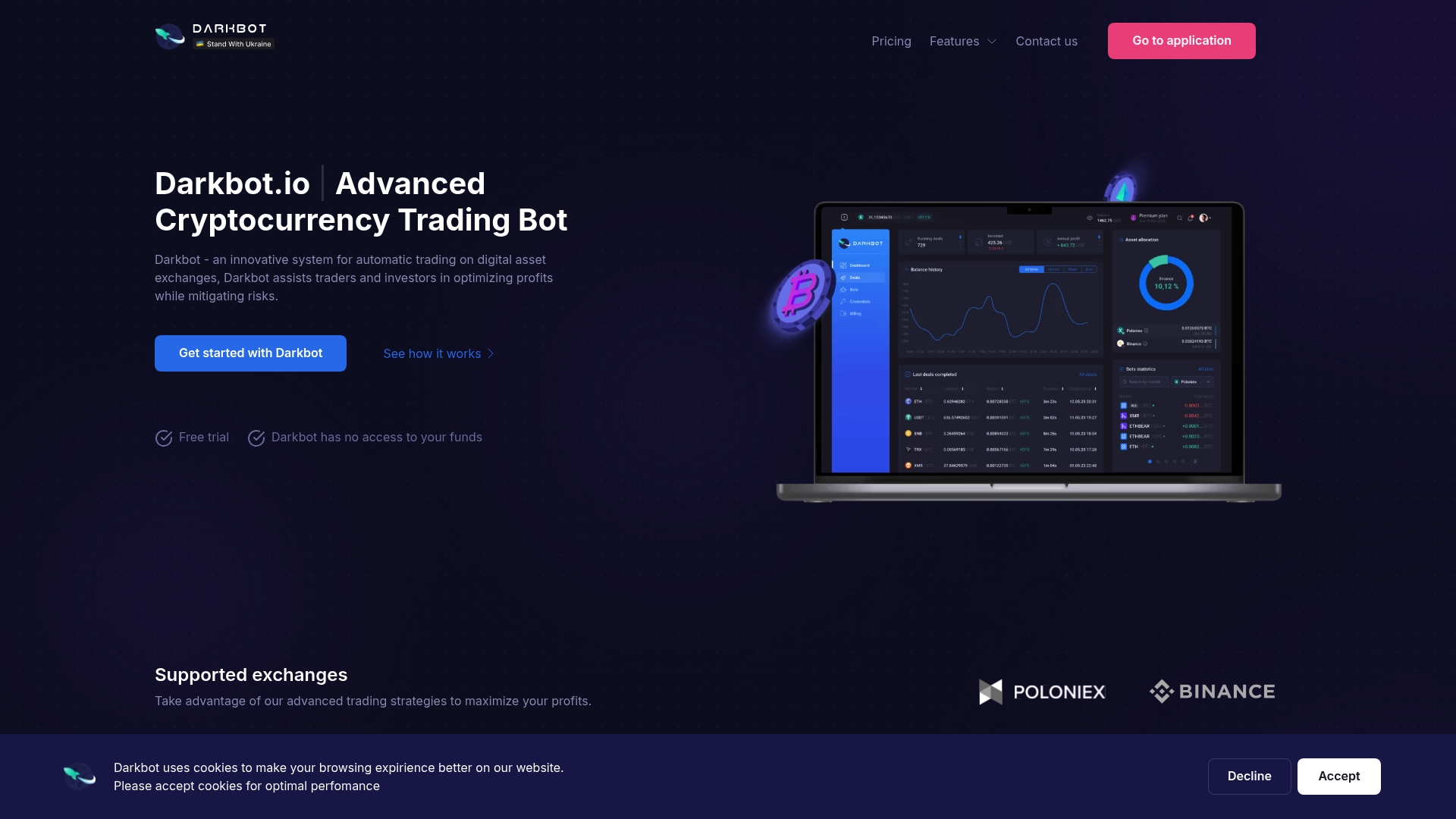
The platform is available across four tiers on the Darkbot pricing page: a Free plan for initial testing, standard and premium paid tiers, and an Enterprise tier with pricing available on request. During any trial period, test the fundamentals covered throughout this comparison directly: connect exchange API keys and confirm the integration behaves as documented, import or build a strategy and run it through backtesting, switch to paper trading before risking capital, and configure risk rules and notification alerts. None of this replaces running your own backtests and paper trades before committing real funds. No platform, including this one, offers guarantees on trading outcomes.
Sources
- CFTC advisory: AI trading bots and fraud warning
- I tested 5 free trading bots — honest results (2025)
- Jesse project repository and docs
FAQ
Is Freqtrade Free to Use?
Yes, Freqtrade is free and open-source, with no subscription cost for the core software itself. Costs come from server hosting if you run it continuously and from exchange trading fees, not from the platform.
What Is the Most Successful AI Trading Bot?
No platform can be called the most successful, since performance depends on strategy quality, market conditions, and risk settings rather than the software alone. The CFTC warns against marketing that implies otherwise; the more useful question is which platform gives you reproducible backtesting and paper trading to verify a strategy before going live.
How Do You Make Money With Freqtrade?
Freqtrade itself doesn’t generate returns. It executes a strategy you configure and backtest, using Hyperopt to optimize parameters against historical data before you consider live deployment. Profitability depends entirely on the strategy’s logic and ongoing risk management, not the software.
Which Crypto Grid Trading Bot Is the Best?
Bitsgap and Pionex both offer dedicated visual grid trading tools, while OctoBot includes grid strategies as one of several open-source templates. The better fit depends on whether you want a cloud dashboard (Bitsgap), built-in exchange bots with no subscription (Pionex), or open-source customization (OctoBot).
Does Darkbot Offer Backtesting and Paper Trading?
Yes, Darkbot includes backtesting and paper trading modes so strategies can be validated before any live capital is committed. Current pricing for the Standard Plan ($12.50 per month) and Premium Plan ($25.00 per month) is listed on the Darkbot pricing page.

Start trading on Darkbot with ease
Come and explore our crypto trading platform by connecting your free account!
Free plan available • No credit card required