Crypto Risk Management Fundamentals: 63% Use Derivatives
Many traders believe risk management means avoiding all losses. That’s the wrong mindset. Crypto’s volatility demands managing losses, not eliminating them. This guide covers quantitative metrics, behavioral discipline, portfolio diversification, automation, and compliance. You’ll learn how proper fundamentals reduce losses, mitigate emotional bias, and improve profitability in volatile markets.
Key Takeaways
| Point | Details |
|---|---|
| Crypto volatility | Crypto markets show 3-5x higher volatility than traditional assets, requiring specialized risk metrics. |
| Framework necessity | 70% of losses stem from missing structured risk frameworks, not market crashes alone. |
| Automation benefits | Automated trading bots enforce risk controls and eliminate emotional errors for busy traders. |
| Diversification value | Low-correlated crypto assets reduce portfolio risk significantly when combined strategically. |
| Operational pillars | Security, insurance, and regulatory compliance are essential components of comprehensive risk management. |
Understanding Crypto Market Volatility
Crypto markets operate differently than stocks or bonds. Annual volatility in cryptocurrencies typically ranges 60% to 120%, compared to just 15% to 25% in traditional markets. This extreme fluctuation creates unique challenges for traders.
Several factors drive this volatility. Market sentiment shifts rapidly based on social media trends. News events trigger immediate price reactions. Liquidity fluctuations cause sudden swings during low-volume periods.
Price movements that take months in stock markets can happen in hours with crypto. Bitcoin might gain 15% overnight, then drop 10% the next day. These rapid changes create opportunities but also magnify losses.
This environment demands specialized measurement tools. Standard risk models built for traditional assets fail in crypto market volatility. You need frameworks designed specifically for digital assets.
Common volatility drivers include:
- Market sentiment and social media trends
- Breaking news and regulatory announcements
- Liquidity fluctuations during off-peak hours
- Whale transactions moving large capital
- Macroeconomic events affecting risk appetite
Importance of Structured Risk Frameworks
Risk in crypto trading cannot be eliminated. You can only manage it systematically. Without a formal framework, you’re gambling, not trading.
Here’s a sobering fact:
70% of investor losses result from absent or inadequate risk frameworks rather than pure market volatility.
A solid framework defines your position sizing rules. It establishes when to exit losing trades. It specifies which metrics you’ll monitor daily.

Structured rules reduce emotional reactions during market chaos. When Bitcoin drops 20% in a day, your framework tells you exactly what to do. No panic decisions. No revenge trading.
Frameworks build trader confidence through consistency. You know your maximum risk per trade. You understand your portfolio’s worst-case scenario. This clarity helps you sleep at night.
The most successful crypto traders follow risk frameworks religiously. They treat risk management as seriously as their entry strategies. This discipline separates profitable traders from the majority who lose money.
Key Metrics for Quantitative Risk Control
Quantitative metrics transform vague risk concerns into actionable data. These numbers guide every trading decision objectively.
Volatility measures how much prices fluctuate over time. Track 7-day and 30-day volatility to understand current market conditions. Higher volatility means you should reduce position sizes.
Maximum drawdown shows your worst-case portfolio loss from peak to trough. If your drawdown exceeds 25%, your risk is probably too high. This metric reveals how much pain you might endure.
The Sharpe ratio balances returns against risk. A ratio above 1.0 indicates decent risk-adjusted performance. Above 2.0 is excellent. This helps compare different strategies fairly.
Correlation coefficient measures how assets move together. Values near 1.0 mean assets move identically. Values near 0 indicate independence. Negative values show inverse relationships.
| Metric | Purpose | Calculation Basis |
|---|---|---|
| Volatility | Measure price fluctuation | Standard deviation of returns |
| Max Drawdown | Worst-case loss assessment | Peak to trough decline percentage |
| Sharpe Ratio | Risk-adjusted return | Excess return divided by volatility |
| Correlation | Diversification analysis | Covariance between asset returns |
Common quantitative controls include:
- Stop-loss percentages (typically 2-5% per trade)
- Maximum position size limits (often 10-20% of capital)
- Portfolio-level exposure caps
- Hedge ratios using derivatives
- Rebalancing thresholds
Pro tip: Derivatives such as futures and options are used by 63% of institutional investors to hedge crypto price volatility effectively without predicting market direction.
Imagine you hold $10,000 in Bitcoin. Your framework says no single trade risks more than 3%, or $300. You set a stop-loss 4% below your entry. This means your position size can’t exceed $7,500. These quantitative risk metrics prevent catastrophic losses.
Behavioral Discipline in Crypto Trading
Numbers alone won’t save you from yourself. Emotional control determines whether you profit or lose in crypto trading.
Panic selling during crashes locks in losses permanently. Fear-driven trades abandon your strategy at the worst possible moment. These emotional errors destroy more accounts than bad strategies.
Consistent trading requires emotional discipline. You must follow your plan during euphoria and despair. When everyone screams “buy,” you check your metrics. When panic spreads, you trust your framework.
Common behavioral pitfalls include:
- Panic selling during sharp corrections
- Overconfidence after winning streaks
- Loss aversion leading to holding losers too long
- Confirmation bias ignoring contrary signals
- Revenge trading after losses
- FOMO buying at market tops
Pro tip: Implement pre-defined rules or automation to minimize human error and enforce discipline automatically.
Mindset training helps maintain discipline. Keep a trading journal documenting decisions and emotions. Review it weekly to identify patterns. Recognize when fear or greed influences you.
Behavioral discipline complements quantitative controls perfectly. Your metrics tell you what to do. Your discipline ensures you actually do it. Together, they create sustainable trading success.
Portfolio Diversification and Correlation
Diversifying your crypto portfolio reduces volatility without sacrificing returns. The key is choosing assets with low correlation to each other.
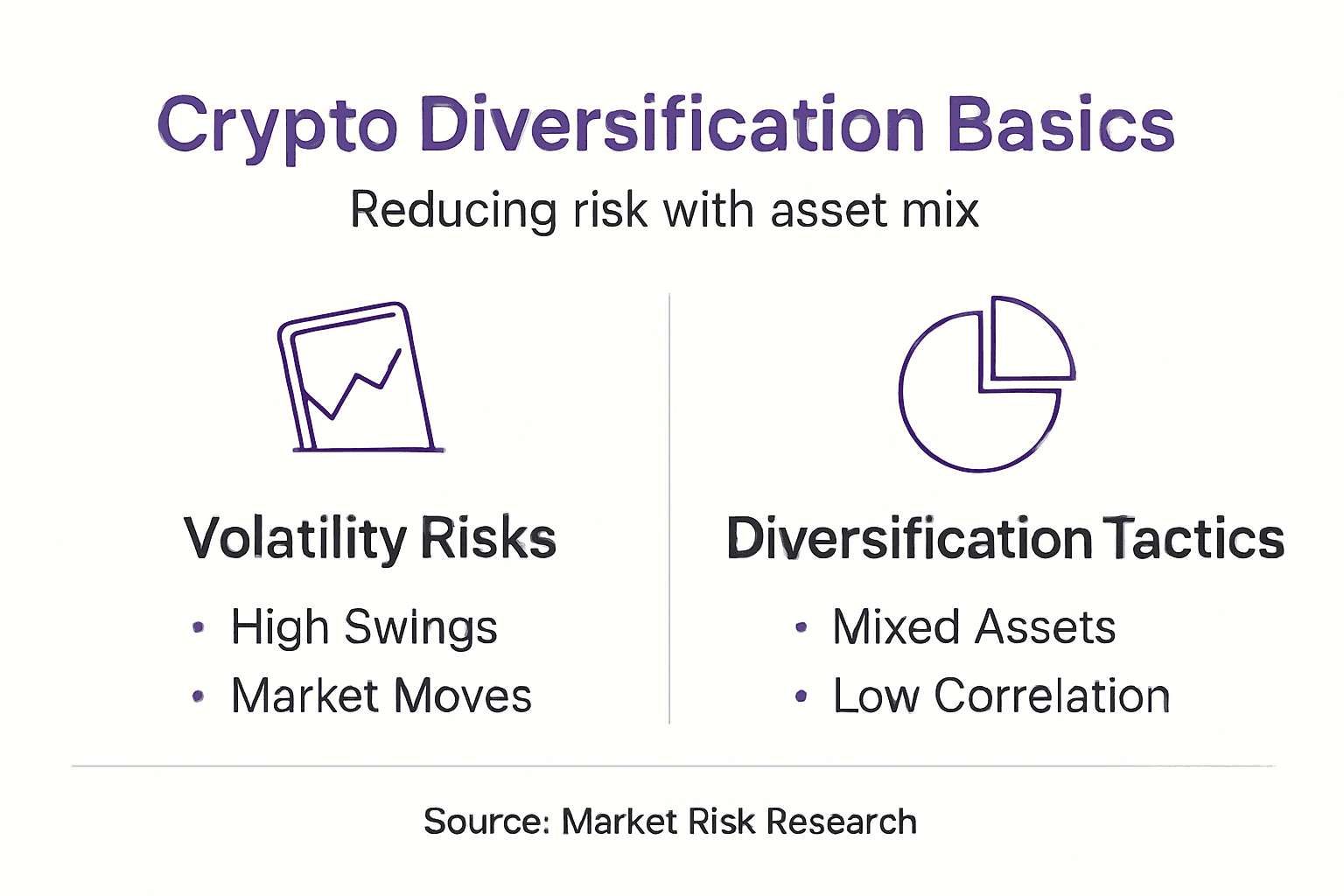
Correlation coefficients range from +1.0 to -1.0. A value of 1.0 means two assets move identically. Zero means no relationship. Negative values indicate inverse movement.
Compare two portfolio scenarios:
| Portfolio Type | Asset Correlation | 30-Day Volatility | Max Drawdown |
|---|---|---|---|
| High Correlation | 0.85-0.95 | 78% | 42% |
| Low Correlation | 0.15-0.35 | 48% | 28% |
Stablecoins provide zero or negative correlation to volatile altcoins. Adding 20-30% stablecoins smooths portfolio returns significantly. Non-correlated altcoins from different sectors (DeFi, gaming, infrastructure) also help.
Diversification benefits include:
- Reduced portfolio volatility
- Lower maximum drawdown percentages
- Smoother equity curves
- Enhanced Sharpe ratios
- Protection against sector-specific crashes
Diversification has limits. It reduces idiosyncratic risk (specific to individual assets) but not systemic risk. When Bitcoin crashes hard, most altcoins follow. Still, crypto portfolio diversification significantly improves risk-adjusted returns.
Practical application matters. Check correlations monthly using rolling 30-day data. Rebalance when correlations drift or positions become too concentrated. Aim for 5-8 holdings with average correlation below 0.50.
Automation in Risk Management
Automated trading bots enforce risk rules without emotional interference. They monitor markets 24/7, never sleeping or getting distracted.
Automation benefits are compelling. Bots execute trades instantly based on predetermined criteria. They never hesitate or second-guess. They apply stop-losses consistently, even during 3am crashes.
Key automated features include:
- Automatic stop-loss execution
- Take-profit orders at target levels
- Portfolio rebalancing on schedule
- Multi-strategy simultaneous execution
- Real-time risk metric monitoring
Running multiple bots simultaneously diversifies your strategies. One bot might trade Bitcoin momentum while another arbitrages stablecoins. This approach reduces strategy-specific risk.
Automation advantages:
- Saves countless hours of manual monitoring
- Improves discipline by removing emotions
- Provides real-time risk analytics dashboards
- Executes complex strategies beyond human speed
- Scales effortlessly across multiple exchanges
Pro tip: Regularly review and optimize bot parameters based on performance data to adapt to changing market conditions.
Automated crypto trading bots with configurable stop-loss, take-profit, and portfolio rebalancing functions reduce emotional decision-making and improve risk mitigation efficiency for busy traders. This makes automation in crypto risk management essential for professionals with limited time.
Earlier we discussed behavioral discipline. Automation enforces those principles automatically. Your bot follows the rules even when you feel tempted to override them. This consistency compounds into substantial benefits of trading bots over time.
Security, Insurance, and Regulatory Compliance
Operational risks extend beyond market volatility. Cybersecurity threats, insurance needs, and regulatory compliance complete your risk framework.
Cybersecurity risks are substantial. Hackers target crypto exchanges and wallets constantly. Phishing attacks steal credentials. Malware compromises devices. One security lapse can erase your entire portfolio.
Insurance coverage is growing rapidly:
Institutions in 2025 use crypto-specific insurance policies extensively, with $6.7 billion in coverage issued globally—a 52% increase from last year—to protect against theft and hacking risks.
Regulatory requirements are evolving quickly. AML/KYC compliance and tax reporting are becoming integral to crypto risk management frameworks to avoid legal and financial penalties. The U.S. Section 6045 requires detailed transaction reporting.
Operational risk mitigation steps:
- Enable multi-factor authentication everywhere
- Use hardware wallets for long-term holdings
- Keep exchange balances minimal
- Maintain compliant transaction records
- File accurate tax reports annually
- Review insurance options for large portfolios
Ignoring these risks invites catastrophic consequences. A security breach can wipe out years of profits instantly. Regulatory violations bring fines and legal troubles. Insurance provides valuable protection, especially for institutional capital.
Security best practices and regulatory focus areas:
- Regular security audits of systems and practices
- Cold storage for majority of holdings
- Compliance with KYC/AML requirements
- Accurate cost basis tracking for taxes
- Understanding jurisdiction-specific rules
Common Misconceptions About Crypto Risk Management
Misunderstandings about risk management lead traders astray. Clarifying these prevents costly mistakes.
Many believe risk management means avoiding all losses. Wrong. Losses are inevitable. Risk management controls their size and frequency. Accept small losses to prevent large ones.
Some think crypto risk only involves price volatility. Security risks, behavioral errors, and regulatory issues are equally important. Comprehensive frameworks address all dimensions.
Others assume technical tools alone suffice. Emotional discipline matters just as much as stop-losses. The best risk metrics fail if you override them emotionally.
Common misconceptions corrected:
- Misconception: Risk management eliminates losses / Reality: It manages and limits losses systematically
- Misconception: Only price risk matters / Reality: Security, behavioral, and regulatory risks are critical too
- Misconception: Automation replaces all human judgment / Reality: Automation enforces rules but requires human oversight and updates
- Misconception: Diversification guarantees safety / Reality: Diversification reduces but cannot eliminate systemic risk
- Misconception: Risk management is only for large accounts / Reality: Small accounts need risk management even more to survive
Effective risk management balances multiple pillars simultaneously. Quantitative metrics guide decisions. Behavioral discipline ensures execution. Diversification spreads exposure. Automation maintains consistency. Security and compliance protect operations.
Set realistic expectations from the start. Risk management won’t make you rich overnight. It preserves capital during downturns, allowing you to profit during recoveries. This patience and discipline compound into sustainable success.
Discover Automated Crypto Risk Management with Darkbot
Ready to implement these fundamentals practically? Darkbot’s AI-powered trading bot automates comprehensive risk management for busy traders and risk-averse investors.
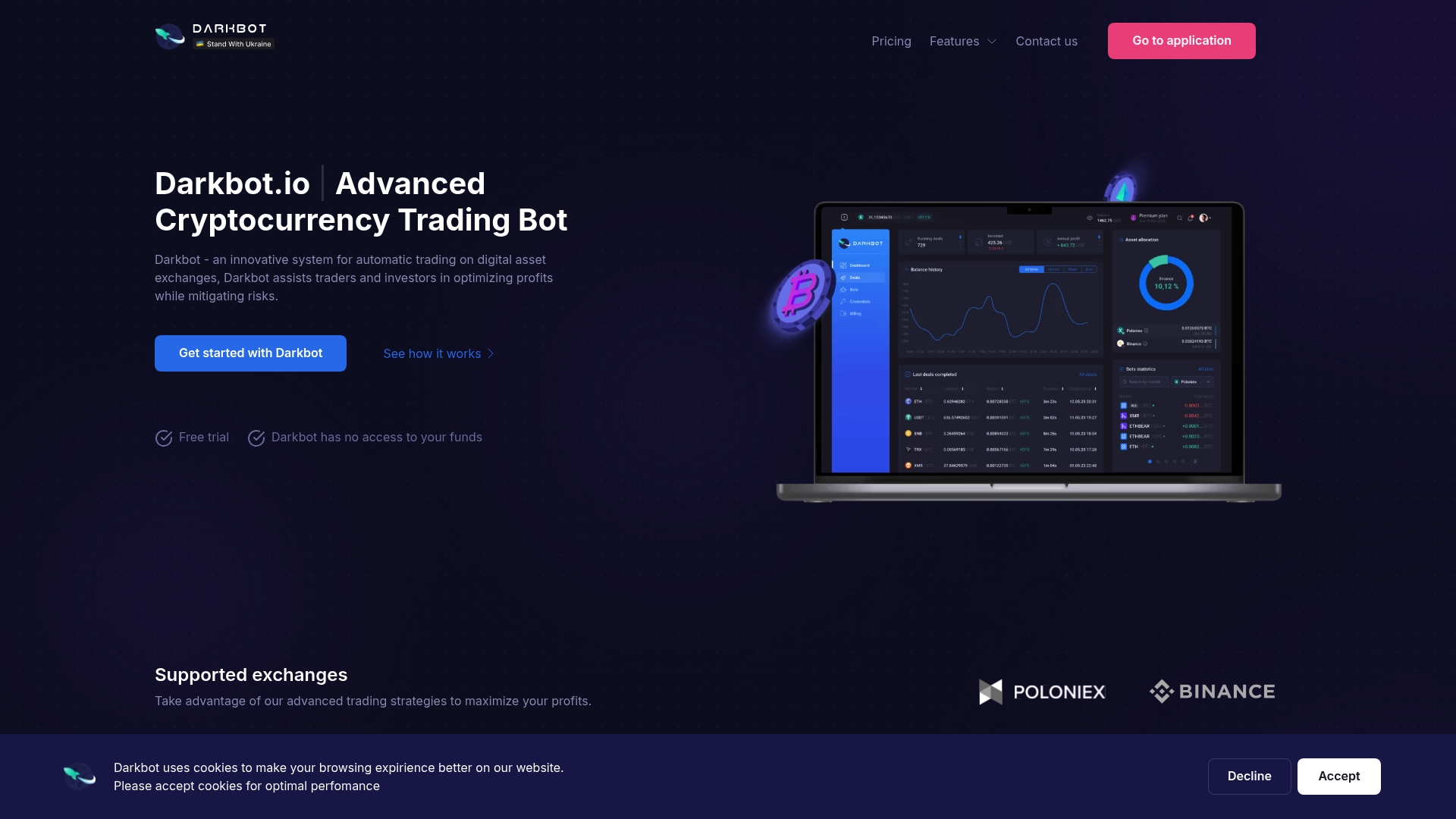
Darkbot offers configurable stop-losses, take-profit targets, and automated portfolio rebalancing. You set the rules once. The bot enforces them 24/7 without emotion or fatigue. This eliminates behavioral errors while capturing opportunities around the clock.
Setting up takes minutes with our trading bot setup guide. Connect your exchange via API keys. Configure your risk parameters. Launch multiple strategies simultaneously. Our interface makes complex automation accessible to everyone.
Learn how to automate crypto trading and discover why thousands trust Darkbot for disciplined, consistent risk control in volatile markets.
Frequently Asked Questions
What is the most important crypto risk metric to monitor daily?
Maximum drawdown and current volatility are the two most critical daily metrics. Drawdown shows your portfolio’s pain threshold, while volatility indicates required position size adjustments. Monitor both to maintain appropriate risk exposure.
How does automation improve crypto risk management?
Automation enforces risk rules consistently without emotional interference. Bots execute stop-losses instantly, rebalance portfolios on schedule, and monitor markets 24/7. This eliminates panic decisions and ensures disciplined strategy execution even during extreme volatility.
Can portfolio diversification eliminate crypto market risk?
No, diversification reduces idiosyncratic risk but cannot eliminate systemic market risk. When Bitcoin crashes severely, most cryptocurrencies follow. However, low-correlated assets significantly reduce portfolio volatility and improve risk-adjusted returns compared to concentrated holdings.
What percentage of capital should I risk per trade?
Most professional traders risk 1-3% of total capital per trade, with 2% being most common. Never exceed 5% on any single position. This ensures you can withstand multiple consecutive losses without catastrophic portfolio damage.
How often should I rebalance my crypto portfolio?
Rebalance monthly or when any position exceeds its target allocation by 5-10 percentage points. More frequent rebalancing increases transaction costs without meaningful benefit. Less frequent rebalancing allows excessive concentration risk to develop over time.
Is crypto insurance worth the cost for individual traders?
For portfolios exceeding $50,000, crypto insurance becomes cost-effective protection against exchange hacks and theft. Smaller accounts should prioritize security best practices like hardware wallets and multi-factor authentication rather than paying insurance premiums.
Recommended

Start trading on Darkbot with ease
Come and explore our crypto trading platform by connecting your free account!
Free plan available • No credit card required