API Trading Advantages in 2025: What Crypto Traders Need to Know

TL;DR:
- API trading in 2025 offers significant advantages like millisecond execution and scalable automation that surpass manual efforts. Its modular architecture enhances reliability, security, and rapid integration across multiple exchanges, enabling traders to operate more efficiently and securely. Proper API security and disciplined strategy design are critical for maximizing the benefits of automated trading systems.
Crypto markets run around the clock across dozens of exchanges, generating more data and order flow than any manual process can handle. The advantages of API trading in 2025 are not theoretical. They are structural. Application Programming Interfaces, the standard term for what traders call “trading APIs,” give software direct programmatic access to exchange infrastructure, bypassing the latency and error rates that manual trading introduces. This article breaks down ten concrete advantages, covering execution speed, automation depth, risk architecture, data access, and ecosystem design, so you can evaluate what API-driven trading actually delivers before building or adopting a system.
Key Takeaways
| Point | Details |
|---|---|
| Execution speed gains are measurable | API orders execute at millisecond levels, reducing slippage in fast-moving crypto markets. |
| Automation scales what manual trading cannot | Programmatic logic manages multiple assets and venues in parallel without additional operational effort. |
| Modular architecture isolates failures | Separating data, execution, and portfolio layers limits how far a single fault can propagate through a system. |
| Real-time data quality depends on protocol | WebSocket streaming provides lower-latency, persistent market data compared to REST polling. |
| Security must be built in, not added later | API key lifecycle management and access controls are integral to any systematic trading setup. |
1. Millisecond execution: the core advantage of API trading in 2025
API trading connects software directly to exchange infrastructure, replacing the human click-to-order sequence with predefined commands that execute in milliseconds. In crypto markets where a single minute can represent a 1% price swing, that difference is not cosmetic. It directly affects fill quality and slippage.
Manual order entry introduces three consistent failure points: reaction time, input errors, and interface latency. APIs remove all three. The order logic runs in software, the parameters are fixed, and the connection to the exchange is persistent rather than initiated on demand.
Pro Tip: When evaluating API protocols, prioritize WebSocket over REST for any time-sensitive strategy. FIX protocol achieves sub-millisecond latency, while REST median latencies run between 22 and 25 ms and WebSocket between 72 and 89 ms. For most retail crypto traders, WebSocket represents the practical optimum given exchange support and infrastructure cost.
2. Automation that replaces repetitive execution with consistent logic
The most direct benefit of API trading is replacing human-repeated actions with programmatic rules. A strategy defined once in code runs consistently across hundreds of trades without fatigue, distraction, or emotional deviation. That consistency is itself a performance variable in systematic trading.
The benefits of API trading extend beyond individual trade execution to full portfolio automation:
- Parallel asset management: A single API-connected bot can monitor and trade dozens of assets simultaneously, something no manual process can replicate at the same speed or consistency.
- Conditional order chains: Stop-loss, take-profit, and rebalancing triggers fire automatically when conditions are met, with no human delay in the loop.
- Strategy iteration without system rebuilds: API-first architecture enables modular pipelines where signal sources and execution layers can be swapped independently. Changing a signal model does not require rewriting the order routing layer.
- Webhook-based alert execution: Modern retail traders connect signal platforms to exchange APIs through webhooks, automating execution without writing exchange-specific code for each venue.
This architecture matters because it decouples strategy logic from execution infrastructure. As your strategy evolves, the system evolves with it incrementally rather than requiring a rebuild from scratch.
3. Reliability through modular API architecture
One of the less-discussed API trading trends in 2025 is the shift toward layered system design. Separating market intelligence, streaming, execution, and portfolio layers into dedicated APIs reduces the blast radius when something breaks. If the market data feed goes down, your execution layer keeps functioning. If the portfolio tracking API has an issue, your order management continues.
A practical approach to building reliability into API-based systems follows a clear sequence:
- Define layer boundaries. Assign each functional responsibility, data ingestion, order routing, portfolio state, to a separate API integration. Never mix concerns in a single connection.
- Use dedicated testing environments. Kraken’s UAT environment mirrors production endpoints exactly, allowing full strategy validation before live deployment. Most major exchanges offer comparable sandbox environments.
- Implement lifecycle security controls. NIST guidelines recommend identifying vulnerabilities and applying multilayer controls across the entire API lifecycle, not just at the point of initial connection.
- Rotate and scope API keys. Least-privilege access, where each key is scoped to only the permissions it needs, limits the operational risk if a key is compromised.
Pro Tip: Never use a single API key with full permissions across your entire system. Scope separate keys to read-only data feeds, order execution, and withdrawal functions independently. This practice, described in depth in resources on API key security, significantly reduces exposure if one credential is leaked.
4. Real-time market intelligence at the data layer
Manual traders work with delayed or periodically refreshed data by default. API-connected systems can access tick-by-tick order book depth, trade history, and funding rate changes as they happen. That data quality difference directly affects the accuracy of any signal or decision model running on top of it.
The protocol you use for data access determines the quality of what your system sees:
| Protocol | Latency range | Connection type | Best use case |
|---|---|---|---|
| FIX | Sub-millisecond | Persistent, binary | Institutional HFT |
| WebSocket | 72–89 ms | Persistent, streaming | Active retail trading |
| REST | 22–25 ms per call | Request/response | Periodic data polling |
| gRPC | Variable, low | Persistent, streaming | Internal microservices |
WebSocket’s persistent connection with sequence numbers is the standard for detecting missed messages and maintaining data integrity in systematic trading. REST polling introduces polling overhead and latency variance that can cause a system to act on stale prices. For any strategy that depends on order book depth or real-time spread data, WebSocket is not optional.
Combining a market intelligence API with a separate execution API, rather than relying on a single combined endpoint, also improves how API trading improves efficiency at the data layer. You get cleaner separation of read and write operations, and each layer can be optimized or replaced independently.
5. Multi-exchange reach without proportional complexity
Manually trading across three or four exchanges means logging into multiple interfaces, managing separate balances, and reconciling positions by hand. API-driven systems handle multi-exchange integration through a unified abstraction layer, where the same strategy logic routes orders to different venues without requiring separate manual workflows for each.
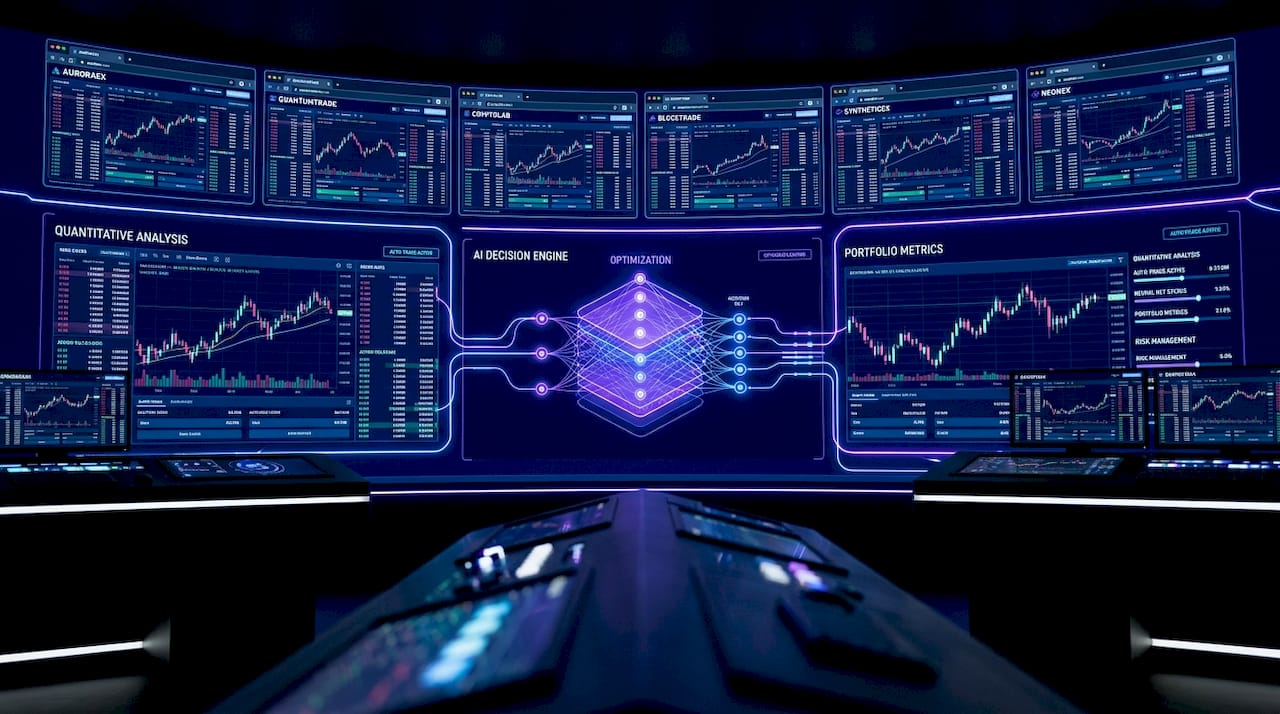
The practical consequence is arbitrage opportunity detection and cross-exchange rebalancing that operates faster than any manual process. It also means that adding a new exchange to your system is an integration task rather than a process redesign.
6. Faster adoption of new chains and features
The future of API trading in crypto is tightly connected to how quickly traders can integrate new infrastructure. Traditional, non-API systems require rebuilding significant portions of a platform every time a new chain or product type is added. API-powered ecosystems reduce integration timelines from months to days, with modular components that slot into existing pipelines.
| Integration approach | Time to add new chain | Operational risk | Compliance readiness |
|---|---|---|---|
| Traditional full build | Weeks to months | High (full system touchpoints) | Requires separate review |
| API-modular approach | Days to a week | Low (isolated component) | Auditable by design |
This speed of adoption is a meaningful competitive variable. Markets move faster than development cycles in non-modular systems. When a new perpetual contract or DeFi venue becomes relevant to your strategy, the ability to integrate it quickly changes your strategic options.
7. Compliance and audit readiness built into the architecture
One of the underappreciated API trading advantages in finance is the audit trail that API-based systems generate automatically. Every API call is logged with a timestamp, action type, and response. That log structure supports compliance review, post-trade analysis, and debugging without requiring separate record-keeping processes.
Modular API design also makes it easier to apply compliance controls at specific layers. Data access, order submission, and fund movement can each carry separate permission structures and logging configurations, which matters as regulatory scrutiny of crypto trading continues to increase.
8. Consistent strategy execution without behavioral drift
One structural problem in discretionary trading is that the same trader does not behave identically on day one and day ninety of running a strategy. Fatigue, recent losses, and market noise all shift execution behavior in ways that are hard to measure and harder to control. API-driven automation does not drift. The logic defined at setup is the logic that runs at trade 1,000.
This consistency is what makes AI-driven strategy optimization meaningful. You cannot reliably measure whether a strategy edge is real if the execution layer introduces behavioral noise. Clean, consistent API execution is a prerequisite for any honest strategy evaluation.
9. Lower operational burden per trade at scale
As trade frequency and asset count grow, the operational cost of manual execution grows proportionally. API-based systems do not scale that way. The marginal cost of the hundredth asset is close to zero once the integration exists. That changes the economics of running diversified, multi-asset strategies in ways that are not available to manual traders.
This is particularly relevant for cryptocurrency portfolio management, where systematic rebalancing across many assets would require constant manual intervention without automation.
10. Accessible onboarding for non-institutional traders
API trading used to require institutional-level engineering resources. That gap has narrowed significantly. Platforms like Alpaca now offer CLI tools and OAuth authentication supporting paper trading without complex configuration. This lowered barrier means individual traders and small funds can access the same execution infrastructure that larger operations rely on, without proportional setup overhead.
My take on what API trading actually delivers
I’ve spent enough time around systematic trading systems to be skeptical of how API trading gets framed in most content. The efficiency gains are real. The latency improvements are real. But I’ve seen traders automate poorly-designed strategies and get consistently bad results faster than they would have gotten them manually.
The genuine advantage of API-driven systems is not speed in isolation. It’s the discipline that good API architecture forces on you. When you have to define rules precisely enough for a machine to execute them, you cannot rely on intuition to paper over vague decision logic. That forcing function is where a lot of the real value lives.
Security is the part most traders treat as an afterthought. In my view, API risk belongs inside the trading strategy stack, not in a separate IT checklist. Secrets management, least-privilege key scoping, and auditable access controls are not overhead. They are part of what makes the system trustworthy enough to run without constant manual supervision.
The future of API trading belongs to traders who combine good execution infrastructure with well-specified strategy logic and treat security as a first-class design concern. Automation amplifies whatever is already in the system, good or bad.
— Grisha
How Darkbot puts these API advantages to work
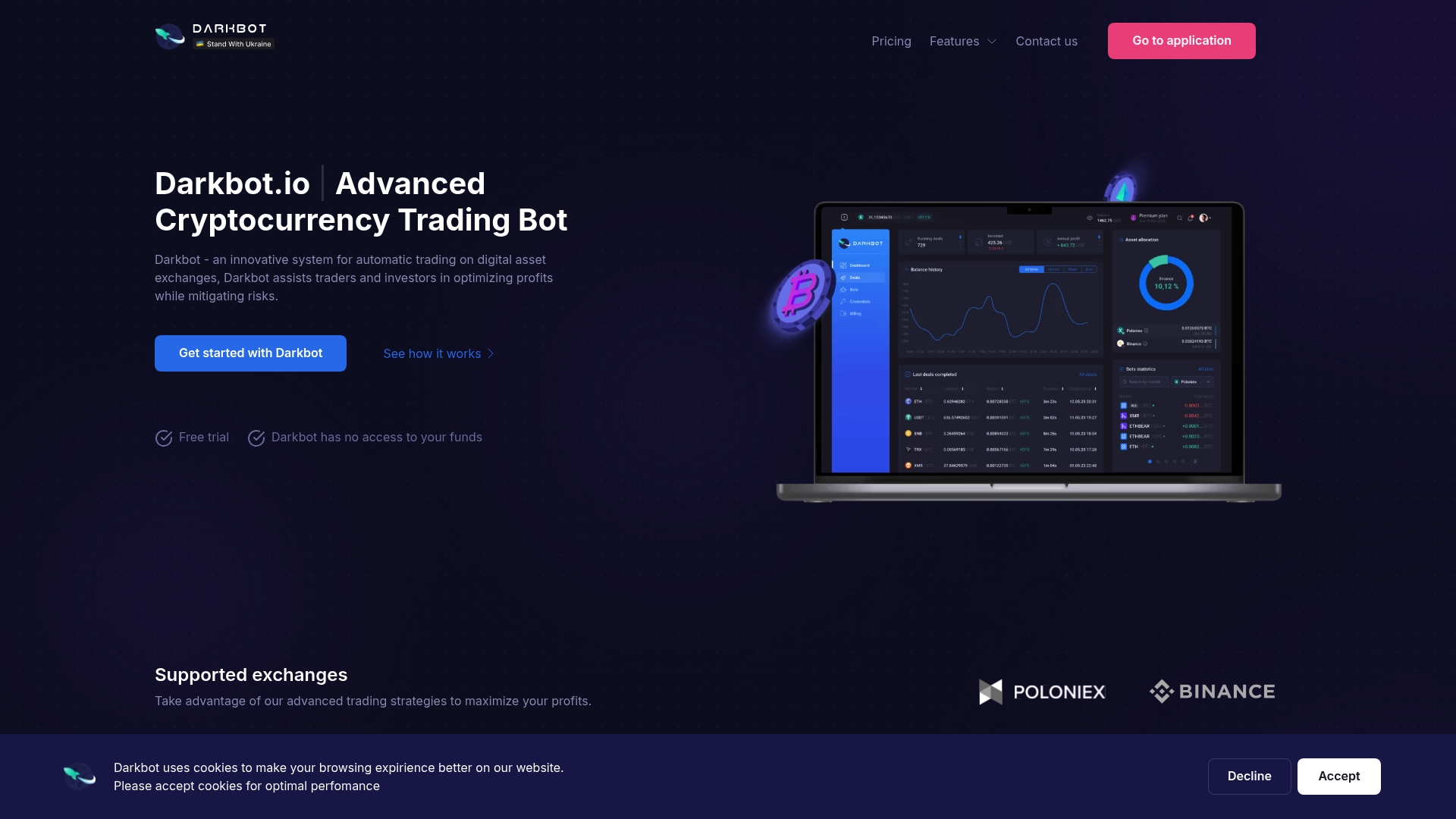
Darkbot is built on the same modular API principles described throughout this article. It connects to multiple exchanges through dedicated API integrations, separating market data ingestion, order execution, and portfolio tracking into distinct layers. That architecture means individual components can be updated or replaced without affecting the full system.
For traders who want systematic execution without building infrastructure from scratch, Darkbot’s automated trading platform applies AI-driven logic to evaluate conditions and execute orders consistently, with risk controls built into the execution layer rather than added as an afterthought. The portfolio management tools handle rebalancing and position tracking across multiple assets simultaneously, using the same API-first design principles that define reliable trading systems in 2025.
FAQ
What is API trading in crypto?
API trading uses programmatic interfaces to connect trading software directly to an exchange, enabling automated order management and real-time portfolio control without manual input.
Which API protocol is best for crypto trading speed?
FIX protocol achieves sub-millisecond latency for institutional use. For retail crypto traders, WebSocket provides persistent, low-latency streaming that outperforms REST polling in most active trading scenarios.
How does API trading reduce risk compared to manual trading?
Modular API architecture isolates system layers so that a failure in one component, such as a data feed, does not automatically affect order execution or portfolio tracking.
Do you need coding skills to use API trading in 2025?
Not necessarily. Webhook-based platforms and tools with CLI interfaces have made API trading accessible without writing exchange-specific code, though understanding API key management and system architecture remains important.
Is API key security a major concern in automated trading?
Yes. Applying least-privilege access, rotating credentials regularly, and scoping separate keys for data, execution, and withdrawals are standard practices for managing the security risks of automated API trading.
Recommended

Start trading on Darkbot with ease
Come and explore our crypto trading platform by connecting your free account!
Free plan available • No credit card required