Benefits of Automating Investments in Crypto Trading
TL;DR:
- Automating crypto investments enhances speed, consistency, and emotional discipline essential for 24/7 markets.
- It saves time through continuous rebalancing, tax optimization, and multi-exchange management, reducing manual errors.
Managing a cryptocurrency portfolio manually means watching price feeds at midnight, second-guessing rebalancing decisions during volatile swings, and executing trades faster than human reaction time allows. The benefits of automating investments are particularly significant in crypto, where markets run 24/7 and a few minutes of delay can shift outcomes meaningfully. Automation, often referred to in quantitative finance as systematic trading, replaces reactive decision-making with rule-based execution. This article breaks down the practical advantages, real limitations, and what to realistically expect before you hand your strategy over to an algorithm.
Key Takeaways
| Point | Details |
|---|---|
| Efficiency gains are real | Automation executes trades and rebalances portfolios continuously, reducing manual time investment significantly. |
| Behavioral discipline matters most | Removing emotion from trading decisions prevents costly panic-driven mistakes that erode long-term returns. |
| Tax optimization compounds over time | Daily automated tax-loss harvesting captures more opportunities than monthly reviews, increasing after-tax returns. |
| Automation requires active oversight | Bots can malfunction under unusual market conditions; kill-switches and periodic human review are non-negotiable. |
| Risk controls must be predefined | Automated stop-losses and exposure limits only work when configured carefully before deployment. |
1. The core benefits of automating investments in crypto
Algorithm-based management provides execution speed, continuous monitoring, and rule-driven consistency that manual trading simply cannot replicate. For crypto investors, this matters because exchanges operate across time zones with no closing bell. A systematic setup handles order placement, position sizing, and portfolio monitoring without requiring you to be at a screen.
The advantages of investment automation go beyond speed. Predefined rules prevent the kind of arbitrary decision-making that happens when markets move sharply. You set the parameters once; the system applies them uniformly every time.
- Continuous 24/7 market monitoring without manual intervention
- Faster order execution than humanly possible during volatile moves
- Consistent application of strategy rules regardless of market conditions
- Reduction in the cognitive load of managing multiple positions simultaneously
Pro Tip: Before automating any strategy, document the exact rules your system will follow in plain language. If you cannot explain the logic clearly, the algorithm will not execute it reliably either.
2. Time savings and operational efficiency
One of the most tangible reasons why automate investments comes down to time. Automation saves roughly two hours per portfolio rebalance cycle compared to doing the same work manually, according to data from Betterment. In crypto, where portfolios can drift significantly within a single session, that time savings compounds quickly across weekly or daily rebalancing needs.
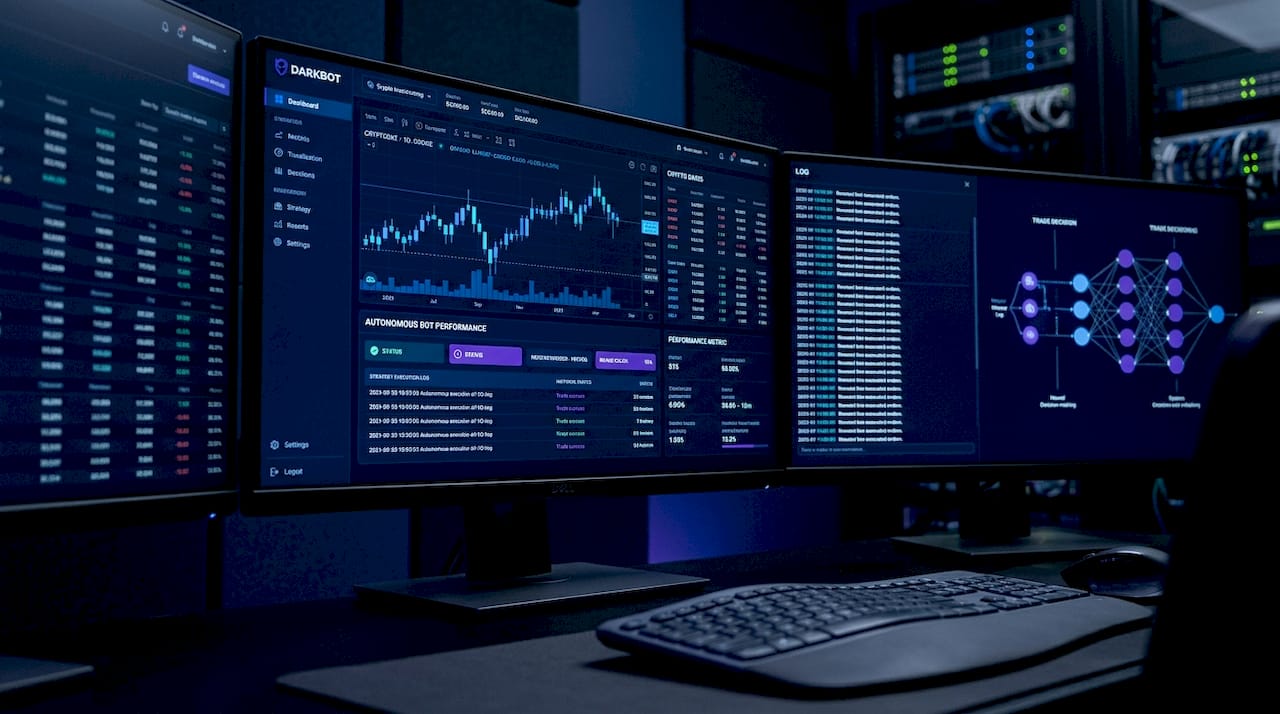
Routine tasks that automation handles include monitoring current allocations against targets, calculating which assets to buy or sell to restore balance, placing the corresponding orders across multiple exchanges, and logging transactions for tax reporting. Each of these steps is error-prone when done manually under time pressure. Automated systems complete them in seconds, with no arithmetic mistakes.
Direct benefits include:
- Scheduled contributions that deploy idle cash without requiring a manual trigger
- Automated rebalancing triggered by threshold drift rather than calendar reminders
- Trade logging that feeds directly into tax reporting workflows
Pro Tip: Set automated contribution schedules to coincide with regular income deposits. The consistency of systematic contributions outperforms trying to time when to invest.
3. Reduced emotional decision-making and behavioral risk
The greatest behavioral risk reduction benefit of automation comes from preventing panic selling and market timing attempts. Vanguard research estimates that behavioral coaching to prevent reactive trades during volatility may be worth up to 150 basis points of additional annual returns. That is not a minor edge.
Crypto markets amplify emotional responses. A 20% drawdown in a single day triggers loss aversion at a level most investors are not prepared for. Without automation enforcing predefined rules, the most common response is selling at the worst possible time.
Automated systems do not experience fear or euphoria. They execute the rules you established when you were thinking clearly, not the decisions you might make when markets are moving against you.
Key behavioral benefits include:
- Elimination of impulse trades triggered by short-term price movements
- Consistent execution of dollar-cost averaging regardless of market sentiment
- Prevention of overtrading caused by overconfidence after winning streaks
Vanguard’s behavioral nudges moved $6 billion from idle cash into diversified investments automatically, demonstrating how automation overcomes the inertia that stops investors from acting on their own stated intentions.
4. Continuous tax optimization through automated strategies
Tax efficiency is one of the most underappreciated benefits of investment technology in the crypto context. The core mechanism here is tax-loss harvesting: selling positions at a loss to offset taxable gains, then replacing them with correlated assets to maintain market exposure.
Doing this manually means reviewing your portfolio once a month at best. Automated systems analyze positions daily, which matters because crypto volatility creates harvesting opportunities that disappear within hours. Daily tax-loss harvesting generates approximately 30 basis points higher annualized tax alpha than monthly review methods, according to J.P. Morgan analysis.
The impact of this compounds through three mechanisms:
- Higher harvesting frequency. Daily scans capture intraday dips that weekly or monthly reviews miss entirely.
- Wash sale rule compliance. Automation tracks the 30-day window requirements systematically, avoiding the violations that would disqualify the tax benefit.
- Individual security management. Operating at the individual asset level rather than broad fund positions multiplies the number of harvesting opportunities available at any given time.
Real-world results confirm the scale of these gains. Wealthfront harvested $100 million in losses across just three volatile days in 2025, with 95% of clients seeing tax benefits that exceeded their advisory fees.
Automated wash sale management also handles the substitution logic systematically, replacing harvested positions with correlated assets that maintain the portfolio’s risk profile without triggering a disqualifying repurchase.
5. Systematic portfolio diversification and risk management
Automating portfolio management addresses one of the most consistent failure modes in crypto investing: concentration risk. When one asset performs exceptionally well, its weight in a portfolio grows. Without automated rebalancing, that drift continues until the portfolio becomes a de facto single-asset bet.
Algorithms maintain risk alignment by executing rebalancing rules continuously, keeping portfolios in line with predefined risk tolerance rather than letting drift accumulate unchecked. This matters most during bull markets, when the temptation to let winners run tends to override the logic of maintaining balanced exposure.
| Risk Control Mechanism | Manual Approach | Automated Approach |
|---|---|---|
| Portfolio rebalancing | Periodic, calendar-driven | Threshold-triggered, continuous |
| Stop-loss execution | Requires active monitoring | Executes instantly on rule breach |
| Concentration limits | Checked manually | Enforced on every trade |
| Exposure across exchanges | Tracked in spreadsheets | Aggregated and monitored in real time |
Specific automated risk controls include stop-loss orders that execute without manual intervention, position size limits that prevent overexposure to any single asset, and cross-exchange monitoring that gives a consolidated view of total portfolio risk.
Pro Tip: Set rebalancing thresholds rather than calendar schedules. Rebalancing when an asset drifts 5% from its target weight is more responsive than rebalancing every month regardless of drift.
6. Considerations and limitations of automating crypto investments
Automation is not passive. The risks of treating it as fully hands-off are well documented, with Robinhood explicitly warning that AI-driven crypto bots can perform poorly under unusual market conditions and may be difficult to monitor or halt in real time.
The distinction that matters most is between automation of systematic processes (rebalancing, contributions, stop-losses) and discretionary trading automation (bots making buy and sell decisions based on pattern recognition). The first category operates predictably because the rules are simple and static. The second category introduces model risk: the algorithm may behave in unexpected ways during market conditions that fall outside its training data.
Key limitations to understand before deploying any automated system:
- Automated systems require predefined rules; garbage logic in means garbage execution out
- Bots can amplify losses during flash crashes if stop-loss cascades are not properly configured
- API connections to exchanges carry security risks that require careful credential management
- System failures during high-volatility periods can leave positions unmanaged at the worst moments
- Periodic human review of strategy performance remains necessary even with full automation
Understanding the risks in automated trading is not a reason to avoid automation. It is a reason to implement it with defined kill-switches, position limits, and a regular review cadence.
7. Scaling strategy with multi-exchange automation
One practical advantage of systematic crypto trading that rarely gets enough attention is the ability to operate across multiple exchanges simultaneously. A manual trader can watch one or two screens effectively. An automated system monitors all connected exchanges with equal attention.
For investors holding positions on more than one platform, this matters for rebalancing across exchanges as well as for capturing arbitrage conditions when price differences emerge. The operational overhead of managing this manually grows exponentially with each additional exchange. Automated systems handle the complexity with consistent rule application regardless of how many connections are active.
This scalability also applies to running multiple strategies in parallel. A systematic framework can simultaneously execute a momentum strategy, a rebalancing rule set, and a tax-loss harvesting scan without those processes interfering with each other. Manual traders must choose which task to prioritize at any given moment.
My perspective on automation’s real role in crypto investing
I’ve been watching investors adopt automation for years, and the pattern I keep seeing is this: people come for the efficiency gains and stay for the behavioral discipline. The time savings are real, but they are not the main event.
What I’ve found consistently is that the investors who benefit most from automation are not the ones with the most sophisticated algorithms. They are the ones who were honest about their own reactive tendencies and built systems specifically to counteract them. The technology is not doing anything magical. It is enforcing decisions they would have made anyway if they had not been afraid or greedy in the moment.
The uncomfortable truth is that automation does not eliminate the need for strategic thinking. It frees you from execution-level decisions so you can focus on the higher-order questions: Is this strategy still valid? Is the risk allocation still appropriate? Is the market regime this was designed for still intact? Those questions require human judgment. The algorithm handles everything else.
My strong recommendation is to start with the least discretionary forms of automation first. Automated contributions, threshold-based rebalancing, and stop-loss rules are well-understood and predictable. Discretionary trading bots require far more testing, monitoring, and acceptance of model risk before they belong in a live portfolio. Cautious, incremental adoption beats ambitious overhaul every time.
— Grisha
Automate your crypto portfolio with Darkbot
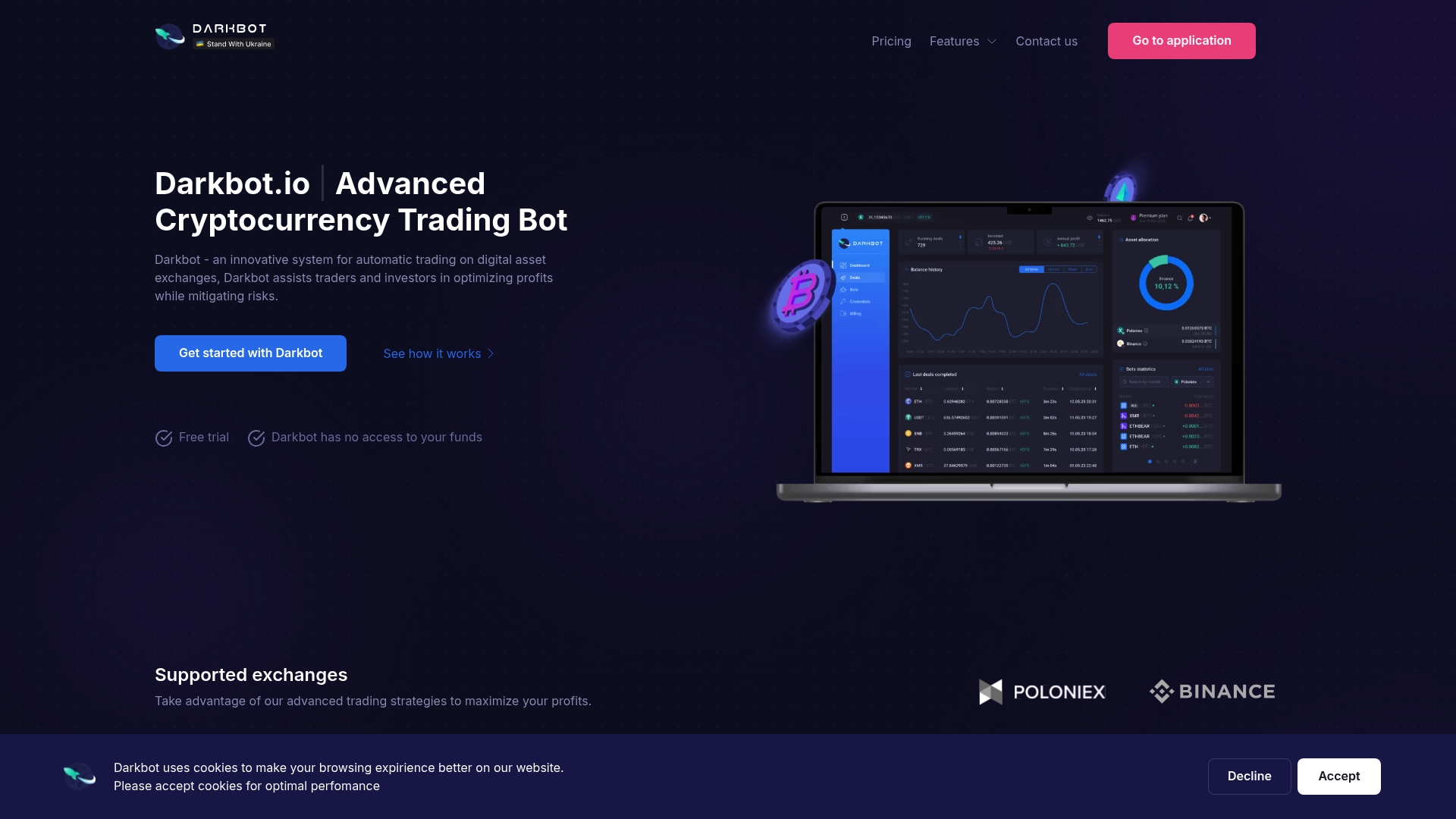
If you’ve worked through the logic of investment automation and want a platform built specifically for crypto, Darkbot offers the infrastructure to put these principles into practice. The platform connects to multiple exchanges via API, executes rule-based automated trading strategies, and provides real-time portfolio analytics without requiring you to manage execution manually. Darkbot’s AI operates as a mechanism for consistent rule application and probabilistic pattern evaluation, not as a speculative signal generator. For investors focused on systematic risk controls and structured portfolio management, it covers rebalancing, strategy customization, and position monitoring in one place.
FAQ
What are the main benefits of automating investments in crypto?
The core benefits include continuous execution without manual monitoring, removal of emotional decision-making, automated rebalancing to maintain risk targets, and tax-loss harvesting that captures opportunities faster than manual review allows.
Does automation eliminate the need to monitor your portfolio?
No. Automated systems require periodic human review to verify that strategies are performing as expected and to catch configuration errors or unexpected behavior during unusual market conditions.
How does automated tax-loss harvesting work?
The system scans your portfolio daily for positions showing unrealized losses, sells them to capture the tax benefit, and replaces them with correlated assets while tracking wash sale rules to avoid disqualifying the deduction.
Is automated crypto trading suitable for beginners?
Starting with structured automations like scheduled contributions and threshold-based rebalancing is reasonable for most investors. Discretionary trading bots carry additional model risk and are better suited to investors who understand the underlying strategy logic.
What risks should I watch for with crypto trading bots?
The primary risks include bot malfunction during flash crashes, API security vulnerabilities, strategy logic that breaks down in market regimes it was not designed for, and the compounding of errors when no manual override is active.
Recommended

Start trading on Darkbot with ease
Come and explore our crypto trading platform by connecting your free account!
Free plan available • No credit card required