Beginner's guide to automated trading: start easily
TL;DR:
- Automated trading removes emotional stress and allows 24/7 market participation.
- Proper setup includes secure API keys, cautious strategy selection, and continuous monitoring.
- Successful automation requires ongoing management, risk control, and realistic expectations about market risks.
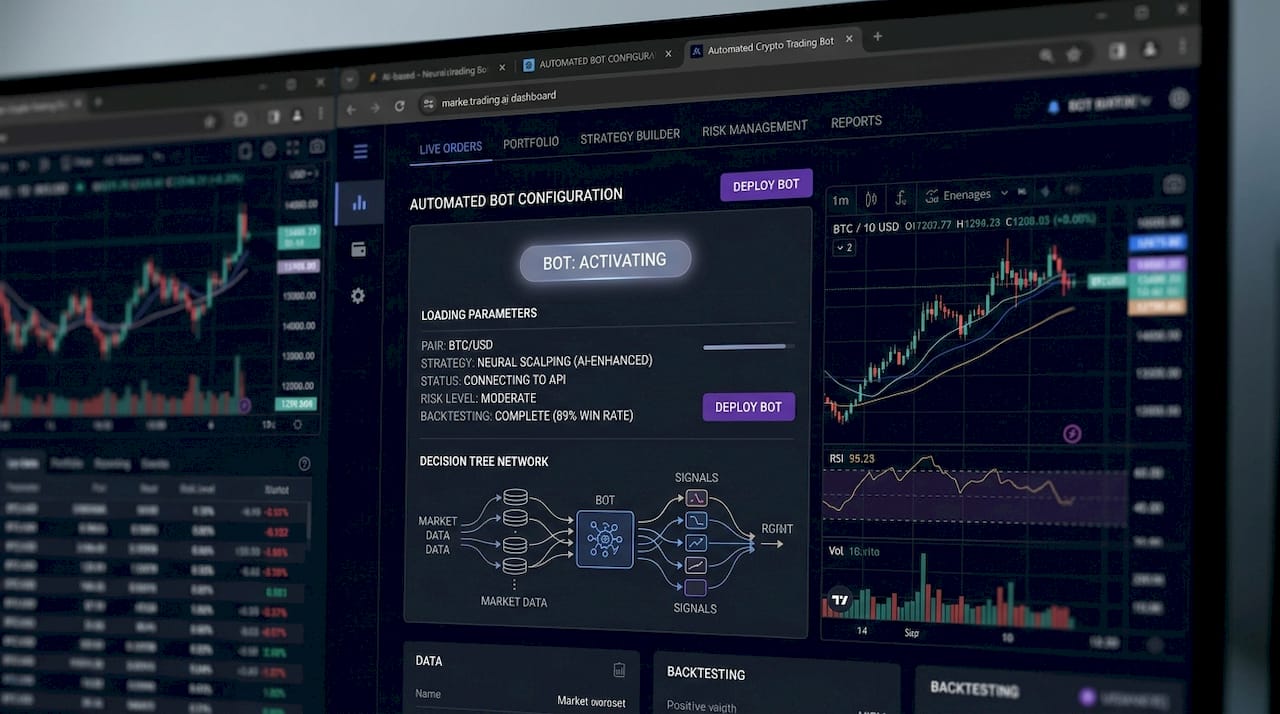
Manual crypto trading is exhausting. You’re watching charts at 2 a.m., second-guessing every move, and still missing opportunities because the market never sleeps. For beginners, this pressure can make crypto feel impossible. Automated trading changes that equation. By letting a bot execute trades based on preset rules, you remove emotion, save time, and stay active in the market around the clock. This guide walks you through everything you need to know in 2026: the tools required, how to set up your first bot, mistakes to avoid, and how to measure real results.
Key Takeaways
| Point | Details |
|---|---|
| Start safely | Use small amounts, secure API keys, and follow fundamental bot security rules. |
| Avoid beginner mistakes | Understand risks, test thoroughly, and don’t expect guaranteed profits. |
| Track and adjust | Monitor your bot’s results regularly and be ready to optimize for market changes. |
| No set-and-forget | Hands-off automation only works with continuous oversight and learning. |
What you need before you start with automated trading
Before you touch a single setting, it helps to understand what automated trading actually means. A trading bot is software that connects to a cryptocurrency exchange and places buy or sell orders automatically based on a strategy you define. Think of it like a programmable assistant that watches the market for you and acts when specific conditions are met.
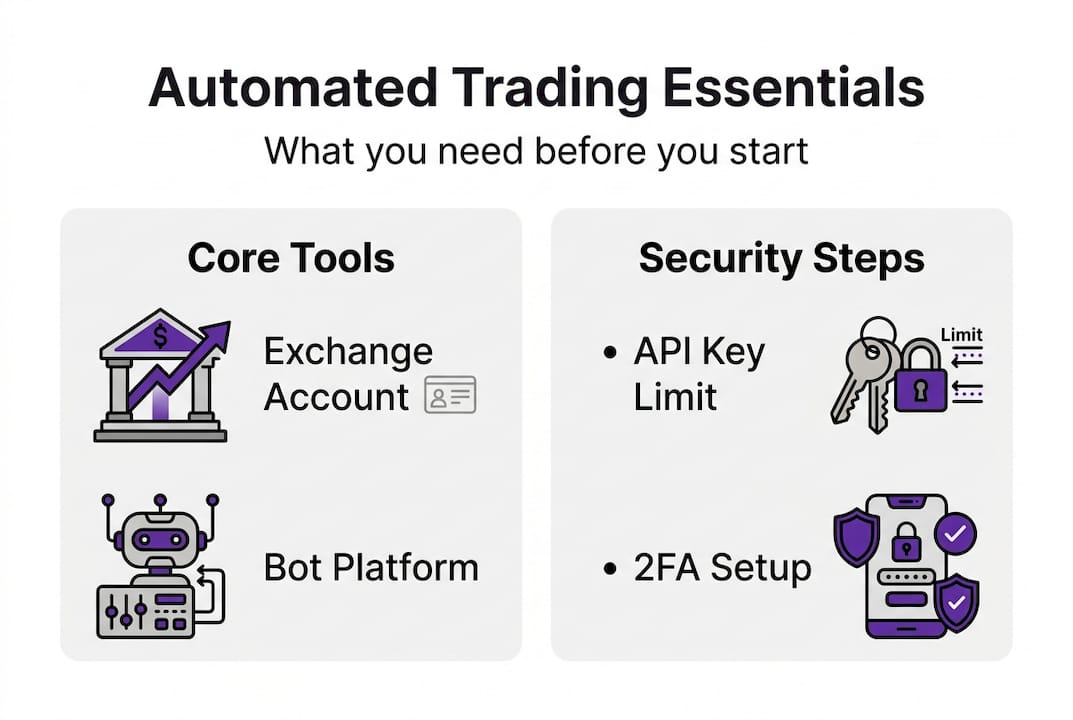
To get started safely, you need a few core things in place:
- A verified account on a reputable crypto exchange (such as Binance or Coinbase)
- A funded wallet with capital you can afford to lose
- A secure device with updated software and strong passwords
- A reliable trading bot platform with clear documentation
- A basic understanding of API key security before connecting anything
The connection between your bot and exchange happens through an API key, which is a unique code that gives the bot permission to trade on your behalf. This is where many beginners get tripped up. API failures and API key theft are real security risks in automated trading, and mishandling these credentials is one of the most common ways beginners lose funds.
| Tool | Purpose | Why it matters |
|---|---|---|
| Crypto exchange account | Where trades execute | Must support API connections |
| Trading bot platform | Automates your strategy | Needs strong security features |
| API key | Links bot to exchange | Must be stored securely |
| Initial capital | Funds your trades | Start small to limit exposure |
| Device security | Protects your setup | Prevents unauthorized access |
Following API integration best practices from day one is not optional. Restrict your API key permissions to trading only, never enable withdrawals, and never share your key with anyone. Security is the foundation everything else is built on.
Pro Tip: Use a dedicated email address and two-factor authentication for both your exchange account and your bot platform. This single step eliminates a huge category of risk before you even place your first trade.
Step-by-step: Setting up your first trading bot
Once the basics are in place, it’s time to set up your first automated system. The process is more straightforward than most beginners expect, as long as you follow each step carefully.
- Choose a reputable trading bot platform. Look for platforms with transparent pricing, active support, and a track record of security. Read reviews and check for common mistakes in automation that users report.
- Connect your exchange using secure API keys. Generate an API key in your exchange settings, restrict it to trade-only permissions, and enter it into your bot platform. Review the full API integration steps to make sure you don’t skip anything.
- Select a basic trading strategy. Most beginner-friendly platforms offer preset strategies like grid trading or dollar-cost averaging. Pick one that matches your risk tolerance and the asset you want to trade.
- Adjust risk settings and paper trade first. Paper trading means simulating trades with fake money. It lets you see how the bot behaves without risking real capital. Set stop-loss limits and position size limits before going live.
- Activate the bot and monitor it closely. Automation depends on exchange APIs, which can fail and require secure handling. Check in daily during your first two weeks.
| Step | Action | Key caution |
|---|---|---|
| 1. Choose platform | Research and sign up | Avoid unverified platforms |
| 2. Connect exchange | Generate and enter API key | Restrict to trade-only access |
| 3. Pick strategy | Select a preset or simple rule | Don’t over-complicate early on |
| 4. Test with paper trading | Run simulation mode | Never skip this step |
| 5. Go live | Activate bot with small funds | Monitor daily for first 2 weeks |
Pro Tip: Start with no more than 5% of your total crypto budget on your first bot. If something goes wrong during setup, your losses stay small and manageable.
Avoiding common mistakes and minimizing risks
Setting up a bot is just the beginning. Avoiding major mistakes is crucial for long-term results, and beginners tend to repeat the same errors over and over.
Here are the top five mistakes to watch out for:
- Skipping backtesting: Running a strategy without testing it on historical data is like driving blindfolded. Always backtest before going live.
- Ignoring trading fees: Fees add up fast, especially with high-frequency bots. A strategy that looks profitable on paper can lose money once fees are factored in.
- Mishandling API keys: Storing keys in plain text files or sharing them with third parties opens the door to theft.
- Over-optimizing for past data: A strategy that performed perfectly in a bull market may collapse in a sideways or bear market.
- No stop-loss settings: Without a stop-loss, a single bad trade can wipe out days of gains.
Market volatility, overfitting, slippage, and security threats are the primary risks that break beginner strategies. Understanding trading risks before you deploy capital gives you a serious edge over traders who learn these lessons the hard way.
“No trading bot guarantees profits. Every automated system carries risk, and market conditions can change faster than any strategy can adapt.”
The fix for most of these mistakes comes down to discipline. Use a checklist before activating any bot. Apply risk management tips like position sizing and diversification. And never assume that because a bot is running, you don’t need to pay attention.
Pro Tip: Set a weekly calendar reminder to review your bot’s performance. Even a five-minute check can catch a runaway loss before it becomes a serious problem.
Tracking performance and optimizing for better results
If you want consistent results, you need to track how your bot actually performs and adjust as needed. A bot that ran well last month may need tweaks this month because market conditions change and ongoing strategy adjustments are necessary.
Start by reviewing your bot’s trade logs regularly. Most platforms show you a full history of every order placed, including entry price, exit price, profit or loss, and fees paid. Focus on these key metrics:
- Win rate: What percentage of trades close in profit?
- Drawdown: What’s the largest drop in account value from a peak?
- Trades per day: Is the bot too active, generating excessive fees?
- Net profit/loss: After fees, are you actually ahead?
Here’s a regular performance verification checklist:
- Check trade logs every 3 to 7 days
- Compare current win rate to your baseline from paper trading
- Review total fees paid versus total profit earned
- Look for unusual spikes in trading volume or losses
- Adjust strategy settings if performance drops for two consecutive weeks
| Factor | Passive management | Active management |
|---|---|---|
| Time required | Minimal (weekly check) | Daily monitoring |
| Results | Steady but slower | Faster adaptation to market |
| Risk | Higher if market shifts | Lower with timely adjustments |
| Best for | Stable market conditions | Volatile or trending markets |
If your bot is showing signs of underperformance, don’t panic. Pause it, review the logs, and adjust one variable at a time. Changing multiple settings at once makes it impossible to know what actually improved results. Patience and methodical testing are your best tools here.

The truth most beginners miss about automated trading
Here’s the reality check most guides skip: automation is a tool, not a shortcut. A bot does exactly what you tell it to do. If your strategy is flawed, the bot will execute that flawed strategy perfectly, and lose money efficiently.
The biggest trap beginners fall into is assuming that once a bot is running, the work is done. It isn’t. Markets evolve. A grid strategy that thrives in a ranging market can bleed out in a strong trend. You need to keep learning, stay aware of what’s happening in the broader market, and treat your bot like a car that needs regular maintenance.
No automated system guarantees profits, and trader judgment remains vital even with the best tools available. The traders who succeed long-term aren’t the ones who found the perfect bot. They’re the ones who stayed curious, kept adjusting, and never stopped learning.
“The bot executes. You decide. Never confuse the two.”
Emotional discipline matters too. When a bot has a losing week, the instinct is to shut it down or change everything at once. Resist that. Review the data, make one change, and give it time. Protecting your bot security and profitability is an ongoing practice, not a one-time setup.
Ready to automate? Start with trusted tools
You’ve learned the essentials: what you need, how to set up a bot, what mistakes to avoid, and how to track real results. Now it’s time to put that knowledge into practice with tools built for exactly this purpose.
The Darkbot trading bot platform is designed with beginners in mind. It offers intuitive setup flows, built-in security features, and preset strategies you can customize as your confidence grows. You can also explore crypto portfolio management tools that help you track your assets, rebalance automatically, and stay in control without spending hours in front of charts. Start with a free plan, test the platform risk-free, and scale up when you’re ready.
Frequently asked questions
Is automated trading safe for beginners?
Automated trading can be safe if you follow security best practices, use reputable tools, and start small to minimize risk. Market volatility, strategy failures, and API key threats are the main risks to manage from day one.
How much money do I need to start with an automated trading bot?
You can start with a small amount, but make sure it meets your exchange’s minimum requirements and covers potential trading fees. Fees can erode profits quickly, so only use capital you can afford to lose.
What’s the biggest risk in crypto trading automation?
Strategy failure due to market volatility or poor configuration is the primary risk, closely followed by security issues like API key theft. Market shifts and API failures can both break a bot’s performance without warning.
Recommended
- Beginner’s guide to trading automation for crypto success
- Step by Step Trading Strategy Setup for Automation
- What is robot trading? A guide to automated crypto profits
- Step by Step Trading Workflow for Automated Crypto Success
- Trade Smarter with AI | Simple Trading Journal by TradeWise
- Trading System Installation Guide: Set Up Automated Trading 2026

Start trading on Darkbot with ease
Come and explore our crypto trading platform by connecting your free account!
Free plan available • No credit card required