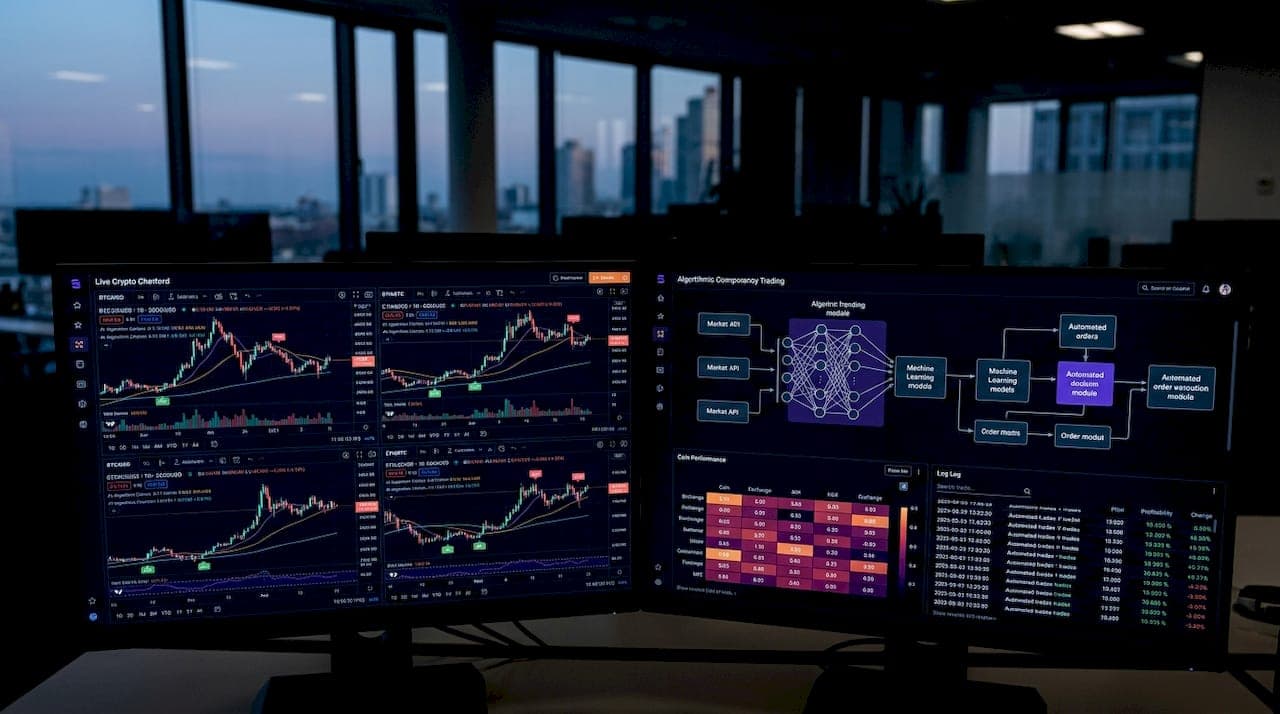
How AI shapes crypto markets: risks and opportunities
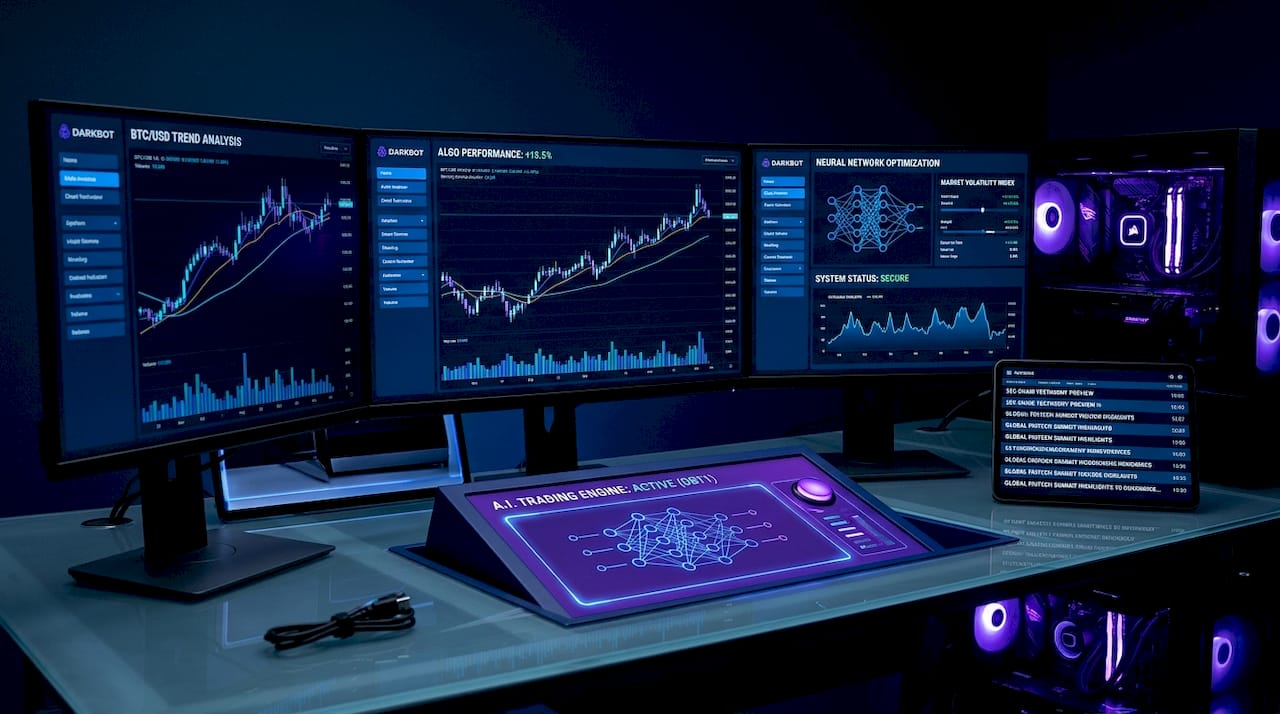
TL;DR:
- AI influences cryptocurrency markets by leading sector signals, modeling sentiment at scale, and magnifying liquidity effects during extreme events. Its impact is most pronounced during booms and crashes, reshaping asset relationships and market dynamics post-ChatGPT. Traders must incorporate cost considerations and regime monitoring to maintain sustainable advantages in AI-driven crypto trading.
Most traders assume AI is simply a sophisticated tool that reacts to the crypto market, scanning charts and placing orders faster than humans can blink. That assumption is dangerously incomplete. AI-related market signals can actually lead and reshape segments of the crypto market, particularly during booms and crashes, flipping the cause-and-effect relationship traders think they understand. This guide breaks down the mechanics behind that dynamic, what the research actually shows, and what it means for anyone running automated strategies in 2026.
Key Takeaways
| Point | Details |
|---|---|
| AI can lead crypto moves | AI-related signals often precede extreme crypto market swings, especially in DeFi and NFT sectors. |
| Sentiment data engineering is critical | How sentiment inputs are built and aggregated can make or break real AI trading performance. |
| Beware hidden costs in AI trading | Fees, slippage, and risk gating limit theoretical profits from AI-driven automated strategies. |
| Market structures can shift | AI-driven feedback loops and regime changes may quickly render old strategies ineffective. |
| Practical edge requires ongoing adaptation | Staying ahead means refining both AI models and trading execution as new dynamics emerge. |
The mechanics: How AI interacts with the crypto market
With the misconception reset, let’s break down the three main ways AI directly shapes the crypto landscape. This is not about AI being clever. It is about structural forces that move money, shift sentiment, and change how markets absorb information.
AI as a macro proxy. When a major AI company announces a breakthrough, releases a new model, or faces regulatory scrutiny, those events ripple immediately into crypto. Tokens tied to decentralized computation, smart contracts, and data infrastructure tend to react within hours. Traders and algorithms alike treat AI sector performance as a leading signal for where crypto enthusiasm, or fear, is heading next. This cross-sector spillover is not random noise. It reflects a genuine overlap between investor bases and thematic narratives.
Sentiment modeling at scale. Modern AI systems do not just read price data. They parse millions of posts, news articles, and forum threads every second, building a real-time picture of market mood. When that collective mood shifts, automated systems adjust positions simultaneously. The result is that crypto markets can move sharply in a direction before traditional price-based indicators show anything unusual.
Automated execution and liquidity dynamics. AI-driven trading efficiency transformation has fundamentally altered how markets absorb large orders. When thousands of bots pull liquidity at the same moment during a stress event, spreads widen dramatically and slippage spikes. The same effect works in reverse during rallies, compressing spreads and accelerating upside momentum. This is the core reason crypto tail events, both crashes and explosive runs, have become more frequent and more violent.
Here is a summary of the three main channels:
- Information spillover: AI sector news causes immediate repricing in correlated crypto assets, especially compute and smart contract tokens
- Sentiment forecasting: Automated mood models drive coordinated position changes before traditional signals activate
- Liquidity amplification: Simultaneous bot execution magnifies both upside and downside moves at the extremes
“AI uses cross-sector information flow, sentiment forecasting, and fast execution to shape crypto’s reaction to news and liquidity shifts, increasing sensitivity to extreme moves.”
Understanding these three mechanics is the foundation for everything else in this guide. The AI market impact is not theoretical. It shows up in price data, research datasets, and the lived experience of anyone who has watched a crypto portfolio swing 15% on AI news that had nothing to do with blockchain at all.
Evidence from recent research: Does AI dominate crypto moves?
Now that we know the major mechanics, let’s dig into what the data actually says about AI’s market leadership. The short answer is yes, but with important nuances about which assets and which market conditions matter most.
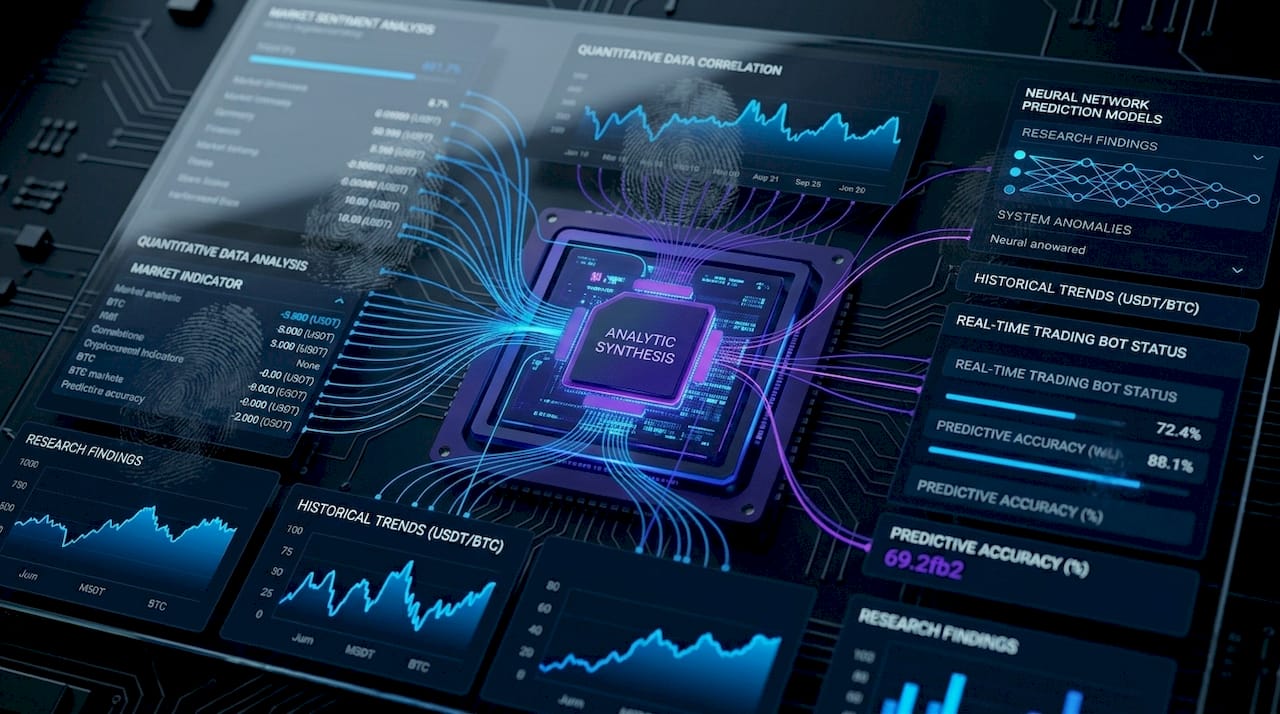
The research makes a critical distinction: AI does not just correlate with crypto. It leads specific sectors and that leadership intensifies exactly when you can least afford surprises. Dynamic spillovers from AI to crypto are most pronounced during crashes and booms, with DeFi tokens, NFT-related assets, and smart contract platforms showing the strongest effect. Bitcoin and large-cap stablecoins show weaker AI leadership, which tells you something important about where risk concentrates.
The structural shift after ChatGPT. One of the more striking research findings is that the way assets move together changed after November 2022. This was not just a correlation strengthening. The actual transmission mechanism, how volatility and sentiment flow from AI sector events into crypto, fundamentally reorganized. AI’s impact is structural, reshaping how assets co-move rather than simply making existing relationships stronger. For traders, this means backtests built on pre-2023 data may be running on an outdated map of market relationships.
| Market condition | AI leadership effect | Most affected assets | Least affected assets |
|---|---|---|---|
| Normal trending markets | Moderate spillover | DeFi, smart contract tokens | BTC, large caps |
| Bull market extremes | Strong positive spillover | NFT tokens, altcoins | Stablecoins |
| Crash events | Very strong negative spillover | DeFi, NFT, compute tokens | BTC dominance plays |
| Post-ChatGPT regime | Structural transmission shift | All thematic crypto | Legacy assets |
The stat that deserves attention here is the concentration of AI-driven effects in market swings rather than calm periods. If your risk model only accounts for average-day behavior, you are systematically underweighting the scenarios where AI’s influence is strongest. That is a recipe for oversized losses at exactly the wrong time.
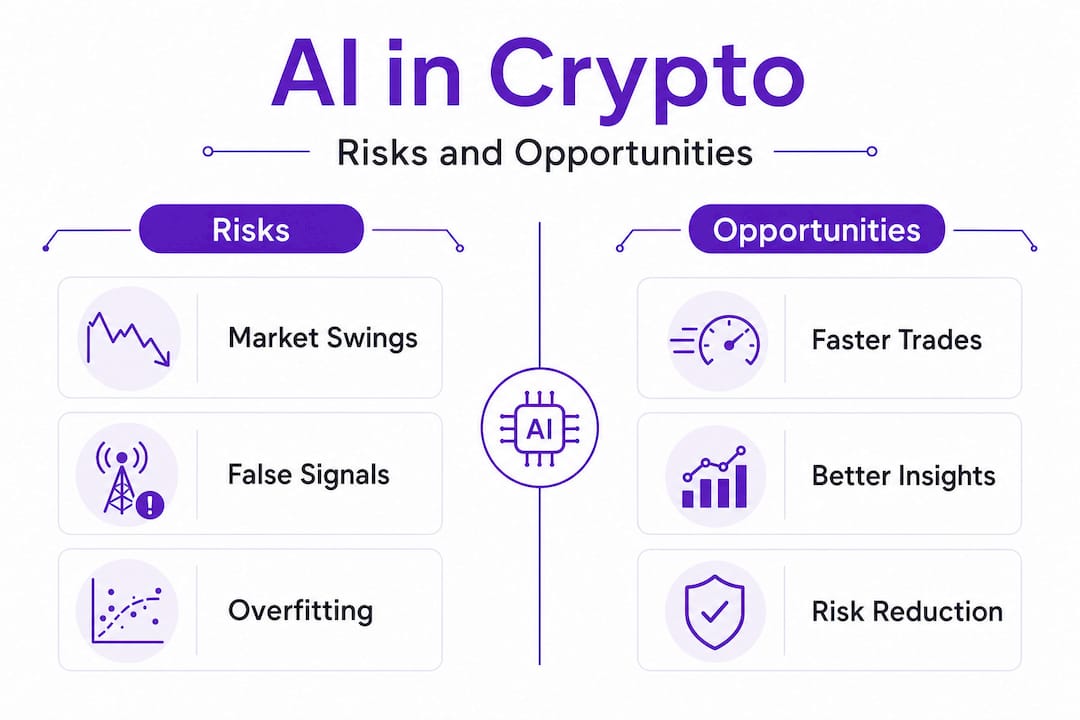
What this means practically. Traders who hold thematic DeFi or smart contract positions without monitoring AI sector news cycles are flying partially blind. A regulatory announcement targeting a major AI company, or a breakthrough that sparks enthusiasm in compute-heavy infrastructure, can shift your portfolio before any crypto-specific indicator picks up the signal.
How AI models and sentiment shape short-term crypto prices
Beyond broad leadership, the reality of AI’s impact is most visible in the mechanics of price prediction and sentiment. This is where the research gets genuinely counterintuitive, and where most traders make subtle but costly mistakes.
Sentiment-informed machine learning models consistently outperform traditional price-only models for short-term crypto prediction. Models like FinBERT-BiLSTM, which combine financial language understanding with sequential pattern recognition, capture mood shifts that pure technical analysis misses entirely. The advantage shows up most clearly in the 1 to 48 hour prediction window, which is exactly the timeframe most active traders care about.
But here is the twist: how you build sentiment features matters more than which model you pick. Research shows that removing advanced aggregation techniques like PCA compression, adaptive clustering, or controlled noise injection causes prediction performance to drop sharply, especially for extreme price moves. The model architecture is almost secondary.
Here is a numbered breakdown of what separates high-performing sentiment models from mediocre ones:
- Aggregation method. Raw sentiment scores from thousands of sources contain enormous noise. Using principal component analysis (PCA) to compress correlated signals into cleaner inputs dramatically improves signal-to-noise ratio.
- Adaptive clustering. Markets shift regimes. A model that clusters sentiment patterns dynamically, rather than assuming fixed categories, handles regime transitions far better than static designs.
- Noise injection during training. Deliberately adding small amounts of random noise during model training forces the system to learn robust patterns rather than memorizing historical quirks. This is especially important for catching wild market changes.
- Source weighting. Not all sentiment sources carry equal weight. Social posts from high-volume accounts, institutional news feeds, and on-chain data signals have different predictive profiles and need to be weighted accordingly.
| Sentiment feature | Prediction improvement | Biggest benefit |
|---|---|---|
| PCA aggregation | High | Noise reduction in normal markets |
| Adaptive clustering | Very high | Regime shift detection |
| Noise injection | Moderate to high | Robustness in tail events |
| Source weighting | High | Accuracy in early trend shifts |
Pro Tip: If you are evaluating any AI trading tool or building your own sentiment model, ask specifically how it handles feature aggregation. A tool that ingests raw social sentiment without compression or clustering is likely overfitting to recent patterns and will underperform when the market shifts suddenly.
The practical takeaway from smarter trading strategies is that you should not chase the most complex model. You should chase the best-engineered inputs. The traders winning with AI in crypto are mostly winning on data quality and feature design, not on exotic architectures. Fintech ML approaches that have been battle-tested across multiple market regimes tend to emphasize exactly this point.
Caveats: Market mechanics, trading costs, and AI’s real-world edge
Even with powerful AI and perfect models, traders face real-world frictions. Let’s examine some sobering examples and practical advice before you take any AI-driven strategy live.
The gap between backtested performance and real trading results is one of the most consistently underestimated problems in algorithmic crypto trading. A strategy that shows 200% annual returns in simulation can produce 60% or even negative returns in production once you account for the full cost stack.
Here is what actually eats your edge:
- Trading fees. On many exchanges, maker and taker fees range from 0.05% to 0.25% per trade. A high-frequency AI strategy executing hundreds of trades daily can spend more on fees than it earns in alpha.
- Slippage. In volatile markets, the price you expect and the price you get diverge. For large orders in thin altcoin markets, slippage of 0.5% to 2% per trade is common. Multiply that across a leveraged position and it becomes significant.
- Liquidation risk. Leveraged strategies using algorithmic trading with AI face sudden liquidation if the position moves against them during a volatility spike. Even a well-timed strategy can be wiped out by a brief, sharp move that triggers margin calls before the model can react.
- Funding rates. Perpetual futures carry funding rates that can run at annualized rates exceeding 100% in heated markets. A long position in a hot altcoin can lose money to funding even while the price trends higher.
Research on AI-driven risk management automation backs this up with hard numbers. In realistic leveraged settings with proper risk gates applied, AgentTrading research found a ceiling of +45.88% ROI over a 30-minute period, far below what naive backtests would suggest. The risk gates and cost modeling were the limiting factors, not the AI’s prediction quality.
Pro Tip: Before running any AI strategy live, apply a realistic cost model that includes fees, slippage at 2x normal levels, and a funding rate assumption. If the strategy still shows positive expectancy, you have a real edge. If it does not, you are just paying to learn.
What most traders overlook about AI’s influence on crypto
Here is the uncomfortable truth that most advanced traders still miss: having access to a capable AI trading tool is not the same as having a durable edge. The edge evaporates quickly when everyone is running similar models on similar data.
The traders who consistently benefit from AI’s influence on crypto are not necessarily using the most sophisticated algorithms. They are the ones who understand the macro feedback loops: how a shift in the AI sector changes investor narratives, how that narrative shift moves thematic crypto assets before the crowd repositions, and how that repositioning itself feeds back into sentiment models and changes the signals those models generate. It is a layered system, and being one step ahead in understanding the loop matters far more than being one step ahead in model architecture.
The regime shift problem is also more serious than most frameworks acknowledge. Automated trading systems that performed beautifully in 2024 may have been running on structural relationships that simply no longer exist in the same form. Post-ChatGPT market dynamics altered how AI sector news transmits into crypto. The next major structural shift, whether from regulatory action, a transformative hardware breakthrough, or a new class of AI agents entering financial markets, could invalidate current models just as decisively.
The practical discipline this demands is continuous model monitoring and regime detection. Not just checking whether returns are positive, but actively testing whether the underlying relationships your model depends on are still holding. When they stop holding, the smart move is stepping back and rebuilding, not averaging into losses while waiting for the model to “snap back.”
Sentiment-based models deserve special scrutiny here. They work exceptionally well when sentiment is a reliable predictor of short-term flows. But during extreme events, sentiment often inverts, panic buying during a crash or fearful selling during a real breakout, which is exactly when rigid models fail at the worst possible moment.
Level up with AI-powered crypto automation
If the research and mechanics in this guide have sharpened your thinking about AI’s role in crypto markets, the next step is putting those insights to work in a system that handles execution, risk management, and strategy tuning automatically.
Darkbot.io is built specifically for traders who want to move beyond manual execution and harness AI-driven automation across multiple exchanges. Whether you are managing a diversified crypto portfolio or running targeted strategies on DeFi tokens, Darkbot’s AI crypto trading bot handles real-time signal processing, risk gating, and order execution with institutional-grade precision. For traders focused on long-term capital growth, the portfolio optimization tools provide automated rebalancing and performance analytics that keep your allocation aligned with your strategy even as market conditions shift. Explore the platform’s flexible tiers to find the level of automation that fits your trading style.
Frequently asked questions
How does AI actually influence daily crypto trading?
AI influences crypto trading by processing market signals, analyzing sentiment across news and social feeds, and executing trades in real time at a speed that affects overall market liquidity and volatility. Rapid automated execution by AI systems can compress or amplify price moves significantly within short windows.
Can AI models predict crypto price crashes or booms accurately?
AI models offer a genuine forecasting edge for extreme events, but their accuracy depends heavily on how sentiment features are constructed and can fail suddenly if market structure changes. Predictive accuracy for crashes relies primarily on advanced sentiment engineering rather than model complexity alone.
Is using leverage with AI-powered strategies always more profitable?
Not at all. Real-world costs including fees, slippage, and funding rates can dramatically reduce leveraged returns even for well-designed AI systems. AgentTrading research demonstrates a realistic ceiling of +45.88% ROI in leveraged scenarios once fees and risk gates are properly applied.
What’s the main limitation of AI in crypto trading?
AI’s biggest limitation is fragility during market regime shifts, where models trained on one set of structural relationships encounter conditions those relationships no longer describe accurately. Sentiment feature design is a key determinant of how robust a model is when extreme volatility hits and historical patterns break down.
Recommended

Start trading on Darkbot with ease
Come and explore our crypto trading platform by connecting your free account!
Free plan available • No credit card required