Top 6 mspbots.ai Alternatives for Automated Trading 2026
Managing cryptocurrency trades across exchanges with adaptive strategies and consistent risk controls remains unreliable when tools lack disciplined automation. Many platforms force manual updates to trading rules as market conditions change or limit strategy customization behind complex onboarding steps. You can compare AI-driven rule adaptation, portfolio control, and subscription tiers so your trading approach matches exchange coverage and strategy needs.
Table of Contents
Darkbot
At a Glance
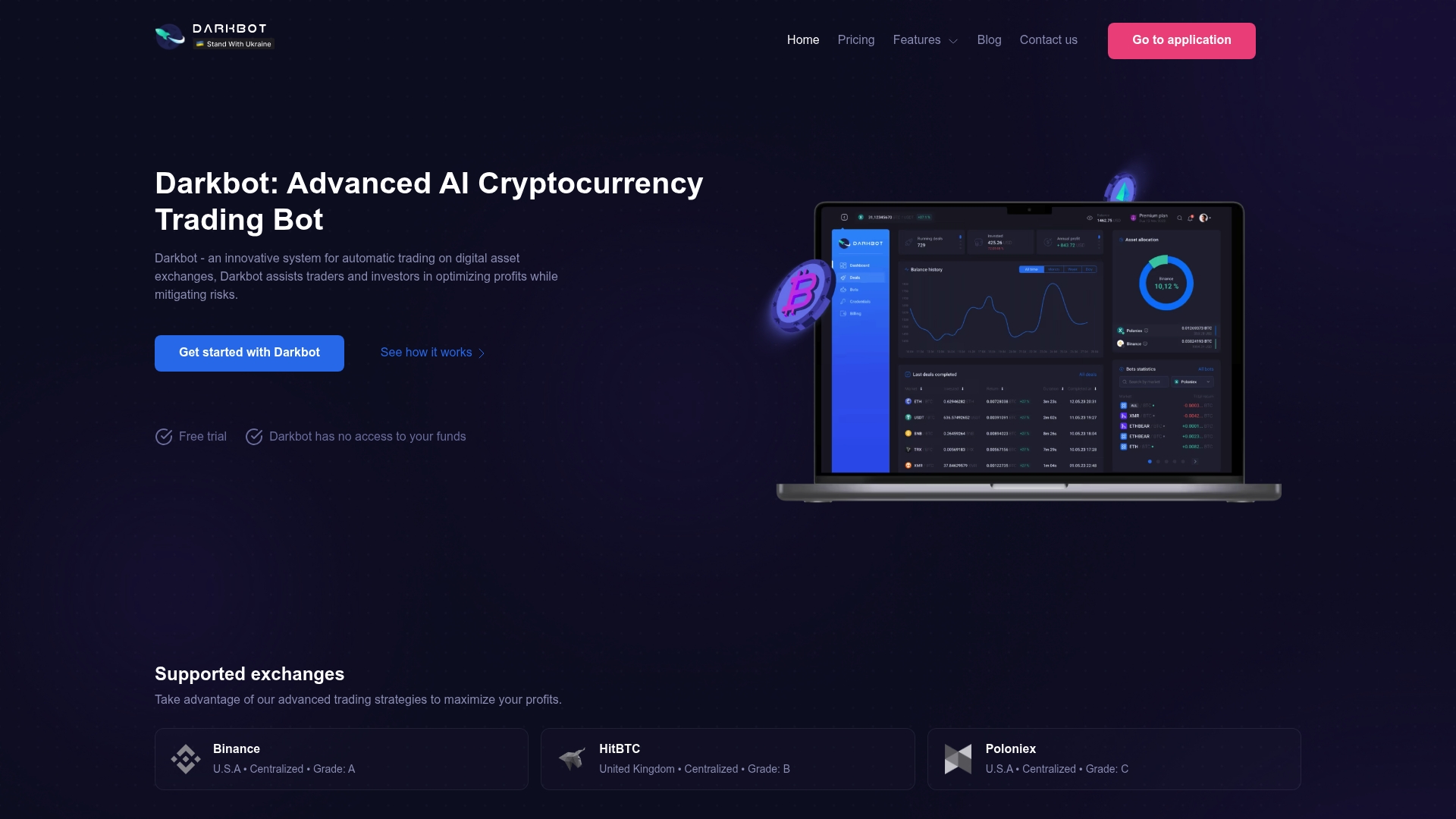
The vendor advertises a 14-day free trial, followed by plans starting at $4.17 per month. Darkbot uses machine learning and AI to adapt trading strategies dynamically across multiple digital asset exchanges. The platform highlights portfolio rebalancing, backtesting, real-time analytics, API key protection, and direct order routing.
Core Features
Darkbot lets you connect exchanges with API Keys for direct order routing and protected execution. You can run multiple simultaneous bots, build custom strategies, and validate ideas with backtesting against historical market data. The system also includes portfolio management, automated rebalancing, stop loss controls, real-time analytics, and 24/7 customer support.
Key Differentiator
Darkbot employs machine learning and AI to adapt strategies dynamically and optimize trading behavior as market conditions change. That adaptation occurs during backtesting and live execution cycles to keep strategy parameters aligned with recent data. For traders, the result is a rules driven approach that reduces manual rule changes when conditions shift.
Pros
Darkbot adapts strategy rules using machine learning and AI so strategies adjust without constant manual retuning. It supports automated portfolio management and scheduled rebalancing while showing execution and performance in real-time analytics for oversight. Multiple subscription tiers, including a free option, plus dedicated support and API key security make the platform accessible to a broad range of traders.
Cons
- Complex setup can challenge absolute beginners during initial configuration and exchange linking.
Who It’s For
You are a crypto trader or investor who wants automated, AI driven trading with configurable strategies and portfolio controls. You need backtesting and real-time analytics to validate and monitor strategy performance. You also value secure API key handling, direct order routing, and the ability to run more than one bot simultaneously.
Unique Value Proposition
Direct order routing via API Keys keeps order execution on the exchange side, which reduces reliance on intermediate custodial systems and cuts an operational step. That routing, combined with live adaptive models, shortens the feedback loop between market signals and execution rules. For teams managing multiple strategies, this reduces manual intervention and keeps execution consistent across bots.
Real World Use Case
A trader connects their Binance account with API Keys, configures entry and risk parameters, and backtests the strategy on historical candles. They launch multiple bots to cover different markets and monitor real-time analytics to confirm expected behavior. That workflow speeds execution, reduces emotionally driven adjustments, and enforces disciplined position sizing and rebalancing.
Pricing
The free trial runs for 14 days. The Standard plan costs $4.17/month. The Premium plan costs $12.50/month.
Website: https://darkbot.io
Ekkie AI
At a Glance
Approval first execution requires an engineer to approve any automated action before it runs. That model preserves human control while automation handles routine work. The platform also locks customer context for each tenant to avoid cross client data exposure.
Core Features
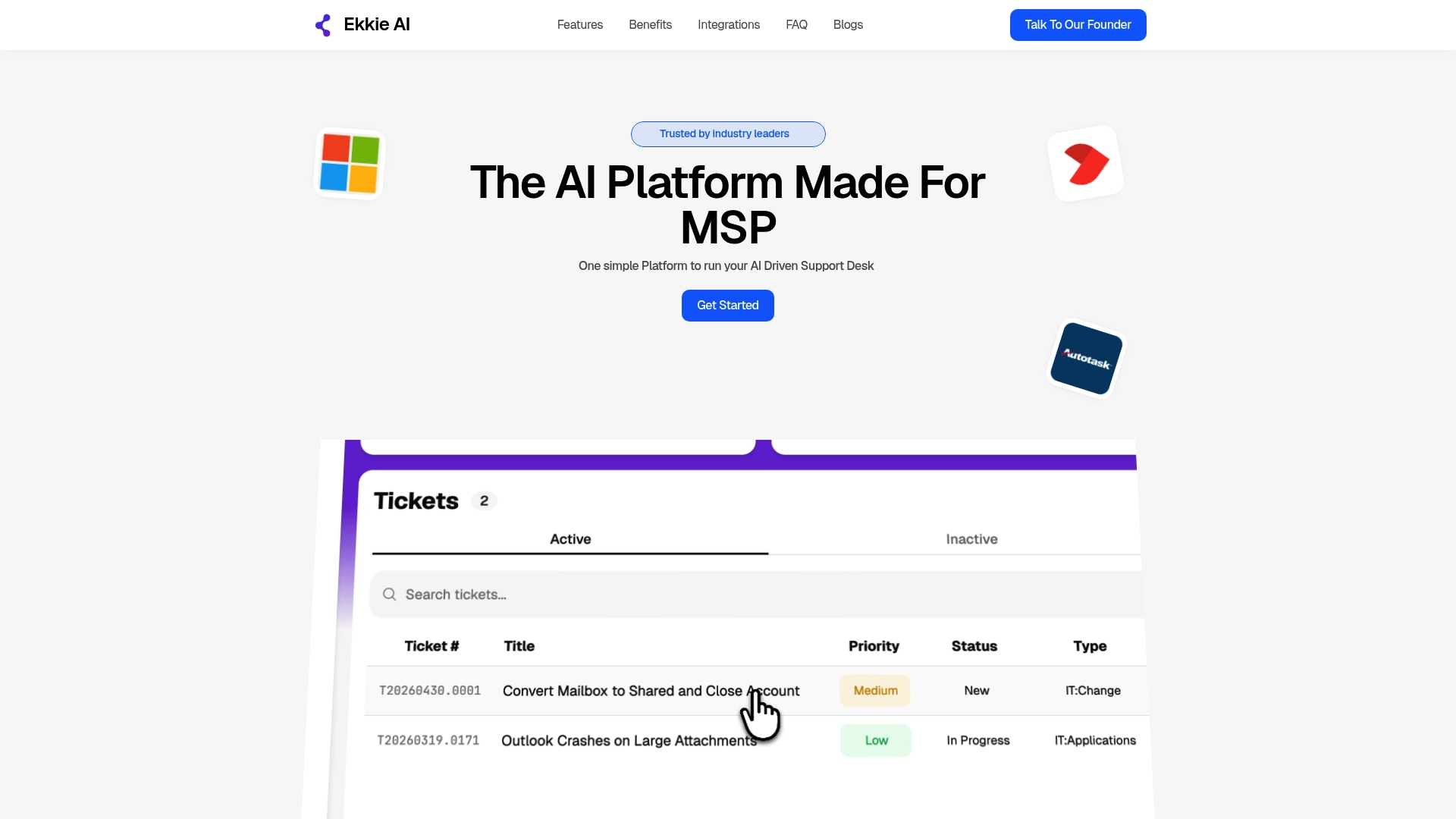
Ekkie AI automatically labels incoming tickets for priority, issue type, and tags and routes them based on engineer availability. It offers AI supported chat that suggests step by step plans while locking the ticket to prevent conflicting edits. The platform enforces approval first execution with delegated permissions and supports secure multi tenant support so MSPs can manage many clients from one account.
Key Differentiator
Ekkie AI centers its workflow on approval first execution combined with explicit multi tenant controls. That mix targets MSPs that need automation without removing final human oversight. The model fits teams that require strict client separation and delegated authority inside their support process.
Pros
Ekkie AI reduces routine triage work by automating labeling and availability based dispatching, which saves engineer time. Its architecture focuses on secure multi tenant support, which helps MSPs keep client contexts separate inside a shared platform. Integrations with major PSA and ITSM tools allow the platform to sit behind existing workflows and keep human approval as the gate for any execution. Automatic re dispatching returns tickets to the queue when assigned engineers are unavailable, which keeps SLAs moving.
Cons
- Limited independent review data on user satisfaction or long term performance. This gap makes it harder to judge behavior in complex environments.
- Performance depends on correct integration setup and configuration. Misconfigured connections will reduce automation accuracy.
- Automation may produce false positives in labeling or routing, requiring ongoing tuning and human oversight.
When It May Not Fit
Teams that rely on highly custom or complex workflows may find Ekkie AI restrictive. The product has limited reported evidence on handling edge case automation for bespoke processes. Organizations without dedicated staff to maintain integrations will see reduced value from the automation.
Notable Integrations
Ekkie AI lists native connections to Microsoft, Autotask, and TopDesk. Those integrations let the platform read ticket context, write status updates, and respect existing assignment rules. Integration support makes it practical to adopt automation without replacing a PSA.
Who It’s For
MSP support desk managers who want to cut manual triage while keeping human control will find this product relevant. It fits teams that need strong tenant separation and delegated permissions across client accounts. Smaller MSPs without integration expertise may need help to realize the automation benefits.
Real World Use Case
A managed service provider connects Ekkie AI to their ticketing system and enables automatic labeling and availability based dispatching. Engineers receive suggested actions via chat and approve steps before execution. The provider reports faster resolution cycles while retaining full approval control for sensitive tasks.
Pricing
The vendor does not publish pricing publicly. Expect subscription or tiered plans that scale with the number of managed clients and integration needs. Procurement typically requires a conversation with sales to clarify tiers and any per client fees.
Website: https://ekkie.ai
Mizo
At a Glance
Mizo finished as a ConnectWise IT Nation PitchIT Competition 2025 runner-up. It uses autonomous AI agents to automate ticket triage, dispatch, and documentation. The platform targets MSPs that need to scale service desk capacity without adding headcount.
Core Features
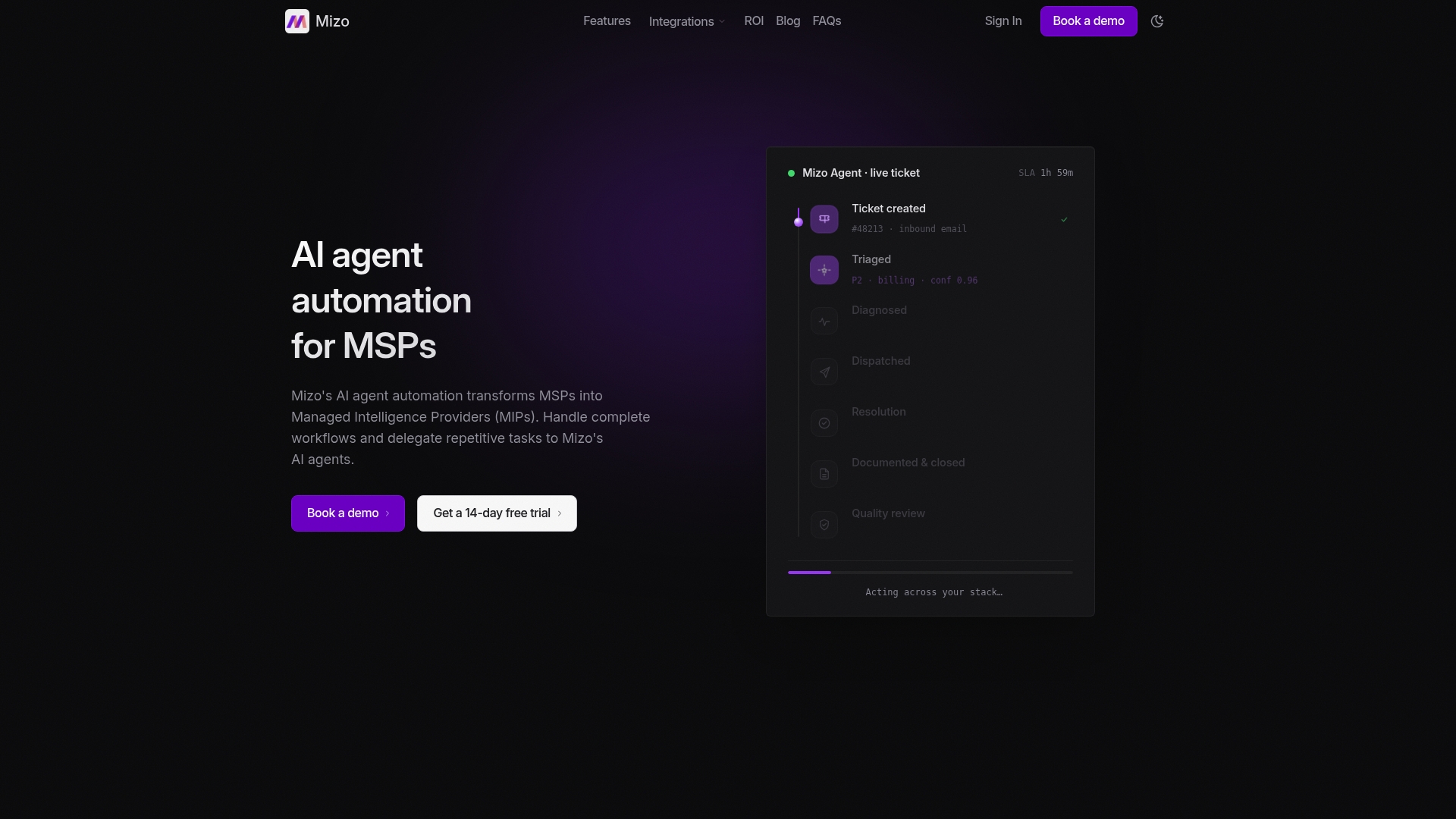
Mizo automates ticket triage and dispatch with AI-driven context understanding and adapts to unstructured requests. It updates documentation and knowledge bases automatically while integrating with common MSP tools. Single click deployment aims to connect the AI to PSA, RMM, documentation, and communication systems quickly.
Key Differentiator
Mizo uses autonomous AI agents that understand ticket context and adapt in real time. That behavior lets it handle variable, unstructured tickets that rule based automation cannot manage well.
Pros
Mizo reduces manual work by applying AI to context heavy support tasks, which speeds up resolution workflows and helps meet SLAs. Its integrations with ConnectWise, Autotask, HaloPSA, IT Glue, and documentation platforms let the AI read and write where teams already operate. The platform supports multiple languages including English, French, and Spanish, which helps MSPs with global clients.
Cons
- Buyer reviews indicate ongoing AI tuning is often required for peak performance. This suggests initial setup may demand staff time.
- Several integrations are listed as coming soon, which limits out of the box coverage for some RMM and PSA tools. That gap can slow deployment for certain stacks.
- The AI needs quality input data to perform predictably, so poor documentation or inconsistent ticket fields reduce effectiveness.
When It May Not Fit
If your MSP needs instant coverage for every niche RMM or PSA, Mizo may not match that need today because some connectors are still upcoming. Teams with minimal technical documentation or unreliable ticket fields will face more AI training work. Small MSPs with very simple workflows may find the setup and tuning overhead larger than the gains.
Notable Integrations
- HaloPSA
- ConnectWise
- Autotask
- IT Glue
- Hudu
- SharePoint
- Confluence
- Teams
Who It’s For
Mizo fits managed service providers seeking to automate help desk operations and reduce repetitive work. It suits MSPs that use mainstream PSA and documentation tools and can invest time in initial AI tuning. Global MSPs that require multi language support will find the platform relevant.
Real World Use Case
An MSP uses Mizo to route incoming tickets to the correct queue and to auto populate technician notes. The AI updates internal and customer facing knowledge base articles after issues resolve. Technicians spend less time on repetitive entries and more time on escalations.
Pricing
Pricing is not publicly listed. The vendor appears to offer customized plans that scale with MSP size and needs and a 14 day free trial option is available.
Website: https://mizo.tech
Assist Engine
At a Glance
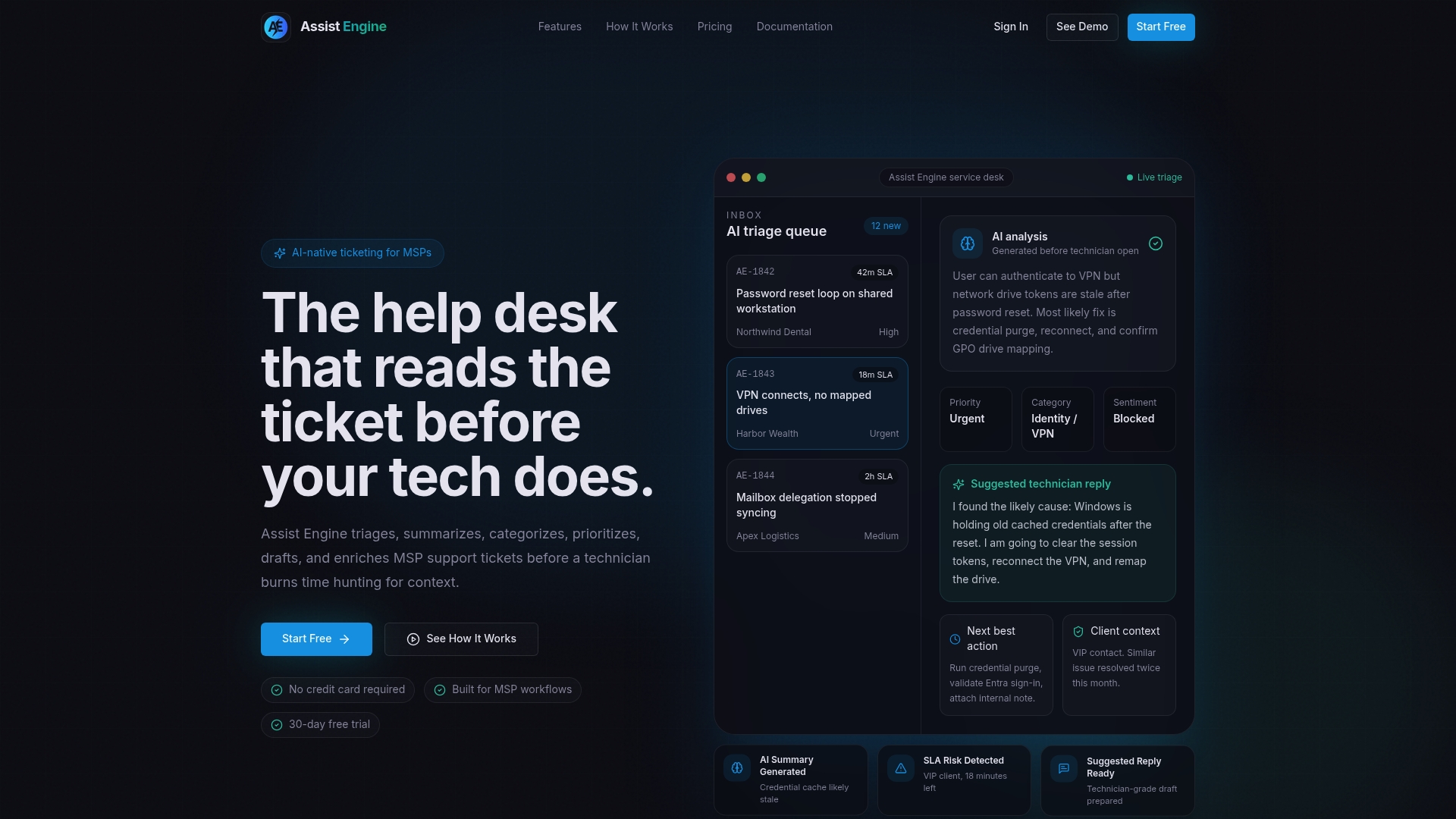
The vendor advertises a free plan plus Pro at $49/month and Enterprise at $149/month. Assist Engine centers on an AI triage queue that categorizes, prioritizes, and summarizes incoming tickets. The platform also bundles drafting tools, routing automations, and an MSP intelligence dashboard into one workflow.
Core Features
Assist Engine runs ticket triage that groups issues, highlights SLA risk, and produces short summaries technicians can act on. A technician copilot speeds reply drafting and root cause notes while an automation engine handles routing, escalation, and after hours follow up. The knowledge flywheel captures resolutions for reusable standard operating procedures and the MSP dashboard surfaces recurring problems and workload trends.
Key Differentiator
Assist Engine focuses specifically on MSP support workflows by combining triage, agent assistance, and operational analytics in a single product. That design reduces context switching because analysts see client health, ticket history, and suggested actions in one pane. The platform targets service teams that want AI to help run processes rather than to deliver raw alerts or signals.
Pros
Built for MSP workflows, the product matches common managed service tasks like escalation rules, VIP handling, and stale ticket recovery and so helps teams align automation with existing processes. The AI-driven ticket analysis and drafting can reduce time spent on first responses and internal notes while the knowledge capture turns repeated fixes into searchable SOPs. The vendor also advertises a free tier, which makes testing practical for small teams.
Cons
- Some buyers report limited customization and fewer third party integrations than more mature support platforms.
- There is a learning curve for configuring automations and interpreting AI summaries.
- The platform relies on third party AI providers for analysis and voice features, which raises privacy and data handling questions.
When It May Not Fit
Large MSPs that need deep third party integration portfolios or heavy customization will likely find the platform constrained. Teams that require on premises processing for every AI task may not accept external AI provider dependency. Organizations seeking an established ecosystem of plugins, managed services, and long tail connectors should evaluate more mature help desk suites.
Who It’s For
This product fits MSP support teams with five or more technicians who want to reduce manual ticket sorting and speed first responses. It helps managers who need operational visibility into recurring issues and SLA risk. It also suits teams willing to accept third party AI services for faster rollout.
Real World Use Case
An MSP routes incoming emails and portal tickets into Assist Engine, which auto classifies urgency and drafts an initial reply for technician review. The system flags tickets with SLA risk and escalates them to a senior tech automatically. The knowledge flywheel then converts closed tickets into SOP entries for future automation.
Pricing
Pricing comes in three tiers: Free, Pro at $49/month, and Enterprise at $149/month. The vendor positions the free tier for small teams and the paid tiers for scaling MSP operations. Specific seat or volume discounts are not publicly listed.
Website: https://assistengine.ai
Uniqua AI
At a Glance
Uniqua AI reports client-reported increases in leads, ROI, and client retention. The company pairs AI tools with the GoHighLevel platform for marketing and CRM functions. That combination targets marketing automation, lead qualification, and measurable campaign tracking.
Core Features
Uniqua AI delivers AI powered marketing automation for email campaigns, social scheduling, content generation, lead scoring, and routing. It adds AI driven audience segmentation and personalized messaging to help target offers to specific segments. The platform includes real time analytics dashboards, AI generated insights, AI chatbots, and 24/7 AI lead generation agents that qualify leads and book appointments through CRM integration.
Key Differentiator
The vendor emphasizes an integrated AI system that automates entire marketing workflows with real time adaptive insights. That approach ties campaign execution to analytics so messaging, scoring, and routing adjust as data arrives. The integration with GoHighLevel positions the system as a single execution and CRM surface for marketing teams.
Pros
Those client reports show strong outcomes for lead generation and ROI according to the vendor. The solution groups campaign execution, lead nurturing, and analytics under one managed setup to reduce coordination overhead. It also offers demos and consultations so teams can validate workflows before committing to a live rollout.
Cons
-
Limited technical transparency: public details on specific AI algorithms and customization options are sparse.
-
Result dependency: success depends on client input and operational conditions, such as CRM access and meeting attendance.
-
Operational demand: clients may need to change internal processes to match the vendor workflow.
When It May Not Fit
Organizations without CRM access or unwilling to join scheduled onboarding meetings will struggle to get full value. Teams that need deep model customization or on premises control will find the offering narrow. Enterprise buyers requiring vendor neutral platform components may need a different architecture.
Notable Integrations
Uniqua AI connects to CRM systems to route leads and book appointments. The product data does not list specific CRM brands. Integrations appear focused on tying lead agents and chatbots into client CRMs for workflow continuity.
Who It’s For
Mid sized businesses and marketing teams seeking scaled marketing automation and lead generation will find this relevant. Agencies that want to automate client campaigns and reduce manual follow up fit the profile. Organizations must be prepared to provide CRM access and engage in vendor guided onboarding.
Real World Use Case
A digital marketing agency used Uniqua AI to automate client campaigns and centralize reporting on GoHighLevel. The agency delegated lead scoring and appointment booking to AI lead agents. That arrangement shortened follow up time and aligned campaign adjustments to analytics.
Pricing
Pricing is listed as not applicable and appears informational only. The vendor does not publish standard tiers in the public description. Prospective buyers should request a demo and proposal to get a tailored cost estimate.
Website: https://uniquaai.com
ServiceTree
At a Glance
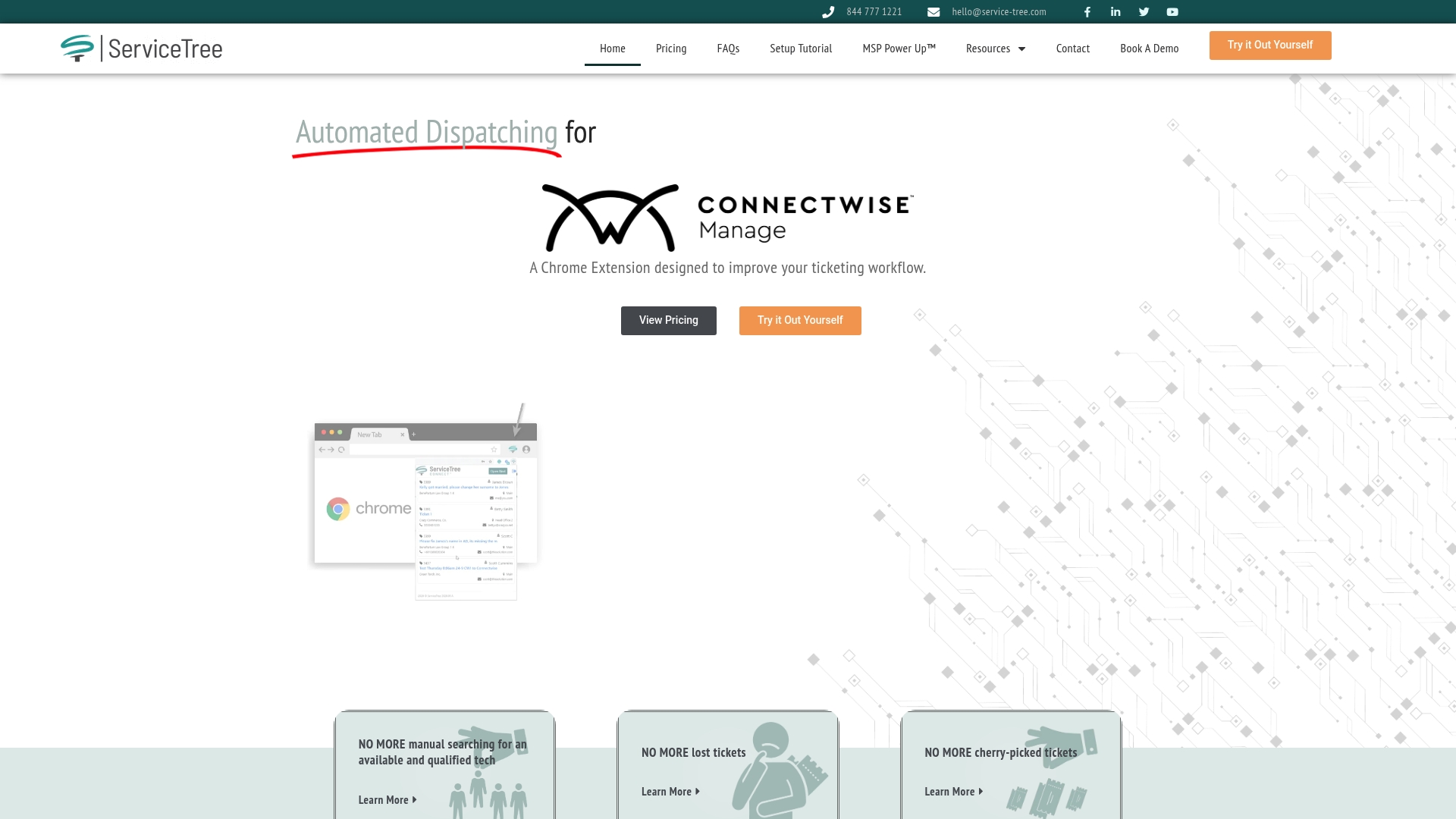
ServiceTree uses patented OpenNext™ technology to prioritize and assign tickets based on configurable rules. According to the company, ServiceTree includes a free 30-day trial. That focus targets MSPs that need automated dispatching and client scheduling inside existing PSA workflows.
Core Features
Automated ticket dispatching matches incoming tickets to technicians by skills, SLA, and other parameters, with options for tech grouping and custom prioritization rules. The product runs as a Chrome extension for quick setup and day one use and adds client-facing scheduling so customers can pick appointment times. Admins can tune SLA rules and prioritization logic to fit different clients and service levels.
Key Differentiator
The standout capability is the platform’s OpenNext™ rules engine that applies patented sequencing for ticket assignment. That engine focuses on matching technician qualifications with SLA constraints and customer scheduling windows. The design fits MSP workflows that need predictable, rules-driven dispatching rather than manual triage.
Pros
ServiceTree reports a 5 to 10 minute setup process, which makes deployment fast for teams already using Chrome and a supported PSA. Customer case studies cited by the vendor show higher ticket resolution rates and less ticket loss after automated dispatching was enabled. The extension reduces manual routing, improves technician utilization, and adds client scheduling to lower back-and-forth communications.
Cons
- Designed primarily around specific MSP PSA ecosystems, which limits flexibility for service providers using lesser-known tools.
- Misconfiguration of prioritization rules can skew dispatching and degrade ticket handling if staff do not audit settings regularly.
- Public details about real-time or offline support are limited, which may matter for multi-location operations.
When It May Not Fit
Teams that do not use ConnectWise Manage or Autotask will find fewer out-of-the-box options. Organizations that require broad PSA compatibility or bespoke integrations may need a different dispatch tool. Large enterprises that expect enterprise-grade support details up front should validate support options before committing.
Notable Integrations
ServiceTree connects directly with ConnectWise Manage and Autotask for ticket ingestion and status updates. Those integrations allow assignments to flow back into the PSA so technicians work inside existing ticket records.
Who It’s For
MSPs and IT support teams that want to automate dispatching while keeping work inside their PSA will get the most value. Teams that need fast rollouts and client scheduling tools will benefit from the Chrome extension approach. Service providers focused on SLA compliance and technician skill matching will find the rules engine useful.
Real World Use Case
According to the company, one MSP used ServiceTree to raise ticket closure rates from 50% to over 85% after automating assignments. That improvement came alongside facilitated client scheduling and reduced manual routing. The result for that MSP was higher technician utilization and fewer missed SLAs.
Pricing
The vendor lists a free 30-day trial and tiered monthly plans starting at $19 per user for the Standard plan. Higher tiers are available for advanced dispatching features and larger teams. Contact the vendor for volume pricing and enterprise options.
Website: https://service-tree.com
Comparison of alternatives
This analysis explores the capabilities and distinctions among various platforms specializing in automated workflows and trading optimization. Each product offers unique benefits tailored to specific user needs, ensuring that professionals can select an option that best serves their goals.
Dynamic adaptability vs. operational control
Darkbot shines with its advanced machine learning capabilities, allowing strategies to continuously adapt to changing market conditions. This makes it particularly suitable for cryptocurrency traders aiming for fine-tuned, responsive trading strategies. In contrast, platforms like Ekkie AI and Mizo cater specifically to the needs of managed service providers. Ekkie AI ensures strict multi-tenant isolation and approval-first execution processes, providing secure and controlled operational automation. Mizo demonstrates strength in autonomous AI agents’ capability to manage unstructured tickets efficiently. These differentiated strengths are critical factors for users depending on their primary operational goals.
Integration and ease of use
Mizo and Assist Engine provide integration with widely adopted MSP tools such as ConnectWise, Autotask, and IT Glue. Moreover, Assist Engine features an intuitive deployment process along its ability to enhance analytical insights for service-level agreements (SLAs). Darkbot, on the other hand, focuses on simplifying access for crypto trading by offering multiple subscription models that cater to diverse trader levels.
Best fit
- Crypto traders requiring adaptive trading strategies across multiple exchanges will find Darkbot advantageous for its AI-driven rule updating and risk management tools.
- MSPs needing secure operational automation for client contexts will benefit from Ekkie AI’s multi-account isolation and permission delegation features.
- Teams prioritizing rapid deployment and operational efficiency within managed service contexts should consider Mizo for its autonomous AI capabilities and broad language support.
Our pick
Darkbot stands out as the ideal solution for individuals and teams focused on achieving automated and dynamic cryptocurrency trading strategies. Its emphasis on deployment of machine learning ensures continuous adaptation to market dynamics. However, users exclusively focused on MSP operational tasks may find Ekkie AI or Mizo better aligned with their goals, given their targeted support for these environments.
For prospective users evaluating automation platforms, the table below presents a concise comparison of key features and parameters to facilitate selection based on individual needs and preferences.
| Platform | Primary Use Case | Key Differentiator | Pricing | Notable Limitation |
|---|---|---|---|---|
| Darkbot | AI-driven crypto trading automation | Adaptive strategies via machine learning | From $4.17/month | Setup complexity may challenge beginners |
| Ekkie AI | Automated ticket triage for MSPs | Approval-first execution with multi-tenancy | Price not published | Integration misconfiguration reduces automation accuracy |
| Mizo | Autonomous support operation automation | AI agents for unstructured ticket understanding | Price not published | Requires quality data for effective AI results |
| Assist Engine | Ticket triage and SLA management | Unified triage and knowledge management system | Free to $149/month | Limited customization and integration options |
| Uniqua AI | Marketing campaign automation | Integrated analytics-driven workflows | Price not published | Requires CRM access and external vendor meetings |
| ServiceTree | MSP ticket dispatch and prioritization | OpenNext™ rules engine for task assignment | From $19/user/month | Narrow PSA ecosystem compatibility |
Challenges in Finding Effective mspbots.ai Alternatives for Automated Trading
The search for reliable mspbots.ai alternatives often highlights the need for automated trading solutions that use AI to support consistent, rule-driven strategies rather than speculative signals. Traders need a platform that integrates securely with multiple exchanges through API Keys, offers adaptable strategy customization, and includes real-time analytics for strategy validation and oversight. Managing portfolio rebalancing and running multiple bots can also be critical for effective execution.
Darkbot addresses these challenges by providing an AI-based crypto trading automation platform designed around structured risk control and repeatable logic. It supports multiple simultaneous bots, secure API connectivity, and ongoing strategy adaptation through AI and machine learning. Traders and investors can explore Darkbot to configure and backtest strategies with precise rule management and portfolio controls.
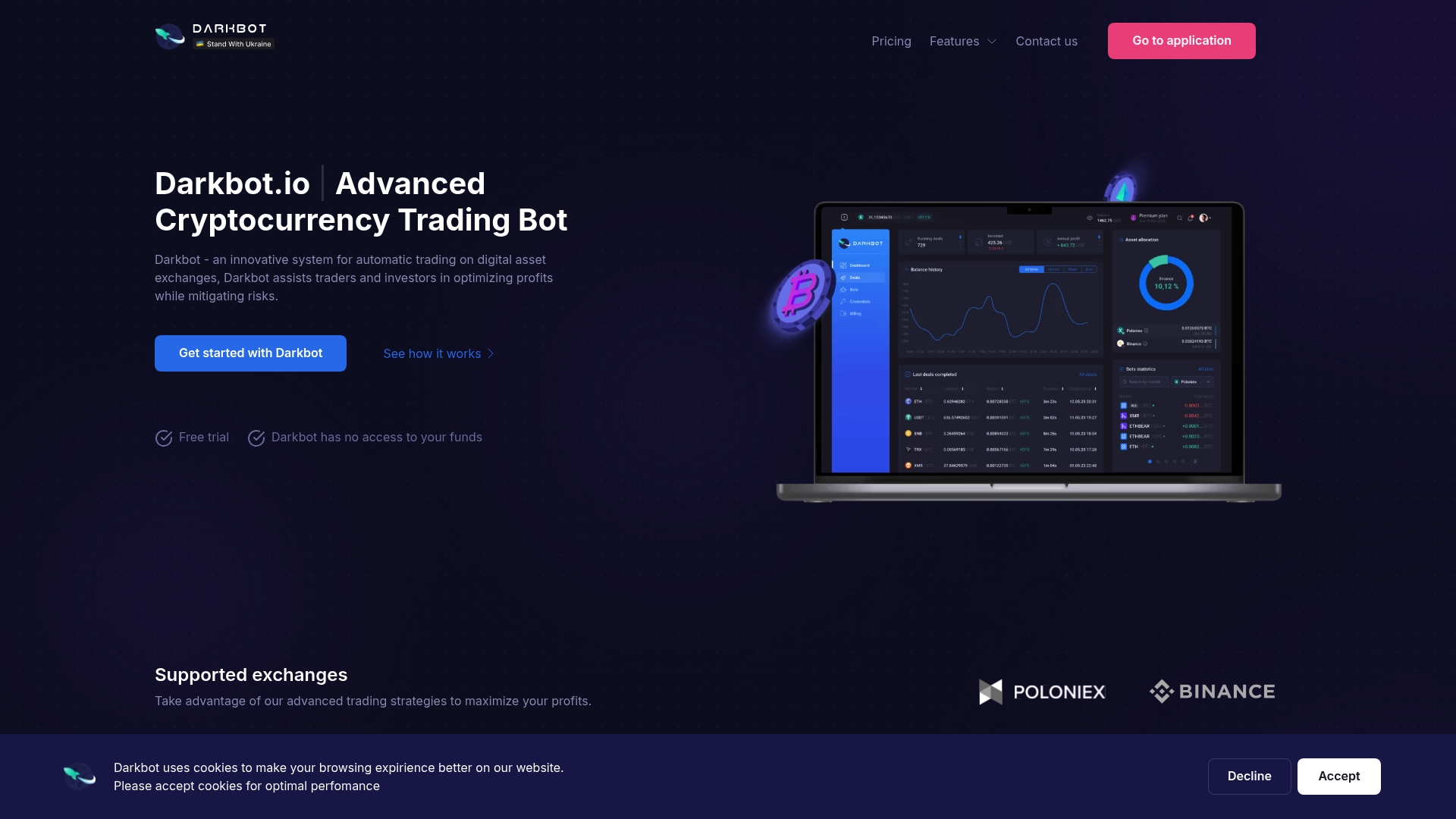
Explore how Darkbot reduces manual strategy adjustments while maintaining disciplined execution. Visit Darkbot.io to connect your exchange accounts, customize bot settings, and monitor performance with real-time analytics.
FAQ
What features make Darkbot suitable for automated trading?
Darkbot excels in dynamic strategy adaptation using machine learning and AI, enabling real-time adjustments to trading rules. This capability allows it to perform effectively under varying market conditions while executing systematic trades. Traders looking for a disciplined and structured approach to trading should consider using Darkbot for its robust functionality.
How does Darkbot’s pricing compare to other alternatives like Ekkie AI?
Ekkie AI is designed with an approval-first execution model that ensures human oversight in the automation process. While it excels in multi-tenant environments for managed service providers, Darkbot’s lower-cost entry point at $4.17 per month makes it more accessible for individual traders seeking automated cryptocurrency trading solutions. Evaluation should focus on whether automation without oversight fits your specific trading style.
Can Darkbot connect to multiple exchanges through API Keys?
Yes, Darkbot allows users to connect to various digital asset exchanges using API Keys for secure and efficient trading executions. This functionality is crucial for traders managing diversified portfolios across multiple platforms, as it facilitates direct order routing.
Is Darkbot suitable for beginners in cryptocurrency trading?
While Darkbot offers sophisticated automation features, its complex setup process may present challenges for absolute beginners. Traders new to the field should factor in their comfort with technology and automation before committing to Darkbot, especially considering the support available during the onboarding phase.
What kind of support does Darkbot offer for users?
Darkbot provides 24/7 customer support to assist users with any concerns or technical issues. This level of accessibility is particularly beneficial for traders who need immediate help while executing automated strategies at any hour.
Recommended

Start trading on Darkbot with ease
Come and explore our crypto trading platform by connecting your free account!
Free plan available • No credit card required