Why Professionals Need Trading Automation in 2026

TL;DR:
- Trading automation systematically executes predefined trading rules, eliminating the need for manual decisions. It allows crypto professionals to manage multiple strategies efficiently, maintain consistency, and operate 24/7 without increasing workload. Human oversight remains essential for safety, strategy validation, and responding to market regime shifts.
Trading automation is the systematic execution of predefined trading rules through software, removing human discretion from individual trade decisions. For professionals managing cryptocurrency portfolios, this distinction is not academic. Crypto markets run 24 hours a day, seven days a week, across dozens of exchanges, and no manual workflow can match that operational demand. The core case for why professionals need trading automation comes down to three factors: execution consistency, time efficiency, and the ability to run multiple strategies without proportionally increasing workload. Institutions have applied hybrid algorithmic workflows for years, combining discretionary judgment with systematic execution to reduce market impact and improve pricing.
Why professionals need trading automation: the core case
Manual trading scales linearly. Each additional strategy a professional monitors requires more screen time, more mental bandwidth, and more exposure to decision fatigue. Automation breaks that constraint entirely. Automated execution allows professionals to run diversified portfolios across multiple strategies simultaneously, without a proportional increase in time commitment. That is the structural advantage that separates systematic traders from discretionary ones at scale.
The benefits of trading automation are not limited to speed. Rule-based systems enforce entry and exit criteria exactly as specified, every time, regardless of market conditions or the trader’s emotional state. This matters most during high-volatility sessions, when the temptation to override a system is strongest and the cost of doing so is highest. Professionals who have articulated their strategies as explicit rules are the ones who benefit most from algorithmic execution, because the system can only execute what it has been given clearly.
Darkbot operates on this principle. The platform connects to exchanges via API keys, applies user-defined strategies, and executes trades according to those rules without requiring the trader to be present at the screen.
How does automation reduce time demands and enable scalable management?
Active monitoring time for fully automated setups drops to roughly 30 minutes per day. That figure represents a structural shift in how professionals allocate their time. Instead of watching charts for hours, a professional using automation spends that time reviewing system health, checking trade logs, and refining strategy parameters.
Cloud-based infrastructure makes this possible at scale. Automated systems running on cloud VPS environments execute trades independently of the trader’s local machine or internet connection. This removes a critical single point of failure from manual workflows. A professional traveling across time zones does not miss a trade because their laptop is closed.
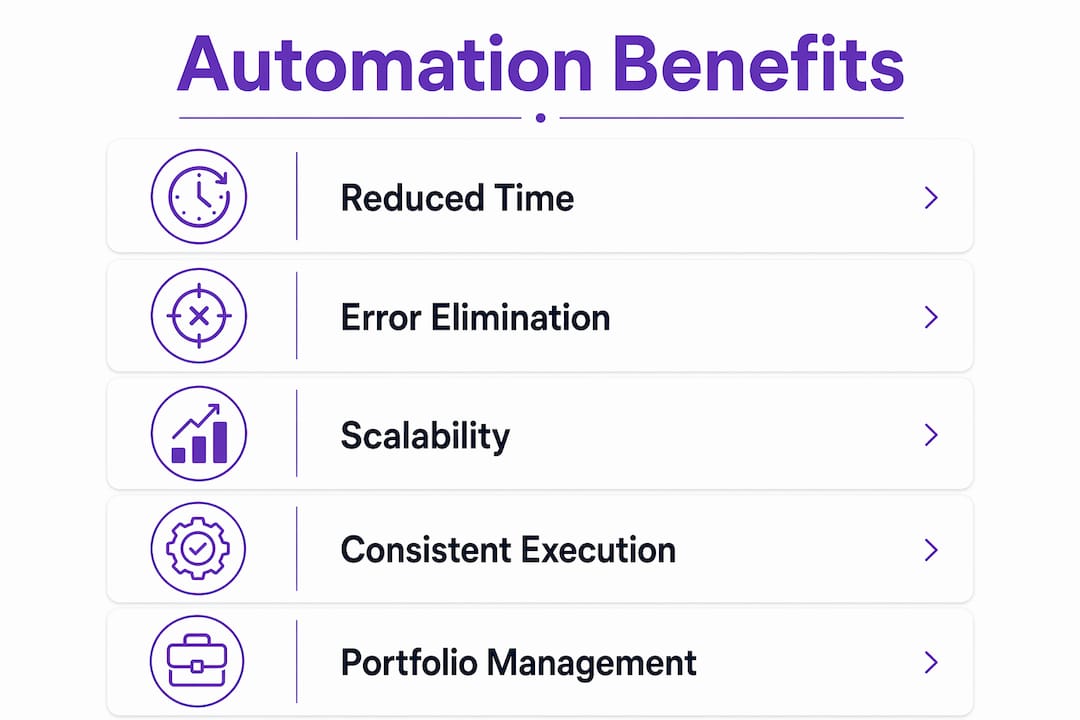
The scalability benefit compounds over time. A professional managing three strategies manually faces a near-linear increase in workload when adding a fourth. The same professional running automated systems can add a new strategy after testing and deployment without meaningfully increasing daily monitoring time. That asymmetry is one of the clearest advantages of automated trading for anyone managing a diversified crypto portfolio.
Pro Tip: Set a fixed daily review window of 20–30 minutes to check system logs, open positions, and risk parameters. Consistency in monitoring prevents small technical issues from becoming large losses.
In what ways does automation eliminate emotional and execution errors?
The primary driver for adopting automation is closing the execution gap created by emotional trading behavior. Revenge-trading and hesitation are the two most common failure modes in manual execution. Both stem from the same source: a trader overriding their own rules in response to recent outcomes rather than current signals.
Automated systems do not experience frustration after a losing trade. They do not hesitate before entering a position because the last three trades were losses. They execute the rule as written, every time. This consistency is the core psychological and operational benefit of algorithmic execution.
The practical impact shows up most clearly in volatile crypto market sessions. When Bitcoin moves 8% in 90 minutes, a manual trader faces a cascade of competing impulses: fear of missing a move, fear of entering at the wrong price, and the urge to act on incomplete information. An automated system fires trades instantly upon criteria being met, independent of trader presence or emotional state. The professional who automated that session captures the move according to their rules. The one watching charts may not.
Common emotional errors that automation eliminates:
- Revenge-trading: Entering oversized positions after a loss to recover quickly, violating risk parameters.
- Hesitation: Delaying entry on a valid signal because of recent losses or market noise.
- Premature exits: Closing profitable positions early due to anxiety rather than signal criteria.
- Overtrading: Taking low-quality setups during slow sessions to feel active.
- Anchoring: Holding losing positions longer than the strategy allows because of attachment to an entry price.
Each of these behaviors has a measurable cost in live trading. Automation removes the mechanism that produces them.
What human factors remain essential despite automation?
Automation does not replace trader responsibility. It amplifies the quality of the underlying strategy, for better or worse. Poor strategies automated will lose money faster than the same strategy traded manually, because the system executes every signal without the occasional hesitation that accidentally filters out bad trades. Automation accelerates outcomes in both directions.
Human oversight remains non-negotiable for four specific reasons:
- Kill switches: Every automated system needs a clearly defined shutdown procedure. A professional must be able to halt all trading activity immediately if a data feed fails, a bug produces unexpected behavior, or market conditions change in a way the strategy was not designed to handle.
- Daily health checks: Trade logs, fill quality, and system connectivity require human review. Automated systems do not self-diagnose. A missed API connection or a stale data feed can cause a system to behave incorrectly without triggering an obvious alert.
- Strategy quality review: Automation executes what it is given. The professional remains responsible for the quality of the rules, the validity of the backtesting, and the ongoing relevance of the strategy to current market conditions.
- Market regime changes: A strategy that performed well in a trending market may deteriorate in a ranging one. Recognizing that shift and adjusting or pausing the system is a human judgment call that no automation handles reliably.
Pro Tip: Keep a simple daily checklist: confirm system connectivity, review overnight fills, check that risk limits were respected, and note any unusual behavior. Five minutes of structured review catches most problems before they compound.
Building a reliable automated system requires weeks of testing, debugging, and integration. Professionals who treat deployment as a one-time event rather than an ongoing process are the ones who encounter preventable failures.
How do professionals integrate automation to optimize crypto trading strategies?
The professional approach to automation is not binary. Institutions combine discretionary judgment with algorithmic execution to minimize market impact and improve pricing. Retail professionals in crypto markets apply the same logic: automate the execution layer while retaining human oversight for macro trend assessment and strategy selection.
Backtesting and paper trading are the validation steps that separate disciplined professionals from those who deploy untested systems. Backtesting applies a strategy’s rules to historical data to assess how it would have performed. Paper trading runs the system in live market conditions without real capital. Both steps are required before live deployment. Skipping either one is the most common cause of early automated trading failures.
The 24/7 nature of crypto markets makes automation particularly valuable for professionals with other commitments. A strategy designed to trade Asian session volatility can run without the professional being awake. Automated systems capture high-volatility moves during sessions that manual traders cannot monitor, which is a structural edge in markets that never close.
| Workflow element | Manual approach | Automated approach |
|---|---|---|
| Trade execution | Requires active screen presence | Executes on signal, independent of presence |
| Multiple strategies | Linear time increase per strategy | Parallel execution with fixed monitoring time |
| Emotional discipline | Dependent on trader’s mental state | Rule-based, consistent across all conditions |
| Session coverage | Limited to waking hours | Full 24/7 coverage across all sessions |
| Validation before live trading | Often skipped under time pressure | Backtesting and paper trading built into workflow |
Platforms like Darkbot support this integrated workflow through portfolio management tools that allow professionals to run multiple bots across different strategies and exchanges from a single interface. The goal is not to remove the professional from the process. It is to remove the parts of the process that do not require human judgment.
Key Takeaways
Trading automation gives professionals the execution consistency, time efficiency, and scalability that manual crypto trading cannot provide, but only when built on validated strategies and maintained with disciplined human oversight.
| Point | Details |
|---|---|
| Automation breaks time constraints | Fully automated setups reduce active monitoring to roughly 30 minutes per day. |
| Emotional errors are structural, not personal | Automation eliminates revenge-trading, hesitation, and premature exits by enforcing rules exactly. |
| Human oversight remains critical | Kill switches, daily health checks, and strategy reviews prevent compounding system failures. |
| Validation before deployment is non-negotiable | Backtesting and paper trading are required steps before any live automated system runs. |
| Automation amplifies strategy quality | A poor strategy automated loses money faster; a sound strategy gains execution consistency at scale. |
Automation as a professional discipline, not a shortcut
I have watched professionals treat automation as a solution to a strategy problem. It never is. What automation actually does is remove the execution layer as a variable. Once that variable is gone, the quality of the underlying strategy becomes the only thing that matters. That is clarifying, but it is also unforgiving.
The traders I have seen benefit most from automation are the ones who spent time first. They documented their rules completely before writing a single line of code or configuring a single bot. They ran backtests with realistic assumptions about slippage and fees. They paper-traded for weeks before going live. That process is not glamorous, but it is what separates a professional workflow from an expensive experiment.
The mental discipline benefit is real and underappreciated. When a system is running and you trust it, you stop watching every candle. You stop second-guessing entries. You get your time back, and more importantly, you get your attention back for the decisions that actually require judgment: which strategies to run, how much capital to allocate, and when market conditions have shifted enough to warrant a review. Automation transforms trading from a time-consuming daily obligation into a process you manage rather than one that manages you.
The warning I give consistently: layer systems gradually. Automate one strategy completely before adding a second. Understand every component of what you have deployed before scaling. The professionals who move too fast are the ones who end up with a system they cannot diagnose when something goes wrong.
— Grisha
Darkbot for professional crypto trading automation
Professionals who have validated their strategies and are ready to automate execution need a platform built for that specific workflow. Darkbot connects to major cryptocurrency exchanges via API keys and executes user-defined strategies with consistent, rule-based logic across multiple simultaneous bots.
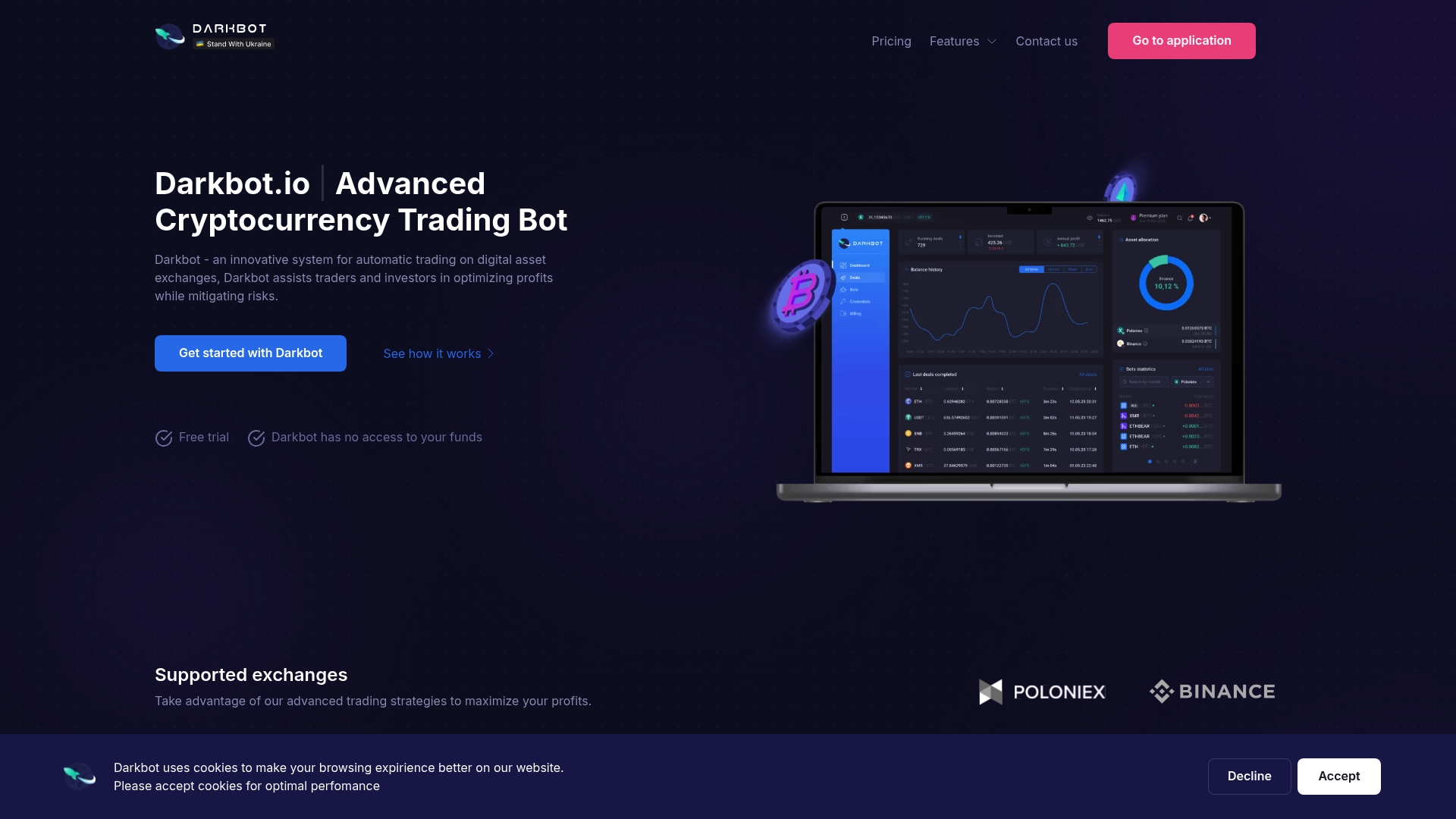
The platform supports automated portfolio management, real-time analytics, and strategy customization across asset classes and exchanges. Professionals managing diversified crypto portfolios can run multiple strategies in parallel without proportionally increasing monitoring time. Darkbot’s free, standard, and premium tiers allow professionals to start with a single strategy and scale as their automated workflow matures. The platform is built around systematic execution and structured risk control, not signal provision or performance promises. Explore Darkbot’s trading automation platform to see how it fits your current workflow.
FAQ
Why do professionals need trading automation?
Trading automation removes emotional execution errors and breaks the time constraints of manual trading. Professionals gain consistent rule-based execution and the ability to run multiple strategies simultaneously without proportionally increasing workload.
Is trading automation worth it for crypto markets?
Crypto markets run 24/7, making full manual coverage impossible for most professionals. Automation captures moves during sessions a trader cannot monitor and enforces strategy rules regardless of market volatility or trader availability.
What are the main risks of automated trading?
The primary risks are poor strategy quality, data feed failures, and insufficient human oversight. Automation amplifies both profitable and losing strategies, so a flawed system loses money faster than the same strategy traded manually.
How much time does automated trading require daily?
Fully automated setups typically require roughly 30 minutes of active monitoring per day. That time covers system health checks, trade log review, and risk parameter verification.
Do professionals still need to monitor automated systems?
Yes. Human oversight remains essential for kill switches, daily health checks, and recognizing market regime changes that require strategy adjustments or system pauses.
Recommended

Start trading on Darkbot with ease
Come and explore our crypto trading platform by connecting your free account!
Free plan available • No credit card required