Try Darkbot Free: The Altrady Alternative for Multi Exchange Traders
Darkbot is the strongest Altrady alternative for traders who want AI-driven automation across multiple exchanges with built-in backtesting and paper trading, rather than a terminal built primarily for manual charting with automation layered on top. Depending on your workflow, 3Commas, Bitsgap, Cryptohopper, and several exchange-native bot tools listed below cover different niches. The shortlist and migration steps that follow will help you pick correctly.
TL;DR:
- Darkbot offers AI and machine learning-optimized strategies across multiple exchanges with integrated backtesting and paper trading, focusing on systematic automation rather than manual charting.
- Strategy depth varies: Darkbot uses ongoing pattern evaluation for parameter adjustment, unlike platforms with static templates or basic sliders.
- Verify exchange and order type support before switching, and ensure API permissions are limited to trading and reading, not withdrawals, for security.
- Running both backtesting and paper trading is essential to trust platform performance, with paper trading reflecting real-time execution conditions.
- Mobile apps primarily support monitoring and manual trades; full strategy configuration remains best on desktop platforms.
Altrady Alternatives Compared: Darkbot and the Rest of the Shortlist
Every platform on this list gets compared to Altrady for a reason: users outgrow Altrady’s terminal-centric design, want deeper automation, or need exchange coverage Altrady doesn’t offer. G2’s competitors page and CB Insights both list 3Commas, Bitsgap, and Cryptohopper as the most frequently cited alternatives, which is a reasonable starting point, but not the full picture for traders who specifically want AI-assisted decision logic.
- Darkbot runs AI/ML-optimized strategies across multiple exchanges via API, with backtesting and paper trading built into the workflow before any capital goes live. Pricing spans free, standard, and premium tiers, so you can test the platform’s execution logic without committing. It’s built for traders who want systematic, rule-driven automation rather than a manual charting terminal with bots bolted on.
- 3Commas offers a SmartTrade terminal and a large library of DCA and Grid bot templates across many exchanges, suited to traders who want deep strategy customization inside a single dashboard.
- Bitsgap combines a unified terminal with arbitrage tools and a backtesting engine, appealing to traders running futures grid strategies across several exchanges at once.
- Cryptohopper runs in the cloud with a strategy marketplace and social trading features, good for users who want to copy or buy strategies rather than build every rule from scratch.
- WunderTrading focuses on TradingView webhook automation and copy trading, a fit for traders who already build alerts in TradingView and want them executed automatically.
- Pionex bundles multiple free bots (Grid, DCA, arbitrage) directly into its exchange, which suits traders comfortable holding funds in exchange custody for lower cost.
- Cornix auto-executes Telegram signals with DCA and trailing logic, built for traders who follow signal channels and want the execution automated rather than manual.
- Jarvis AI lets traders build code-free AI agents for experimentation, a niche fit for those testing LLM-driven workflows rather than running production strategies.
- Gate.io, Binance, OKX, Coinbase Exchange, UPHOLD, CoinDCX, PrimeXBT, and Zengo Wallet round out the category as exchanges or wallets with native bot features, broad liquidity, or custody options, each useful depending on which markets and asset types you trade.
Which Decision Dimensions Actually Matter Here?
“Exchanges supported” sounds like a simple checkbox, but in practice it determines whether your bot can route orders on the venue where you actually hold liquidity. A platform that lists ten integrations but lacks your specific pair mapping or order type support won’t help you. “Strategy depth” is a similarly loose term: some platforms offer strategy templates you customize with sliders, while others, like Darkbot, apply AI/ML-driven optimization that adjusts parameters based on ongoing pattern evaluation rather than static rules you set once and forget.
Review-based trust signals matter, but they measure different things depending on the source. G2’s aggregated ratings reflect user satisfaction with interface and support, not backtested performance. A platform with strong reviews for ease of use may still lack the exchange coverage or API permission granularity a systematic trader needs. Treat review counts as one input among several, not a ranking mechanism on their own.
Here’s how the shortlist breaks down against the dimensions that actually change outcomes:
- Multi-exchange execution accuracy: matters most for traders running the same strategy across several venues simultaneously, since order mapping errors compound with each added exchange.
- Backtesting fidelity: separates platforms that simulate historical fills realistically from those that just replay price charts.
- Free plan depth: some roundups highlight platforms with genuinely free built-in bots as valid options for traders who don’t need terminal-level charting depth.
- Documented API integration: the difference between a platform that publishes clear API permission scopes and one that leaves you guessing during setup.
Pro Tip: Never grant a trading bot withdrawal permissions on your exchange API key. Restrict keys to trade and read-only access, and test every new strategy in paper trading mode for at least a few full market cycles before allocating real capital.
Paper trading and backtesting answer different questions. Backtesting tells you how a strategy would have performed against historical data; paper trading tells you how the platform’s live execution engine behaves under current market conditions, including latency and slippage that backtests can’t fully capture. Run both before switching.
How to Choose and Migrate Without Losing Your Setup
- Ask vendor support directly which exchanges and order types (limit, market, stop, trailing) are fully supported, not just “connected.”
- Confirm API permission requirements in writing. A platform that only needs trade and read permissions is safer than one requesting withdrawal access.
- Check the trial or refund policy before funding anything. Darkbot offers a 14-day money-back guarantee alongside its free tier.
- Start with paper trading or backtesting on your actual strategy parameters, not a demo template.
- Move a small live allocation first, monitor execution against your backtest assumptions, and only scale up once results align.
- Treat a missing test mode, undocumented API integration process, or hidden fee structure as a reason to stop the switch and look elsewhere.
How Darkbot Maps to What Alternative Buyers Actually Check
Darkbot covers the checklist most alternative buyers work through: AI/ML strategy optimization, multi-exchange API integration, customizable strategy parameters, backtesting, paper trading, portfolio management, automated rebalancing, risk management tools, and real-time analytics, all documented on the Darkbot platform. Subscription tiers run free, standard, and premium, with a 14-day money-back guarantee that removes most of the risk from a first commitment.
For traders comparing this against 3Commas or Bitsgap feature-by-feature, the practical question is whether you want AI-driven parameter adjustment or manual template configuration. Darkbot is built for the former.
Security Features and Track Record Across These Platforms
Two-factor authentication and API key encryption are table stakes now, not differentiators, across nearly every platform on this list. What varies is how each vendor scopes API permissions and whether they document their security posture publicly. Third-party audit registries like CertiK’s Skynet list project-level verification for some platforms, which is worth checking directly rather than taking a vendor’s security claims at face value.
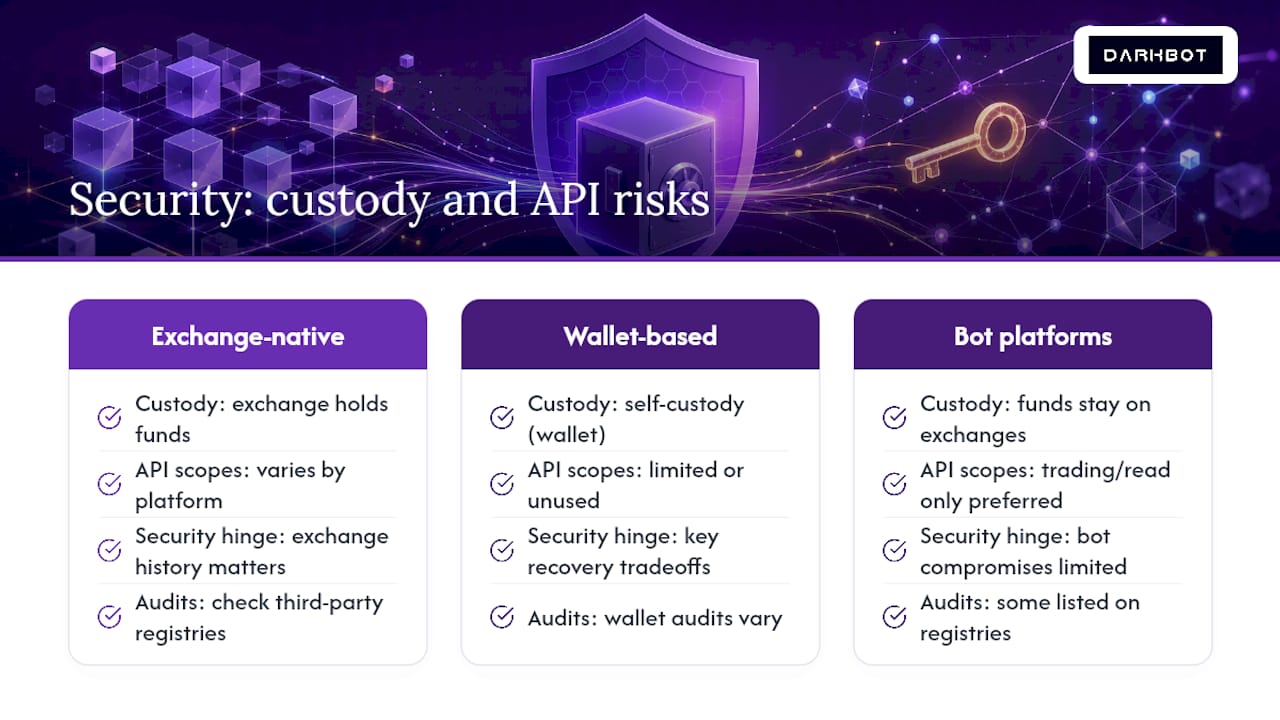
Exchange-native platforms like Binance, OKX, and Gate.io carry a different risk profile than dedicated bot software: your funds sit in exchange custody, so exchange-level security history matters as much as the bot layer itself. Wallet-based options like Zengo Wallet shift custody risk toward self-custody models with their own tradeoffs around key recovery.
For dedicated bot platforms including Darkbot, 3Commas, Bitsgap, and Cryptohopper, funds generally remain on the connected exchange, and the bot only holds trade permissions through API keys. This limits exposure if the bot platform itself is compromised, since a stolen API key without withdrawal rights can’t move funds off the exchange. Always verify that a platform restricts its own requested API scopes to trading and reading account data, never withdrawals, before connecting any account.
No platform on this list is immune to risk, and past reliability doesn’t guarantee future security. Read each vendor’s documented security practices directly rather than relying on marketing language, and revisit your API key permissions periodically as you add or remove connected exchanges.
Customer Support: What to Expect Before You Commit
Support responsiveness varies more than most comparison pages admit. Terminal-heavy platforms like 3Commas and Bitsgap typically route support through ticket systems and community forums, with response times that stretch during high-volatility periods when everyone needs help simultaneously. Cloud-based platforms with marketplace features, such as Cryptohopper, often lean on community-driven support alongside official channels.
Darkbot structures onboarding with personalized support rather than leaving new users to figure out API setup alone, which matters most in the first two weeks after switching, when misconfigured exchange keys or misunderstood order types cause the bulk of setup errors. Ask any vendor directly what support channels exist (live chat, email, ticket queue) and what their typical first-response window looks like before you commit capital.
Exchange-native bot tools bundled inside Binance, Gate.io, OKX, or Coinbase Exchange route support through the exchange’s own customer service, which handles account and custody issues well but may be less specialized for bot-specific troubleshooting. If your strategy depends on precise order execution logic, a platform with dedicated trading-bot support tends to resolve issues faster than a general exchange help desk juggling unrelated account questions.
Comparing the Trading Interface Experience
Terminal-first platforms like 3Commas and Bitsgap pack multiple charts, order books, and bot configuration panels into one dense dashboard, which rewards traders who want everything visible at once but can overwhelm someone just starting with automation. Cryptohopper’s marketplace-driven interface adds a layer for browsing and installing strategies, which simplifies setup for less technical users at the cost of some configuration depth.
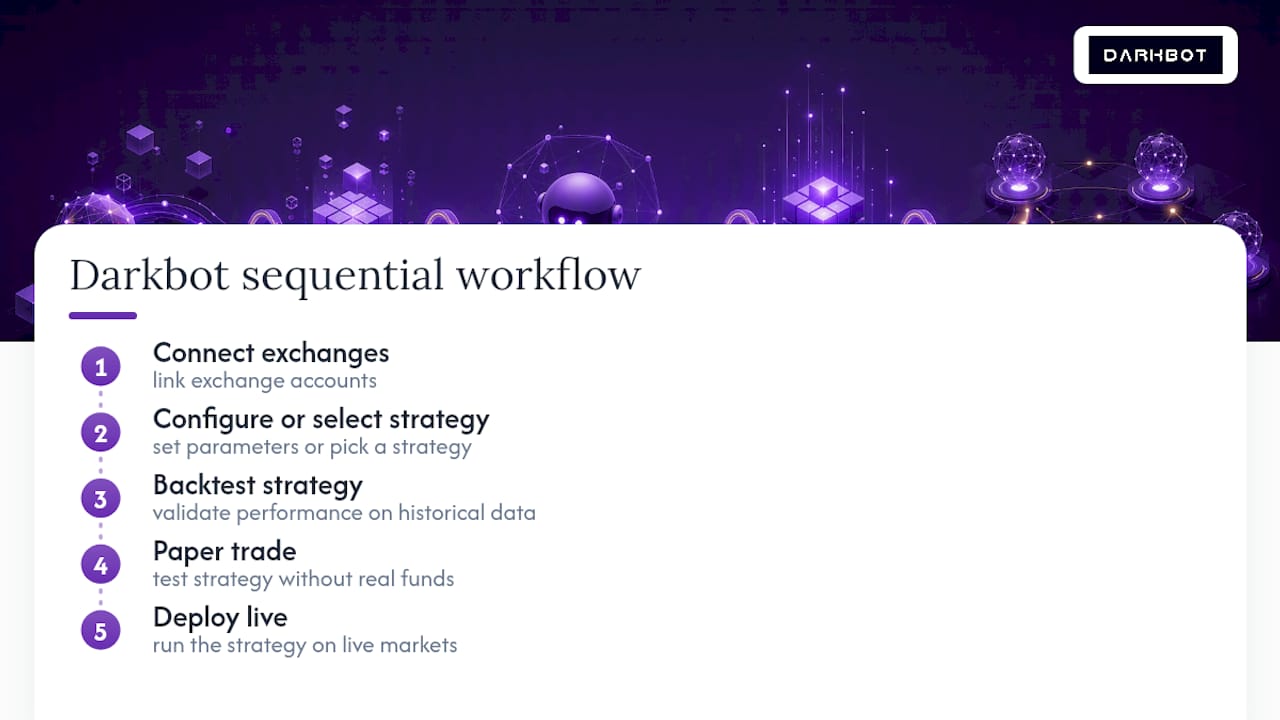
Darkbot’s interface is built around a more linear workflow: connect exchanges, configure or select a strategy, backtest it, paper trade it, then deploy live. That structure suits traders who want a repeatable decision process rather than a dashboard full of simultaneous options. Exchange-native tools inside Binance, OKX, and Gate.io tend to feel the most minimal, since bot configuration sits as one feature among many inside a broader trading platform rather than the main product.
None of these approaches is objectively better across every trader profile. A discretionary trader monitoring multiple charts benefits from terminal density. A systematic trader who wants to define rules once and let execution run without constant supervision benefits more from a streamlined, sequential interface.
Mobile Access Across the Shortlist
Mobile functionality still lags desktop feature parity across nearly this entire category. Exchanges like Binance, Coinbase Exchange, OKX, and Gate.io offer full-featured mobile apps since trading is their core product, letting you monitor positions and execute manual trades from a phone with little friction. Dedicated bot platforms generally offer mobile apps focused on monitoring bot performance and portfolio balances rather than full strategy configuration, which usually still requires a desktop browser session.
This split makes sense operationally: configuring backtests, adjusting risk parameters, and reviewing multi-exchange analytics benefits from a larger screen and more careful attention, while checking whether a bot is running as expected is well suited to a quick mobile glance. If mobile-first configuration is a hard requirement for your workflow, prioritize exchange-native bot tools over dedicated software, and treat that convenience as a tradeoff against the deeper strategy customization terminal-based platforms and Darkbot offer on desktop.
Community Support and Learning Resources
Signal-driven platforms like Cornix depend heavily on the Telegram channels feeding them, which means the “community” is really the signal provider’s audience, not a platform-owned resource. Marketplace platforms like Cryptohopper and 3Commas benefit from active user forums where traders share bot configurations and strategy templates, which shortens the learning curve for common setups.
Darkbot pairs its free tier with structured onboarding rather than relying solely on community forums, aiming to get new users through exchange connection, strategy selection, and paper trading correctly the first time. For traders who prefer learning through documentation and guided setup over crowdsourced forum threads, that structured path tends to reduce early configuration mistakes. Whichever platform you choose, verify that documentation covers API setup, order type behavior, and risk parameter definitions clearly. Vague documentation is one of the more reliable warning signs that support will be thin once you’re a paying customer.
Terminal or Specialist Automation: Which Fits Your Workflow?
Terminal-first platforms suit traders who want to watch charts and intervene manually with some automation support. Specialist bot platforms suit traders who want a defined, repeatable process: define rules, backtest, paper trade, deploy, monitor. Darkbot fits that second group best, particularly traders managing multiple exchanges who want AI-assisted parameter adjustment instead of static templates. A trader migrating from Altrady’s terminal to a rules-based workflow might start with one exchange, backtest a single strategy for a full market cycle, then expand once results hold up under paper trading.
— Grisha
Try Darkbot’s Automation Before You Commit to a Switch
Darkbot gives you a way to test AI-driven, multi-exchange automation without the manual terminal work Altrady’s alternatives still expect from users. The free tier and 14-day money-back guarantee let you connect an exchange, backtest a strategy, and run paper trading before any capital moves.
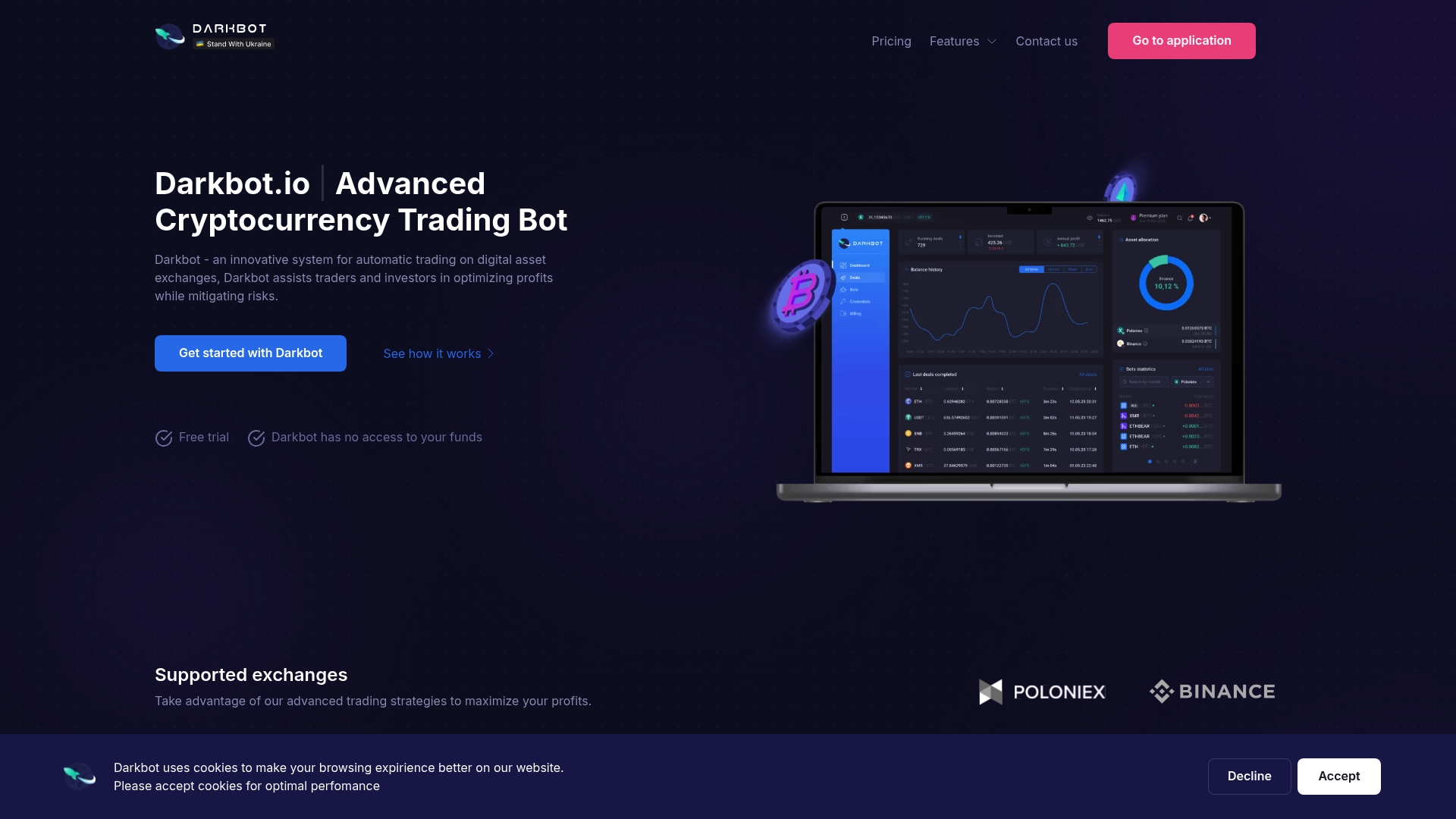
Migrating from another platform doesn’t require rebuilding everything at once. Darkbot’s onboarding support walks you through API key setup, exchange mapping, and strategy configuration so you’re not troubleshooting alone during the switch. If you’re also comparing execution approaches more broadly, the comparison of algorithmic trading platforms covers how different automation styles handle live deployment.
Start by connecting a single exchange on the Darkbot free tier, backtest one strategy against recent market data, and move to paper trading before deciding whether to allocate live capital.
Sources
The comparisons above draw on G2’s Altrady competitors page for user review data, CB Insights’ alternatives listing for the commonly cited competitor set, Altrady’s own features page for baseline feature expectations, and CertiK’s Skynet registry for third-party project verification checks.
FAQ
How Much Does Altrady Cost?
Altrady publishes tiered subscription pricing on its own site rather than a single flat rate; check its features page for current plan details before comparing against alternatives.
Which Crypto Assets Should Traders Be Cautious About?
Low-liquidity tokens with thin order books and unverified or unaudited projects carry higher execution and rug-pull risk; checking third-party audit registries like CertiK’s Skynet before trading a new asset is a reasonable precaution.
What Is the Best Crypto Copy Trading Platform?
WunderTrading is commonly cited for copy trading built around TradingView automation, while Cryptohopper offers marketplace-based strategy following; the better fit depends on whether you want to copy signals or copy full strategy configurations.
Is Anything Better Than TradingView for Charting?
TradingView remains a charting standard that many bot platforms, including WunderTrading, integrate with directly rather than replace; the more relevant question for automation is which platform executes your TradingView alerts most reliably, not which charting tool to switch to.
Is Darkbot a Good Altrady Alternative for Multi-Exchange Trading?
Darkbot fits traders who want AI-driven strategy optimization with built-in backtesting and paper trading across multiple exchanges, rather than a manual charting terminal with automation added on top.
Recommended

Start trading on Darkbot with ease
Come and explore our crypto trading platform by connecting your free account!
Free plan available • No credit card required