API Key Rotation for Developers: Zero-Downtime Automation

The safe default for API key rotation is automation built on a dual-key overlap pattern backed by a secrets vault. You generate a new key, let it run alongside the old one during a grace period, confirm every consumer has switched over, then revoke the original. No downtime, no scrambling, no shared secret living untouched for a year.
Here’s the checklist to act on today:
- Inventory every key by risk level (production, service-to-service, admin, third-party).
- Move static keys into vault-based dynamic retrieval instead of hardcoded config.
- Set a rotation trigger, either scheduled or event-driven, for each key category.
- Build in an overlap window so old and new keys both validate briefly.
- Monitor usage patterns and revoke immediately on any anomaly.
Pro Tip: Treat rotation as a routine deploy, not an incident. Teams that only rotate keys after a scare tend to skip the overlap window under pressure, which is exactly when mistakes cause outages.
This approach cuts the blast radius of a leaked credential and keeps services running while you swap it out.
Key Takeaways
Automated, zero-downtime API key rotation reduces breach exposure and keeps compliance and uptime intact without manual intervention.
| Point | Details |
|---|---|
| Default to dual-key overlap | Run old and new keys simultaneously during a grace period to avoid downtime. |
| Match cadence to risk | Rotate production keys regularly, with admin and service keys rotated more frequently. |
| Automate the trigger | Use scheduled jobs for routine cycles and event-driven triggers for leaks or offboarding. |
| Revoke on suspicion, not confirmation | Treat any suspected leak as confirmed compromise and rotate immediately. |
| Store versioned keys in a vault | Name keys with rotation dates for faster audits and incident response. |
Why Rotating API Keys Matters Right Now
A static API key is a standing liability. The longer it lives unchanged, the more places it ends up: build logs, container images, a forgotten .env file committed to a public repo. Rotation limits how much damage a single exposed key can do, because it caps the window during which that credential remains valid.
Compliance frameworks treat this as table stakes rather than a nice-to-have. SOC 2 auditors expect documented key lifecycle policies, and PCI DSS assessors specifically look for evidence of periodic credential rotation tied to access scope. Rotation guidance from APIScout frames this as blast-radius reduction: shorter-lived keys mean a compromised credential has less time to do harm before it stops working.
There’s also an insider-risk angle. Employees leave, contractors finish engagements, and orphaned keys tied to departed team members quietly accumulate:
- Leaked keys in public GitHub repositories remain one of the most common exposure vectors.
- Container images baked with embedded secrets often outlive the deployment that needed them.
- Log files and error traces can capture keys passed as query parameters.
Setting a Practical API Key Rotation Policy
Not every key deserves the same rotation clock. A read-only analytics key carries far less risk than an admin key with write access to production infrastructure, so your policy should scale rotation frequency to privilege and exposure.
APIScout’s guidance suggests a workable baseline: production keys every 90 days, service-to-service keys every 30 days, and admin credentials also on a 30-day cycle, each with an overlapping grace period rather than a hard cutoff.
| Key Type | Recommended Cadence | Enforcement Style |
|---|---|---|
| Production API keys | Every 90 days | Automated, scheduled |
| Service-to-service keys | Every 30 days | Automated, scheduled |
| Admin/privileged keys | Every 30 days | Automated with manual approval step |
| Third-party integration keys | Every 60 to 90 days | Scheduled with owner reminder |
| Legacy or deprecated keys | Immediate migration | Manual, tracked to deprecation date |
Send warning notices to key owners well ahead of expiration, and build a deprecation schedule for any key type you’re phasing out so consumers aren’t caught off guard.
The Core API Key Rotation Workflow
Every rotation, whether scheduled or triggered by an incident, follows the same lifecycle. Skipping a step is usually where outages come from.
- Generate a new key through the provider’s API or console, never by hand-editing a shared file.
- Distribute it to the vault or secrets manager, tagged with a version identifier.
- Use the new key in a canary deployment before rolling it out fleet-wide.
- Monitor both keys during the overlap window for error rates and usage patterns.
- Rotate traffic fully onto the new key once telemetry confirms a clean migration.
- Revoke the old key and log the action for audit purposes.
generate -> distribute -> use -> monitor -> rotate -> revoke
    ^                                                  |
    |__________________ next cycle __________________|
Pro Tip: Name keys with their rotation date or a version number, like prod-key-v14-2026-03, instead of a generic label. OpenRouter’s rotation cookbook notes this small habit makes audit trails and incident investigations far faster, since you can tell at a glance which key was active during a given window.

Zero-Downtime Rotation Patterns You Can Rely On
The dual-key overlap pattern is the backbone of zero-downtime rotation: both the old and new keys validate simultaneously for a defined grace period, giving every downstream consumer time to switch without a hard cutover. Zuplo’s lifecycle documentation lays out this exact sequence, create, store, grace period, revoke.
Grace period length depends on your deployment cadence and cache TTLs. A service that redeploys hourly can use a short window; a mobile app with slow update adoption needs days, sometimes weeks.
- Dual-key overlap works best for internal services where you control both ends of the integration.
- Roll-key pattern (an atomic create-new-plus-expire-old call) suits providers that expose a single endpoint for the whole operation, reducing coordination errors.
- Phased migration fits large external consumer bases, rolling the new key out to a subset of traffic before going fleet-wide.
Choose the grace window based on how fast your slowest consumer can realistically update, not on convenience.
Automating Key Rotation: Scheduled and Event-Driven
Manual rotation doesn’t scale past a handful of keys, and it’s the first thing skipped when a team is busy. Automation removes that failure mode entirely. Start with Identity’s automation guide frames this as migrating from static configuration to dynamic secret retrieval, then letting a vault policy or orchestrator handle the rest.
- Scheduled rotation: a cron job, CI/CD pipeline step, or secrets manager policy fires on a fixed interval, generating a new key and deprecating the old one automatically.
- Event-driven rotation: a trigger such as leak detection, offboarding, or an anomalous usage spike forces an immediate, out-of-cycle rotation.
- Pipeline integration: a rotation job calls the provider’s key-creation endpoint, writes the new secret to the vault, waits for a health check, then calls the revoke endpoint on the old key.
Vendor-native rotate endpoints, where they exist, cut down on coordination mistakes because create-and-expire happens as one atomic operation instead of separate calls your own code has to sequence correctly.
Emergency Revocation: What to Do When a Key Leaks
Scheduled rotation handles routine hygiene. A suspected leak needs a different clock entirely, measured in minutes, not days.
| Incident Type | Action | Urgency |
|---|---|---|
| Key posted in a public repo | Revoke and rotate immediately | Critical, act within minutes |
| Employee or contractor offboarding | Revoke keys tied to that person | High, same business day |
| Anomalous traffic spike or new geography | Investigate, rotate if unconfirmed | High, within hours |
| Suspected phishing or support impersonation | Rotate as a precaution | High, treat as confirmed |
| Routine policy expiration | Standard scheduled rotation | Low, follows normal cadence |
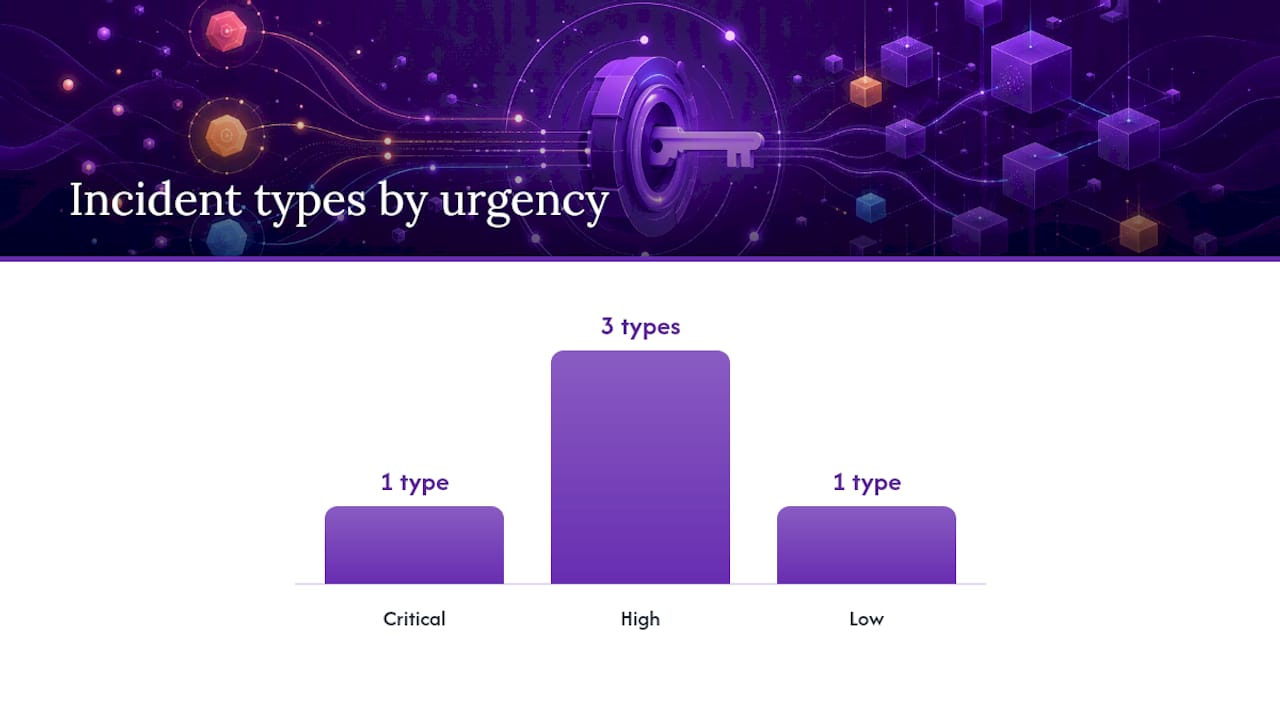
Vendors including Stripe are explicit that they will never ask for your secret keys through a support channel, so treat any such request as an active phishing attempt and rotate on the spot.
Once you revoke, the next steps matter as much as the revocation itself:
- Pull access logs for the compromised key’s full active window.
- Notify the key’s owning team and any downstream service consumers.
- Log the incident, the revocation timestamp, and the new key’s version in your audit trail.
- Roll back any suspicious transactions or configuration changes made during the exposure window.
Vendor and Open-Source Patterns Worth Studying
You don’t need to design a rotation system from scratch. Several vendors and open-source projects have already solved the hard parts.
- AWS Secrets Manager is a common backbone for teams storing current and previous key versions, often paired with a scheduled function that drives the rotation itself.
- Stripe documents managed, rotatable API keys and is explicit that suspected exposure should be treated as confirmed compromise.
- Kong Gateway recommends placing keys in headers rather than query parameters, since query strings tend to leak into logs and browser history.
- Coinbase Prime exposes a dedicated rotate endpoint with a configurable grace window, an example of a provider handling the atomic create-and-expire operation for you.
- The how-to-rotate repository on GitHub is an open-source collection of provider-specific rotation guides covering GitHub, AWS, Mailchimp, and dozens of other services.
Gateway-managed rotation (where an API gateway like Kong owns the key lifecycle) tends to reduce coordination overhead versus application-managed rotation, where every service has to implement its own vault calls. For a deeper look at how these controls interact with exchange-level protections, Darkbot’s breakdown of exchange API security covers IP whitelisting alongside key rotation. For a broader developer perspective on authentication rules, TradeDupe’s coverage of API security is a useful outside reference.
A Copyable Checklist and Policy Table for Your Runbook
Paste this into your team’s operational runbook rather than treating rotation as tribal knowledge.
- Inventory every active key and assign a named owner.
- Record scope (read, write, admin) and the exchange or service it connects to.
- Set a rotation cadence per the policy table above and automate the trigger.
- Define a grace period matched to your slowest consumer’s deployment cycle.
- Wire up monitoring for usage anomalies before you need it during an incident.
| Field | What to Capture |
|---|---|
| Owner | Named individual or team responsible for the key |
| Scope | Permissions granted (read-only, trade, withdrawal, admin) |
| Rotation cadence | Days between scheduled rotations |
| Grace period | Overlap duration before old key revocation |
| Last rotated | Timestamp of the most recent rotation event |
Darkbot’s own API and market data integration is built around this same principle: exchange credentials are handled through scoped, monitored connections rather than static, long-lived secrets, consistent with the operational security practices that govern how the platform connects to exchange accounts.
Why This Guide Reflects How Darkbot Handles API Credentials
This guide mirrors the operational discipline Darkbot applies internally: exchange connections rely on scoped, monitored credentials rather than static secrets left untouched indefinitely. Systematic key hygiene is part of systematic trading infrastructure, not a separate concern bolted on afterward.
Sources
- API Key Management: Rotation & Revocation 2026 | APIScout
- API Key Rotation lifecycle management — Zuplo Learning Center
- API Key Rotation Automation Guide — Start with Identity
- Stripe — Keys best practices
FAQ
What Does It Mean to Rotate an API Key?
Rotating an API key means generating a new credential to replace an existing one, then retiring the old key once every consumer has switched over, typically through a brief overlap window rather than an abrupt swap.
How Often Should API Keys Be Rotated?
Frequency should match privilege and exposure: a common baseline is 90 days for production keys and 30 days for service-to-service and admin keys, with shorter cycles for anything high-risk.
Why Do API Keys Need to Be Rotated?
Rotation limits how long a leaked or compromised key stays useful to an attacker, reducing the blast radius of exposure and satisfying compliance requirements like SOC 2 and PCI DSS that expect documented credential lifecycles.
What Is the Best Practice for Rotating API Keys Without Downtime?
Use a dual-key overlap pattern: create the new key, store it in a secrets vault, let both keys validate during a grace period, then revoke the old key only after telemetry confirms every consumer has migrated.
Recommended

Start trading on Darkbot with ease
Come and explore our crypto trading platform by connecting your free account!
Free plan available • No credit card required