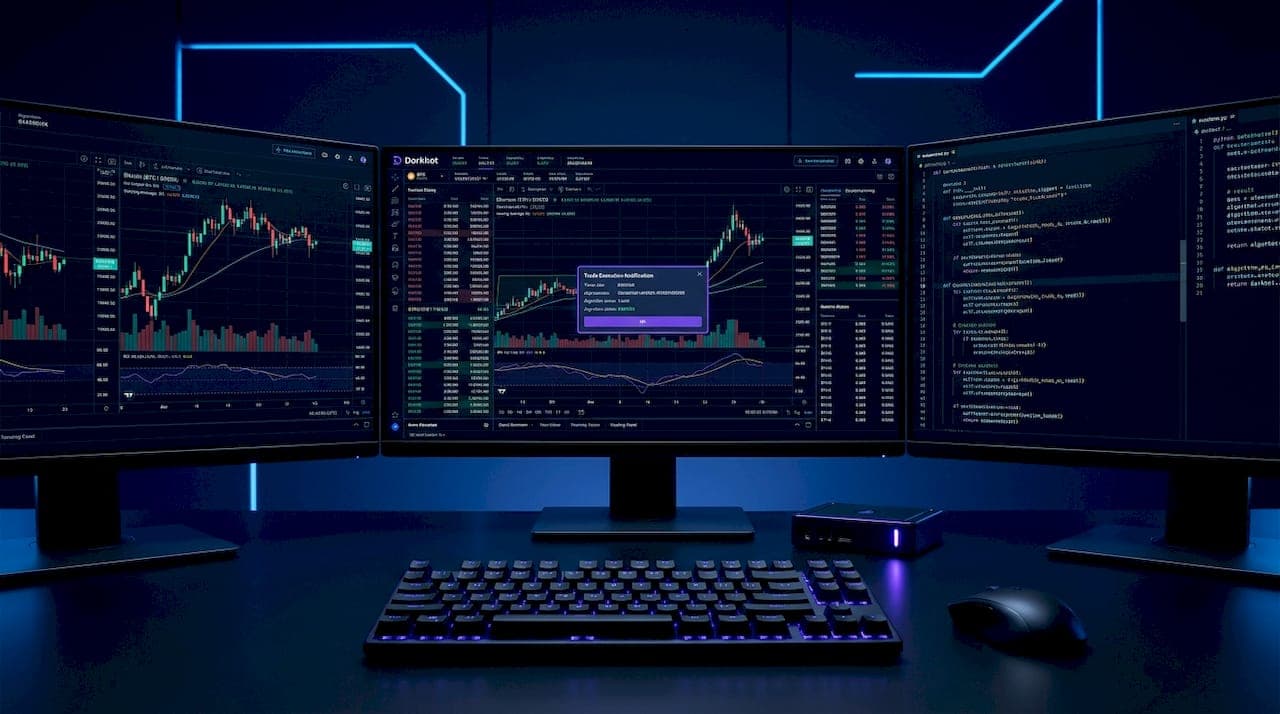
Benefits of Automated Portfolio Management in 2026

TL;DR:
- Automated portfolio management uses algorithms to execute rebalancing, risk adjustments, and tax strategies without manual intervention. It offers continuous market monitoring, disciplined execution, and tax optimization, surpassing manual methods in scale and consistency. Properly configured automation removes emotional bias, maintains risk discipline, and enhances returns through steady process execution.
Automated portfolio management is defined as algorithm-driven, rule-based control of investment portfolios that executes rebalancing, risk adjustments, and tax strategies without manual intervention. The core benefits of automated portfolio management include continuous market monitoring, disciplined execution, and tax optimization that most manual approaches cannot replicate at scale. Platforms like Betterment in traditional finance and Darkbot in cryptocurrency markets demonstrate how automation removes the operational burden from investors while maintaining systematic control. Automated investing operates 24/7, reducing emotional bias and enabling real-time responses to market conditions that human managers routinely miss.
1. what are the main operational benefits of automated portfolio management?
Automation delivers its clearest value through speed and consistency. Algorithmic systems execute trades in milliseconds, rebalance positions in real time, and monitor every asset class simultaneously. No human team can match that operational throughput across a diversified portfolio.
The advantages of portfolio automation at the operational level include:
- 24/7 monitoring: Automated systems never sleep, take breaks, or miss a market move. This matters especially in cryptocurrency, where prices shift significantly outside traditional trading hours.
- Faster execution: Algorithms process signals and place orders far faster than manual workflows, reducing slippage and capturing tighter entry points.
- Consistent rule application: Every trade follows the same logic. There is no deviation based on mood, fatigue, or recency bias.
- Reduced human error: Automated systems eliminate fat-finger mistakes, missed rebalancing windows, and delayed responses to risk triggers.
Pro Tip: Set clear rule parameters before activating any automated system. Automation amplifies your strategy, so a poorly defined strategy will produce poor results at scale.
The reduction of emotional decision-making is one of the most underrated automated investment advantages. Behavioral finance research consistently shows that investors underperform their own portfolios because they buy high and sell low under stress. Automation removes that variable entirely.

2. how automation builds discipline and controls portfolio risk
Systematic rebalancing is the mechanism that keeps a portfolio aligned with its target risk profile. Without it, a strong-performing asset class grows to dominate the portfolio, increasing concentration risk beyond the investor’s original tolerance.
Disciplined portfolio management including rebalancing can add up to 3% per year in net returns, with rebalancing alone accounting for up to 35 basis points annually. That figure comes from Vanguard’s Advisor’s Alpha framework, which quantifies the return impact of process discipline over time.
| Risk Control Feature | Manual Approach | Automated Approach |
|---|---|---|
| Rebalancing frequency | Quarterly or ad hoc | Continuous, threshold-based |
| Drift detection | Periodic review | Real-time monitoring |
| Rule consistency | Subject to human judgment | Algorithmic, no deviation |
| Emotional override risk | High | Eliminated |
| Response to volatility | Delayed | Immediate |
Threshold-based rebalancing is the correct model. Automated portfolio drift control works best when trades only execute after an asset class crosses a predefined deviation band. This avoids over-trading, which generates unnecessary costs and tax events.
Pro Tip: For crypto portfolios, set wider rebalancing thresholds than you would for equities. Crypto volatility is higher, and tight thresholds will trigger excessive trading that erodes returns through fees.
The role of automation in maintaining disciplined investing becomes especially clear during periods of market stress. When risk appetite drops sharply, human investors tend to reallocate impulsively. Automated systems hold to the defined strategy unless the rules themselves specify otherwise.
3. tax advantages that automated portfolio management delivers
Tax-loss harvesting is the practice of selling positions at a loss to offset capital gains elsewhere in the portfolio. Automated systems perform this function continuously, not just at year-end, which produces meaningfully better outcomes.
The key tax advantages of portfolio management automation work as follows:
- Continuous loss identification: Automated systems scan positions daily or intraday for harvesting opportunities, rather than waiting for a scheduled review.
- Cost-benefit filtering: Trades only execute when the tax benefit exceeds the transaction cost, preventing value-destroying harvesting.
- Wash-sale compliance: Rule-based systems can be programmed to avoid wash-sale violations automatically, reducing compliance risk.
- Coordination across accounts: Automation can manage tax exposure across multiple accounts simultaneously, something manual management rarely achieves.
Daily analysis enhances tax-loss harvesting compared to monthly checks, according to J.P. Morgan research. The reason is straightforward: markets move daily, and loss opportunities that exist on a Tuesday may disappear by Friday.
“Higher frequency tax-loss harvesting captures more opportunities — an operational edge that is difficult to replicate manually.” — J.P. Morgan Asset Management
The quantified value is significant. Tax-loss harvesting delivers median annualized alpha of 1.08% early in an investment horizon, decaying to 0.42% over the long term for high-bracket investors. That alpha is not from better stock picking. It comes purely from systematic tax management, which automation executes more reliably than any manual process.
Betterment has built continuous tax-loss harvesting into its core product. Automated tax-loss harvesting realizes losses multiple times monthly when cost-benefit conditions are met, unlike calendar-based approaches that check once per quarter or year.
4. why transaction costs and market friction matter in automated crypto trading
Transaction costs are the silent drain on automated portfolio performance. Fees, spreads, and slippage compound across hundreds of trades. An algorithm that ignores these costs will generate activity that looks profitable on paper but underperforms in practice.
The critical friction factors in automated crypto portfolio management include:
- Exchange fees: Most crypto exchanges charge 0.1%–0.5% per trade. At high rebalancing frequency, these costs accumulate fast.
- Bid-ask spreads: Illiquid trading pairs carry wide spreads that reduce execution quality on every order.
- Slippage: Large orders move the market against the trader, especially in lower-liquidity altcoin markets.
- Network fees: On-chain transactions carry gas costs that vary with network congestion and can spike unpredictably.
Fees and market frictions significantly impact crypto automated trading strategies. Ignoring them leads to systematic underperformance, according to MDPI research on automated crypto portfolio management. The study found that optimal algorithms must model transaction costs explicitly to avoid unprofitable churn.
The practical solution is friction-sensitive logic. Cost-aware algorithms switch to a no-trade decision when friction exceeds the expected benefit of rebalancing. This prevents value erosion from excessive activity. A well-designed system trades less than a naive automation setup, and that restraint is a feature, not a limitation.
Understanding crypto portfolio automation at this level separates effective systems from those that simply automate bad habits at higher speed.
5. how automated portfolio tools compare for different investor profiles
Not every automated portfolio management platform fits every investor. The right choice depends on asset class focus, customization needs, and cost structure.
| Platform Type | Best For | Tax Features | Customization | Crypto Support |
|---|---|---|---|---|
| Traditional robo-advisors (e.g., Betterment) | Long-term equity/bond investors | Strong (TLH included) | Limited | Minimal |
| AI-driven crypto bots (e.g., Darkbot) | Active crypto traders | Varies by exchange | High | Full |
| Hybrid wealth platforms | High-net-worth multi-asset | Advanced tax coordination | Moderate | Partial |
| DIY algorithmic tools | Quantitative traders | Manual setup required | Maximum | Full |
Traditional robo-advisors excel at low-cost, hands-off management for standard asset classes. They apply automated rebalancing and tax-focused features consistently and require minimal user input. The tradeoff is limited flexibility.
Crypto-focused platforms like Darkbot operate differently. They connect to exchanges via API keys, execute strategies across multiple trading pairs simultaneously, and apply rule-based logic to volatile, 24/7 markets. The key advantages of automated crypto trading include speed, multi-exchange coverage, and the ability to run multiple strategies in parallel without manual oversight.
The core question for any investor is whether the platform’s logic matches their risk tolerance and investment goals. Automation amplifies the strategy you give it. A well-defined strategy produces consistent results. A vague one produces consistent noise.
Key takeaways
Automated portfolio management delivers measurable advantages through disciplined execution, continuous tax optimization, and friction-aware trading logic rather than through market prediction.
| Point | Details |
|---|---|
| 24/7 operational edge | Automated systems monitor and adjust portfolios continuously, capturing opportunities human managers miss. |
| Rebalancing adds real returns | Vanguard research shows disciplined rebalancing contributes up to 35 basis points annually in net returns. |
| Tax harvesting compounds value | Daily tax-loss harvesting generates median alpha of 1.08% early in the investment horizon for high-bracket investors. |
| Friction sensitivity is required | Crypto automation must model fees and slippage explicitly; ignoring costs leads to systematic underperformance. |
| Platform fit determines outcomes | Choose tools based on asset class, customization needs, and whether tax features match your tax situation. |
Automation is a process tool, not a prediction engine
I have spent years watching investors approach automated portfolio management with the wrong expectation. They want a system that predicts the market. What automation actually delivers is something more reliable: a system that executes your strategy without deviation, every time, under any market condition.
The distinction matters. Automation provides greater practical value through disciplined execution rather than market prediction. That framing should guide every decision you make when evaluating these tools.
The investors who get the most from automation are those who define their strategy clearly before they turn the system on. They set rebalancing thresholds based on their actual cost structure. They configure tax-loss harvesting rules that reflect their tax bracket. They test friction sensitivity before deploying capital at scale.
Crypto adds a layer of complexity that traditional robo-advisors were not built to handle. Volatility is higher, markets run continuously, and transaction costs vary dramatically by exchange and asset pair. A platform designed for equity portfolios will not manage a Bitcoin and altcoin portfolio well. You need tools built specifically for that environment, with smart automation for risk management baked into the execution logic.
My honest recommendation: treat automation as a discipline tool first and an efficiency tool second. The efficiency gains are real and measurable. But the deeper value is that it removes you from the decision loop at the moments when human judgment is most likely to fail.
— Grisha
Put automated portfolio management to work with Darkbot
Darkbot is built for traders and investors who want systematic, rule-driven control over cryptocurrency portfolios across multiple exchanges. The platform connects via API keys to major exchanges, runs multiple simultaneous bots, and applies friction-sensitive rebalancing logic that accounts for fees and slippage before executing any trade.
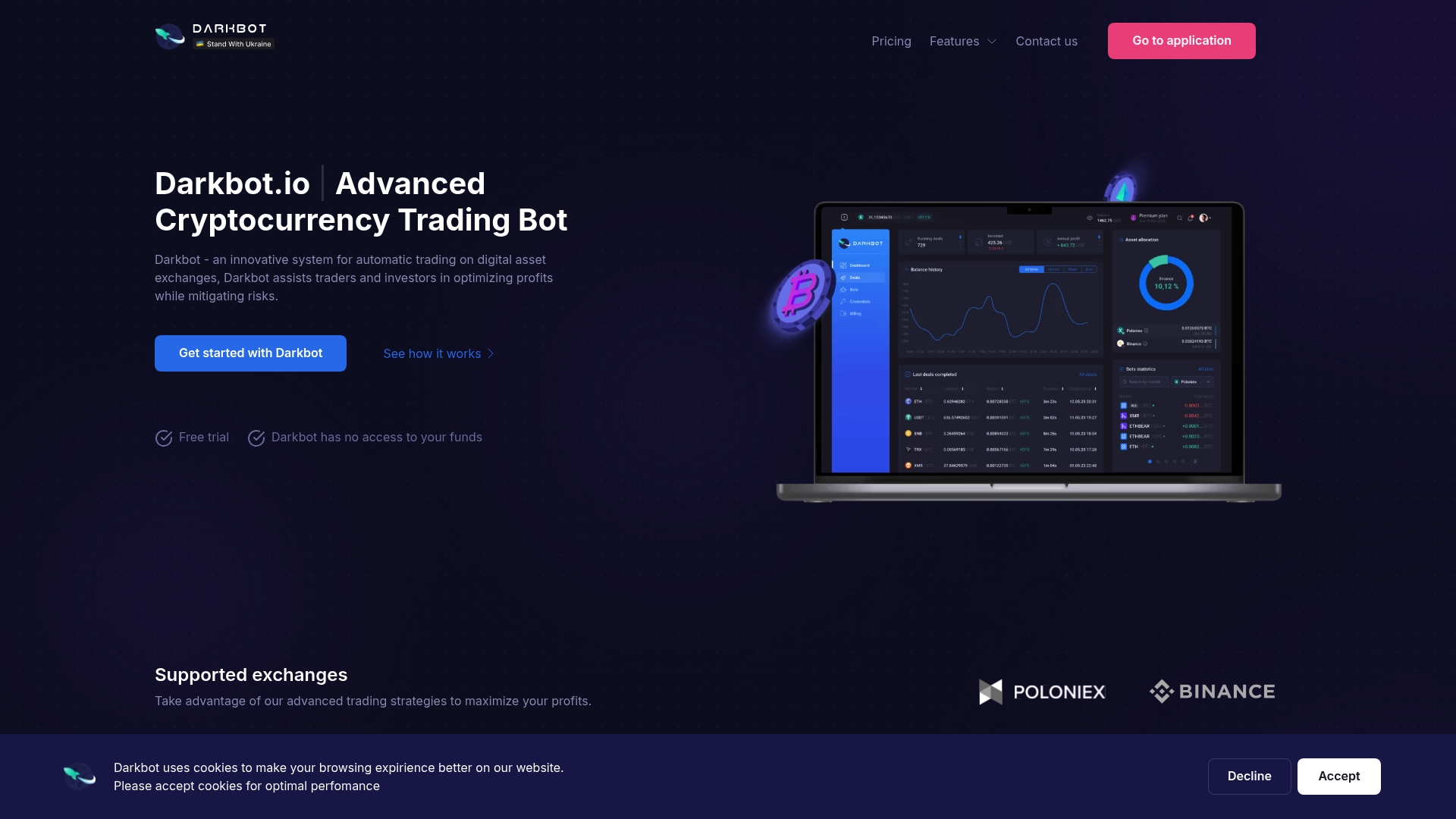
Every strategy on Darkbot operates on defined rules, not signals or predictions. The system monitors positions continuously, applies automated portfolio rebalancing based on your configured thresholds, and provides real-time analytics so you can evaluate performance against your original strategy. Darkbot offers free, standard, and premium tiers, making systematic crypto portfolio automation accessible at any scale. Explore the full platform at Darkbot.
FAQ
What is automated portfolio management?
Automated portfolio management is algorithm-driven control of an investment portfolio that executes rebalancing, risk adjustments, and tax strategies based on predefined rules without manual input.
Why use automated portfolio management over manual methods?
Automated systems operate 24/7, eliminate emotional decision-making, and apply consistent rules across every trade. Vanguard research shows disciplined rebalancing alone can add up to 35 basis points annually in net returns.
How does automated tax-loss harvesting work?
Automated tax-loss harvesting scans positions continuously for opportunities to realize losses that offset capital gains. J.P. Morgan research shows daily analysis captures significantly more opportunities than monthly or quarterly calendar-based approaches.
Are automated portfolio management tools suitable for crypto investors?
Yes, but the platform must be built for crypto specifically. Crypto markets run 24/7, carry higher volatility, and have variable transaction costs that require friction-sensitive algorithms to avoid unprofitable over-trading.
How does automated rebalancing control portfolio risk?
Automated rebalancing detects when asset allocations drift beyond target thresholds and executes corrective trades. Threshold-based systems only trade when the drift justifies the cost, preventing value erosion from excessive activity.
Recommended

Start trading on Darkbot with ease
Come and explore our crypto trading platform by connecting your free account!
Free plan available • No credit card required