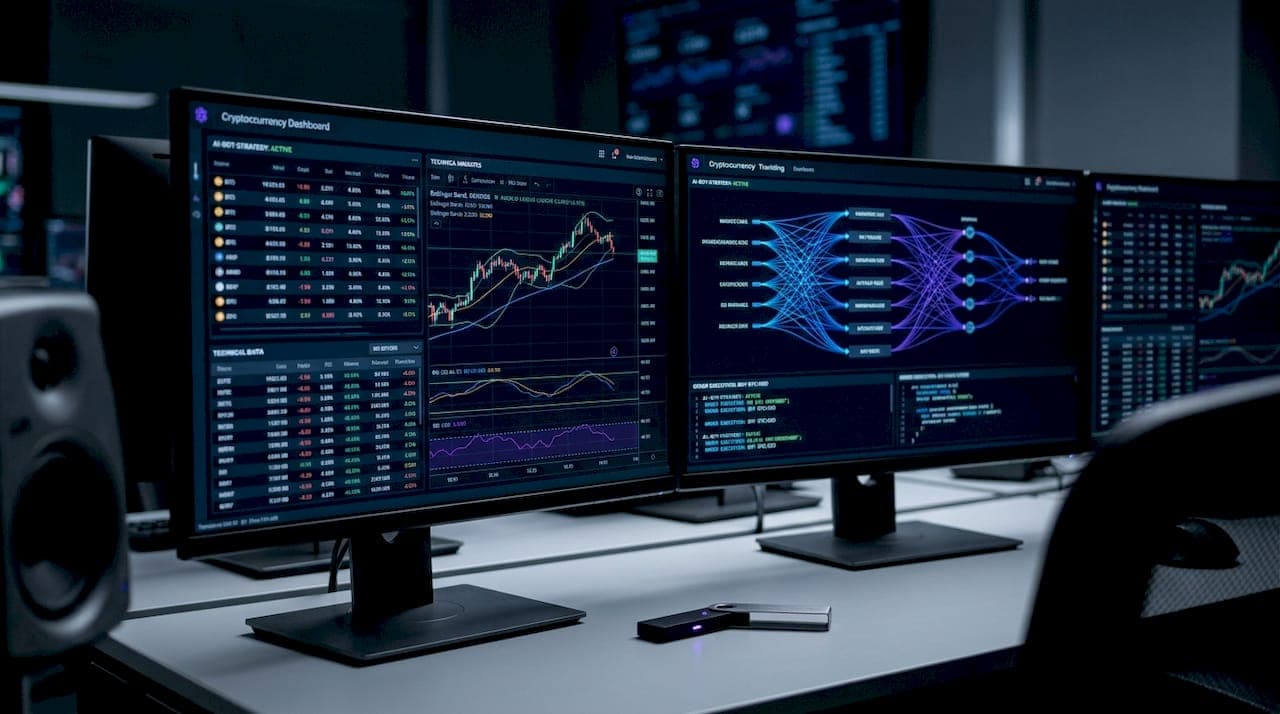
Build an Effective Crypto Trading Strategy Workflow
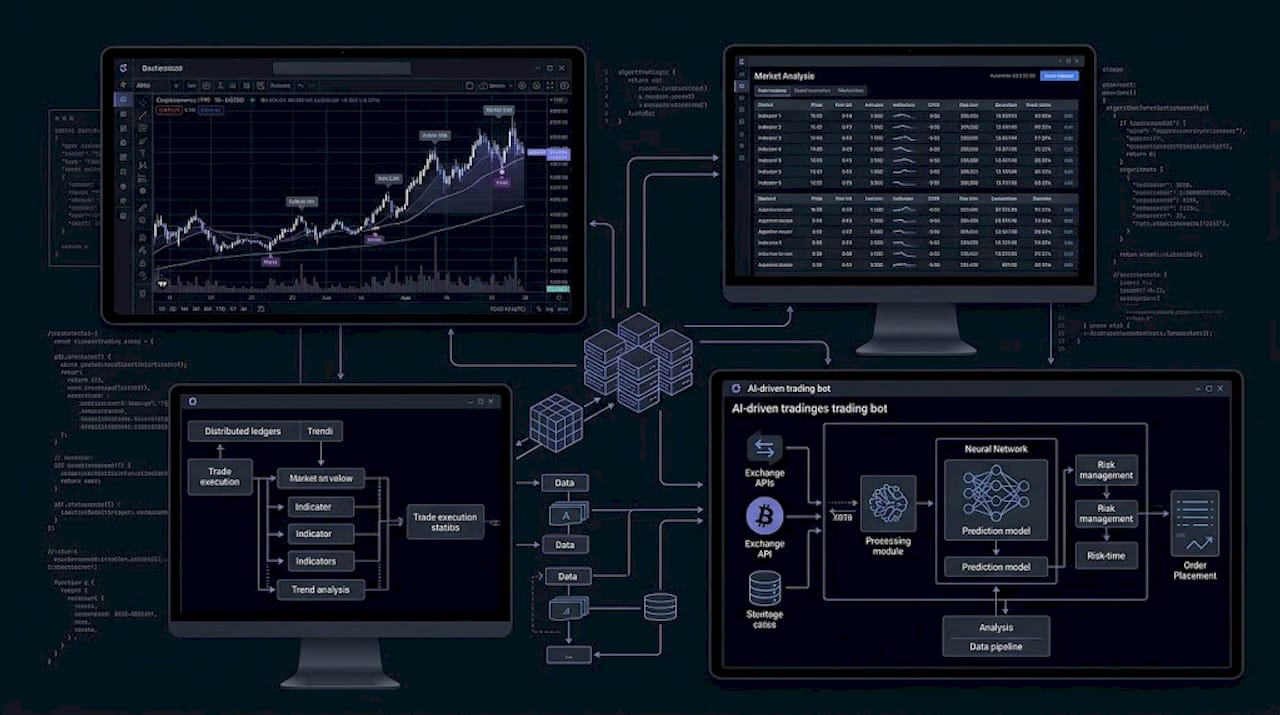
TL;DR:
- Automated trading workflows reduce emotional mistakes and enable continuous strategy execution.
- Building a strong infrastructure with low-latency data feeds and secure API connections is essential.
- Regular monitoring, backtesting, and adapting strategies to market changes are key to long-term success.
Manual crypto trading is exhausting. You watch charts at 2 a.m., second-guess every entry, and still miss the move. Worse, emotional decisions in volatile markets can wipe out weeks of gains in minutes. The solution is not more screen time. It is a systematic, automated trading strategy workflow that executes your rules without hesitation, around the clock. This guide walks you through the exact steps to build, deploy, and continuously improve that workflow, covering tool selection, strategy design, step-by-step execution, and ongoing optimization. Whether you are new to automation or looking to sharpen an existing system, this is built for you.
Key Takeaways
| Point | Details |
|---|---|
| Automate for consistency | Automation streamlines execution and reduces human error in volatile crypto markets. |
| Prioritize risk controls | Risk management methods like position sizing and stop-losses are essential to long-term profitability. |
| Leverage machine learning | ML models outperform traditional signals—if used as part of a disciplined, adaptive workflow. |
| Focus on improvement | Regular review, journaling, and workflow adjustment are key to lasting trading success. |
Gather the right tools and data for your workflow
Before writing a single line of strategy logic, you need the right infrastructure. Think of it like building a house: the workflow is only as strong as the foundation underneath it. Crypto markets run 24/7, which makes them uniquely suited to bots and automation, especially in volatile conditions where grid and DCA strategies thrive.

Your core toolkit should include a reliable trading bot platform, a quality market data feed, and exchange connectivity via API keys. Latency matters more than most traders realize. A slow data feed means your bot acts on stale prices, which can turn a profitable signal into a losing trade. Prioritize exchanges with low-latency APIs and support for limit, market, and stop orders.
Here is a quick-reference table of the essential components:
| Component | Purpose | Example |
|---|---|---|
| Trading bot platform | Automates strategy execution | Darkbot.io |
| Market data provider | Real-time and historical OHLCV data | CoinGecko, Binance API |
| Exchange integration | Order routing via API keys | Binance, Kraken, Bybit |
| Backtesting engine | Validate strategy before going live | Built-in bot tools |
| Portfolio tracker | Monitor allocations and P&L | Darkbot portfolio module |
When choosing tools, focus on these must-have features:
- Low-latency data feeds for accurate signal generation
- Multiple order type support including stop-loss and take-profit
- API key security with IP whitelisting and read/write permission controls
- Backtesting capability with at least 12 months of historical data
- Alerting and logging to catch errors before they become losses
Exploring machine learning crypto strategies early can also help you understand which data features matter most for signal quality. And if you want to avoid the common crypto mistakes that trip up new automators, start simple before adding layers.
Pro Tip: Start with one workflow automation tool and get comfortable with it before layering on additional complexity. Mastering one system beats juggling three mediocre ones.
Solid crypto trading bot risk control starts at the infrastructure level, not just in your strategy parameters.
Design your trading strategy with best-practice components
With your tools and data ready, it is time to design the actual trading strategy and the underlying logic that powers it. A well-structured strategy is not just a buy/sell rule. It is a complete system with defined inputs, risk controls, and execution protocols.
Here is how the two most popular automated approaches compare:
| Strategy type | Best for | Key advantage | Key risk |
|---|---|---|---|
| DCA (Dollar Cost Averaging) | Long-term accumulation | Reduces timing risk | Slow in trending markets |
| Grid trading | Sideways/ranging markets | Profits from oscillation | Losses in strong trends |
| Rule-based technical | Trend-following | Clear, testable logic | Lagging signals |
| ML-driven signals | Adaptive environments | Learns from new data | Overfitting risk |
Research on ensemble ML crypto prediction shows that combining multiple model types often outperforms single-model approaches, which is worth factoring into your design.
Here is a numbered breakdown of the core components every strategy needs:
- Signal generation Define what triggers a trade. This could be a moving average crossover, RSI threshold, or an ML model output.
- Entry and exit rules Specify exact conditions for opening and closing positions, including partial exits.
- Position sizing Risk only 1-2% of capital per trade to protect your account during losing streaks.
- Stop-loss and take-profit levels Automate these so emotions never override your plan.
- Regime detection Identify whether the market is trending, ranging, or in high volatility mode, then adjust parameters accordingly.
Understanding the impact of ML in crypto can sharpen your signal design significantly. For a deeper look at automating risk rules, smart crypto risk automation covers practical frameworks you can apply directly.
Pro Tip: Always backtest your strategy across multiple market regimes, not just bull runs. A strategy that only works in one environment is a liability, not an asset.
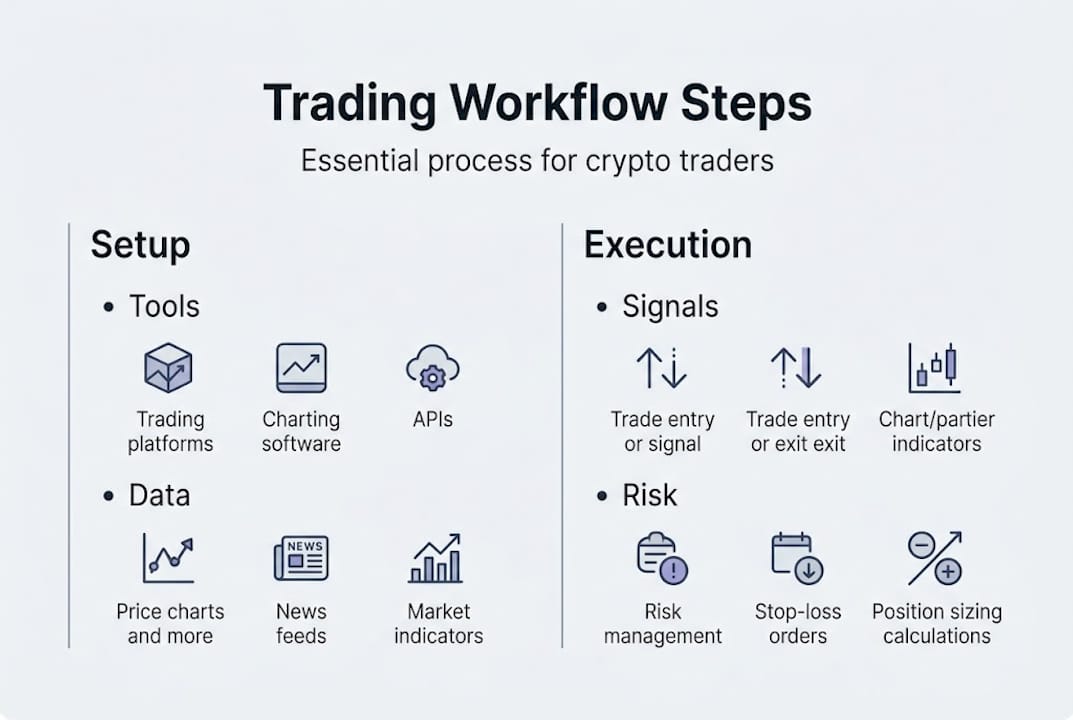
Step-by-step workflow: From plan to execution
With the strategy blueprint defined, let’s lay out the exact steps to automate, deploy, and manage it during active crypto market hours. This is where theory becomes practice.
- Define your goal Are you targeting steady income, long-term growth, or hedging an existing portfolio? Your goal shapes every decision downstream.
- Code or configure your strategy Use your bot platform’s built-in tools or a custom script. Keep logic clean and well-documented.
- Set risk parameters Input your position size limits, maximum drawdown thresholds, and daily loss caps before anything goes live.
- Backtest rigorously Run your strategy against at least one year of historical data. Look at Sharpe ratio, maximum drawdown, and win rate, not just total return.
- Paper trade first Run the strategy in simulation mode for two to four weeks. This surfaces bugs and edge cases without real capital at risk.
- Deploy with small capital Go live with a fraction of your intended allocation. Monitor closely for the first two weeks.
- Monitor and log everything Keep a trade journal. Record entries, exits, slippage, and any manual overrides. This data is gold for future optimization.
- Review and adjust Schedule weekly or bi-weekly reviews. Adjust parameters when market conditions shift.
Performance benchmark: AI trading agents have achieved 186% returns with Sharpe ratios of 4.65 and win rates above 70% in controlled studies. These numbers are impressive, but empirical AI trading results vary widely across market conditions. Past performance never guarantees future results.
For practical inspiration, reviewing AI trading strategy examples gives you real-world blueprints to adapt rather than starting from scratch.
The trade journal step is one most traders skip and later regret. Without it, you are flying blind when something goes wrong.
Troubleshooting and optimizing your workflow
Executing your workflow is just the beginning. Ongoing review and troubleshooting will determine sustained success. Even well-designed strategies break down when market conditions shift, and the traders who adapt fastest are the ones who stay profitable.
Common workflow killers include:
- Overfitting Your strategy performs brilliantly in backtests but fails live because it was tuned too tightly to historical data
- Overtrading Too many signals, too many fees, and too much slippage erode returns fast. Overtrading and ignoring volatility are among the most cited reasons crypto strategies fail
- Ignoring fees Even small per-trade costs compound into significant drag over hundreds of trades
- No regime adaptation A strategy optimized for a bull market will bleed in a ranging or bear market without adjustment
- Black swan blindness Low-probability, high-impact events like exchange hacks or sudden regulatory shifts can invalidate assumptions instantly
For edge cases, use these practical fixes:
- Set maximum position limits during high-volatility windows
- Use regime detection ML tools to automatically switch strategy modes
- Build automated alerts for drawdown thresholds so you can intervene before losses compound
- Audit your logs weekly for slippage, missed fills, and API errors
On the modeling side, Gradient Boosting outperformed deep learning models in crypto price prediction with MAPE scores as low as 2.74%, which suggests simpler, well-tuned models often beat complex ones. Tools that help with maximizing trading efficiency can also surface inefficiencies you might otherwise miss.
“No strategy is future-proof. Review and adapt as market regimes shift, because the market will always change faster than any static model.”
Our perspective: What really works in effective trading strategy workflows
Most traders either over-engineer their workflow or treat automation as a set-it-and-forget-it magic box. Both approaches fail. What we consistently see working in 2026 is simpler than you might expect: disciplined risk management combined with consistent monitoring and incremental improvement.
The traders who perform best are not the ones running the most complex ML pipelines. They are the ones who know their strategy’s limits, stick to defined risk rules, and adapt quickly when the market shifts. Even the most sophisticated models only outperform when the workflow behind them is consistent and actively supervised.
Human judgment is not obsolete. It is the layer that decides when to pause a bot during a black swan event, when to update parameters after a regime change, and when to simply stay out of the market. Automation enforces discipline. It should not replace thinking.
For those looking to stay ahead, optimizing trading with ML in 2026 means treating your workflow as a living system, not a finished product. The edge comes from iteration, not complexity.
Enhance your workflow with Darkbot automation
Building a reliable trading strategy workflow takes time, but the right platform makes every step faster and more precise. Darkbot’s AI-powered trading automation gives you the infrastructure to set up, backtest, and deploy strategies across multiple exchanges without writing code from scratch.
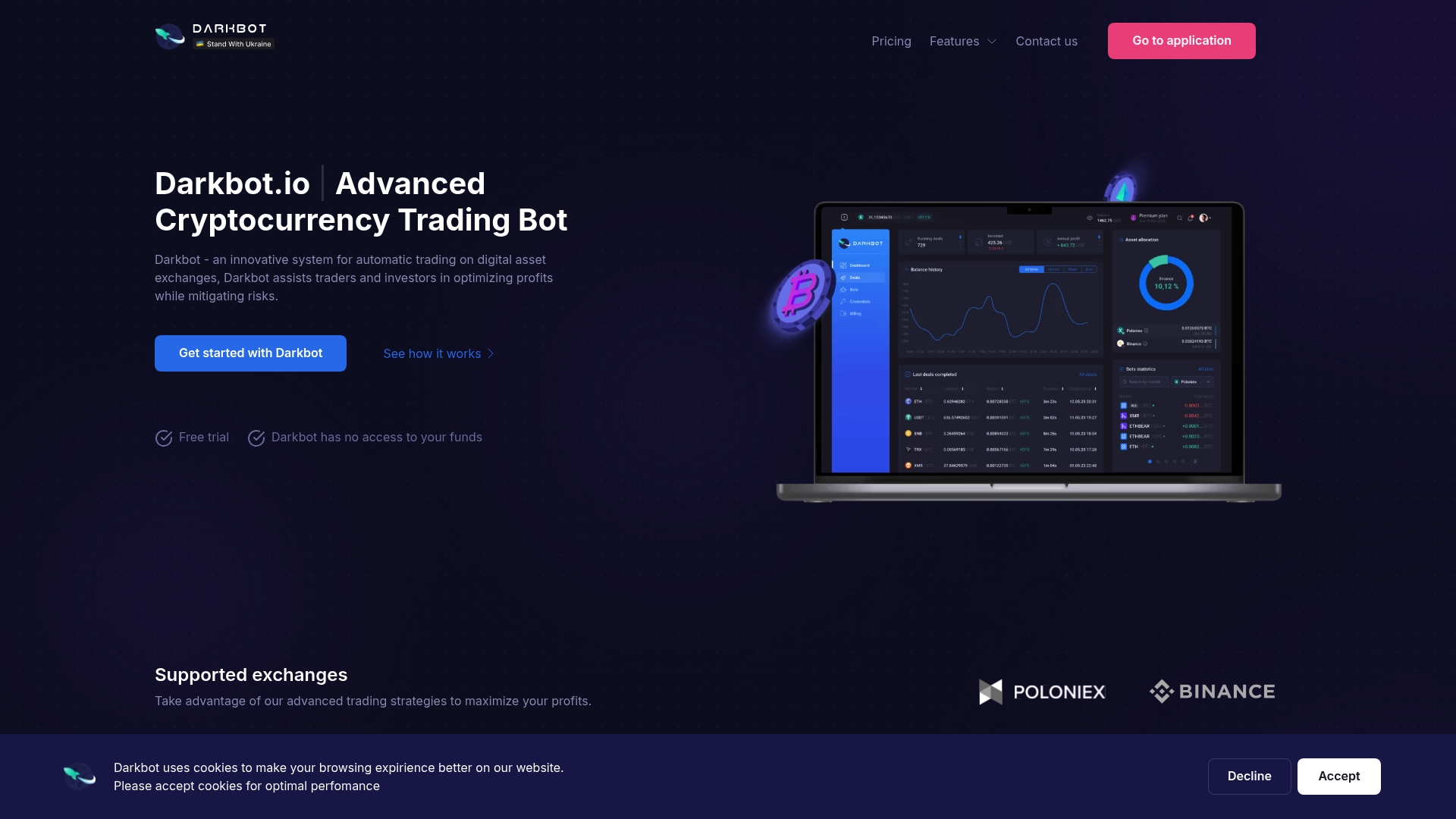
From signal configuration to automated risk controls, Darkbot handles the operational heavy lifting so you can focus on strategy refinement. The built-in portfolio optimization tools let you monitor allocations, track performance, and rebalance automatically as market conditions evolve. Whether you are running your first bot or managing a multi-strategy portfolio, Darkbot scales with your ambition. Start with a free plan and upgrade as your workflow grows.
Frequently asked questions
Why is automation important in a crypto trading strategy workflow?
Automation removes emotional decision-making, keeps your strategy running 24/7 in volatile markets, and lets you scale across multiple assets simultaneously without added stress.
What is the role of machine learning in effective trading workflows?
ML models like XGBoost and Gradient Boosting improve prediction accuracy and adapt to shifting market conditions. Research shows MAPE scores as low as 2.7% in crypto price forecasting with well-tuned ensemble models.
How much risk should I take per trade in my workflow?
Experts consistently recommend 1-2% risk per trade as the sustainable standard for protecting capital across long trading periods.
What common mistakes do crypto traders make when automating workflows?
The biggest pitfalls are overtrading and ignoring volatility, alongside skipping risk controls, underestimating fees, and failing to update strategies when market regimes change.
Recommended

Start trading on Darkbot with ease
Come and explore our crypto trading platform by connecting your free account!
Free plan available • No credit card required