Top advantages of machine learning in crypto trading
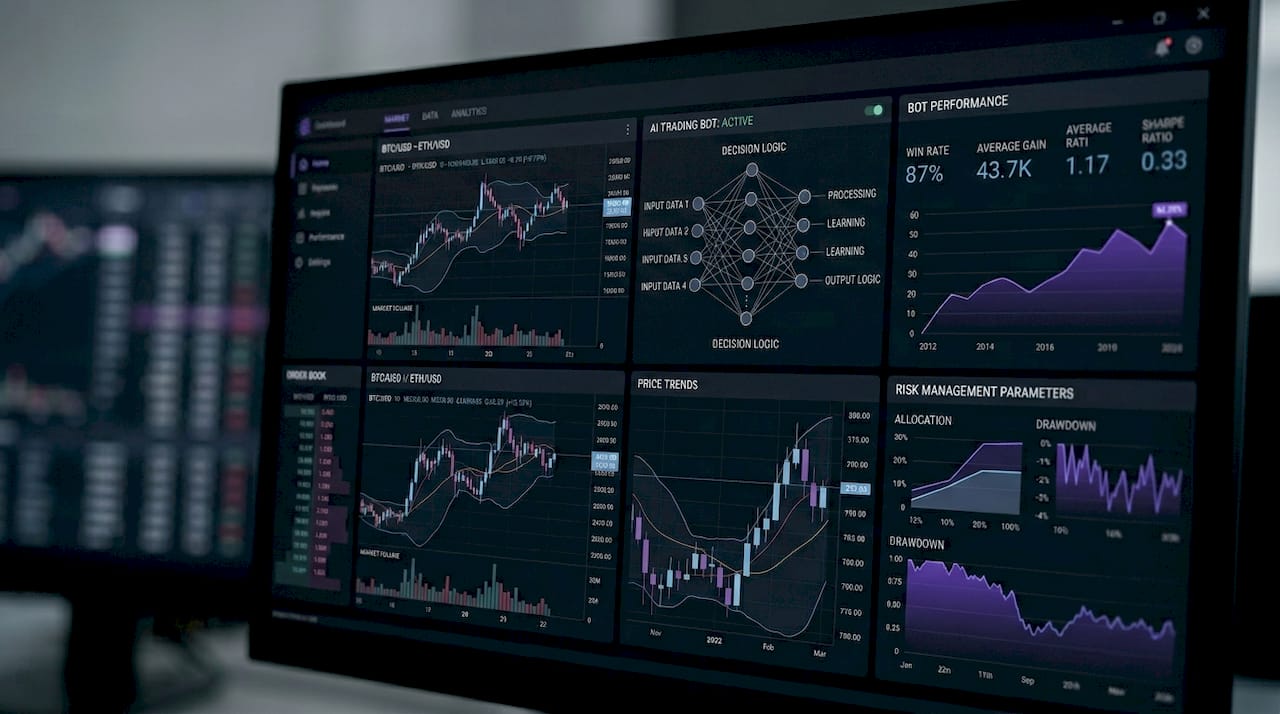
TL;DR:
- Machine learning enhances crypto trading speed by automating rapid trade execution across multiple exchanges.
- ML models process vast datasets and identify subtle patterns for more accurate market predictions.
- Adaptive ML systems continually update strategies, improving risk management and performance amid changing conditions.
The crypto market never sleeps, and it moves faster than any human trader can track alone. Price swings, news events, and liquidity shifts happen in seconds, leaving slow decision-makers behind. Machine learning trading has shifted from a niche tool used by hedge funds to something everyday investors are actively adopting. Whether you’re managing a small portfolio or running multiple positions across exchanges, understanding how machine learning reshapes trade execution, risk control, and strategy adaptation gives you a real competitive edge. This article breaks down the top advantages, so you can make smarter decisions about how automation fits into your trading approach.
Key Takeaways
| Point | Details |
|---|---|
| Faster execution | Machine learning enables near-instant trade execution, giving you an edge in the fast-paced crypto market. |
| Smarter analysis | ML algorithms uncover complex patterns for more reliable predictions than traditional methods. |
| Dynamic risk control | Automated systems manage risk and rebalance your portfolio continually as the market changes. |
| Evolving strategies | Machine learning models adapt to new trends, protecting you from outdated trading techniques. |
Improved trade execution and speed
Speed is everything in crypto. A price discrepancy between two exchanges can vanish in under a second. A news headline can trigger a 10% move before most traders even read the title. Machine learning systems are built to operate in this environment because they process signals and act on them in milliseconds, not minutes.
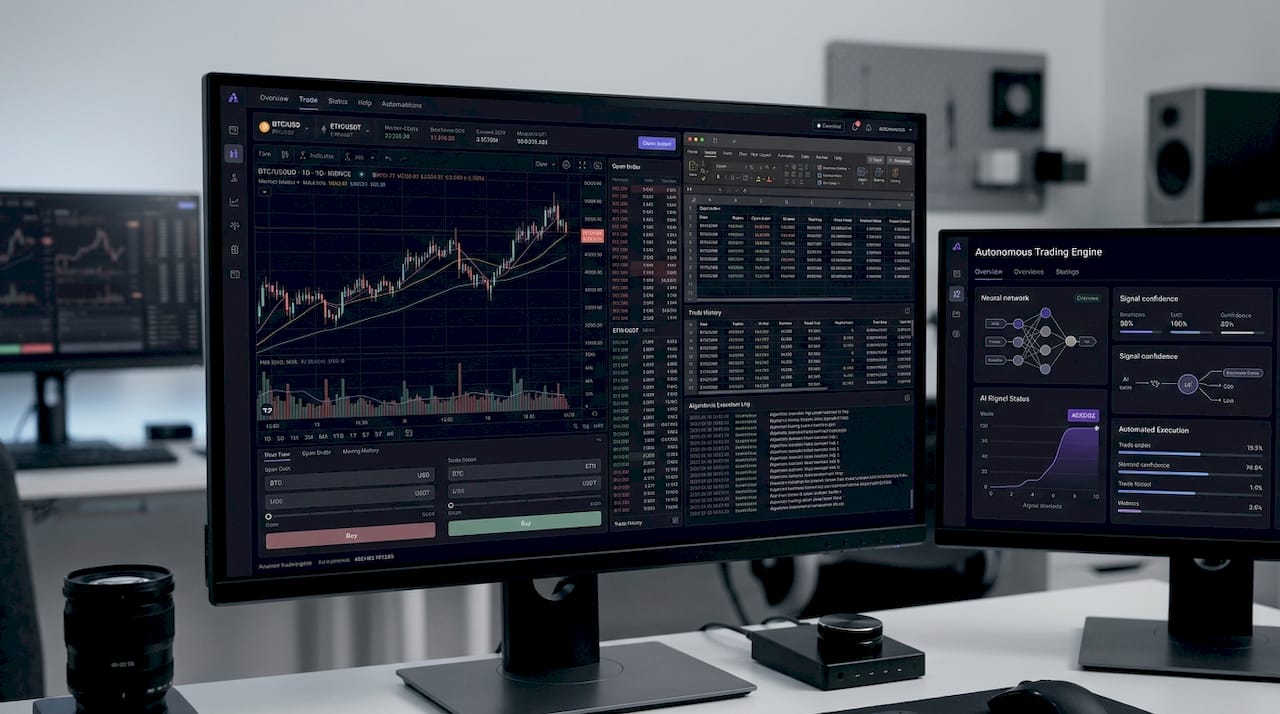
Machine learning algorithms analyze and execute trades faster than human traders can react. That’s not a small edge. In high-frequency trading and arbitrage, where profits are measured in fractions of a percent, execution speed is the entire strategy. An ML-powered bot can monitor dozens of trading pairs simultaneously, detect a price gap, and place an order before a human trader finishes reading the chart.
Automated systems also eliminate latency between signal generation and order placement. Traditional manual trading involves reading an indicator, deciding to act, and then clicking through an interface. Each step adds delay. ML-driven systems compress all of that into a single automated loop, giving you smarter crypto trading strategies that react to the market in real time.
Here’s what ML-driven execution handles automatically:
- Monitoring multiple exchanges and trading pairs simultaneously
- Detecting arbitrage opportunities across markets
- Executing limit and market orders based on predefined signal thresholds
- Adjusting order size dynamically based on volatility and liquidity
- Canceling or modifying orders when conditions shift mid-execution
“In crypto markets, the difference between a profitable trade and a missed opportunity often comes down to milliseconds. Automated ML systems close that gap consistently, where manual trading simply cannot.”
Pro Tip: Combine ML-based execution with robust risk filters, such as maximum drawdown limits and position size caps, so speed works in your favor without amplifying losses during volatile periods.
The practical result is that you stop chasing the market and start responding to it before most other traders even notice the opportunity.
Enhanced data analysis and predictive accuracy
Human traders can analyze a handful of indicators at once. Machine learning models can simultaneously process thousands of data points across price history, trading volume, order book depth, social media sentiment, on-chain activity, and macroeconomic signals. That scale of analysis is simply not possible manually.
Machine learning models excel at identifying non-obvious patterns in massive datasets. Traditional technical analysis relies on well-known patterns like head-and-shoulders formations or RSI divergence. These patterns are widely watched, which means their predictive value erodes over time as more traders act on the same signals. ML models can find subtler, less-exploited correlations that give you an informational edge.
Here’s a comparison of prediction accuracy between ML-driven and traditional technical analysis approaches:
| Factor | Traditional technical analysis | Machine learning models |
|---|---|---|
| Data sources | Price and volume charts | Price, volume, sentiment, on-chain, news |
| Pattern recognition | Manual, rule-based | Automated, adaptive |
| Speed of analysis | Minutes to hours | Milliseconds |
| Accuracy on volatile assets | Moderate | Higher with proper training |
| Ability to learn from new data | None | Continuous retraining |
The types of data ML models analyze for crypto automation with ML include:
- Price action: Candlestick patterns, support and resistance levels, momentum signals
- Volume data: Unusual volume spikes that often precede major price moves
- Order book depth: Identifying large buy or sell walls before they affect price
- Social media sentiment: Tracking mentions and tone around specific tokens
- On-chain metrics: Wallet activity, exchange inflows and outflows, miner behavior
The impact and advantages of ML crypto trading show up most clearly in prediction accuracy during complex market conditions. When multiple signals align in ways that traditional analysis would miss, an ML model can flag the opportunity and act on it before the broader market catches on.
Superior risk management and portfolio optimization
Every experienced crypto trader knows that managing losses matters more than chasing gains. A 50% loss requires a 100% gain just to break even. Machine learning brings a level of precision to risk management that manual monitoring simply cannot match, especially across a diversified portfolio.
ML-powered algorithms continuously monitor risk and rebalance crypto portfolios based on changing market conditions. This means your exposure is being assessed in real time, not just when you happen to check your dashboard. The system evaluates market risk, liquidity risk, and concentration risk simultaneously, then adjusts positions accordingly.
Here’s how machine learning handles risk assessment and rebalancing step by step:
- Data ingestion: The model pulls in live price data, volatility metrics, and correlation coefficients across all held assets.
- Risk scoring: Each position is assigned a dynamic risk score based on current market conditions.
- Threshold detection: When a position’s risk score exceeds a preset limit, the system flags it for action.
- Rebalancing execution: The algorithm adjusts position sizes, adds hedges, or closes positions to bring the portfolio back within acceptable risk parameters.
- Performance logging: Every action is recorded, creating a feedback loop that improves future risk decisions.
For AI in crypto risk management, the advantage is consistency. Human traders get emotional. They hold losing positions too long, hoping for a recovery, or exit winning trades too early out of fear. ML systems follow the rules every time, without hesitation or second-guessing.
Pro Tip: Use scenario analysis models to stress-test your portfolio against historical volatility events, like major exchange collapses or regulatory announcements, before they happen. Knowing your downside in advance changes how you size positions.
Adaptability to changing market conditions
One of the biggest problems with traditional trading systems is that they’re built for the conditions that existed when they were created. Markets evolve. Regulatory shifts, new market participants, and macroeconomic changes all alter how assets behave. A static rule-based strategy that worked in 2021 may fail completely in 2026.
ML trading systems can retrain on new data, adapting to shifts unlike static rule-based approaches. This is a fundamental structural advantage. Instead of manually rewriting trading rules every time market dynamics change, an adaptive ML system detects the shift and updates its own parameters.
| Scenario | Static rule-based system | Adaptive ML system |
|---|---|---|
| Post-news volatility spike | May trigger false signals | Adjusts sensitivity thresholds |
| Market regime shift (bull to bear) | Continues using outdated rules | Retrains on recent data |
| New token listing arbitrage | Cannot detect novel patterns | Identifies and exploits quickly |
| Liquidity crunch on an exchange | Fixed order sizes, higher slippage | Reduces order size dynamically |
Real-world scenarios where adaptability makes the difference:
- Post-news volatility: A static system might keep firing buy signals during a panic sell-off. An ML system recognizes the regime change and pauses or reverses its bias.
- Regime shifts: Moving from a trending market to a range-bound one requires completely different strategies. Adaptive models detect this and switch approaches automatically.
- Liquidity changes: When trading volume drops on an exchange, slippage increases. An adaptive system reduces position sizes to protect execution quality.
For traders focused on optimizing crypto trading with ML, adaptability means your strategy doesn’t become obsolete the moment market conditions shift. The system keeps learning, and smarter automated trading becomes a sustainable process rather than a one-time setup.
What most traders overlook about machine learning in crypto
Here’s the uncomfortable truth: most traders approach machine learning like it’s a vending machine. Put in data, get out profits. That’s not how it works, and that mindset leads to real losses.
The biggest mistake we see is overfitting. A model trained too tightly on historical data performs brilliantly in backtests and fails in live trading because it memorized past noise instead of learning real patterns. Data bias is equally dangerous. If your training data comes from a bull market, your model has no framework for bear conditions.
The traders who actually win with ML are the ones who treat it as a tool, not a replacement for market understanding. They combine machine efficiency with human judgment on strategy design, data selection, and model evaluation. Exploring ML for option trading insights reveals how even sophisticated traders blend systematic models with contextual awareness.
“The best ML trading systems are built by people who understand markets deeply, not just people who understand code.”
Machine learning amplifies your edge. It doesn’t create one from nothing.
Unlock the benefits of machine learning with Darkbot
Understanding these advantages is one thing. Having a platform that puts them to work for you is another.
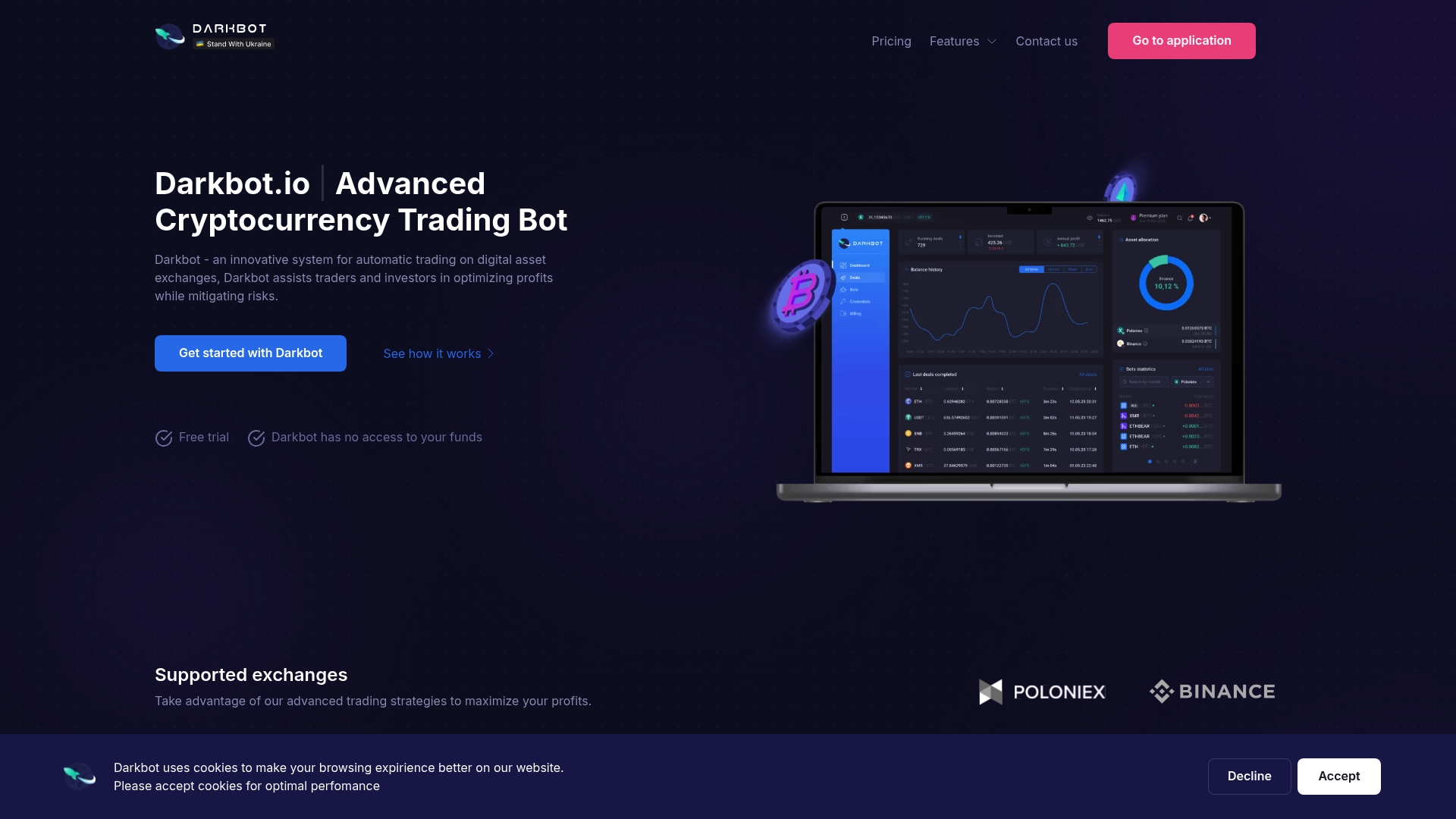
Darkbot brings ML-driven automation, real-time data analysis, and dynamic risk management together in one platform built specifically for crypto traders. Whether you want to automate execution across multiple exchanges, optimize your crypto portfolio optimization with rebalancing algorithms, or run multiple bots simultaneously with custom strategies, Darkbot gives you the infrastructure to do it. The platform is designed for both beginners and experienced traders, with flexible pricing and hands-on support. Explore what AI-powered crypto trading tools can do for your portfolio and start trading smarter today.
Frequently asked questions
Can machine learning trading work for beginners?
Yes, machine learning-powered platforms offer automation and insights even novice traders can use with minimal technical knowledge. The accessibility of automated strategies broadens who can benefit from ML trading, making it practical for anyone willing to learn the basics.
How do machine learning bots handle crypto market volatility?
ML bots adapt to changing conditions by retraining on new data and adjusting strategies in real time. Adaptation to shifting markets is a key advantage of machine learning bots over static rule-based systems.
What is the main risk of machine learning-driven trading?
Overfitting and poor model selection can lead to losses if not carefully managed with backtesting and human oversight. The risk of overfitting in machine learning trading requires ongoing monitoring to keep models performing accurately in live conditions.
Can machine learning trading be used for portfolio optimization?
Yes, ML algorithms continuously monitor and adjust portfolios to maximize profit and control risks. ML algorithms rebalance and optimize crypto portfolios in real time, responding to market shifts without requiring manual intervention.
Recommended

Start trading on Darkbot with ease
Come and explore our crypto trading platform by connecting your free account!
Free plan available • No credit card required