Top 5 Benefits of Trading Automation for Crypto
TL;DR:
- Automation offers faster, more consistent, and emotion-free trade execution in crypto markets.
- It enhances risk management, strategy diversification, and allows 24/7 market access.
- Combining automation with active oversight maximizes trading performance and mitigates potential risks.
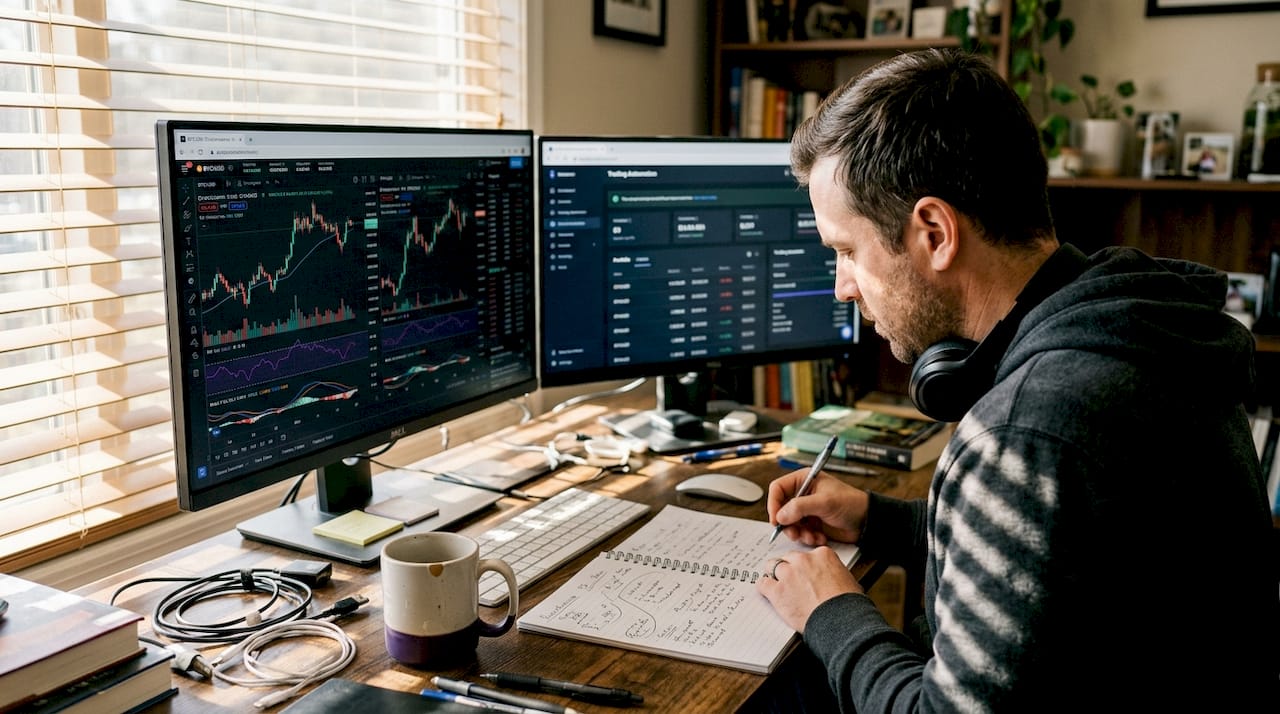
Crypto markets never sleep, and neither do the opportunities they create. The problem is that human traders do. In a market where a single minute can mean the difference between a profitable position and a painful loss, manual trading increasingly puts you at a structural disadvantage. Productivity increases and reduced manual intervention are no longer optional perks; they are the baseline expectation for serious crypto investors. This article breaks down the core benefits of trading automation, gives you a clear framework for evaluating solutions, and shows you exactly where automation delivers its biggest edge.
Key Takeaways
| Point | Details |
|---|---|
| Automation delivers speed | Trading bots make split-second decisions in volatile crypto markets, beating human reaction times. |
| Better risk management | Automated trading platforms enforce rules and strategies consistently, reducing emotional errors. |
| 24/7 market access | Bots keep trading and managing your portfolio round the clock, capturing global opportunities. |
| Data-driven strategy | Automation empowers traders to use backtesting, analytics, and smarter algorithms for better results. |
How to evaluate trading automation benefits
Not all automation tools are built the same, and not every trader has the same needs. Before you commit to any platform, you need a clear set of criteria to judge whether a solution actually fits your goals.
Here are the key dimensions worth evaluating:
- Speed: Can the system execute trades in milliseconds, or does it introduce lag?
- Consistency: Does it follow your strategy without emotional deviation?
- Risk management: Does it support stop-loss orders, position sizing, and daily loss limits?
- Adaptability: Can it adjust to changing market conditions or shift between strategies?
- Data-driven approach: Does it use backtesting and real-time analytics to improve over time?
Human traders struggle in fast markets not because they lack intelligence, but because biology works against them. Stress, fatigue, and cognitive bias all erode decision quality. A well-designed bot has none of those problems. It executes the same logic at 3 a.m. on a Sunday as it does at noon on a Tuesday.
One common blind spot traders overlook is the difference between a bot that looks good on a demo and one that performs under live market pressure. Slippage, latency, and real-world order book depth can all affect results. Understanding the risks of automated trading before you deploy capital is just as important as understanding the upside. The trading digital transformation guide from JF Just Funded offers a broader look at how automation is reshaping modern trading environments.
Pro Tip: Always test any new algorithm in sandbox or paper trading mode first. This lets you evaluate its logic against real market data without putting a single dollar at risk.
Consistent execution and faster trade responses
Speed is not just a nice-to-have in crypto. It is often the entire game. Automated trading systems execute trades in milliseconds, capturing opportunities that are simply impossible for a manual trader to act on.
Consider the typical cycle for a manual trade:
- Trader spots a signal on the chart
- Trader analyzes the signal and decides to act
- Trader navigates to the exchange interface
- Trader enters order details and confirms
- Order is submitted and filled
This process takes anywhere from 10 to 45 seconds on a good day. An automated bot completes the same sequence in under 100 milliseconds. In a volatile market, that gap is enormous.
Emotional interference compounds the speed problem. A manual trader who just took a loss is far more likely to hesitate on the next valid signal, or worse, overtrade to recover losses. Automation removes that variable entirely. The bot does not feel fear or greed. It simply executes.
“The biggest edge automation gives traders is not just speed, it is the ability to remove the human element from execution entirely, so your strategy runs exactly as designed every single time.” — Automated trading analyst, robo-revolution overview
For traders working with smarter crypto strategies, this consistency is what separates a strategy that works in theory from one that delivers in practice. Pairing speed with well-designed AI trading strategies creates a compounding advantage that manual trading simply cannot replicate.
Smarter risk management and strategy diversification
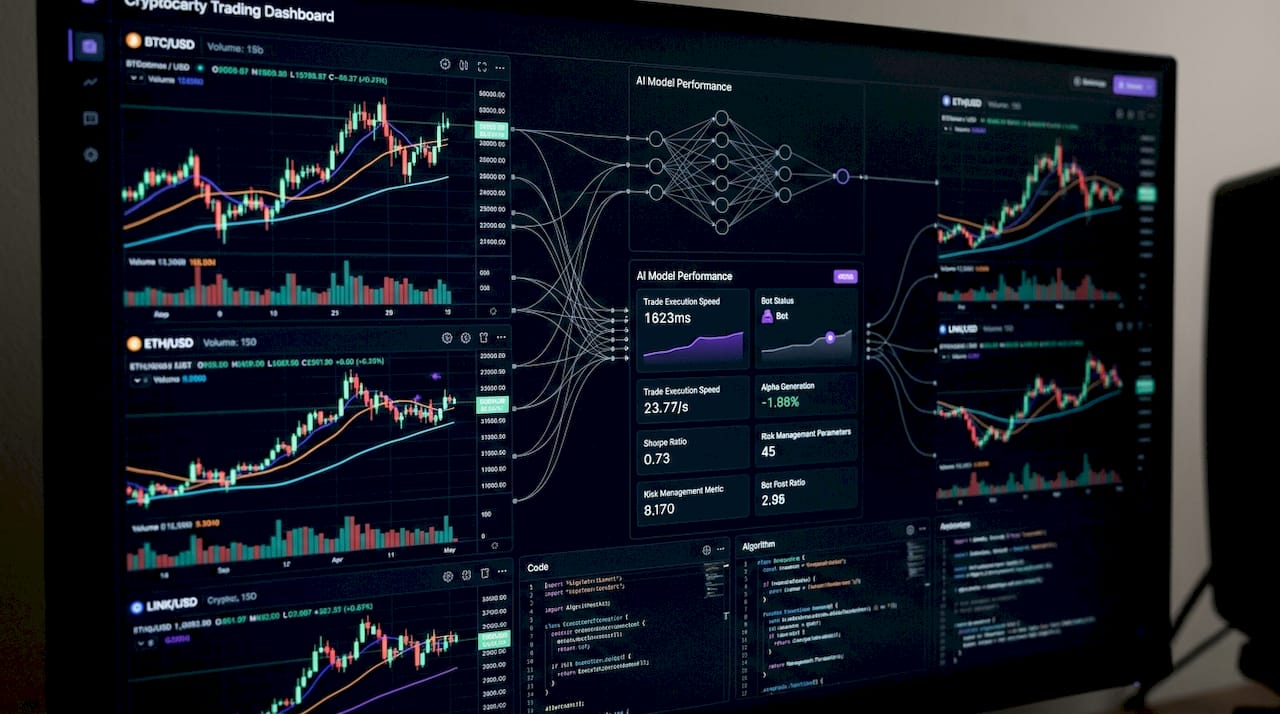
Automation does not just make you faster. It makes you safer. AI-based automation runs multiple risk-adjusted strategies 24/7 with a level of precision that no human portfolio manager can match consistently.
Here is a direct comparison of how manual and automated approaches handle risk:
| Risk management feature | Manual trading | Automated trading |
|---|---|---|
| Stop-loss execution | Delayed, emotion-dependent | Instant, rule-based |
| Portfolio rebalancing | Periodic, manual effort | Continuous, automatic |
| Strategy switching | Slow, requires analysis | Triggered by preset conditions |
| Multi-asset monitoring | Limited by attention span | Simultaneous, unlimited |
| Daily loss limit enforcement | Inconsistent | Strict and programmable |
The features that matter most for risk control include:
- Automated stop-loss orders that trigger without hesitation
- Portfolio rebalancing that keeps your asset allocation on target
- Strategy switching based on volatility thresholds or market signals
- Drawdown limits that pause trading when losses hit a defined ceiling
A practical example: imagine an AI-powered bot managing a portfolio split across Bitcoin, Ethereum, and three altcoins. When one asset drops sharply, the bot can automatically reduce exposure, shift weight to more stable assets, and log the event for review. A manual trader managing the same portfolio would likely miss the signal or react too slowly. Exploring AI in crypto trading and safer trading with AI gives you a clearer picture of how these systems work in practice. The broader role of AI in finance also shows why institutions are moving fast in this direction.
Pro Tip: Set a daily loss limit in your automation settings from day one. It acts as a circuit breaker that protects your capital during unexpected market events.
Scalable performance and round-the-clock market access
Crypto does not close at 4 p.m. on a Friday. Some of the most significant price moves happen during off-hours, weekends, and major global events. Automated trading grants consistent access across global crypto markets, including during the hours when manual traders are asleep or unavailable.
Scalability is the other major advantage here. A single trader can only monitor so many assets and execute so many strategies at once. An automated system faces no such ceiling.
Tools that directly improve scale and reliability include:
- Backtesting engines that validate strategy logic against years of historical data
- Multi-pair bots that run different strategies across multiple asset pairs simultaneously
- API integrations that connect seamlessly to major exchanges without manual intervention
- Real-time analytics dashboards that surface performance data instantly
| Metric | Manual trading | Automated trading |
|---|---|---|
| Trading hours | Limited to active hours | 24 hours a day, 7 days a week |
| Asset pairs monitored | 3 to 5 realistically | Dozens simultaneously |
| Trade frequency | Low to moderate | High, based on strategy |
| Backtesting capability | None in real time | Full historical validation |
Understanding the trading bots profit impact and how AI boosts trading profits helps you set realistic expectations before deploying capital. The broader impact of AI on finance confirms this shift is accelerating across the industry.
Pro Tip: Before going live, run your bot against at least 12 months of historical market data. It reveals weaknesses in your strategy that live trading will expose quickly.
Summary comparison: Automation vs. manual trading
Automated solutions outperform manual approaches for execution consistency, diversification, and 24/7 access. Here is how the two approaches stack up across the metrics that matter most:
| Criteria | Automated trading | Manual trading |
|---|---|---|
| Execution speed | Milliseconds | 10 to 45 seconds |
| Emotional bias | None | High |
| 24/7 availability | Yes | No |
| Multi-strategy management | Yes | Very limited |
| Risk control precision | High | Inconsistent |
| Scalability | Unlimited | Capped by human attention |
Automation is the stronger choice when:
- You are trading high-volatility assets that move fast
- You want to run multiple strategies across different asset pairs
- You need consistent risk management without emotional interference
- You cannot monitor markets around the clock
Manual trading still has its place when:
- You are making long-term, thesis-driven investment decisions
- You are navigating a major news event that requires nuanced judgment
- You are in the early stages of building and testing a new strategy
The key is aligning your automation tools with your actual trading goals. Not every situation calls for full automation, but for most active crypto traders, the automated trading key advantages far outweigh the limitations. The funded trading transformation perspective reinforces that the traders gaining the most ground are those who use automation strategically, not blindly.
When does automation make the biggest difference for crypto traders?
Here is an honest take that most articles skip: automation is not a magic solution. It is a force multiplier. If your underlying strategy is weak, a bot will execute that weak strategy faster and more consistently than you ever could, which means losses accumulate faster too.
Automation truly shines in high-frequency, high-volatility scenarios where human reaction time is the bottleneck. Automation excels during high market volatility and in multi-asset portfolio management, where tracking dozens of positions manually is simply not realistic.
But the traders who get the best results treat automation as a partner, not a replacement. They review bot performance weekly, adjust parameters when market conditions shift, and step in manually when macro events create conditions their strategy was not designed for. Ignoring the trading automation risks is where most failures begin.
The combination of disciplined automation and active human oversight beats either approach alone. Set it, monitor it, and refine it.
Take your trading automation to the next level
If the advantages outlined here resonate with your trading goals, the next step is finding a platform that can actually deliver them. Darkbot.io is built specifically for crypto traders who want reliable, AI-powered automation without the complexity of building systems from scratch.
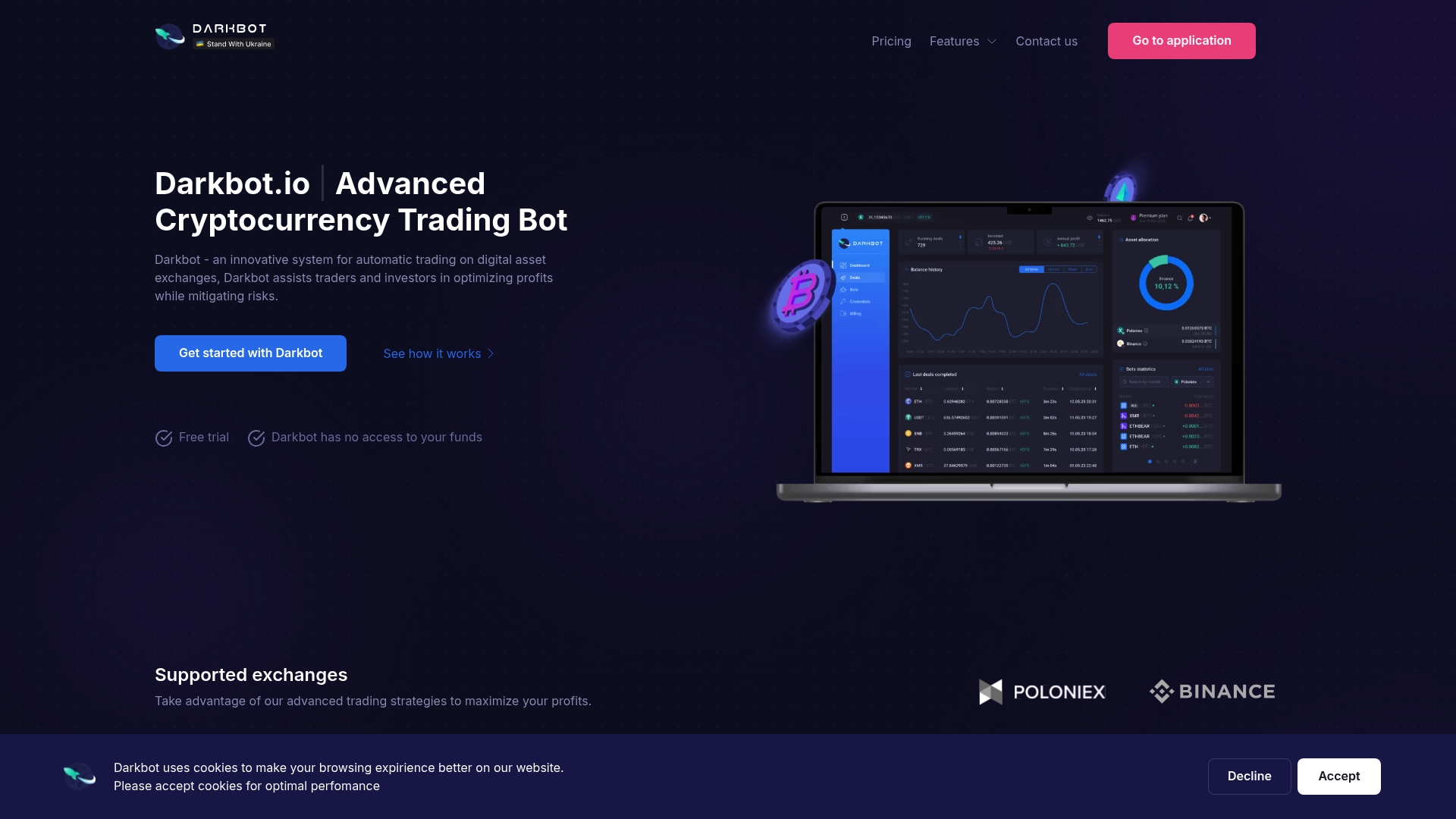
With AI-powered trading automation across multiple exchanges, real-time analytics, and flexible strategy customization, Darkbot.io gives you the infrastructure to act on everything covered in this article. From stop-loss controls to multi-bot deployment, the platform is designed to scale with your ambitions. Explore portfolio management tools to see how automated rebalancing and diversification work in practice.
Frequently asked questions
What are the main benefits of trading automation for crypto in 2026?
Automated trading delivers consistency, risk management, and 24/7 market access, giving crypto traders faster execution and more disciplined strategy management than manual approaches allow.
Is automated trading safe for beginners?
Automated trading can be safe for beginners who start with reputable platforms, define clear risk parameters upfront, and monitor their bots regularly rather than leaving them fully unattended. Productivity and safety improvements are central to well-designed automation platforms.
Can trading automation handle multiple cryptocurrencies at once?
Yes. AI-based automation handles risk-adjusted strategies across multiple asset pairs simultaneously, adjusting positions and rebalancing portfolios in real time based on preset rules.
What is the biggest risk in using trading automation for crypto?
The main risk is deploying poorly designed strategies without adequate risk controls or active monitoring. Robust oversight is essential to catch failures before they compound into significant losses.
Does automation really beat manual trading for most crypto investors?
For speed, 24/7 availability, and managing complex multi-asset strategies, automation outperforms manual trading in most active crypto market scenarios.
Recommended

Start trading on Darkbot with ease
Come and explore our crypto trading platform by connecting your free account!
Free plan available • No credit card required