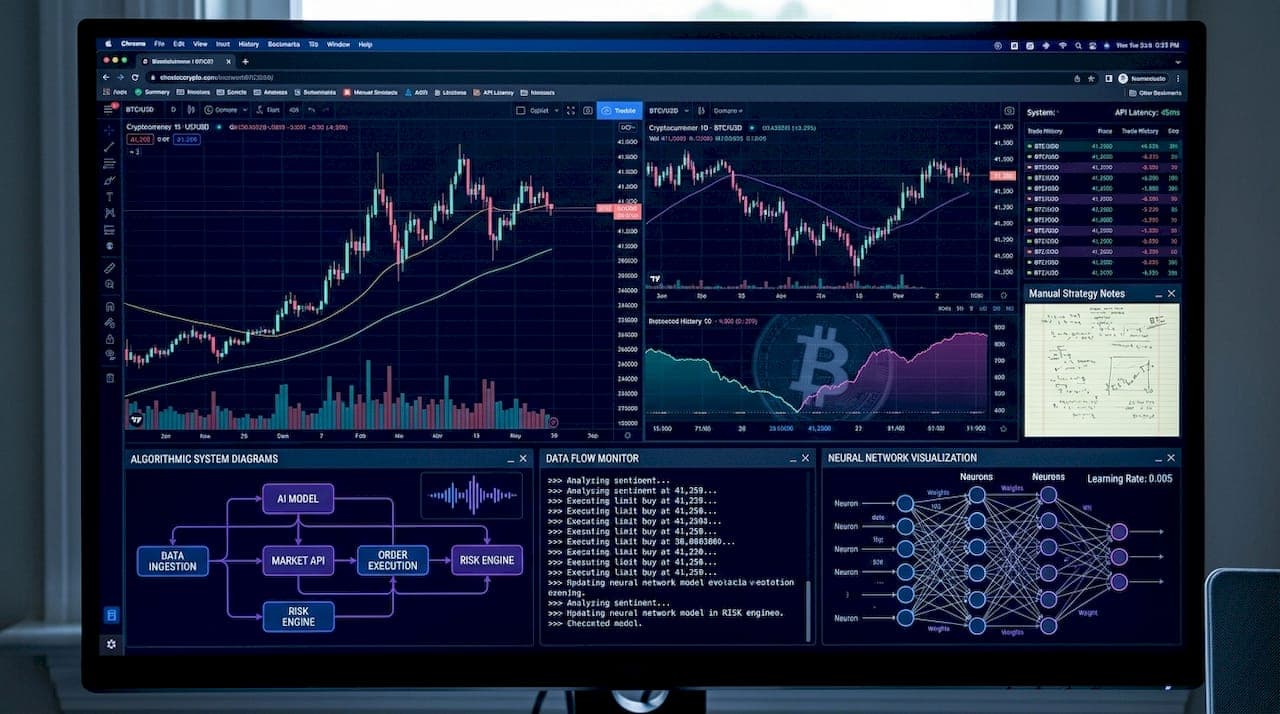
Can trading bots really improve your crypto profits?
TL;DR:
- Trading bots outperform manual trading mainly in speed and discipline under specific conditions.
- Effectiveness depends heavily on market regime, requiring adaptive strategies and continuous tuning.
- Responsible automation involves thorough testing, ongoing monitoring, and realistic profit expectations.
Automated trading promises to remove emotion, work around the clock, and execute faster than any human. But the real question most crypto traders quietly wrestle with is whether bots actually deliver better returns, or just better-looking dashboards. The answer, backed by growing research, is more nuanced than any vendor will tell you. Some bots genuinely outperform manual trading under specific conditions, while others redistribute your capital straight into the pockets of more sophisticated participants. This article breaks down the evidence, the traps, and the proven methods that separate profitable bot users from frustrated ones.
Key Takeaways
| Point | Details |
|---|---|
| Bots don’t guarantee profit | Success depends on bot design, market conditions, and disciplined management. |
| Adaptability beats rigidity | Adaptive bots adjusting to market changes significantly outperform static systems. |
| Process trumps hype | Profitable traders rely on thoughtful testing, validation, and risk controls above all else. |
| Automation magnifies risk and reward | Bots can both improve returns and magnify mistakes—responsible oversight is essential. |
How trading bots (really) impact profit: What the evidence shows
The “set and forget” story around crypto bots is one of the most persistent myths in the space. Real research paints a more complicated picture, and understanding it is your first advantage over the average retail trader.
Studies show that AI traders top-performed in 83% of sessions in controlled experimental setups, which sounds impressive until you read the full finding. That same research cautions that an AI trader may not improve market efficiency overall and can actually redistribute gains away from other participants. In plain terms: one bot winning often means another trader losing. The market is not a money printer that automation unlocks for everyone simultaneously.
What does the evidence actually confirm? A few reliable patterns emerge:
- Bots consistently outperform manual traders in speed and discipline, eliminating emotional decision-making during volatility.
- AI-driven bots show improved win rates in backtests, but real-world performance depends heavily on market structure and competition.
- System design matters enormously. A poorly configured grid bot in a trending market will bleed capital just as fast as any impulsive human trade.
“An AI trader can be a top performer in a controlled session while leaving broader market mispricing largely unchanged. Gains often come at the expense of less sophisticated participants, not from generating new market value.”
Understanding trading bot profit optimization at the algorithm level is what separates traders who get sustainable results from those who chase yesterday’s backtest. The bot impact on profits is real, but it requires the right conditions, the right design, and honest expectations.
| Bot type | Typical strength | Key limitation |
|---|---|---|
| Grid bots | Sideways/ranging markets | Loses in strong trends |
| Trend-following bots | Bull or bear momentum | Whipsawed in choppy markets |
| Arbitrage bots | Price discrepancies across exchanges | Razor-thin margins, high competition |
| AI/ML adaptive bots | Learns from new data | Requires more monitoring and tuning |
The takeaway: bots work, but only in environments that match their logic. Ignoring that fact is how most traders end up disappointed.

Regime-dependence: Why context is key to trading bot success
Here’s what the evidence shows beyond the headlines: bot performance is deeply tied to market regime, which is the underlying condition of the market at any given time, whether it’s trending, ranging, highly volatile, or near-flat.
A 2025 multi-agent adaptive system study found that ARTEMIS improved win rates significantly over rigid rule-based bots across 301 live trades by continuously adjusting strategy based on detected market conditions. When the market shifted from a trending regime to consolidation, ARTEMIS adapted its logic. A static bot using the same parameters from three months ago kept losing because it was solving yesterday’s problem.
This is the core principle most traders skip: market conditions change, and your bot needs to change with them. A rigid system that worked brilliantly during the 2024 bull run can become a liability in a choppy, low-volume environment. The logic that captured 8% moves on Bitcoin starts triggering losses when the average daily range compresses to 1.5%.
The best-performing bots share these characteristics:
- They detect regime changes through volatility metrics, volume signals, or pattern recognition.
- They switch between multiple sub-strategies rather than forcing one approach on every market condition.
- They continuously update parameters based on recent performance data rather than relying on static historical settings.
The AI strategy examples that generate consistent returns tend to incorporate at least basic regime-awareness. Even a simple volatility filter that pauses trading during extreme uncertainty can dramatically reduce drawdown.
Pro Tip: Before deploying any bot with real capital, run it through at least three distinct market environments in backtesting: a strong trend, a ranging period, and a high-volatility shock event. If it only performs well in one of those, it is not ready.
The step-by-step algorithmic trading process always includes regime analysis for exactly this reason. Skipping that step is like hiring a specialist surgeon and then using them only for general practice.
| Bot design | Trending market | Ranging market | Volatile shock |
|---|---|---|---|
| Static rule-based | Strong | Weak | Very weak |
| Adaptive/multi-agent | Strong | Strong | Moderate |
| Human-guided manual | Moderate | Moderate | Emotional risk |
What most traders miss: Real-world methods for long-term trading bot profit
Understanding regime-dependence is one thing. Applying it to your actual deployment is another. Most traders stop at “I ran a backtest and it looked good.” That is where the real money gets lost.
Solid methodology that tends to produce reliable bot profits includes pre-registering your rules before testing, running walk-forward and out-of-sample validation, stress-testing across fee structures and slippage scenarios, and actively monitoring for drawdowns and parameter drift once live.
Here is how to approach this in practice:
-
Pre-register your strategy rules before running any test. Write down the entry signals, exit conditions, position sizing, and risk limits before you see the results. This prevents unconsciously cherry-picking rules that only worked in hindsight.
-
Run walk-forward validation. Split your historical data into segments. Train on the first segment, test on the next unseen segment, then advance the window forward. This mimics how the bot will encounter future data and reveals whether it generalizes or just memorized.
-
Stress-test for fees, slippage, and latency. A bot strategy that shows a 15% annual return might show 2% after realistic trading fees, market impact, and execution delays. Darkbot’s platform connects via API to real exchange data, so you can model realistic execution costs rather than idealized fills.
-
Control your drawdown limits aggressively. Decide in advance how much drawdown triggers a pause or strategy review. Many traders only check performance when things go wrong, which is too late. Set automated alerts for any account drawdown beyond your pre-set threshold.
-
Monitor for parameter drift. A parameter that worked six months ago may be stale today. Review your bot’s key inputs monthly, especially if market structure has shifted. This is the most commonly skipped step, and it quietly destroys returns that looked great in testing.
The methodical bot testing process is not glamorous, but it is the actual difference between sustainable profit and a single lucky streak. Treat crypto risk management automation as a non-negotiable part of every deployment, not an optional add-on.
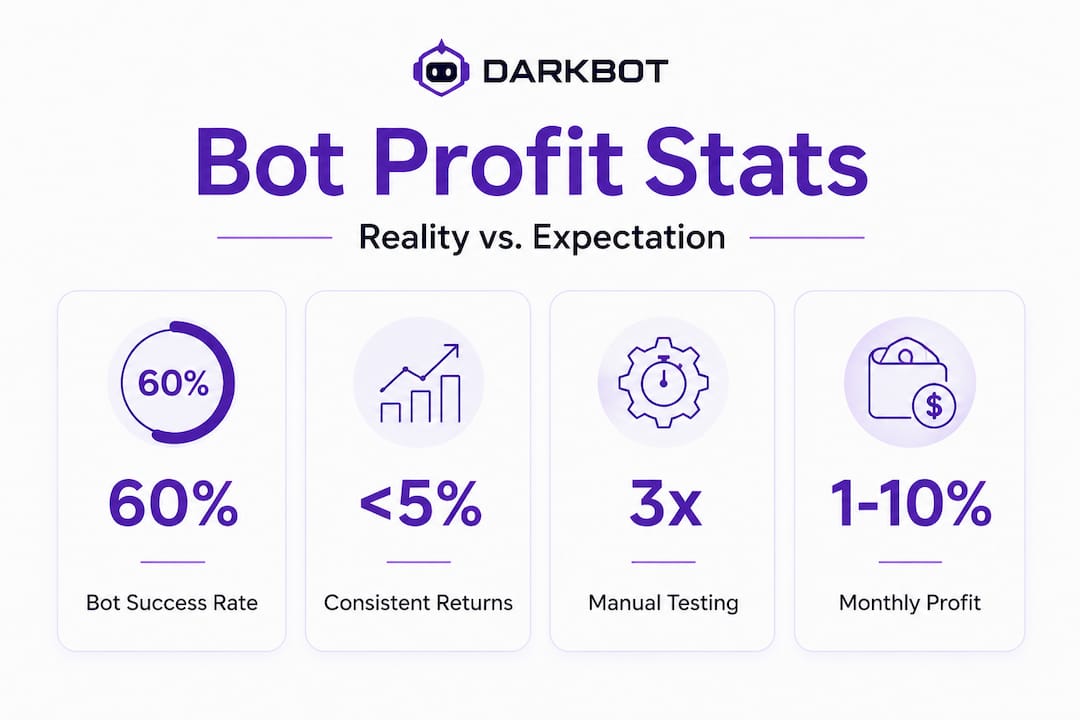
A realistic profit expectation: Quantitative research on algorithmic strategies suggests that well-designed, properly validated systems can realistically target 15 to 40% annualized returns in favorable conditions, but with meaningful drawdown periods. Anyone promising consistent triple-digit monthly returns with zero oversight is describing a marketing slide, not a trading system.
Pro Tip: Treat your bot deployment like a business, not a lottery ticket. Track every metric, review performance weekly, and iterate systematically. The traders who build lasting profit from automation treat it as an ongoing process, not a one-time setup. Review your secure trading bot usage practices as part of that regular review.
Risks, realities, and responsible automation
Even a well-designed, tested, and monitored bot carries risks that pure automation cannot eliminate. In fact, bots can amplify risks when users mistake automation for oversight.
Research confirms that increased algorithmic trading does not automatically make markets more efficient. A market with many competing bots can develop new instabilities, including flash crashes, sudden liquidity voids, and rapid cascading liquidations. Your bot may behave perfectly according to its rules while the market environment it was designed for temporarily disappears.
Common failure scenarios include:
- Parameter drift: Your optimal settings quietly stop working as market conditions shift, but the bot keeps trading as if nothing changed.
- Excessive leverage: Automated systems make it easy to apply leverage consistently, which means losses can scale as fast as gains.
- Flash crash exposure: During sudden, extreme price moves, bots can execute at severely dislocated prices before circuit breakers activate.
- API and connectivity failures: Exchange downtime or API rate limits can leave bots in unintended positions with no active management.
“The most dangerous moment with a trading bot is when you stop watching it. Automation removes the emotional burden, but it does not remove the need for human oversight.”
Responsible automation requires a structured approach. Follow these practices consistently:
- Start small. Deploy with minimal capital until you confirm live performance matches your testing assumptions.
- Set kill switches. Program hard stops that automatically pause or liquidate if drawdown exceeds your threshold.
- Review performance stats weekly. Do not wait for a crisis to check in. Regular reviews catch parameter drift early.
- Keep a trading log. Record every strategy change, every market event, and every performance anomaly.
- Use the crypto risk checklist as a recurring reference, not a one-time read.
Understanding key bot trading risks before you face them in live markets is what keeps your capital intact long enough to benefit from automation’s genuine advantages.
The uncomfortable truth: Why most traders reap less profit from bots than they imagine
Most bot disappointment has nothing to do with the technology. It has everything to do with the gap between what traders expect and what disciplined automation actually delivers.
Here is what years of observing real crypto traders reveals: the majority come to trading bots expecting a profit machine they can activate and mostly ignore. They run a quick backtest, see a strong equity curve, deploy capital, and then treat the bot as finished work. When performance dips or markets shift, they either panic-edit settings or abandon the system entirely. Neither response is part of a sound strategy.
The hard reality is that safe automation returns require you to be a more disciplined trader, not a less involved one. The bot handles execution; you handle judgment. And judgment means knowing when your strategy’s assumptions no longer hold, when to pause, when to adjust, and when to sit on your hands entirely.
There is also a skills transfer problem. When you automate a flawed or under-researched strategy, you automate your losses at machine speed. Many traders who burned capital with bots would have lost it manually too. The bot just made it faster and more systematic. The tool does not compensate for gaps in understanding.
The traders who genuinely profit from automation long-term tend to share one characteristic: they view the bot as a force multiplier for their own edge, not a replacement for having one. They understand AI trading and risk deeply enough to know which market environments favor their strategy and which demand stepping back.
Lasting profit from bots comes from combining evidence with healthy skepticism, rigorous testing, ongoing iteration, and honest assessment of your own strategy’s real-world validity. That is not the sales pitch anyone wants to hear, but it is the one that actually leads to results.
Automate smarter with advanced crypto trading bots
If the evidence and methodology covered in this article have shifted how you think about automation, the next step is finding a platform built around exactly those principles: adaptive strategies, real-time analytics, and the flexibility to iterate as markets evolve.
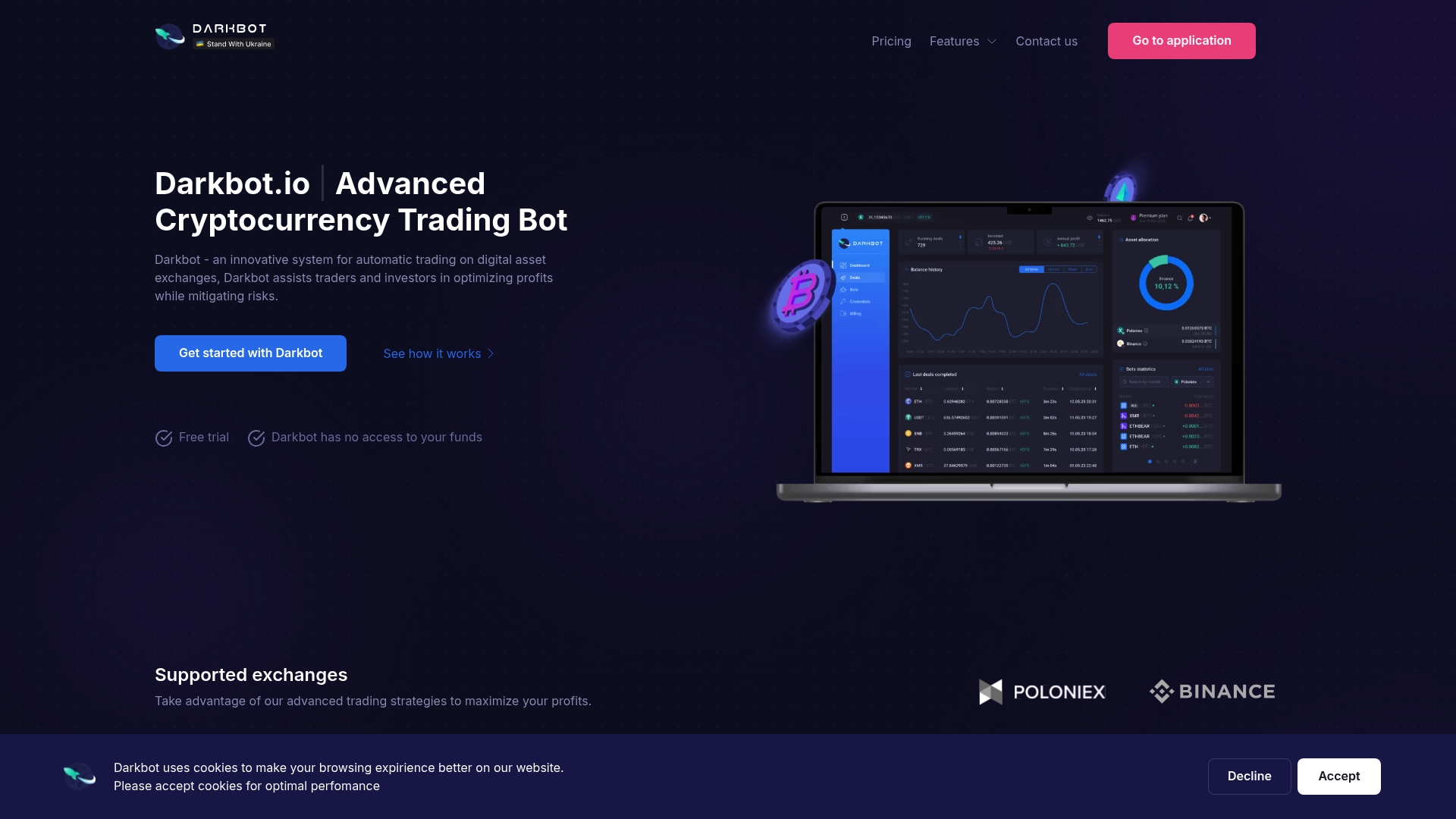
Darkbot.io provides an advanced AI-powered trading automation platform designed for traders who take the process seriously. With seamless API integration across major exchanges, robust portfolio management tools, strategy customization, and automated rebalancing, Darkbot gives you the infrastructure to deploy, monitor, and refine bots the right way. Whether you are starting with the free tier to test your first strategy or scaling up with premium multi-bot deployment, Darkbot positions your automation around evidence, discipline, and real market adaptability. Start building your systematic edge today.
Frequently asked questions
Do trading bots guarantee profits in crypto markets?
No, trading bots cannot guarantee profits. Their performance depends on strategy design, prevailing market conditions, and ongoing oversight, as even top-performing AI traders show inconsistent results across different environments.
What kind of trading bot works best for changing markets?
Adaptive bots that detect and respond to different market regimes consistently outperform rigid rule-based systems, as demonstrated by the ARTEMIS multi-agent system which improved win rates across 301 trades by switching strategies dynamically.
What are critical pitfalls to avoid when using trading bots?
The most damaging pitfalls include skipping thorough validation testing, ignoring parameter drift once live, applying excessive leverage, and treating automation as a replacement for active monitoring rather than a complement to it.
Does more algorithmic trading always make the market more efficient?
No. Research confirms that increased algorithmic trading does not automatically improve market efficiency, and a highly skilled AI trader can profit privately while observed mispricing in the broader market remains unchanged.
Recommended

Start trading on Darkbot with ease
Come and explore our crypto trading platform by connecting your free account!
Free plan available • No credit card required