Crypto bot safety: 5 essential steps for secure trading

TL;DR:
- The primary security risk for crypto bots is user environment compromise, like malicious browser extensions.
- Implement operational controls such as kill switches, circuit breakers, and position reconciliation for safety.
- Code audits alone are insufficient; verify safety features through testing, documentation, and stress scenarios.
Most traders assume that if their crypto bot has clean code and no bugs, they’re safe. That assumption is wrong, and dangerously so. A malicious Chrome extension was recently discovered stealing MEXC API keys directly from users’ browsers, proving that the weakest link is almost never the bot itself. The real attack surface is your entire operating environment: your browser, your device, your habits. This guide walks through exactly what threatens automated crypto trading setups and, more importantly, how to lock yours down so you can trade with confidence.
Key Takeaways
| Point | Details |
|---|---|
| User risk is critical | Most crypto bot breaches happen due to compromised devices, not just faulty code. |
| Operational controls matter | Features like kill switches and state reconciliation are essential for safe, automated trading. |
| Safety beats marketing claims | Independent testing and practical safeguards should guide your bot choice—not just glossy performance charts. |
| API hygiene is non-negotiable | Keep API keys secure, permissions minimal, and monitor their use regularly to prevent theft. |
Why crypto bots get compromised: Beyond code vulnerabilities
When a crypto bot gets hacked, most traders immediately suspect faulty code or a compromised exchange. The real culprit is usually much closer to home. Attackers have learned that targeting the user’s environment is far easier than cracking a well-built bot or a major exchange. Your browser, your device, and your personal security habits are all fair game.
The threat landscape breaks down into a few consistent patterns:
- Malicious browser extensions: Extensions that promise trading tools or portfolio trackers can silently capture API keys typed or stored in your browser.
- Phishing attacks: Fake exchange login pages or bot dashboards trick users into entering credentials.
- Compromised devices: Shared computers, public Wi-Fi, or devices without updated antivirus software are easy entry points.
- Reused or over-permissioned API keys: One key that grants full access everywhere becomes a master key for attackers.
- Weak 2FA practices: SMS-based two-factor authentication is easier to bypass than app-based or hardware-based methods.
Here’s the pattern that makes this so dangerous:
“API key compromises frequently come from user-environment compromise like malicious browser extensions stealing credentials, not only from flaws in bots themselves.”
Code audits and bot reviews only cover one layer. The user-side environment is where attackers are actually winning. Think about how many browser extensions you have installed right now. How many of those have you truly vetted? This is where protecting profits and data starts: not in the code, but in your daily habits and setup.
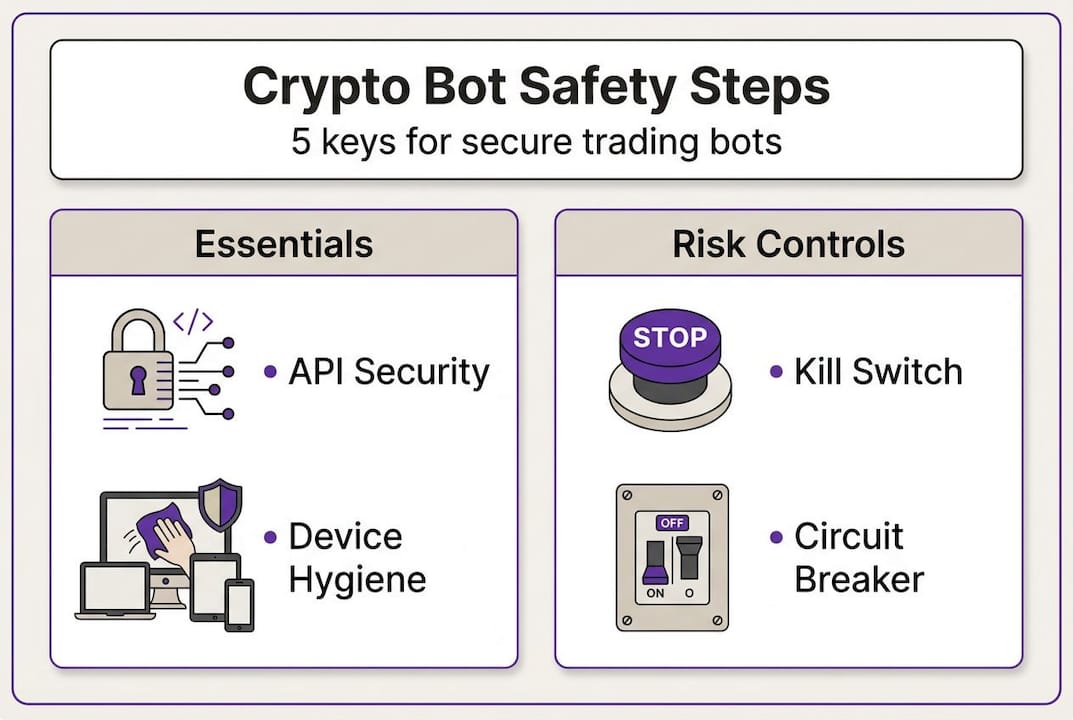
Device hygiene matters just as much as bot configuration. Running your bot on a dedicated device that you use only for trading, with no random extensions and no other software installed, dramatically reduces your attack surface. Understanding API key security in crypto bots is the first practical step toward closing these gaps.
The uncomfortable truth is that you can use the most sophisticated bot in the world and still lose everything if your operating environment is compromised. Clean code doesn’t save you from a keylogger.
Core safety principles for running crypto bots securely
Understanding the threats is only part of the puzzle. Here’s how you can proactively secure your bot operations, starting with the fundamentals that most traders skip.
- Never store plain API keys in unsecured locations. Saving keys in a plain text file, a Notes app, or a browser-saved password is an invitation for trouble. Use a reputable password manager with encryption, or store keys in encrypted vault software designed for sensitive credentials.
- Enable IP whitelisting on every exchange that supports it. When you whitelist specific IP addresses, your API key becomes useless to an attacker operating from a different network. Over 70% of exchanges support IP security for API keys, yet most traders never configure it.
- Restrict API key permissions to only what the bot needs. If your bot only trades, it does not need withdrawal permissions. Ever. Limit every key to the minimum required actions, and review those permissions regularly.
- Rotate your API keys on a schedule. Even if you suspect no breach, rotating keys every 30 to 90 days minimizes the window of exposure if a key was silently captured.
- Monitor API access logs for unusual activity. Most exchanges provide logs of when and where your keys were used. Set a reminder to review these weekly, especially after any changes to your setup.
As noted above, user-environment compromise is the leading cause of API key theft, not bot code flaws. Following solid API key integration tips before you deploy protects you from the most common attack vectors.
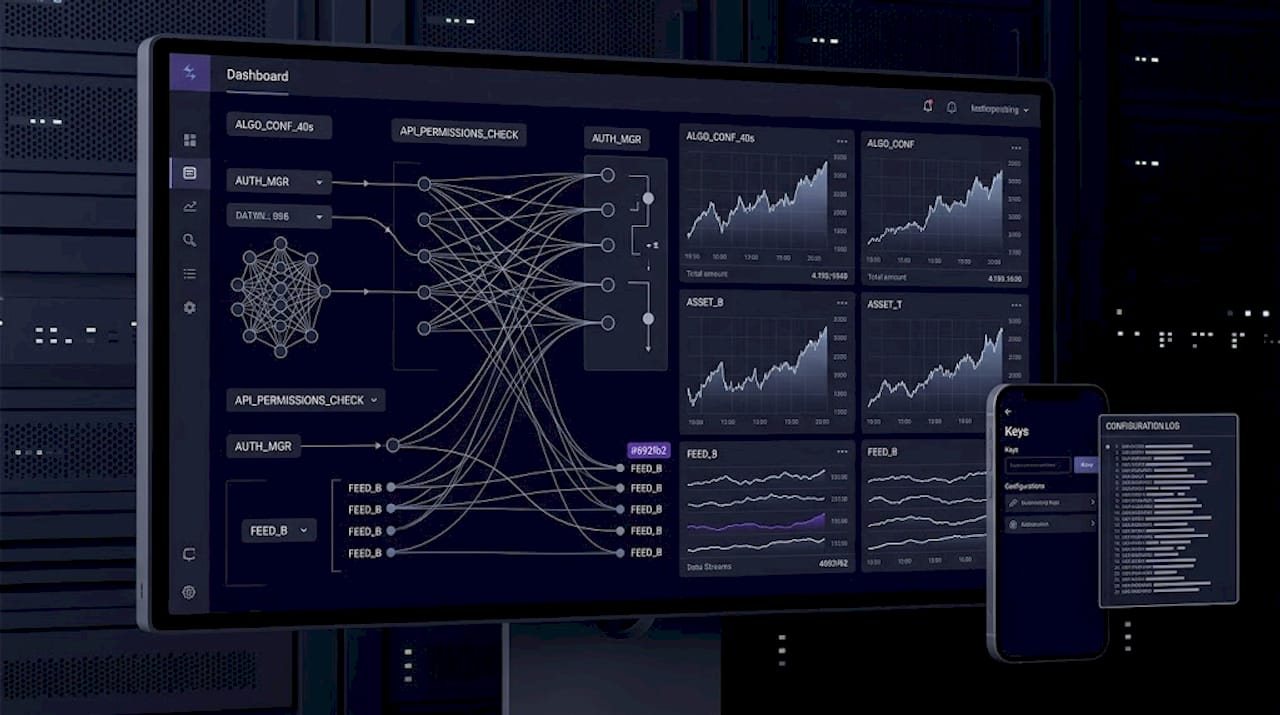
Pro Tip: Before committing serious capital to any bot setup, run it with a minimal test amount for at least two weeks. This lets you catch configuration mistakes and verify key permissions without meaningful financial exposure.
Operational risk controls: Kill switches, circuit breakers, and handling disconnections
With secure deployment basics covered, the next layer is how bots stay in control during unexpected events. Even a perfectly secured bot can cause serious damage if it has no mechanism to stop itself when things go wrong.
The three operational controls every serious bot setup needs are:
- Kill switches: These instantly halt all trading activity when a predefined condition is met, such as an API error, a connectivity outage, or a manual override trigger. Without one, a bot can keep sending orders into a broken market or an erroneous state.
- Circuit breakers: These pause bot activity when market volatility spikes or when a loss threshold is crossed. They’re the automated equivalent of a stop-loss for the entire bot’s behavior, not just individual trades.
- State reconciliation: After any disconnection or restart, a bot must verify its actual open positions before placing new orders. Without this, a reconnected bot might assume it has no positions and open duplicate trades, creating unintended exposure.
Bots without proper risk management architecture for edge cases like disconnects and state reconciliation face roughly twice the chance of catastrophic drawdowns during extreme market events. That’s not a hypothetical risk. Flash crashes, exchange downtime, and API rate-limit errors are routine in crypto.
Think of it this way: a kill switch is your bot’s emergency brake. A circuit breaker is its speed limiter. State reconciliation is its GPS that recalculates after you lose signal. All three need to work independently and together. Solid risk management in crypto trading bots accounts for all three layers, and the bot advantages for safer trading are only real when these controls are in place.
Pro Tip: Once a month, simulate a failure scenario: kill your bot mid-trade, disconnect your network, or cut the API key temporarily. Verify that the bot recovers cleanly and reconciles its positions correctly. If it doesn’t, you have a problem before real money is on the line.
Framework comparison: Evaluating safety features across crypto bots
To decide on the safest bot, a framework comparison makes your options clear. Marketing claims are easy to make and hard to verify. What you need is a functional checklist.
| Safety feature | What to look for | Red flag |
|---|---|---|
| API key management | Encrypted storage, permission scoping, IP whitelist support | Plain-text storage, full-access keys by default |
| Session handling | Automatic timeout, re-authentication on reconnect | Sessions that stay open indefinitely |
| Kill switch | Configurable triggers, documented recovery process | No kill switch or only manual shutoff |
| State reconciliation | Position sync after disconnects, order verification | Assumes last known state without checking |
| Incident response | Documented process, past incident disclosures | No history, no process, no explanation |
Operational controls like disconnect handling, order reconciliation, and kill switches are the actual indicators of a production-ready bot. A bot that aces a backtest but cannot explain its recovery logic is not safe to run unattended.
When evaluating any bot, require answers to these questions:
- Can you demonstrate a kill switch activation and recovery in a live or paper environment?
- What happens to open positions if the bot loses connectivity for five minutes?
- Has the bot been stress-tested across high-volatility periods, not just optimized market windows?
- Is there a documented incident response log or post-mortem from past failures?
Forward testing matters more than backtesting. Any bot can be curve-fitted to look good on historical data. Real safety shows up in live or paper trading under conditions the bot was not built for. For additional perspective on secure crypto bank account opening as part of your broader financial setup, your overall security posture matters end-to-end. Always review risk controls in crypto bots before committing to any platform.
The hidden risks most crypto bot guides miss
Comparisons are essential, but let’s step back for a candid take on what actually matters. Most crypto bot safety guides focus almost entirely on technical hacks: stolen keys, compromised wallets, exchange breaches. These are real risks. But the silent operational failures are where experienced traders quietly lose the most money.
A bot that gradually accumulates unintended positions due to a state reconciliation bug won’t show up on any security dashboard. Neither will a circuit breaker that was never tested and fails silently during a flash crash. These aren’t headline events. They’re quiet erosions of capital that look like bad luck until you audit the logs.
Performance claims from bot vendors should be treated with real skepticism. Validate everything with forward testing, paper trading, and stress tests across different market regimes, not just the favorable windows vendors cherry-pick for screenshots.
The standard for trusting a bot should be this: if the developer cannot explain the kill switch and recovery logic in plain language, don’t deploy it. Smart risk management means demanding transparency, not accepting complexity as a substitute for accountability. Real safety is boring and documentable, not impressive and opaque.
Take your crypto bot safety to the next level
If you’re looking for actionable solutions, Darkbot can make your next steps secure and simple. The Darkbot crypto bot platform is built around the exact principles covered in this guide: encrypted API key handling, configurable risk controls, and transparent operational logic you can actually understand and verify.
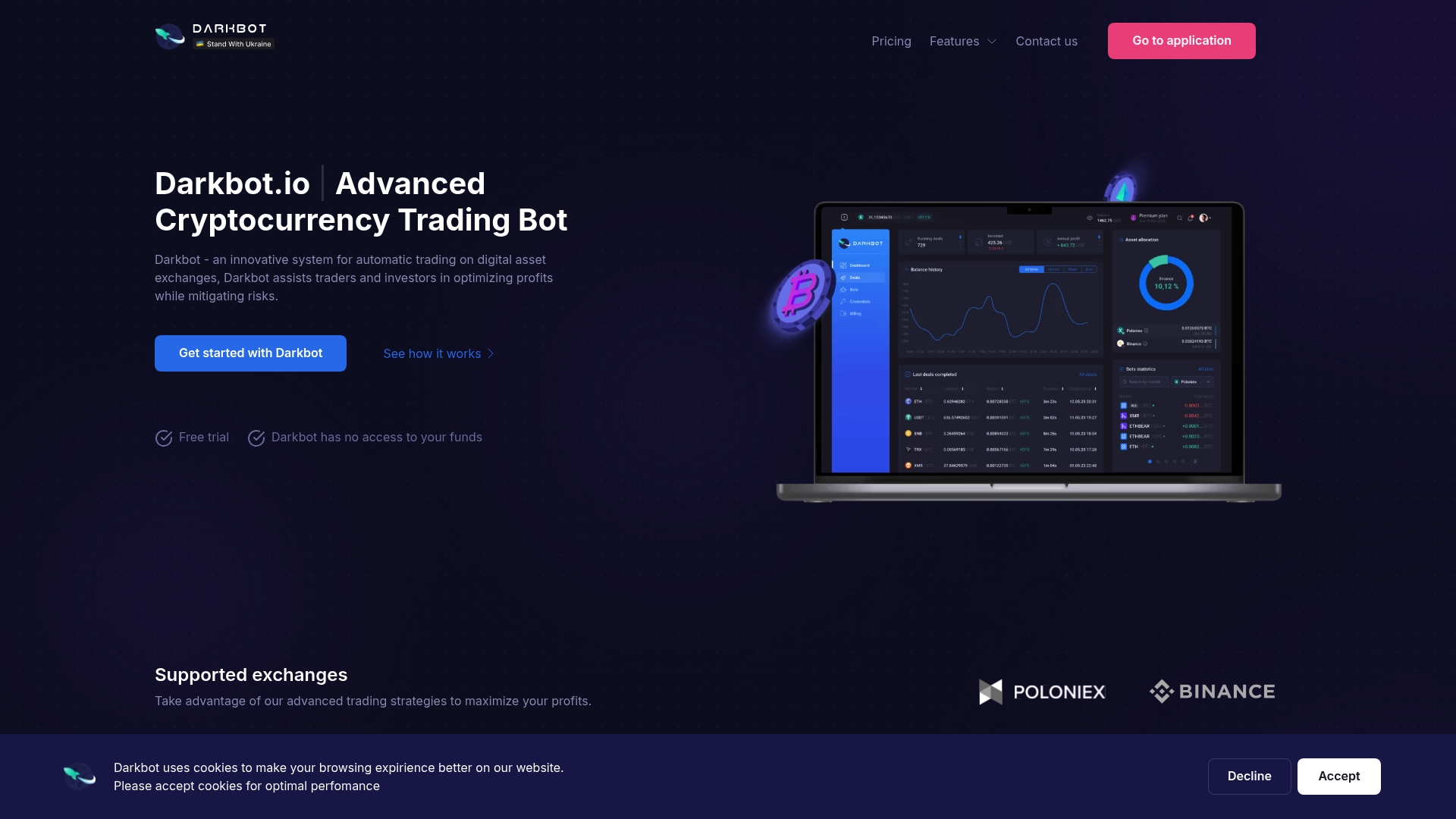
Darkbot’s architecture supports IP whitelisting, permission-scoped API integration, and automated safeguards that keep your trades in check even during volatile conditions. For traders who want more than automation, the crypto portfolio optimization solutions offer real-time risk management across your entire portfolio. You don’t have to choose between efficiency and safety. With the right platform, you get both.
Frequently asked questions
How can I prevent API key theft when using crypto bots?
Store keys in encrypted password managers, restrict permissions to trading-only actions, enable IP whitelisting, and only access keys on dedicated, trusted devices. User-environment compromise like malicious browser extensions is the leading cause of API key theft.
What operational features ensure a crypto bot is safe to run unattended?
Require kill switches, circuit breakers, and position state reconciliation after any disconnection. Risk-management architecture for edge cases like disconnects and reconnects is what separates safe bots from risky ones.
Why aren’t code audits alone enough for crypto bot safety?
Even flawless code cannot protect you if the bot has no kill switch, cannot reconcile state after a disconnect, or breaks silently under market stress. Operational controls are just as critical as code quality.
How can I verify a bot’s safety claims before deploying real capital?
Run the bot in paper trading mode, simulate failure scenarios, and check for clear documentation on risk controls and recovery logic. Advertised performance claims should always be validated through forward testing and stress tests across different market conditions, not just backtested results.
Recommended

Start trading on Darkbot with ease
Come and explore our crypto trading platform by connecting your free account!
Free plan available • No credit card required