How to automate crypto rebalancing for smarter portfolios
TL;DR:
- Automated rebalancing helps maintain optimal crypto portfolio allocations by executing trades instantly upon drift detection without emotional bias. It improves risk management, reduces time investment, and can enhance risk-adjusted returns through systematic trading discipline. Regular review of settings and understanding of potential pitfalls are essential to maximize benefits and mitigate risks.
You set your portfolio to 40% Bitcoin, 30% Ethereum, and 30% altcoins. Three weeks later, Bitcoin’s surge has pushed it to 65% of your holdings, and your carefully planned allocation is gone. This drift happens constantly in crypto, and fixing it manually means watching charts, calculating trades, and executing them at just the right moment. That’s stressful, time-consuming, and easy to get wrong. Automated rebalancing solves this problem by doing the heavy lifting for you, and this guide walks you through exactly how to set it up, what tools you need, and how to measure results.
Key Takeaways
| Point | Details |
|---|---|
| Improved risk-return profile | Automated rebalancing boosts Sharpe ratio and reduces drawdowns compared to HODL. |
| Discipline keeps you ahead | Automation enforces consistency and counters emotional trading mistakes. |
| Threshold triggers are efficient | In volatile crypto, threshold-based rebalancing usually outperforms monthly schedules. |
| Monitor costs and liquidity | Real-world success relies on controlling fees and adapting to market conditions. |
| Always review performance | Track key metrics to ensure your automated strategy remains effective over time. |
Why automated rebalancing matters for crypto traders
Crypto markets don’t sleep, and neither does portfolio drift. When Bitcoin rallies 40% in a week while your altcoin positions stay flat, your risk exposure shifts dramatically without you doing anything. Manual rebalancing requires you to notice this drift, calculate the right trades, and execute them quickly enough to matter. Most traders fail at least one of those three steps.
Automated rebalancing removes human delay from the equation. The bot monitors your allocation 24 hours a day and executes corrective trades the moment your portfolio drifts beyond your defined threshold. This kind of discipline is hard to replicate manually, especially when emotions run high during volatile market swings.
The data backs this up. Research on the rebalancing premium in crypto shows that daily rebalanced portfolios produce improved Sharpe ratios and lower drawdowns compared to buy-and-hold strategies. The Sharpe ratio measures how much return you earn per unit of risk, so a higher number means you’re getting more reward for the same exposure.
Key benefits of automated rebalancing include:
- Consistent risk management: Your target allocation stays intact regardless of market moves
- Emotion-free execution: The bot doesn’t panic sell or hold through denial
- Round-the-clock monitoring: Opportunities and risks at 3 AM get addressed automatically
- Lower time investment: You set the rules once and review periodically instead of watching charts daily
- Potential to maximize gains with rebalancing: Selling high and buying low is built into the logic
“The rebalancing premium in crypto is real. Systematic, automated rebalancing captures volatility as a return source, which buy-and-hold simply cannot do.”
That said, automation has limits. In a raging bull market where one asset climbs for months, rebalancing will keep trimming the winner, which can limit upside. Trading fees also accumulate, especially if your thresholds are too tight. Liquidity matters too. A small-cap token with thin order books may get rebalanced at a terrible price. Choosing the right rebalancing logic and reviewing it regularly keeps these risks in check. For a deeper breakdown of how this works in practice, the balancing guide for automated trading covers strategy nuances in detail.
What you need to automate crypto rebalancing
Understanding the benefits sets the stage. Here’s what you’ll need to get started automating your crypto rebalancing.
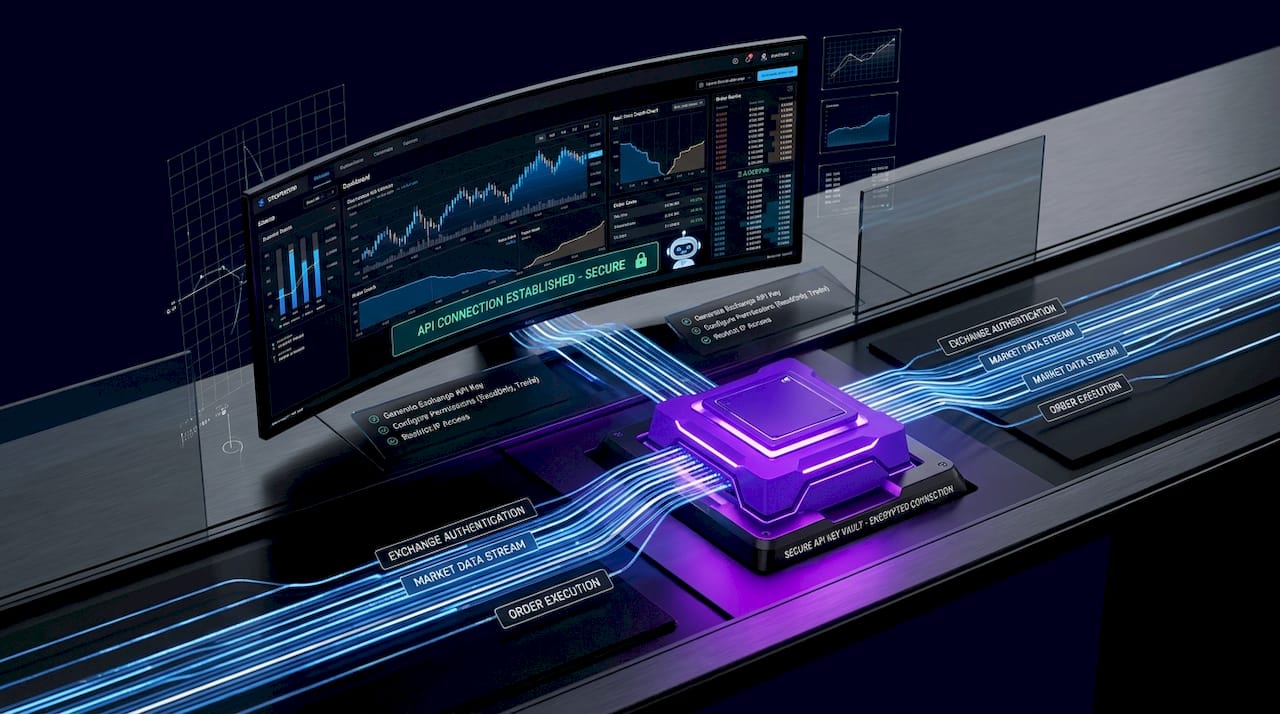
The foundation is a compatible exchange account. Most major exchanges, including Binance, Coinbase Advanced, Kraken, and Bybit, support API access. An API key (Application Programming Interface key) lets third-party tools connect to your account securely, read balances, and place trades without requiring your login credentials directly. Always generate API keys with trading permissions only, never withdrawal access, to limit exposure if a key is compromised.
Here’s a quick overview of what you’ll need:
| Requirement | Details |
|---|---|
| Exchange account | Must support API access and your target assets |
| API key | Trading permissions only, IP-restricted if possible |
| Rebalancing tool or bot | Built-in exchange feature or third-party platform |
| Target allocation | Defined percentages for each asset in the portfolio |
| Rebalancing trigger | Threshold-based, periodic, or a hybrid of both |
| Starting capital | Enough to cover trades and fees without erosion |
Your rebalancing tool is the brain of the operation. Some exchanges offer basic built-in portfolio tools, but they’re usually limited. Third-party bots like those covered in automated portfolio management offer far more control, including multiple simultaneous strategies, backtesting, and real-time analytics.
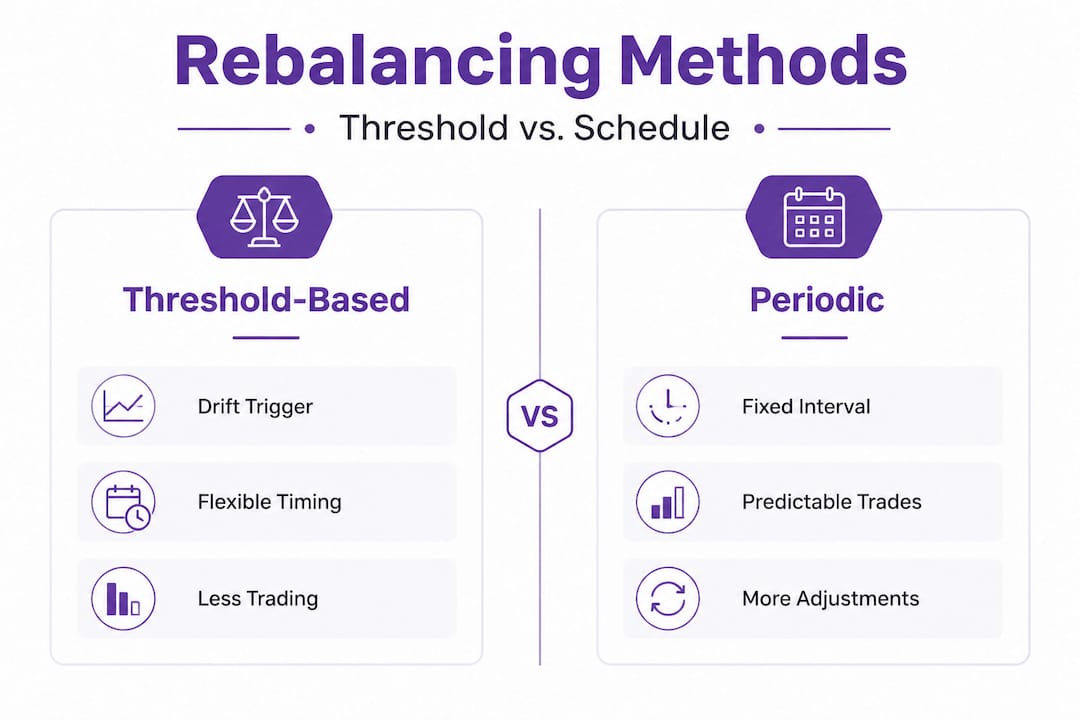
Choosing between threshold-based and periodic rebalancing is one of the most important early decisions. Periodic rebalancing triggers on a schedule, such as daily or weekly, regardless of how much drift has occurred. Threshold-based rebalancing only activates when an asset drifts beyond a set percentage, say 5% above or below its target. Research from rebalance bot efficiency suggests that threshold-based triggers tend to outperform periodic ones in volatile markets because they react to actual drift rather than the calendar.
Pro Tip: Before going live with real funds, test your bot configuration in paper trading mode if available. Many platforms let you simulate trades using real market data without risking capital. This step reveals configuration errors and helps you calibrate thresholds before they matter.
Step-by-step: Setting up your automated crypto rebalancing process
Once your tools and accounts are ready, here’s exactly how to automate the rebalancing process, step by step.
-
Connect your exchange account via API. Log into your rebalancing platform, navigate to the integrations or exchange settings section, and enter your API key and secret. Restrict the key to your bot’s IP address if the platform supports it. Test the connection before proceeding.
-
Define your target portfolio allocation. Enter each asset and its target percentage. For example: Bitcoin 40%, Ethereum 30%, Solana 15%, stablecoins 15%. Make sure your percentages add up to exactly 100%.
-
Choose your rebalancing logic. Decide between threshold-based (triggers when any asset drifts more than X%), periodic (triggers on a set schedule), or hybrid (combines both). For most crypto portfolios in volatile conditions, threshold-based logic at 5 to 10% deviation is a solid starting point.
-
Set fee and slippage limits. Configure maximum acceptable trading fees per rebalance event. This prevents the bot from executing trades that cost more than the benefit of rebalancing.
-
Run a backtest or simulation. Most quality platforms let you simulate how your settings would have performed against historical data. Backtests confirm that rebalanced portfolios outperform buy-and-hold by 64 to 77% in certain conditions, but fee structures and liquidity significantly affect real-world outcomes.
-
Activate the bot and monitor the first 48 hours closely. Don’t set it and forget it immediately. Watch the first few rebalancing events to confirm the bot is behaving as expected.
Here’s a clear comparison of the two main rebalancing approaches:
| Feature | Threshold-based | Periodic |
|---|---|---|
| Trigger | Drift beyond X% | Fixed schedule |
| Trade frequency | Variable, as needed | Predictable |
| Fee exposure | Lower in stable markets | Potentially higher |
| Reaction speed | Fast when drift occurs | Delayed until schedule |
| Best for | Volatile assets | Stable or lower volatility |
Pro Tip: Keep your threshold wide enough to avoid over-trading. A 3% threshold on a portfolio with many assets will generate constant trades and eat fees. Start at 7 to 10% and tighten it only after reviewing the fee impact over several weeks. Reading portfolio rebalancing explained can help you calibrate this decision. Understanding the bot advantages for 2026 also gives useful context on optimizing your setup for current market conditions.
Troubleshooting and common mistakes in crypto rebalancing automation
Even with automation in place, there are pitfalls that can trip up even experienced traders. Here’s how to avoid them.
Ignoring trading fees: This is the most common and costly mistake. If your threshold is too tight, your bot will rebalance constantly, generating fees that quietly erode your returns. Check your total fee spend weekly, especially in the first month of operation.
Incorrect API permissions: Setting up API keys with withdrawal access instead of just trading access is a serious security risk. If your API key is ever leaked or intercepted, an attacker can drain funds. Always use the minimum permissions required and rotate keys every few months.
Liquidity problems with small-cap tokens: If you hold assets with thin order books, a rebalancing trade might move the market against you, a problem called slippage. The result is you execute the trade but at a worse price than expected, undermining the benefit of rebalancing.
Unexpected rebalancing events: Sometimes a bot triggers trades you didn’t anticipate. This often happens when configuration errors set thresholds too low, or when a volatile news event causes a sharp spike that triggers an immediate rebalance. Reviewing bot logs after unexpected activity is essential.
Common pitfalls to watch for at a glance:
- Threshold too tight (over-trading)
- Withdrawal permissions enabled on API keys
- Illiquid assets included in rebalancing scope
- No slippage limit configured
- Skipping the backtest or simulation phase
- Forgetting to review bot activity regularly
“Automation removes emotion from trading, but it doesn’t remove responsibility. You still need to check in, review logs, and adjust settings as market conditions change.”
Understanding the automation benefits for safer investing goes beyond just returns. Security, configuration, and ongoing review are just as important as strategy selection. For a broader view of the risks involved, crypto trading bot risks covers the landscape well and is worth reading before you go live.
Measuring results: How to know if your automated rebalancing works
After automation has been running for a while, you’ll want to verify it’s delivering results. Here’s how to check and improve.
The three metrics that matter most are Sharpe ratio, maximum drawdown, and total return compared to a simple buy-and-hold of the same assets. Sharpe ratio tells you return per unit of risk. A higher number means you’re being compensated fairly for the volatility you’re absorbing. Maximum drawdown shows you the worst peak-to-valley drop your portfolio experienced. Lower is better.
Key performance indicators to track regularly:
- Sharpe ratio: Target above 1.0 for a solid risk-adjusted return; above 1.5 is excellent
- Maximum drawdown: Compare to buy-and-hold over the same period; automation should reduce it
- Total return vs. HODL: Measure over at least 90 days for meaningful data
- Fee-to-return ratio: Calculate total fees paid relative to the gains from rebalancing
- Rebalance frequency: Too frequent means your threshold may be too tight
Research consistently shows that daily rebalanced portfolios demonstrate better Sharpe ratios and lower drawdowns than buy-and-hold. But your specific results depend on the assets you hold, the fees your exchange charges, and whether you’ve configured the bot correctly.
When should you adjust your rebalancing logic? If fees are eating more than 1 to 2% of your portfolio value per month, widen your threshold. If your Sharpe ratio is lower than buy-and-hold over the same period, consider whether your asset selection or threshold logic needs tuning. Exploring strategies around 25 to 40% ROI with bots can give you a realistic performance benchmark and optimization approach.
Our take: The real advantage (and hidden risk) of crypto rebalancing automation
Most articles focus on the mechanics of rebalancing. Set a threshold, connect an API, watch the bot run. But the real value of automation goes much deeper than convenience.
The genuine advantage is behavioral discipline enforced by code. Most traders know they should sell some Bitcoin after a 50% rally and rotate into underperforming assets. Almost nobody does it consistently when emotions are running hot. Automation removes the choice entirely. The bot doesn’t feel greed. It doesn’t check Twitter before executing. It just runs the rules you set when you were thinking clearly.
This is where automation beats human decision-making in most market conditions. Not because the algorithm is smarter, but because it’s consistent. And consistency in risk management compounds over time.
But here’s the part most people overlook: automation can lag in pure bull markets, and that lag has a real cost. If Bitcoin climbs 300% over a year, a rebalancing bot will keep trimming your Bitcoin position and buying assets that aren’t moving. Your overall portfolio might still do well, but you’ll likely underperform someone who just held Bitcoin the whole time. That’s not a flaw in the system. That’s the system working exactly as designed, trading maximum upside for lower volatility. You just need to know that’s the tradeoff going in.
The other hidden risk is what we call “set and forget drift.” Traders configure automation once and assume it handles everything indefinitely. It doesn’t. Exchanges change APIs. Fee structures shift. New assets in your portfolio may have different liquidity profiles. The bot you set up in January 2026 needs a review by June. Automation reduces workload, but understanding rebalancing deeply means committing to periodic strategy reviews, not permanent hands-off management.
Long-term investors benefit most from automated rebalancing. Short-term traders may find it limits their tactical positioning. Knowing which category you fall into is more important than any specific tool or configuration setting.
Ready to automate your crypto portfolio? Start with Darkbot
If you’ve made it through this guide, you have a clear picture of what automated rebalancing requires and how to make it work effectively for your portfolio.
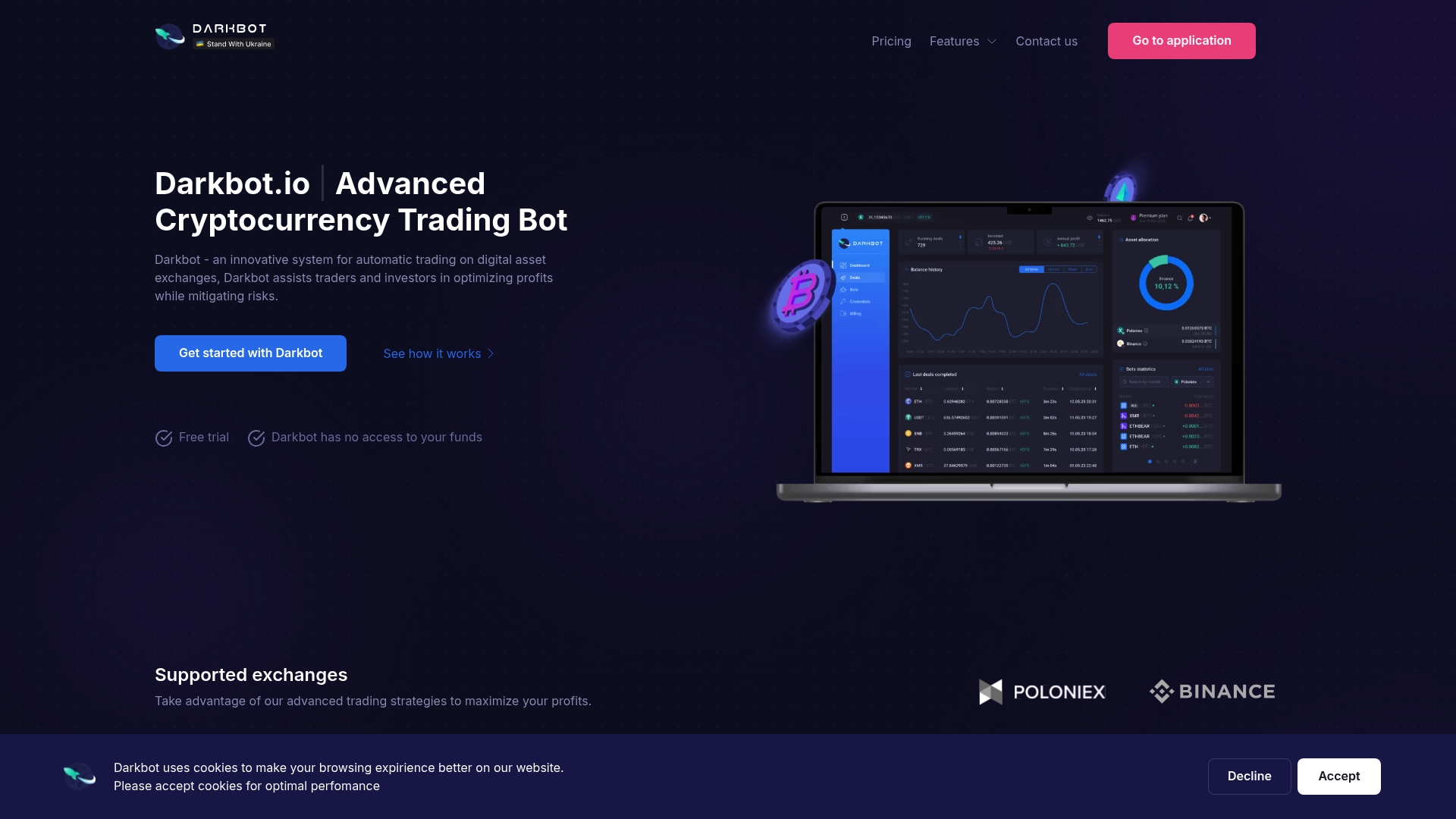
Darkbot.io makes the entire process straightforward, from connecting your exchange accounts via secure API keys to configuring custom rebalancing thresholds, running simulations, and monitoring real-time performance analytics. Whether you’re managing a simple two-asset portfolio or running a complex multi-exchange strategy, the platform scales with your needs. Explore the full range of crypto portfolio management tools available, or start with the AI-powered trading bots to see how automation can transform your approach to managing digital assets. Flexible pricing means you can start free and upgrade only when you’re ready.
Frequently asked questions
How often should automated crypto portfolios be rebalanced?
Frequency depends on volatility and your fee structure, but daily rebalancing or threshold-based triggers have proven most effective for crypto portfolios. Threshold-based logic avoids unnecessary trades in stable periods.
Can automated rebalancing really outperform HODLing?
Backtests show automated rebalancing outperforming buy-and-hold by 64 to 77% in volatile conditions, but real-world results depend heavily on trading fees and exchange liquidity.
What is the biggest risk of using automated crypto rebalancing bots?
Trading fees, insecure API configurations, and sudden market regime shifts are the top risks, with threshold over periodic approaches helping reduce unnecessary fee exposure in volatile markets.
Are all exchanges compatible with automated portfolio rebalancing tools?
Most major exchanges support API-based automation, but always verify compatibility between your chosen rebalancing platform and your exchange before committing funds to the strategy.
How do I track if my automated rebalancing is actually improving returns?
Monitor your Sharpe ratio, maximum drawdown, and total return versus HODLing over at least 90 days. Improved Sharpe ratios and lower drawdowns relative to buy-and-hold are the clearest signs your automation is working.
Recommended

Start trading on Darkbot with ease
Come and explore our crypto trading platform by connecting your free account!
Free plan available • No credit card required