How to optimize crypto trading strategies for max profits
TL;DR:
- Crypto trading strategies often underperform in live markets due to overfitting and overlooked risks.
- Simpler, robust systems like grid, DCA, and momentum tend to survive better through market regime changes.
- Using AI-powered tools like darkbot can help optimize, test, and monitor strategies effectively in volatile markets.
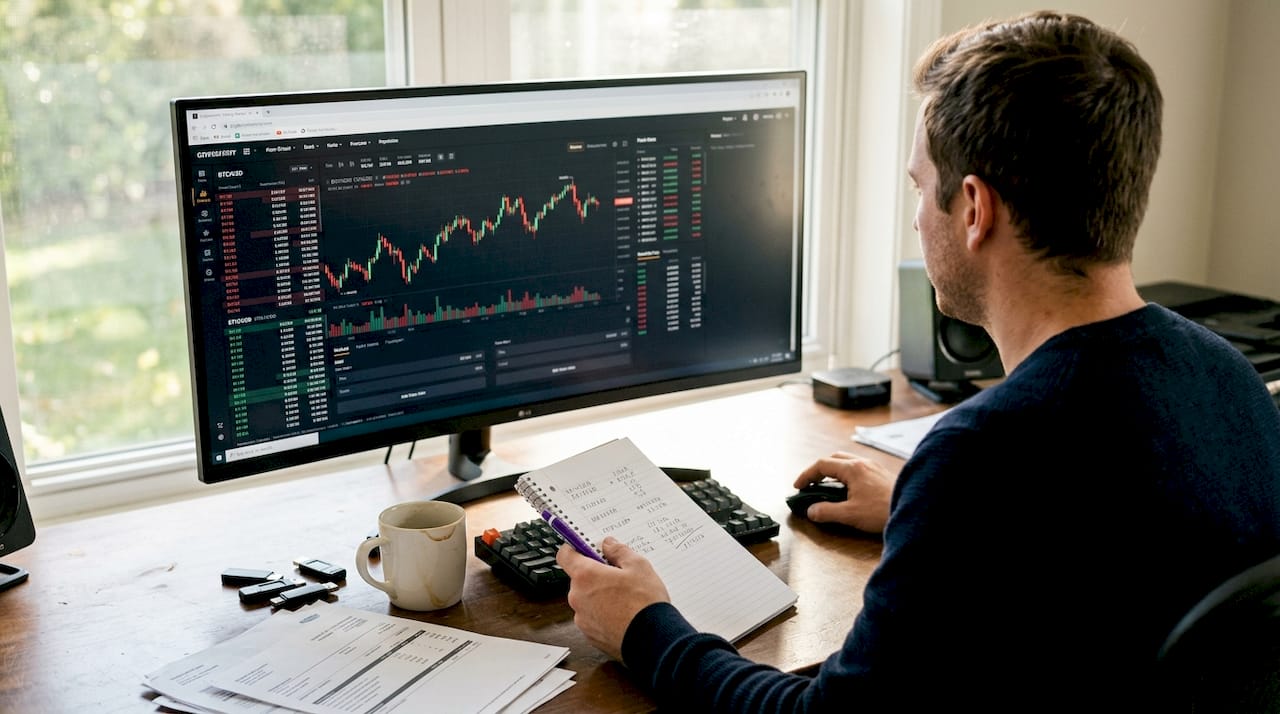
Most crypto traders have a strategy that looks great on paper but quietly bleeds real money when markets shift. The gap between a promising backtest and consistent live profits is wider than most people expect, and in 2025, that gap has only grown more treacherous. Trading bots now dominate the optimization conversation, with algorithmic systems handling a significant share of crypto volume across major exchanges. This guide walks you through the exact process of building, testing, and refining automated strategies so your portfolio can keep pace with one of the fastest-moving asset classes on earth.
Key Takeaways
| Point | Details |
|---|---|
| Smart platform selection | Choosing the right automation tool and collecting robust data is foundational for successful strategy optimization. |
| Rigorous backtesting | Backtesting with realistic fees and using advanced data bars helps uncover real profitability and limit risk. |
| Balanced strategy design | Combining advanced AI with simple, cycle-proof methods protects your capital during market shifts. |
| Avoid overfitting traps | Unrealistically high backtest results usually signal over-optimization instead of reliable performance. |
| Continuous adaptation | Regular monitoring, paper testing, and incremental improvements give you an edge in evolving crypto markets. |
Understanding today’s crypto trading landscape
Crypto markets in 2025 are not the same wild west they were five years ago. There are more participants, more sophisticated tools, and faster regime changes where a trend strategy that crushed it in Q1 can quietly implode by Q3. The benefits of trading bots have never been clearer: automation removes emotion, executes faster than any human, and can simultaneously monitor dozens of pairs around the clock.
The rise of algorithmic trading has produced a new class of platforms built specifically for crypto automation. AI trading bots now span everything from simple rule-based grid bots to reinforcement learning systems that adapt in real time. Understanding which tools fit your style is critical before you write a single line of strategy logic.
One of the most counterintuitive lessons from this era is that simpler strategies frequently beat complex ones. A clean momentum setup with tight risk controls often outperforms a 20-parameter machine learning model because the latter tends to overfit historical noise. The crypto trading automation benefits matter most when the strategy underneath is robust, not just clever.
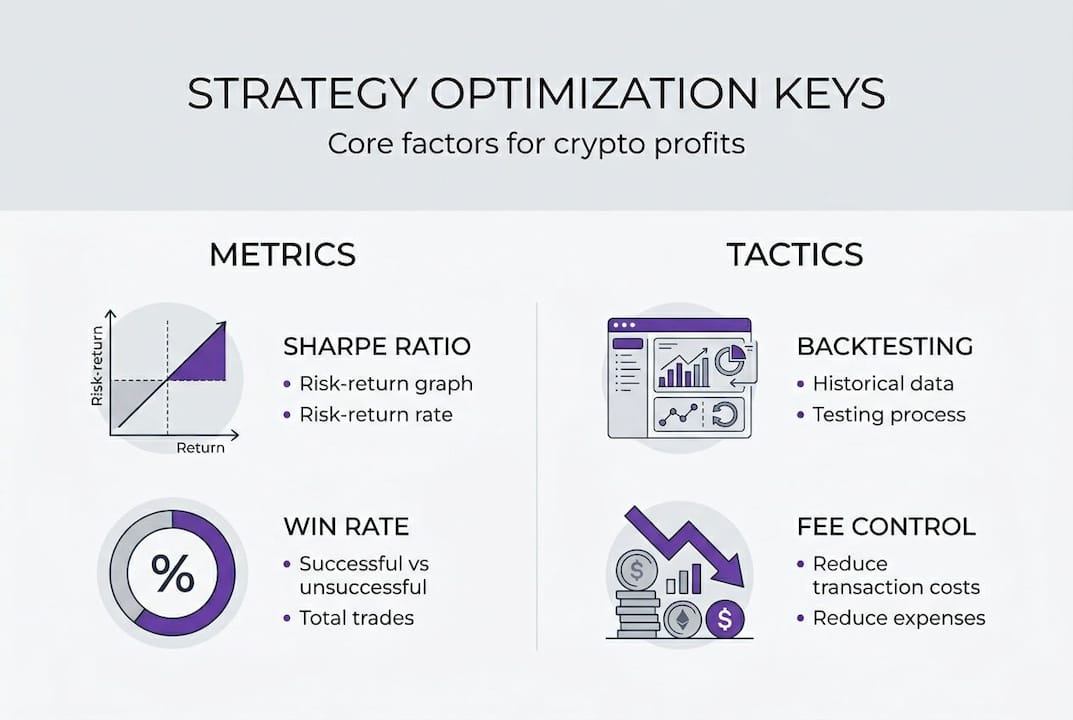
Three metrics tell you almost everything you need to know about a strategy’s health:
- Win rate: The percentage of trades that close in profit, ideally above 50% for most styles.
- Max drawdown: The worst peak-to-trough loss. Keep this under 20% for sustainable operation.
- Trading bots: The most critical traders use to evaluate risk-adjusted returns in volatile crypto markets.
| Strategy type | Win rate (avg) | Max drawdown | Best market regime | Notes |
|---|---|---|---|---|
| Grid bot | 58-65% | 8-15% | Range-bound | Low setup complexity |
| DCA bot | 60-70% | 10-18% | Bear/sideways | Strong long-term bias |
| Mean reversion | 52-58% | 12-20% | Low volatility | Signal quality critical |
| momentum/trend | 45-55% | 18-28% | Strong trending | Risk controls essential |
| AI/ML model | 55-70% | 10-25% | High volatility | Monitor for regime shifts |
Common pain points traders face heading into 2025 include poor backtesting methodology, ignoring trading fees in simulations, and failing to account for liquidity differences between exchanges. Every single one of those mistakes costs real money.
Setting up for success: Tools, data, and requirements
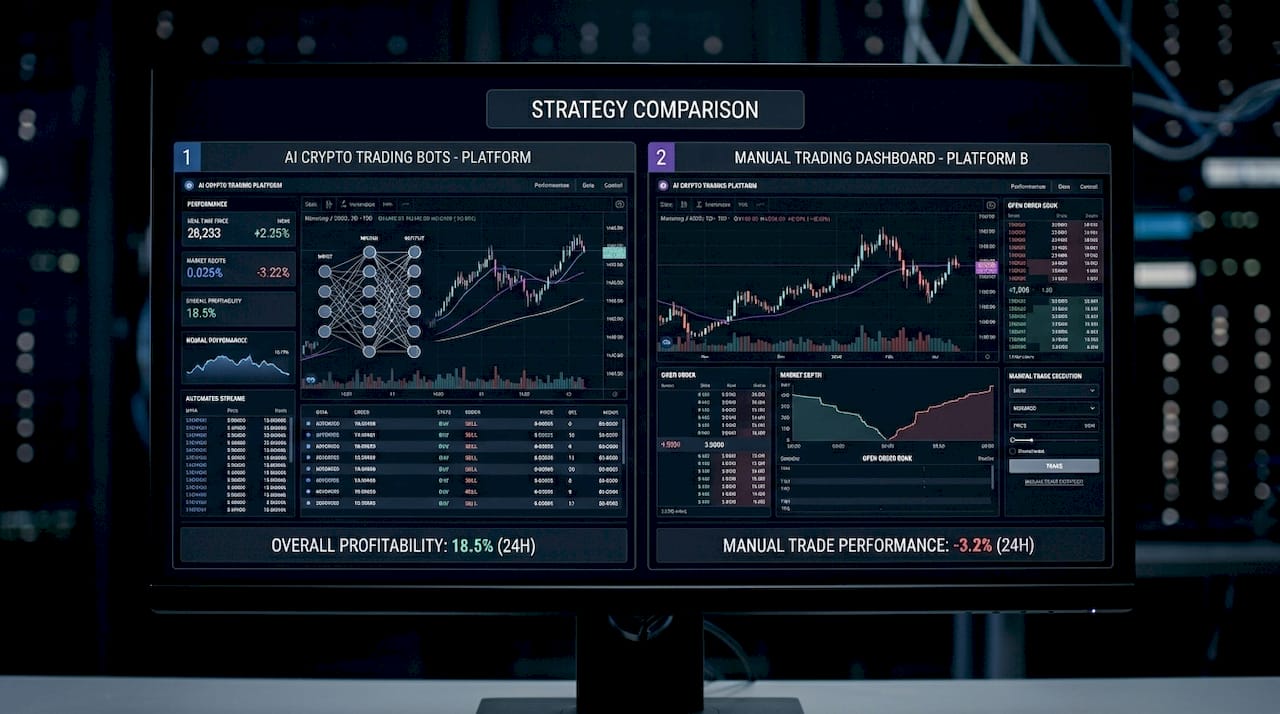
Once you understand the key players and why automation matters, gathering the right resources is the next step. Platform selection is the first and arguably most important decision you will make. 3commas, pionex, bitsgap, and cryptohopper were among the most widely used platforms in 2025 based on feature completeness and reliability.
| Platform | Strategy flexibility | Fee structure | Best for |
|---|---|---|---|
| 3commas | High | Monthly subscription | Active traders, DCA/grid hybrids |
| pionex | Medium | 0.05% per trade | beginners, grid bots |
| bitsgap | High | Monthly subscription | Multi-exchange arbitrage |
| cryptohopper | High | Monthly + marketplace | Strategy marketplace users |
| darkbot.io | Very high | Free/Standard/Premium tiers | All levels, AI optimization |
Data quality is non-negotiable. You need at minimum five years of clean historical data that includes a full bull cycle, bear cycle, and sideways consolidation period. Most automated investing challenges stem from strategies that are only tested against a narrow slice of market history.
When backtesting, always include realistic slippage (0.1-0.3% per trade depending on the pair) and exchange fees. A strategy that shows a 40% annual return before fees might shrink to 18% after accounting for transaction costs. That difference determines whether your system is viable at all. optimizing your trading process early in the setup phase prevents costly surprises later.
A solid pre-launch checklist:
- Generate exchange API keys with trade-only permissions (never withdrawal access)
- Define your position sizing rules before going live
- Set a maximum daily loss threshold that auto-pauses the bot
- Run at least 30 days of paper trading on live market data
- Log every trade for review, including slippage differences from simulation
Pro tip: Paper trading is not just a confidence exercise. It reveals gaps between your backtested assumptions and actual live order execution. Run it for a full month minimum before committing real capital.
Step-by-step: designing and optimizing your automated strategy
With tools ready, now you are set to architect and refine an actual trading strategy tailored to 2025’s landscape. The first decision is how you feed data into your model. Standard time-based candlesticks treat every minute as equal, which is a problem when market activity is wildly uneven across sessions. Information-driven bars like volume and range-based sampling produce cleaner signals and outperform time-based approaches in live testing.
Here is a practical workflow for building your strategy:
- Data preparation: Source raw tick data and convert to volume or range bars. Filter out obvious data errors (zero-volume candles, exchange outages).
- Feature engineering: Add indicators relevant to your thesis, such as RSI, ATR, order book imbalance, or funding rates. Keep features minimal at first.
- Label outcomes: Use Triple barrier labeling rather than naive next-candle returns. This method sets a profit target, stop loss, and time limit on each trade label, producing much more realistic training data.
- Model selection and training: Start with a simple logistic regression or gradient boosting model before touching neural networks. Simple models reveal signal quality without masking it in complexity.
- AI strategy optimization and validation: Walk-forward validation, not a single train-test split. Markets change, and your validation process must reflect that.
- Paper trading feedback loop: Compare live signals against backtested predictions. Large divergences flag data leakage or execution issues you missed.
The most expensive mistakes in crypto trading come from confusing a good backtest with a good strategy. The backtest is a hypothesis. Only live trading proves it.
Pro tip: If your backtested sharpe ratio exceeds 3, treat it as a red flag rather than a celebration. Real-world sharpe ratios above 2 are exceptional. A result above 3 almost always signals overfitting.
automation in action: Example strategies and real-world results
The mechanics make sense, but how do advanced strategies hold up in the real world? The answer depends heavily on market regime. Grid bots and DCA strategies consistently outperform in sideways or declining markets because they profit from volatility without requiring directional accuracy.
Reinforcement learning systems are a different story. SAC and Rainbow DQN frameworks delivered sharpe ratios up to 2.81 and returns as high as 287% in backtests, but those numbers come with an asterisk. They were tested in high-volatility regimes where the models were trained. Drop them into a choppy, low-liquidity market and performance often collapses.
| Strategy | Market regime | sharpe ratio | Win rate | Max drawdown | estimated ROI |
|---|---|---|---|---|---|
| Grid bot | Range-bound | 1.4 | 63% | 11% | 18-28% |
| DCA bot | Bear/sideways | 1.2 | 66% | 15% | 14-22% |
| momentum bot | Strong uptrend | 1.7 | 51% | 22% | 30-50% |
| SAC (AI/ML) | High volatility | 2.81 | 67% | 14% | Up to 287% |
| Rainbow DQN | High volatility | 2.6 | 64% | 17% | Up to 200% |
The risks worth watching in any live deployment:
- Key risks in automated trading: Exchange downtime, API failures, and liquidity gaps can each destroy a session’s results.
- profit and risk impact of bots is real, but only when bots are actively monitored and updated.
- Nothing in crypto is truly set-and-forget. Even the most stable grid bot needs periodic rebalancing as price ranges drift.
The traders who build sustainable track records check their bots daily, adjust parameters quarterly, and kill strategies that underperform their benchmark for two consecutive months without explanation.
The real secret: simplicity, cycles, and surviving the unexpected
Here is what the optimization obsession misses: most catastrophic trading losses come not from a bad parameter but from a regime change nobody anticipated. A strategy that performs beautifully in a trending bull market can produce devastating drawdowns the moment the market flips to low-volatility chop or sharp reversal.
The data backs this up. Simple strategies outperform over five years when you account for regime shifts and transaction costs. momentum, grid, and DCA approaches are not exciting, but they are survivable. They do not collapse when your training assumptions stop holding.
We believe the real edge in 2025 is not finding the cleverest algorithm. It is building systems robust enough to survive what you did not model. That means broader stop conditions, faster kill switches when a strategy underperforms its expected behavior, and the discipline to step away from a bot that is drifting rather than doubling down. The future of automated trading belongs to traders who treat their bots as living systems, not finished products.
Level up with darkbot’s AI-powered optimization
Ready to put these lessons into action? The gap between understanding a concept and executing it reliably in live markets is where most traders stumble.
darkbot brings together everything this guide covers: AI-powered strategy optimization, built-in backtesting with realistic fee modeling, paper trading mode for safe validation, and automated portfolio rebalancing across multiple exchanges. Whether you are deploying a simple grid bot or a multi-layered adaptive system, the portfolio management tools give you real-time performance analytics and risk controls built for 2025’s volatile markets. Plans start free, so there is no barrier to getting your first automated strategy running today.
frequently asked questions
What is the best metric for optimizing crypto trading strategies?
The three most important metrics are sharpe ratio, win rate, and max drawdown because together they measure profitability, consistency, and downside risk in one picture. No single metric tells the full story on its own.
How can I avoid overfitting my trading bot in 2025?
Always validate on unseen data using walk-forward testing and treat any backtest sharpe above 3 as a warning sign rather than a win. Running live paper tests for at least 30 days catches overfitting that backtests routinely miss.
Which automated trading bots performed best in 2025?
3commas, pionex, bitsgap, and cryptohopper led in reliability and feature completeness for 2025, each serving slightly different trader profiles and exchange preferences.
Are deep learning and AI-based strategies worth it?
SAC and rainbow DQN showed impressive sharpe ratios in volatile regimes, but they require constant monitoring for regime shifts and have a higher overfitting risk than simpler rule-based approaches.
Recommended

Start trading on Darkbot with ease
Come and explore our crypto trading platform by connecting your free account!
Free plan available • No credit card required