Top tips for crypto investors: smarter automated trading
TL;DR:
- Effective crypto trading relies on dynamic risk management, automation, and disciplined processes.
- Adaptive automation and real-time rebalancing protect portfolios during volatility and liquidity crises.
- Combining automation with human oversight ensures resilience against black swan events and market shocks.
Market conditions in crypto can shift from bullish to brutal within hours, leaving even experienced traders scrambling to respond. The gap between investors who consistently grow their portfolios and those who watch gains evaporate comes down to one thing: process. Emotional decisions, poor risk controls, and outdated static strategies are quietly destroying returns for the majority of active traders. This article breaks down four practical, evidence-backed strategies covering dynamic risk management, volatility handling, smart oversight, and automated rebalancing so you can build a resilient, high-performing portfolio that runs even while you sleep.
Key Takeaways
| Point | Details |
|---|---|
| Set clear risk limits | Defined drawdown and position sizing rules prevent emotional losses. |
| Automate for volatility | Adaptive automation protects against sudden market shocks and slippage. |
| Blend automation with oversight | Manual checks safeguard your portfolio from rare and catastrophic events. |
| Rebalance automatically for growth | Regular portfolio rebalancing boosts returns and maintains intended allocations. |
Understand and implement dynamic risk management
Most active crypto investors are losing to a simple buy-and-hold (HODL) strategy, and that’s a difficult truth to sit with. Active investors destroy wealth at a rate of 78% compared to HODL, while dynamic rebalancing adds 3 to 7% in annual performance when applied consistently. The culprit isn’t market randomness. It’s behavioral: panic selling during dips, overloading positions during FOMO runs, and ignoring basic risk controls that professional desks treat as non-negotiable.
Dynamic risk management starts with defining the parameters that govern every trade before it opens. The three most critical controls are:
- Max drawdown percentage: The maximum loss your portfolio can sustain before all activity pauses. A common threshold is 15 to 20% of total portfolio value.
- Per-trade risk limit: Most professionals apply the 1 to 2% rule, meaning no single trade can put more than 1 to 2% of total capital at risk.
- Volatility-adjusted position sizing: As market volatility increases, position sizes shrink automatically to preserve capital.
Here’s where automation becomes essential. A human trader might know these rules but break them when a coin is pumping 40% and the urge to pile in is overwhelming. An automated bot doesn’t feel that urge. It checks the parameters, executes within limits, and moves on.
| Scenario | Annual return | Max drawdown | Risk rule applied |
|---|---|---|---|
| No risk controls (reactive) | -12% | 45% | None |
| Static 5% per-trade risk | +4% | 28% | Partial |
| Dynamic 1-2% sizing + max drawdown limit | +19% | 11% | Full |
| HODL (BTC baseline 2025) | +14% | 33% | Passive |
The table illustrates a pattern experienced traders recognize immediately: tighter risk controls don’t cap your upside, they protect your downside. And protecting your downside, particularly during sharp corrections, often matters more than chasing the highest peak returns.
Understanding crypto portfolio rebalancing is also part of this foundation. Drift happens when one asset surges and suddenly represents 60% of your portfolio instead of the planned 30%. Without rebalancing, you’re inadvertently taking on risk you never intended to carry.

Pro Tip: Set automated alerts for portfolio drift exceeding 5% of your target allocation. Catching drift early, before it compounds, is far cheaper and less stressful than emergency rebalancing after a correction.
Strong risk management fundamentals are the foundation every other strategy rests on. No amount of sophisticated algorithmic trading will save a portfolio that’s losing 30% per trade.
Handle volatile events with adaptive automation
Once your basic risk controls are locked in, the next challenge is building automation that can withstand the events most trading plans ignore: cascade sell-offs, flash crashes, and sudden liquidity collapses. These events are rare, but they’re also the ones that wipe out months of careful gains in a matter of minutes.
The March 2025 ETH flash crash is a sharp reminder of what can go wrong. During acute liquidity crises, adapting slippage and order sizing is essential, and using regime detection with a volatility ratio greater than 2.5 helps pause momentum strategies before they spiral. That’s not hypothetical advice. It’s a response to documented market behavior that hurt real portfolios.
Here’s what actually happens during a cascade event. Sellers trigger stop-losses, which feed more selling, which triggers more stops. Order book depth collapses between 80 and 95% within seconds. Slippage, the difference between your expected execution price and the actual fill price, accounts for 34 to 67% of the performance gap between traders who survive these events and those who don’t.
“In severe liquidity crises, order book depth drops 80 to 95% within seconds. Slippage during these windows accounts for 34 to 67% of the total performance gap between adaptive and non-adaptive trading systems.”
Static automation is particularly dangerous here. A bot running a fixed momentum strategy during a volatility shock will keep executing trades as conditions deteriorate, often buying into falling prices or selling at terrible fills. Adaptive automation, by contrast, detects when conditions fall outside acceptable parameters and pauses or modifies its behavior.
Comparing static vs. adaptive automation during a volatility shock:
| Feature | Static automation | Adaptive automation |
|---|---|---|
| Responds to volume spikes | No | Yes |
| Adjusts order sizes in real time | No | Yes |
| Pauses on volatility regime trigger | No | Yes |
| Slippage protection | Minimal | Active |
| Performance during flash crash | High loss risk | Contained loss |
Key steps to build volatility resilience into your automation:
- Add a volatility regime detector that measures current volatility against a 30-day baseline. A ratio above 2.5 is a strong signal to pause aggressive strategies.
- Reduce order sizes automatically as spread widens. A bot that adapts its lot size when liquidity thins out avoids catastrophic fills.
- Use limit orders instead of market orders during volatile windows to avoid being filled at extreme prices.
- Set a maximum slippage tolerance that cancels orders if fills exceed a defined threshold.
For a deeper look at building these protections, the risk management for safer trading guide covers how to layer these controls systematically.
Pro Tip: Add a volatility regime detector to your automation stack. When the vol ratio crosses 2.5 compared to your 30-day baseline, automatically suspend momentum and trend-following bots until conditions normalize. It’s the single most impactful upgrade you can make to protect against catastrophic loss.
Balance automation with smart manual oversight
Automation protects you from most errors, but treating it as infallible is itself a serious mistake. Black swan events, regulatory shocks, exchange failures, and major geopolitical developments can create market conditions that no algorithm was trained on. In these moments, human judgment isn’t just helpful. It’s essential.
The hybrid approach means running automated bots for the vast majority of routine trading while maintaining clear protocols for when a human steps in. Automate but maintain hybrid oversight for black swans, discard trading signals with below 50% win rates, and use a low-latency VPS that reduces slippage to 0.1 pip compared to 0.8 pip on a home connection. That infrastructure difference alone is worth thousands of dollars annually for active traders.
Signal testing is a critical but often skipped step. Before any signal drives live capital, validate it:
- Backtest the signal across at least 12 months of historical data including at least one major correction period.
- Run it in paper trading mode (simulated trades without real capital) for a minimum of 30 days in live market conditions.
- Calculate the win rate: if it falls below 50%, discard the signal entirely. Low win-rate signals compound losses faster than most traders realize.
- Monitor the signal’s performance on a rolling 30-day basis after going live, and flag degradation before it becomes expensive.
How to periodically review and override your automation:
- Weekly performance check: Compare bot performance against a simple HODL benchmark. If bots are consistently underperforming, investigate the strategy, not just the market.
- Monthly parameter review: Volatility regimes shift seasonally. Review your position sizing and drawdown limits every 30 days.
- Immediate override triggers: Define in advance what conditions justify shutting down all bots manually. Exchange outages, regulatory announcements, and macroeconomic shocks all qualify.
- Audit trail review: Ensure your platform logs every trade decision. Reviewing those logs reveals patterns in poor performance that aren’t obvious from summary statistics.
Combining smart automation with deliberate human checkpoints creates a system that’s both efficient and resilient. It’s also worth investing in proper infrastructure. Running bots on a professional VPS reduces latency significantly, and in a market where milliseconds matter, that’s a meaningful edge.
If you’re still deciding whether to fully automate or build a hybrid system, the guide on how to automate crypto trading walks through both approaches with practical setup steps.
Pro Tip: Run your bots on a low-latency professional VPS server, not your home connection. The slippage reduction from 0.8 pip down to 0.1 pip can translate to thousands in saved losses annually on active strategies.
Optimize your portfolio with automated rebalancing
Portfolio automation powers consistent performance, but only when it’s implemented correctly. Dynamic rebalancing adds 3 to 7% annually, but most investors either rebalance too rarely, too often, or without accounting for fees and tax implications that can eat those gains entirely.
Automated rebalancing works by continuously monitoring your portfolio’s actual allocations against your target allocations and triggering trades to correct any drift that exceeds your defined threshold. Instead of a manual monthly review, the system acts the moment the conditions are met, whether that’s 3 AM or during a mid-session spike.
Steps for configuring automated rebalancing:
- Define your target allocation: Set percentage targets for each asset (e.g., 40% BTC, 30% ETH, 20% altcoins, 10% stablecoins).
- Set a drift threshold: Trigger rebalancing only when any asset drifts more than 5% from its target. This prevents unnecessary trades from fees.
- Choose a rebalancing method: Time-based (weekly or monthly) vs. threshold-based. Threshold-based is generally more cost-efficient.
- Account for transaction fees: Configure minimum trade sizes so that rebalancing trades always exceed fee costs by a significant margin.
- Enable tax-loss harvesting logic if your platform supports it. Selling underperforming positions to offset gains is a legal and effective cost-saver.
- Monitor execution quality: Review fills regularly to ensure rebalancing isn’t executing at poor prices during low-liquidity windows.
Performance comparison with and without automated rebalancing:
| Metric | No rebalancing | Manual monthly rebalancing | Automated threshold rebalancing |
|---|---|---|---|
| Annual return added | Baseline | +1.5 to 2.5% | +3 to 7% |
| Max drawdown | Higher | Moderate | Lower |
| Drift exposure | High | Moderate | Minimal |
| Fee efficiency | N/A | Moderate | High |
| Tax efficiency | Low | Low | Can be high |
Common mistakes that undercut rebalancing returns include rebalancing too frequently (generating excessive fees), ignoring short-term capital gains tax on each rebalancing trade, and failing to account for exchange withdrawal or trading minimums. A properly configured automated system handles all of this systematically.
For a complete walkthrough on setting this up, the guide to portfolio management covers configuration for multiple exchange types. The portfolio rebalancing guide also provides specific threshold and frequency recommendations for different portfolio sizes.
Why automation and discipline beat impulse and hype every time
After running through these frameworks, here’s an uncomfortable insight worth stating plainly: the biggest threat to any trading system isn’t market volatility. It’s the investor overriding their own rules during a hype cycle.
Even sophisticated traders with well-designed automation have been known to manually override their bots during a viral meme coin run, believing “this time is different.” It almost never is. The protocols exist precisely for the moments when breaking them feels most justified.
Automation doesn’t guarantee profits. What it guarantees is process consistency. And in a market as noisy and emotionally charged as crypto, consistency is the actual competitive advantage. The traders who survive long-term aren’t necessarily the most brilliant. They’re the ones who follow their rules when it’s boring and especially when it’s terrifying.
The perspective shift that matters most is this: your job as an investor isn’t to predict markets. It’s to build a system that performs across many market conditions and then trust that system. Making smarter automation choices means accepting that discipline in your process will outlast any short-term impulse, no matter how compelling it feels in the moment.
Supercharge your crypto investing with automation
These strategies work. But implementing them manually across multiple exchanges, tracking drift thresholds, monitoring volatility regimes, and managing rebalancing logic is genuinely complex. That’s where having the right platform makes the difference between intent and execution.
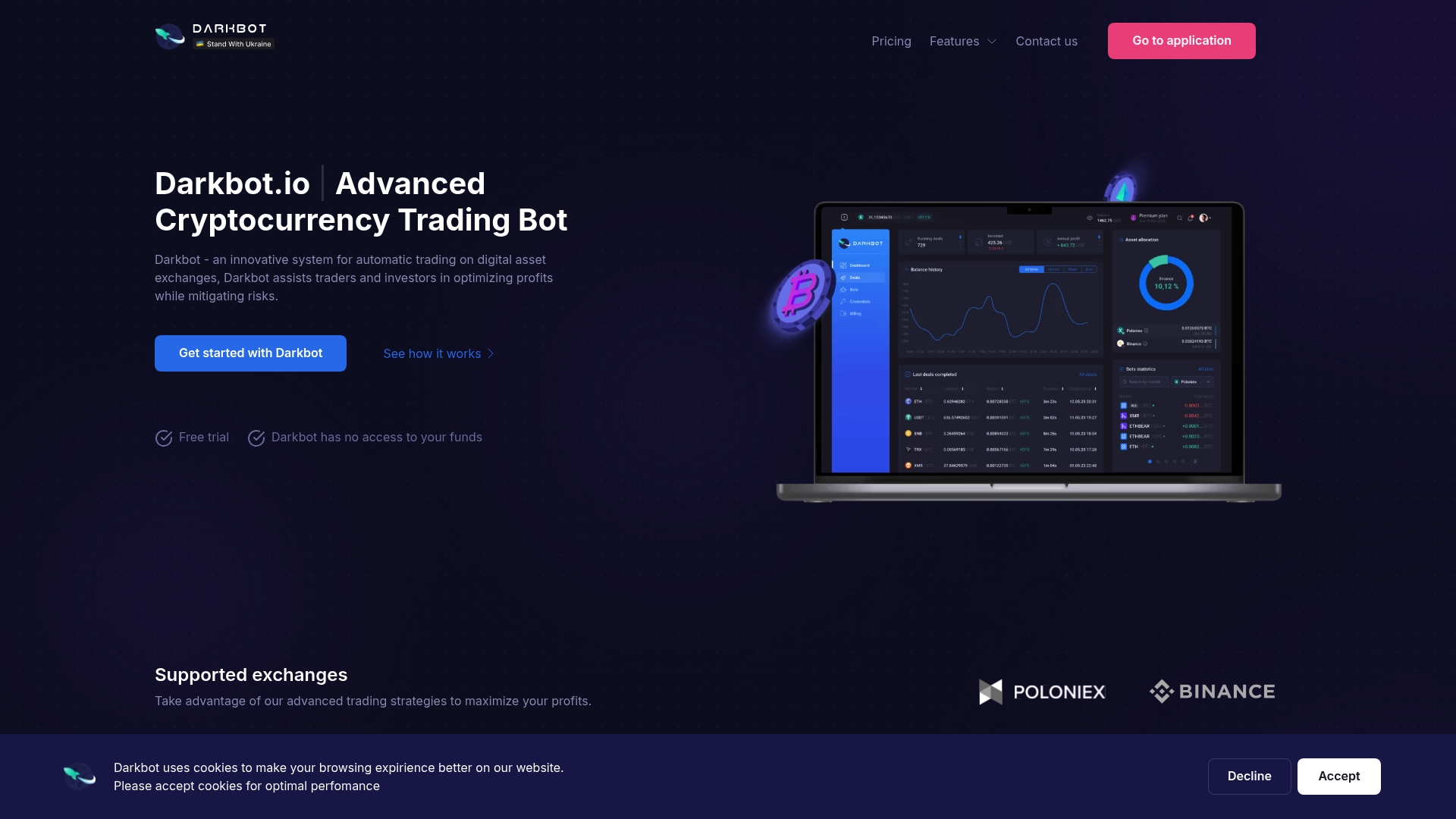
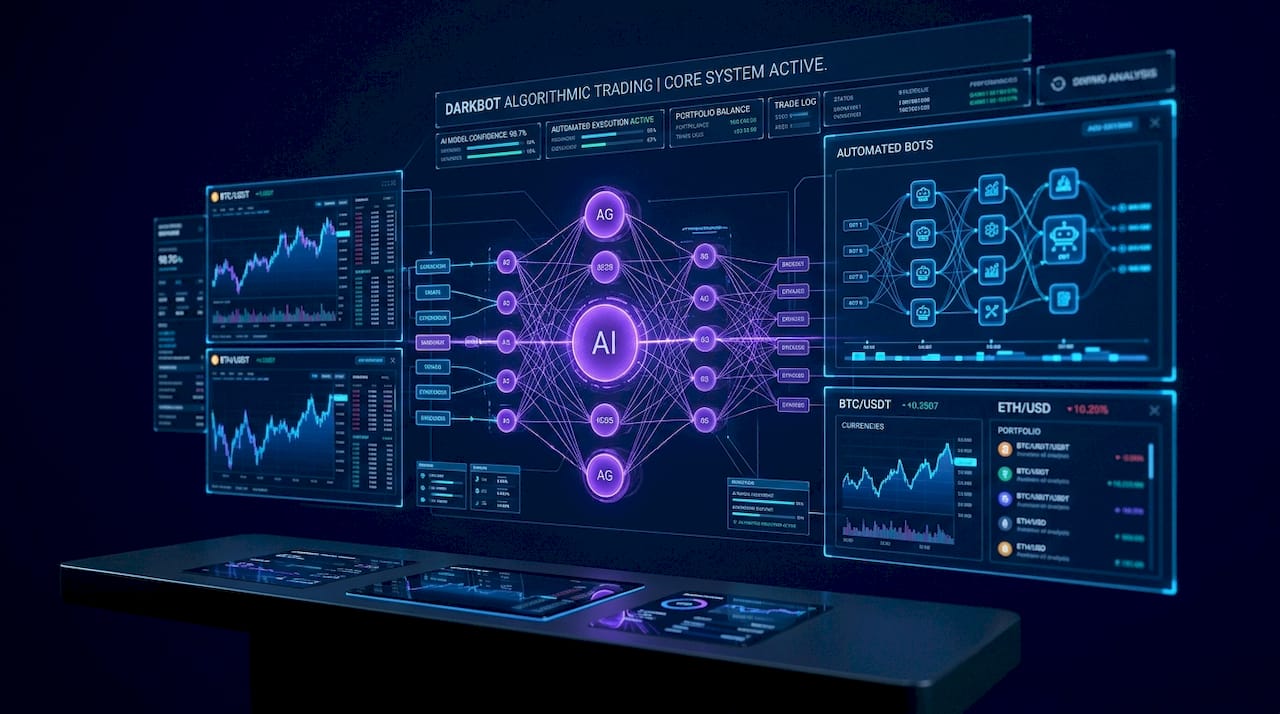
Darkbot.io brings all of this together in one place. From AI trading bots that run adaptive strategies across major exchanges to portfolio optimization tools that automate rebalancing and risk monitoring, the platform is built for investors who take their automation seriously. Whether you’re just getting started with your first bot or running multiple strategies simultaneously, Darkbot.io gives you the infrastructure, analytics, and control to execute smarter. Explore the platform and start automating with confidence.
Frequently asked questions
Why do most active crypto investors underperform holding?
Most active investors destroy wealth compared to HODL because of emotional trading, poor risk controls, and excessive transaction costs that compound over time, all problems that automation directly addresses.
How does automated rebalancing improve portfolio performance?
Automated rebalancing adds 3 to 7% annually by maintaining target allocations, capturing systematic sell-high-buy-low cycles, and eliminating the drift that increases unintended risk exposure.
What should I do during extreme market drops or flash crashes?
Activate volatility regime detection and pause momentum strategies when the vol ratio exceeds 2.5. During liquidity crises like the March 2025 ETH crash, adapting slippage tolerance and order sizing prevents catastrophic fills.
Why combine automation with manual oversight in crypto?
Automation handles routine decisions with superior speed and consistency, but manual hybrid oversight is essential for black swan events where trained models encounter conditions they weren’t designed to handle.
Recommended

Start trading on Darkbot with ease
Come and explore our crypto trading platform by connecting your free account!
Free plan available • No credit card required